8 – 13 February 2023
Ruaha – wild and remote and at 20 000 square km is one of the large national parks in Africa, and part of an even bigger wilderness area when one adds in the neighbouring reserves of Rungwa and others.
Less well known and less visited than those parks on the northern circuit (Serengeti, Manyara, Taranguire etc.), for those self-driving from the south it is a an alluring destination. Properly wild, yet easily accessible off the ‘’main drag” from Iringa. We have it firmly in our sights for a return visit having visited just once before. It is also home to a tenth of the world’s lion population as well as thriving populations of wild dog – how can you miss that?
So, leaving the chilly climes of Kitulo we set off down the escarpment and re-join the Tanzam highway. As we drop down the temperature climbs but it’s not too hot and an easy drive bar the speed bump frustrations.
Our lodgings tonight will be the campsite at the Old Farmhouse, Kisolanza – a farm some 60km shy of Iringa. It is a working farm owned by the Ghaui family and the restaurant is well known in the area. The campsite is also a popular destination for overlanders especially those travelling to or from Ruaha. We phone ahead to check / let them know we are coming. Yes, we are welcome – would we like supper? Of course we would! Keen to sample the delights of Kisolanza home cooking we take Nicky (the owner) up on her offer. Any preferences? Nah – we eat anything…There is something very appealing about these set menus especially when the venue has a good reputation. It’s a fixed price, you don’t have to choose, so all the work of what deciding what to eat / cook is whisked away and it’s bound to be different from camping fare. No washing up. What’s not to like?
Anyway we arrive at Kisolanza late afternoon and after a quick shower we sit down to the most fabulous meal: homemade cream of celery soup, main is grilled rare lamb steak with crunchy green beans and roast potatoes all served on a platter for two so you can help yourself to the portions you want. Pud is baked caramel toffee cake with homemade custard. All of this washed down with a well stored, well-chosen bottle of chianti. Marvellous.
I forgot to take any pics of the campsite but how is our table set for dinner? The restaurant is set in the ruins of the old farmhouse with the remaining mud walls. There is a barn-like structure above all of this for shelter. It’s lovely:

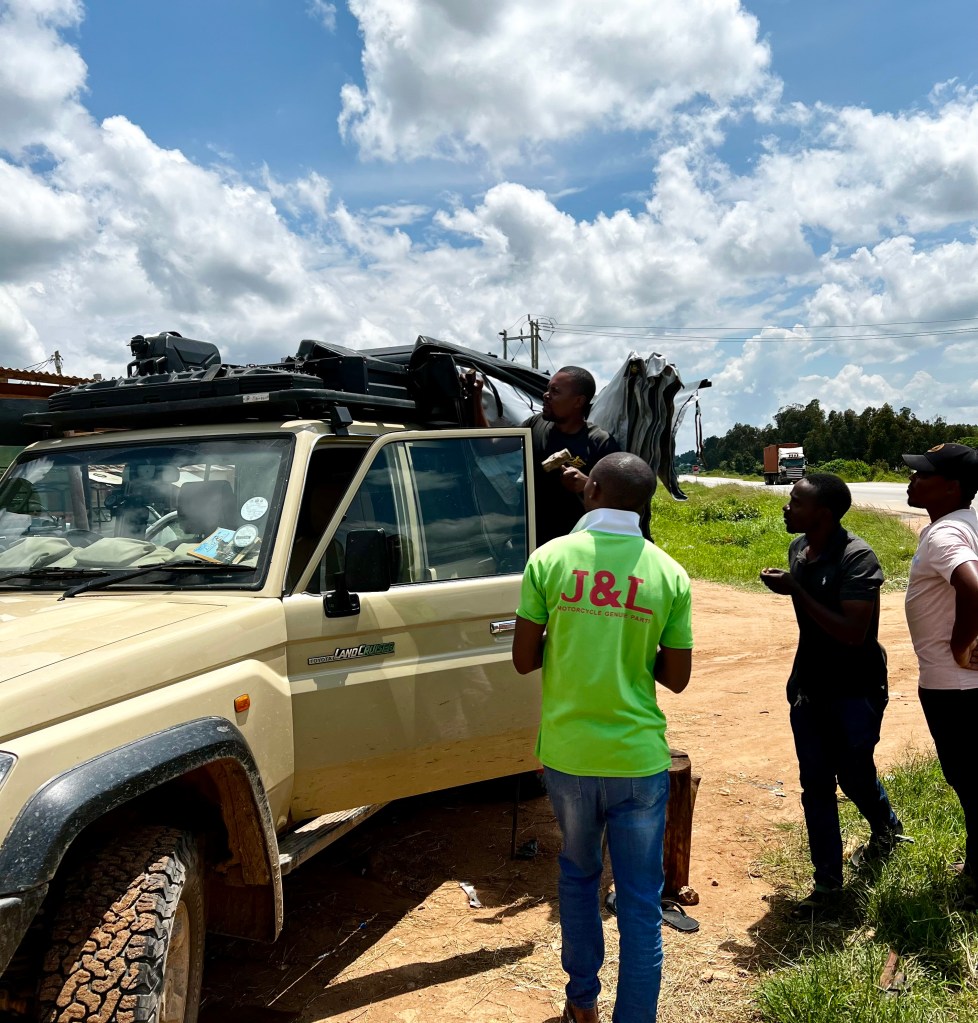
We spend a second day at Kisolanza, pottering about and using the time to get our awning sorted. We have an ostrich-wing sun shade / awning that folds out from the side of the cruiser. It took a bit of a battering in the Ngozi crater lake exertions. At one end there is a metal casing that the “arms” of the awning tuck into when you fold it away. This is now a bit bent / mangled and we can’t release two of the arms….and we need shade for Ruaha. We’ve tried bashing it back / levering it open but we don’t have the tools. We ask Nicky if she knows a panel beater or someone to help. She suggests Hilary, a mechanic near town – she phones ahead – pull in he says. We head off following Nicky’s directions: 12 km up the road, in the middle of a small row of unprepossessing shops at the end of the longest 50km zone in Tanzania and opposite the police station. And we find it, exactly as described but with Hilary standing out on the road – ready to flag us down. In no time it is sorted and Hilary refuses to charge us saying he used no materials but I pay him a small amount as thanks for his time.
Back at Kisolanza we do some stocking up at the farm shop. Spinach, green beans, a monster mango, tomatoes, lamb chops and some eggs. Eggs are useful on trips like this – boiled and mashed on marmite toast for breakfast, egg fried rice (great user- upper of left overs and bits of veg) – but the ones in supermarkets here in Tanzania are horrible. And I have a fear of buying them roadside / at local markets – I have this horror of cracking one open and finding an embryo inside. Am generally not that squeamish but the very idea of it gives me the heebie-jeebies. Somehow (naively?) I feel Nicky’s eggs will be safer.
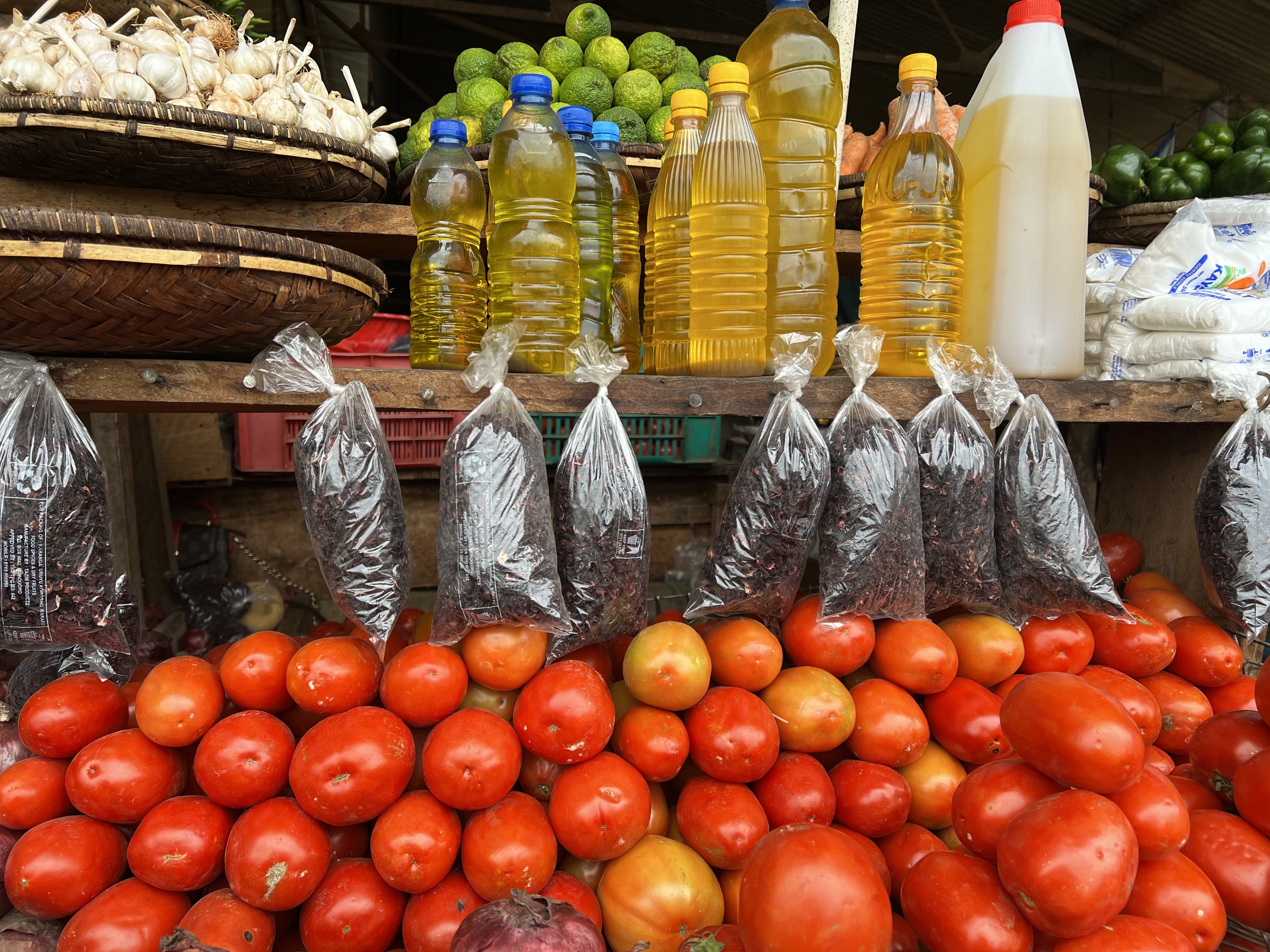
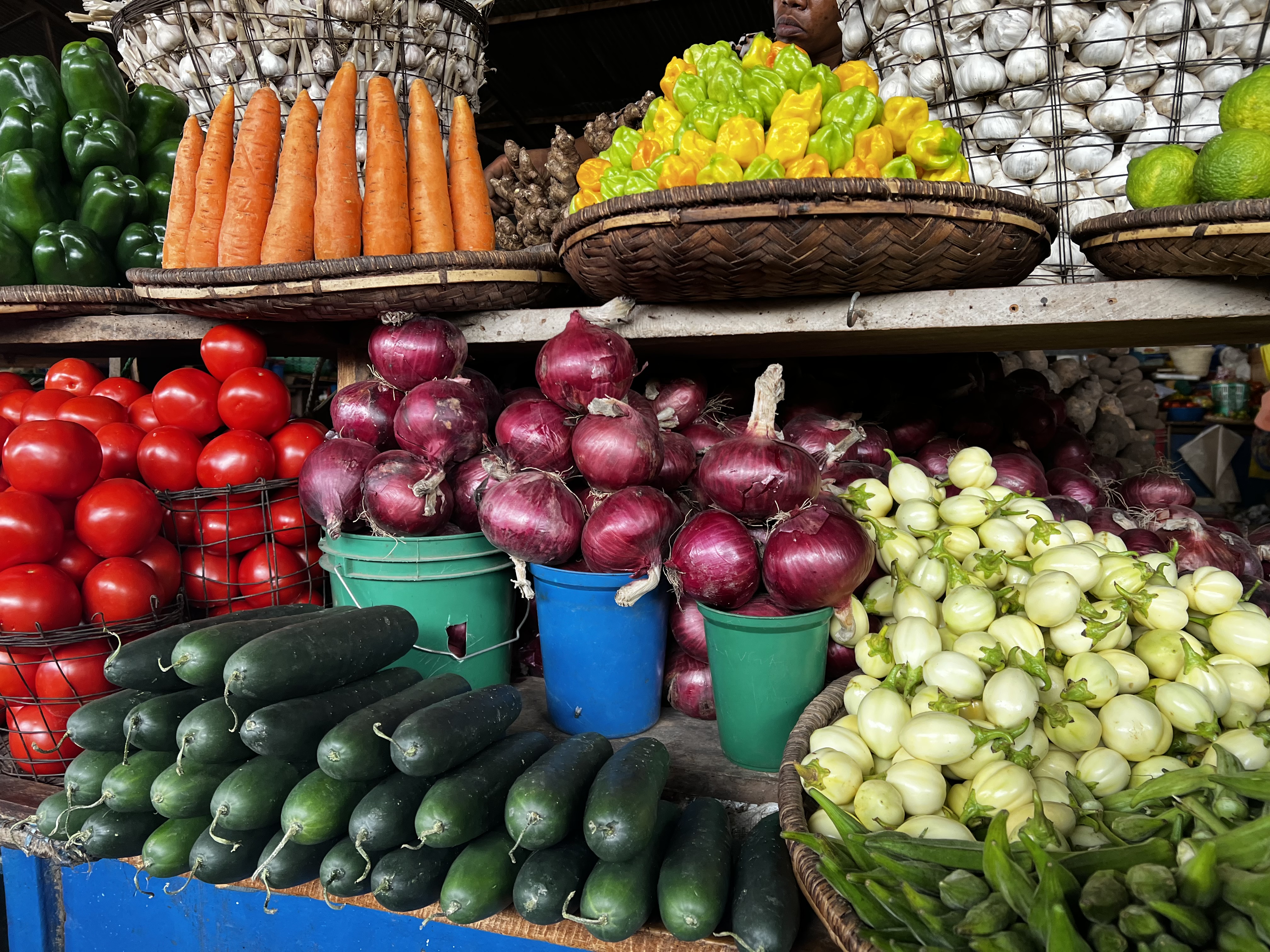
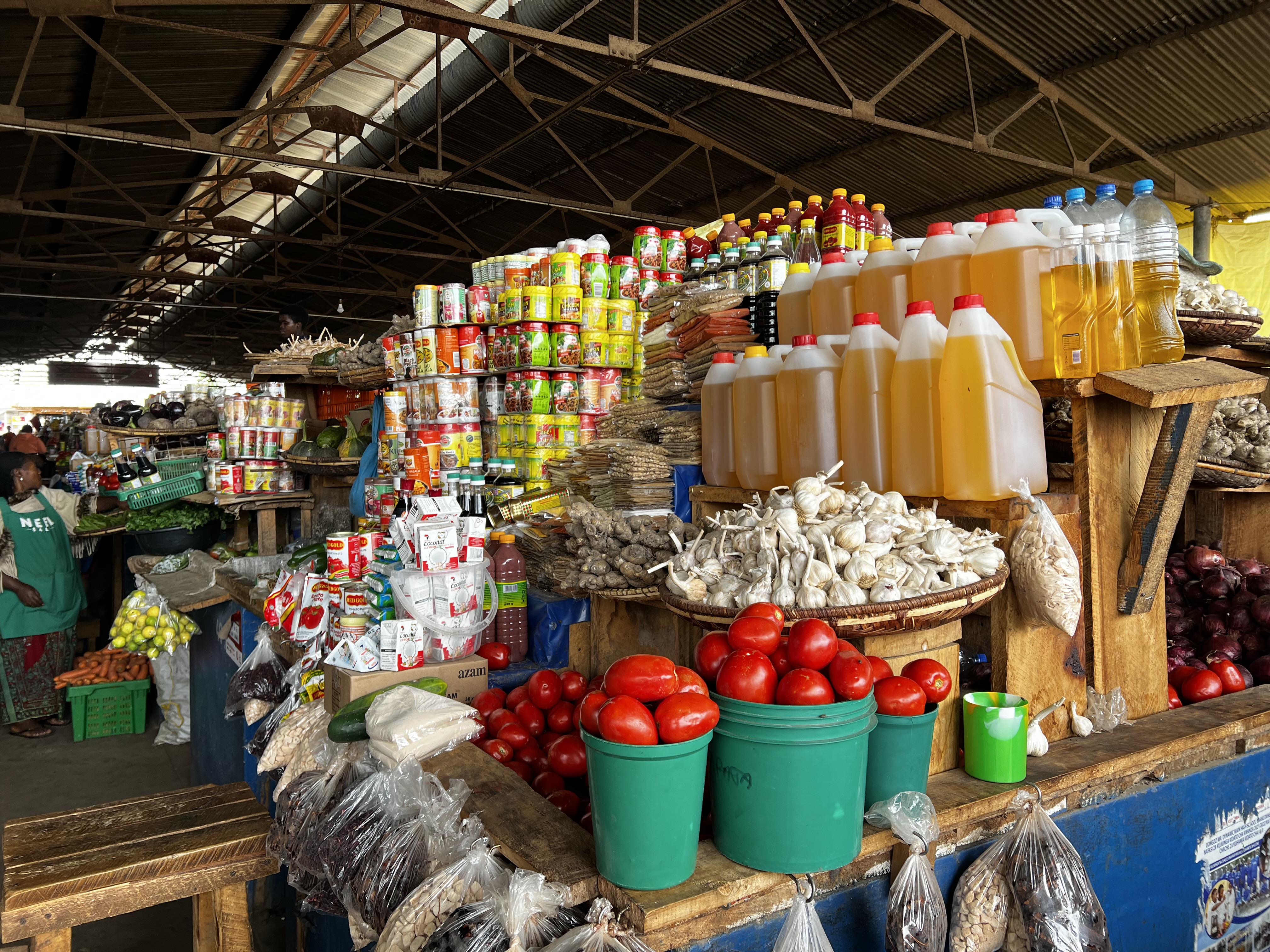
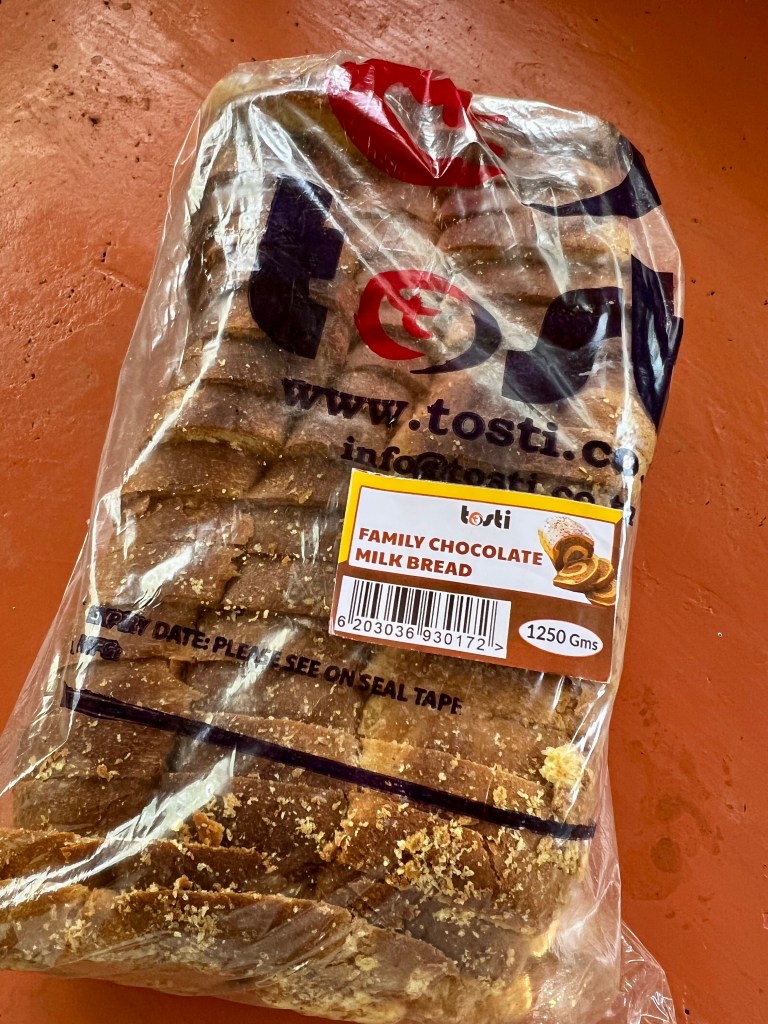
From Kisolanza we head on up the main road, stopping in at the Iringa market which is as impressive as I remember. Loads of fresh fruit and veg, spices by the kilo (I buy a small tin of curry powder in case we want to ring the changes from my sister Sara’s excellent mix which we carry with us), I buy a few more bits and pieces (fresh coriander, eggplant, limes, fresh turmeric, red onion) (can’t resist) and then we turn to the shops that edge the market. Stock up on some beer and whisky, and then find the bakery where I find some rolls as well as some ‘chocolate’ bread (can’t help myself). We aren’t going to starve.
The hanging plastic bags in the pic below are full of dried hibiscus flowers. Used to make tea and / or boiled with sugar into a cordial.
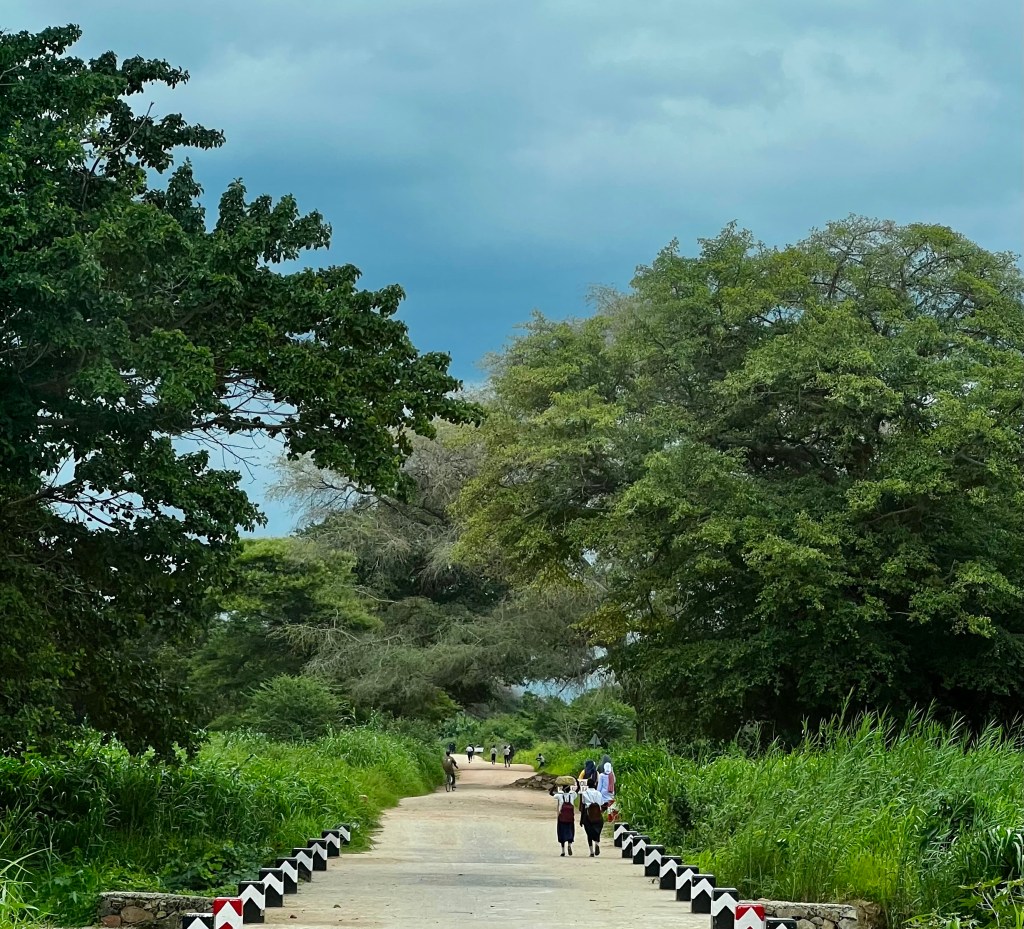
Iringa is set high on a hill and the road to Ruaha drops down sharply and you are through the outskirts and into farmland really quickly. We make our way through small villages, lots of cows and goats, lots of churches, more patches of bush – all intensely green. No rain as yet but there are dark clouds building up. On we go, winding out way down, cries of “Wazungu! As we pass kids waving for our attention. Often we just make out a fore-shortened “Zungu!”as we drive past, inevitably yelled with the delight of a scored result: “I spotted one”!
The road from Iringa is good graded dirt.

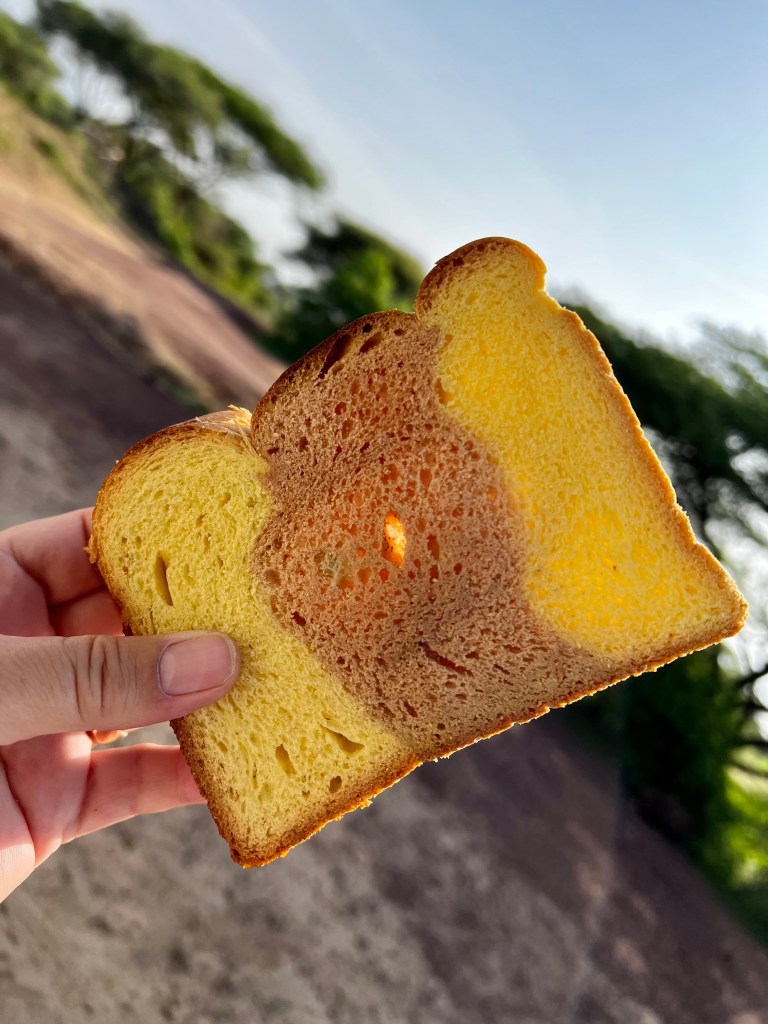
On the way down I bust out the chocolate bread. It isn’t very chocolatety and a bit dry. “What were you expecting? asks Deb. Pain au chocolat? Sarky cow.
Reaching the park we are delighted to find the river in full flood:
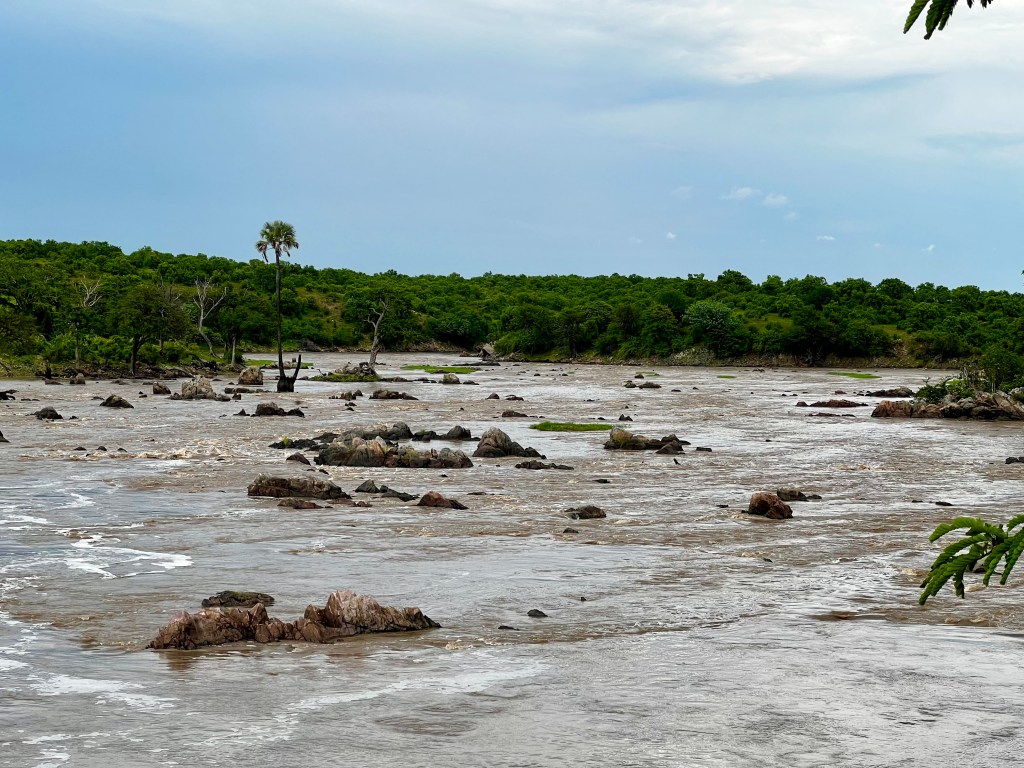
This is a wonderful sight, not least in light of the problems that have besieged the greater Ruaha basin freshwater flow. When we last visited (late December 2016) we found the river almost completely dry – just with the smallest of trickles. This was the result of poor rainfall that year / climate change generally but also the unrestricted (unsustainable) use of water by rice farmers upstream. 2020 saw very good rains, with the river flowing again and filling marshes and wetlands. And here we are again – 2023 and in full flood.
Checking in at the gate we again have a hiccup with the foreign reg plates and calls to be made to IT. Could do without the delay but I’m secretly wishing for another work-around a la Kitulo for a reprieve from the daily $150 fee but no such luck….my invoice is printed out with the full fee. And now to pay – no internet / reception so the card machines are down and they cannot accept cash – so am told to go on in anyway and pay at the airfield. (In the end airfield / HQ have no reception either so we end up paying them in cash US$ anyway).
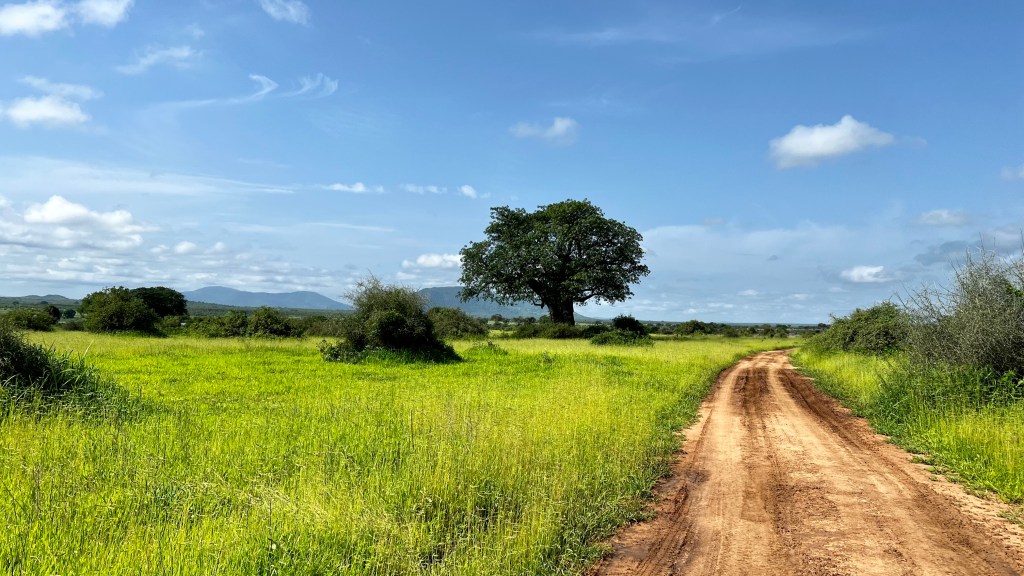
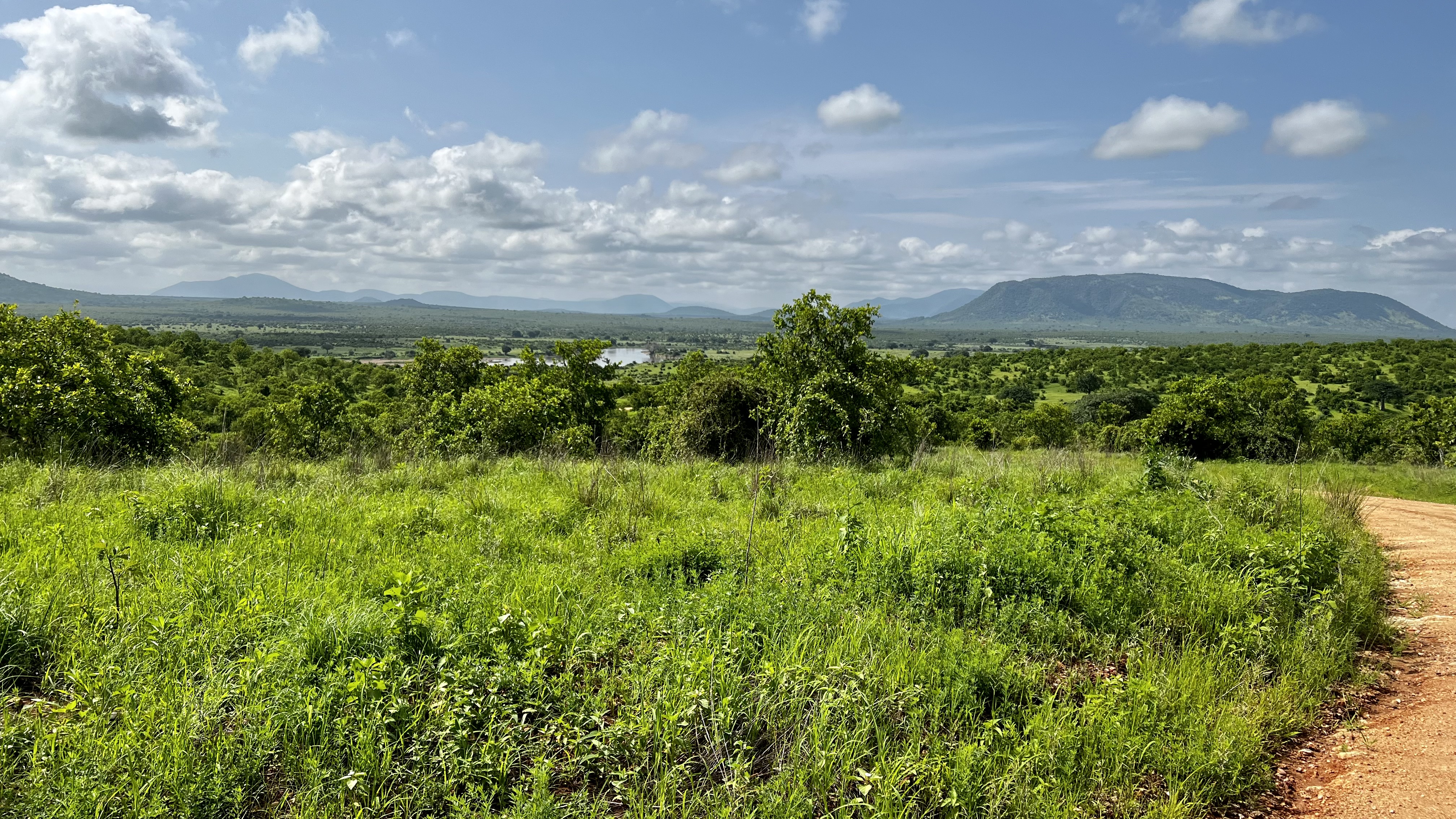
So on into the park – it is intensely green and so so lush, with tall grasses with 4 pointed seed heads, other grasses with purple / magenta tops and just so much growth everywhere. Am now a bit grass obsessed post Kitulo:
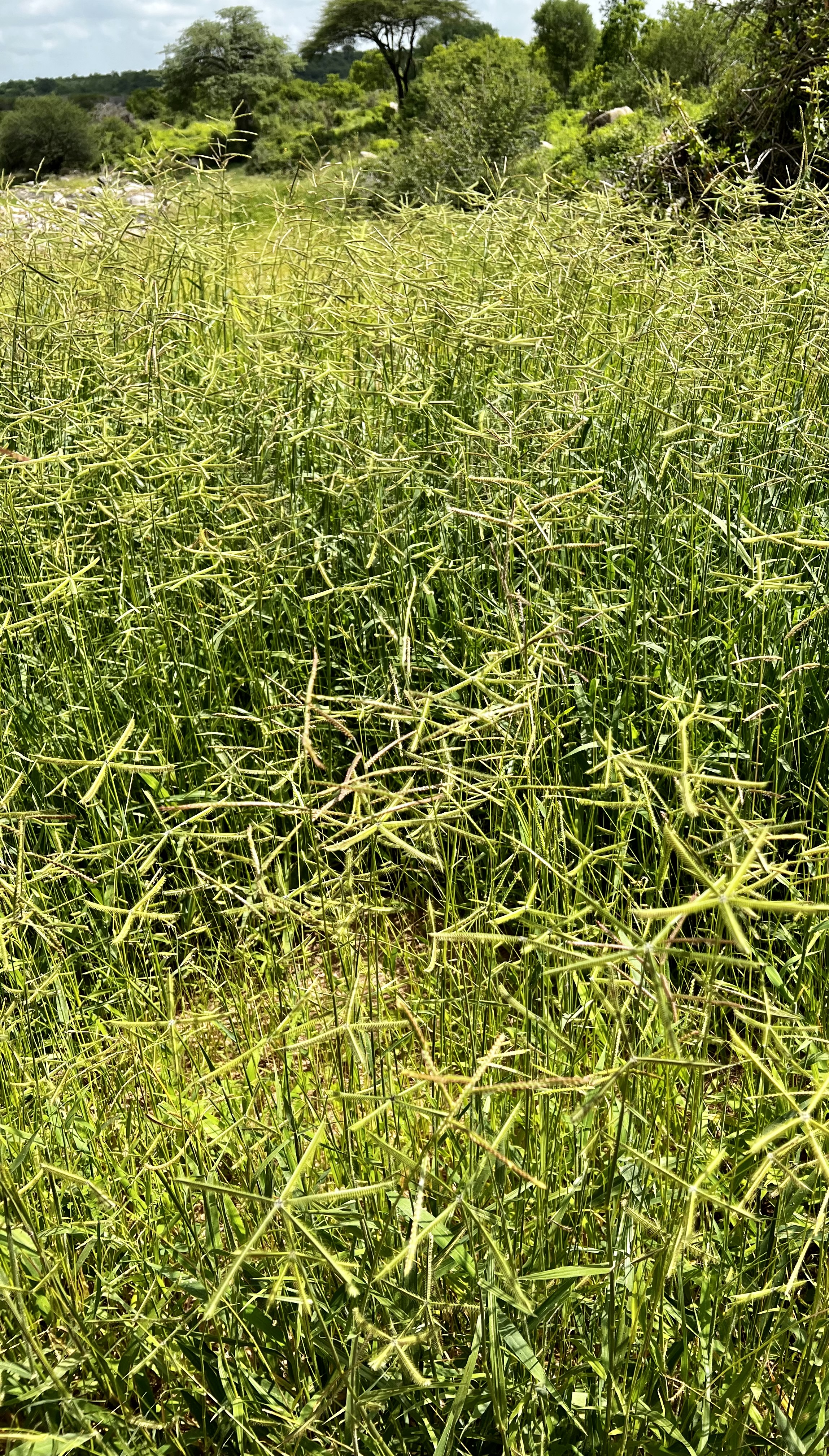
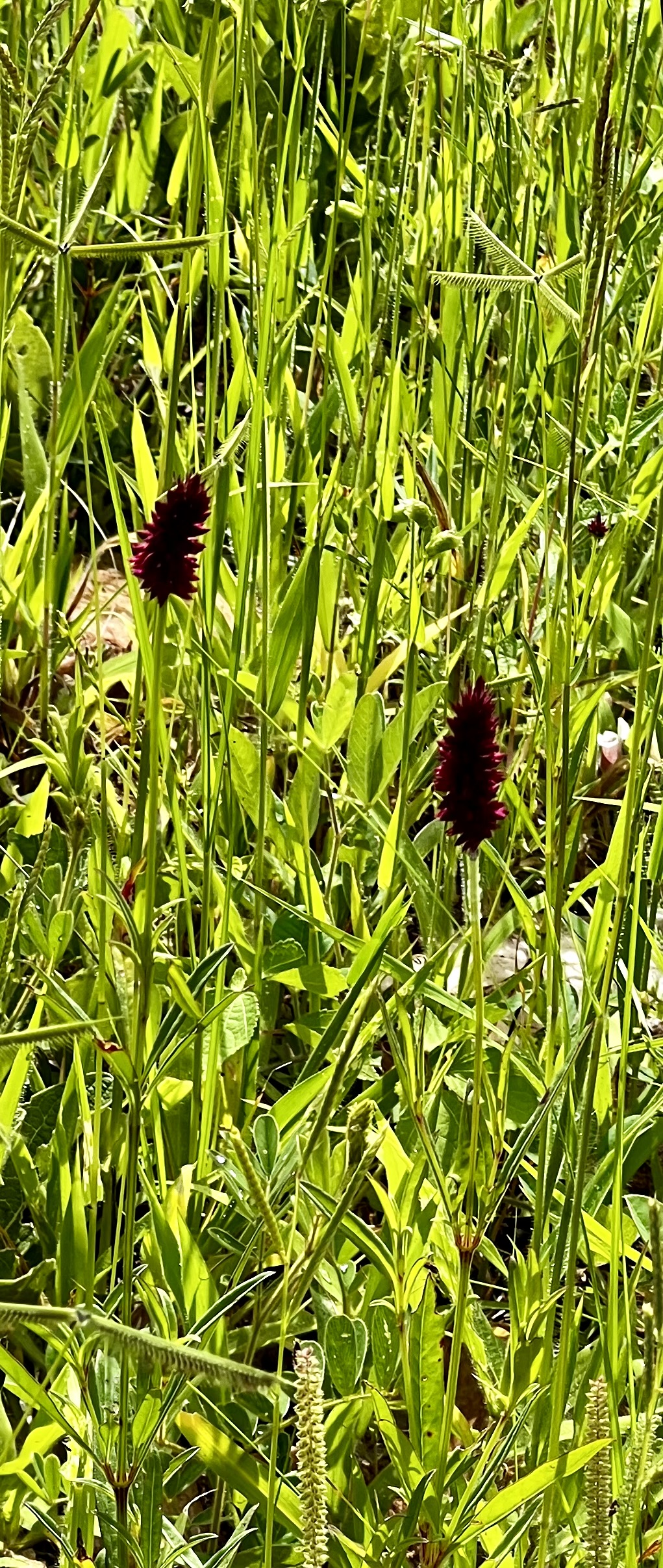
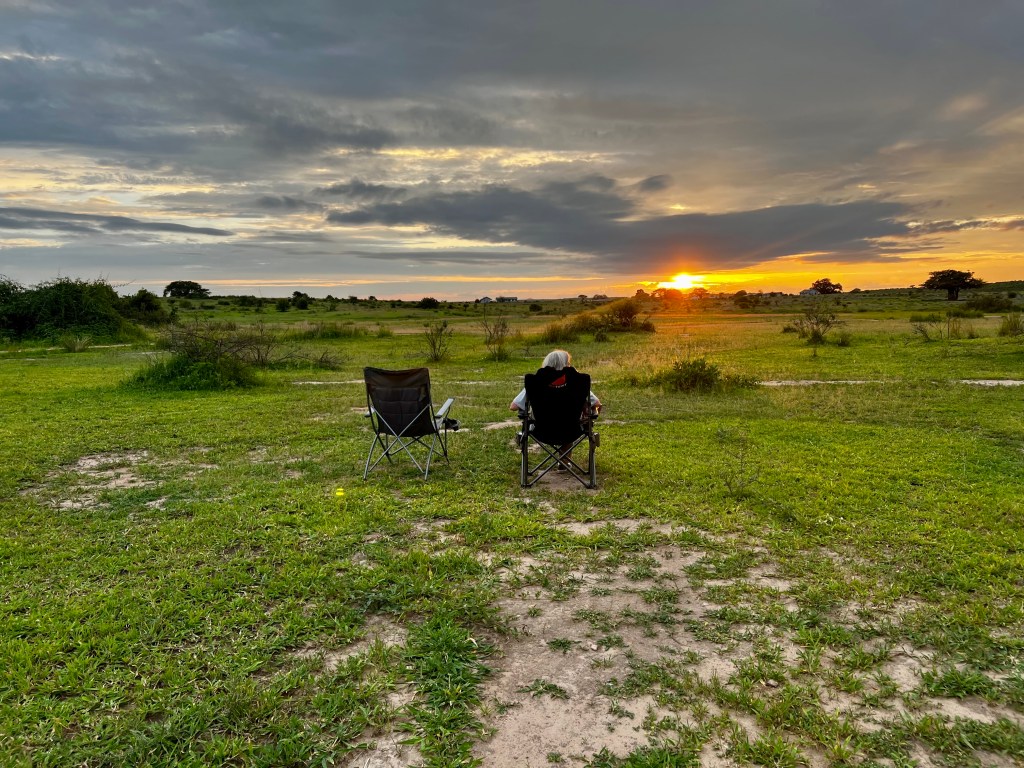
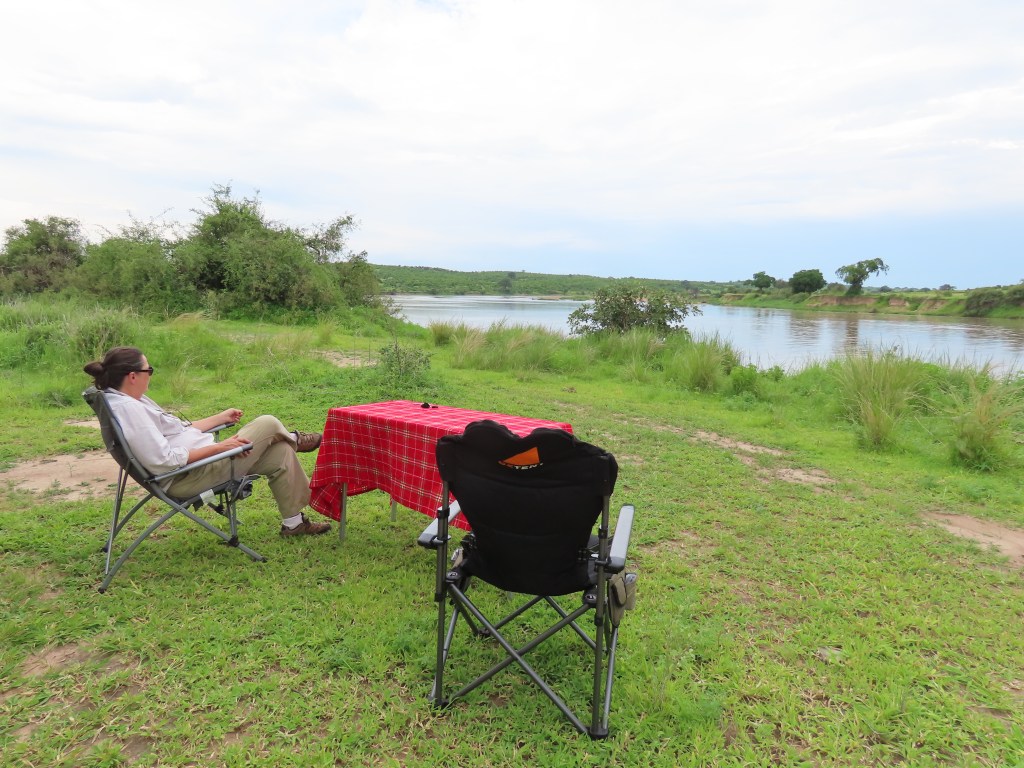
There are a number of public campsites in Ruaha – two of which are on the river. The first one, Kiboko, has two large “conference” bandas (basically one big dining / meeting room) that look fairly newly built (although that can be hard to tell, and they clearly haven’t been used in a while), as well as ablutions. The sites look a bit overgrown but there are good river views. We opt for the second campsite along the river, Tembe, preferring the more open aspects (with a plain behind) and wide river views. Sunsets are spectacular.
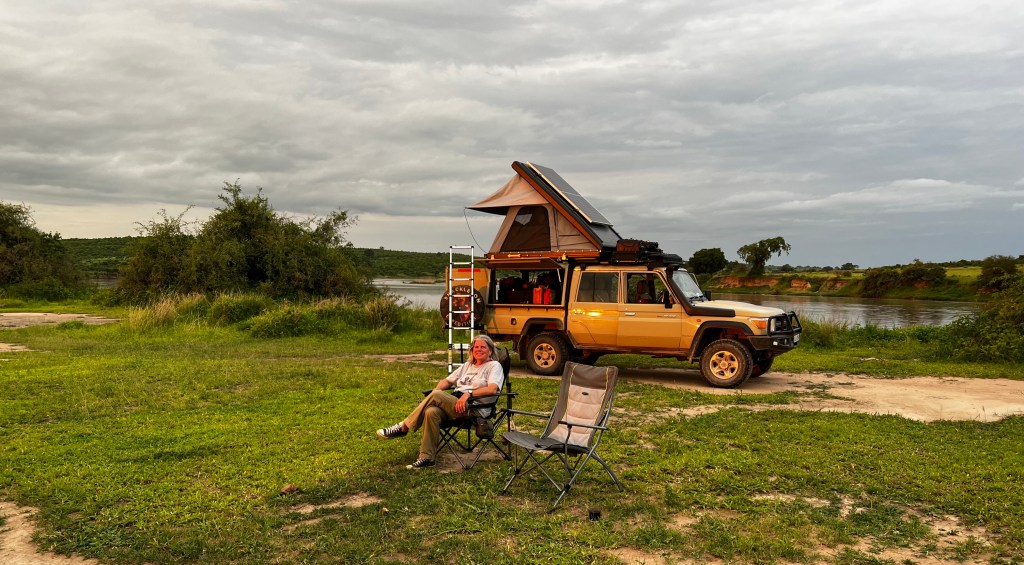
The ablutions have been upgraded since we were last here , but already things are starting to deteriorate. The workmanship is shoddy and the shiny white tiles (really?) hard to keep clean and death trap slippery. Like in SA you wonder who got the tender and who checked it was fit for purpose. There is a shower head but it doesn’t work (its one like in a bath where you have to shift a lever to direct the water to the shower head or tap. But is all scaled up). So in the end I clean the floor and sit on that under the tap. Its fine, but unnecessary. We see a lot of this – money is spent but no maintenance is done and so it all just slowly falls apart, and cleaning is cursory at best, and the sink outlet leaks water everywhere….I resolve to go and say my bit but I don’t in the end. Just don’t feel like the confrontation.
We spend our time here exploring the park and revelling in all the green. We take drives on up the Ruaha River. Up to the Mwagusi river – smaller and sandier but flowing:
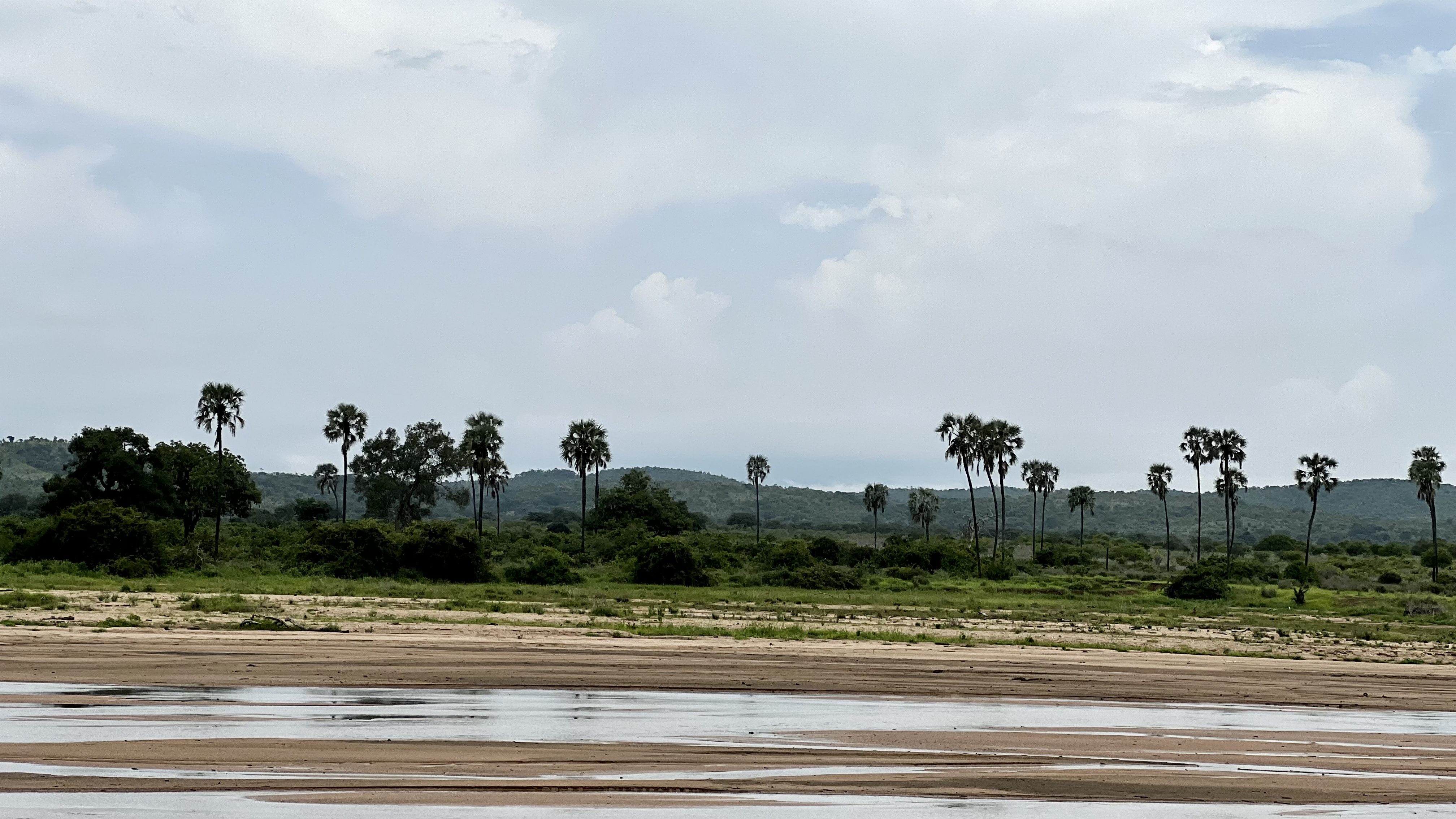
We also explore the routes around Kimilamatonge Hill and Mwayiui Hill (great to get some height) and also around Mdonya Old River Camp. I think we saw one other game drive vehicle the whole time we were in Ruaha. We tried to get out to Makindi Spring but the tracks got really faint and muddy and the tsetse were baaaaad so we turned back. Worth noting that we only see tsetse around that area – at camp there are none for which I am very very grateful. I react badly to these bites (although on this trip it turns out that I tolerate them better).
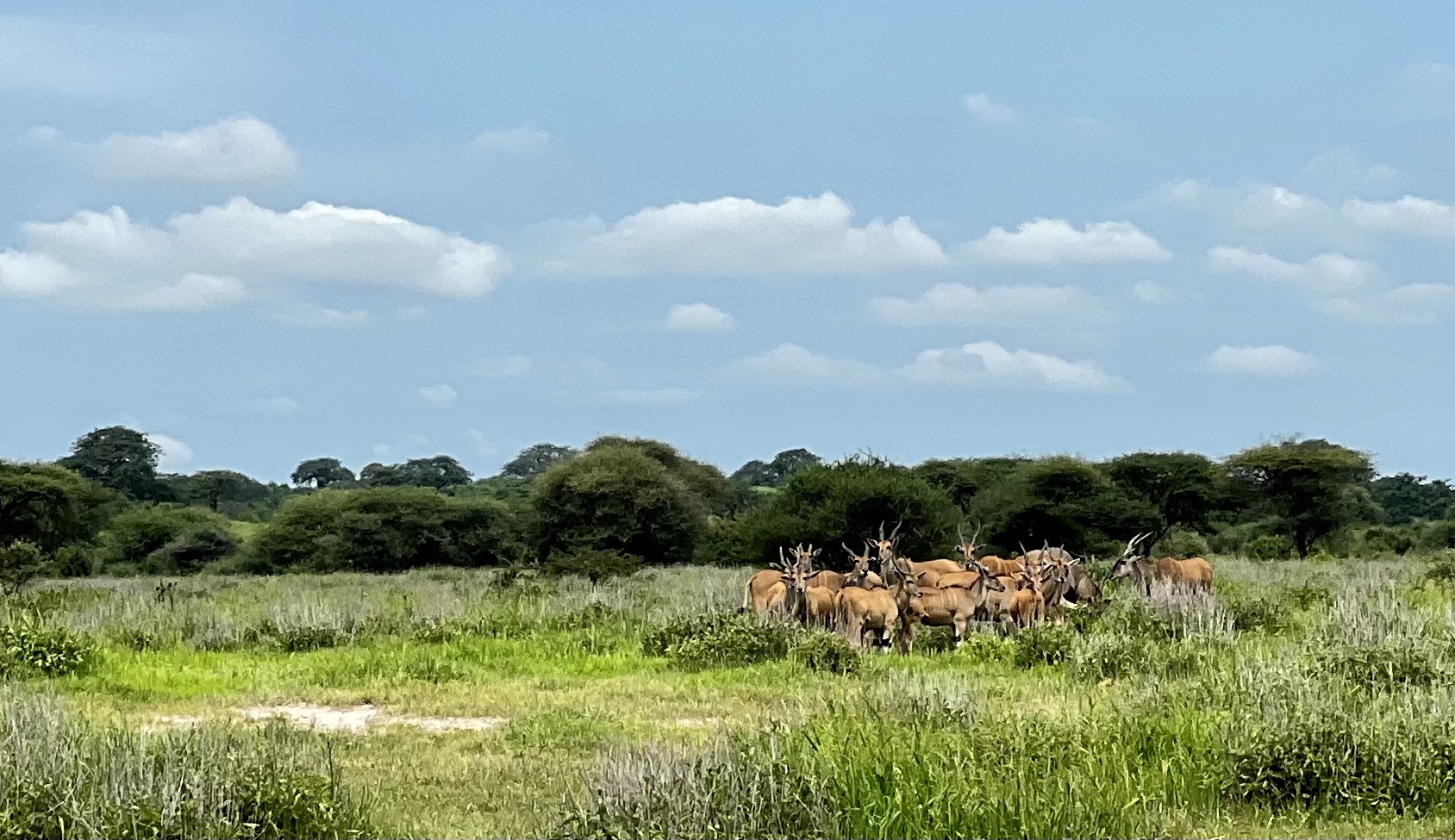
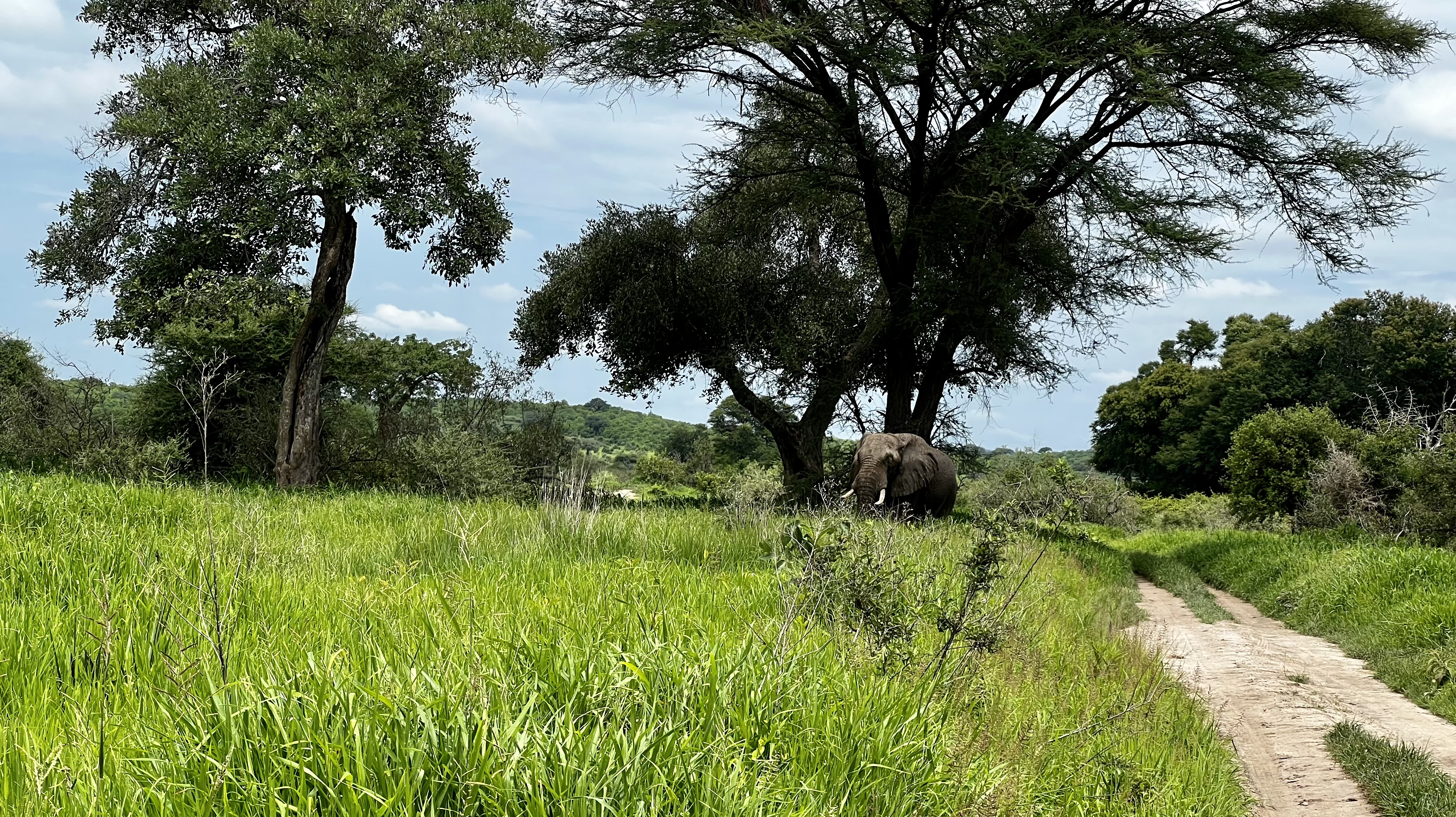
We saw loads of game: usual impala, kudu, lots of elephant and giraffe, eland etc. But game aside the landscape with large baobabs dotted about is magnificent.
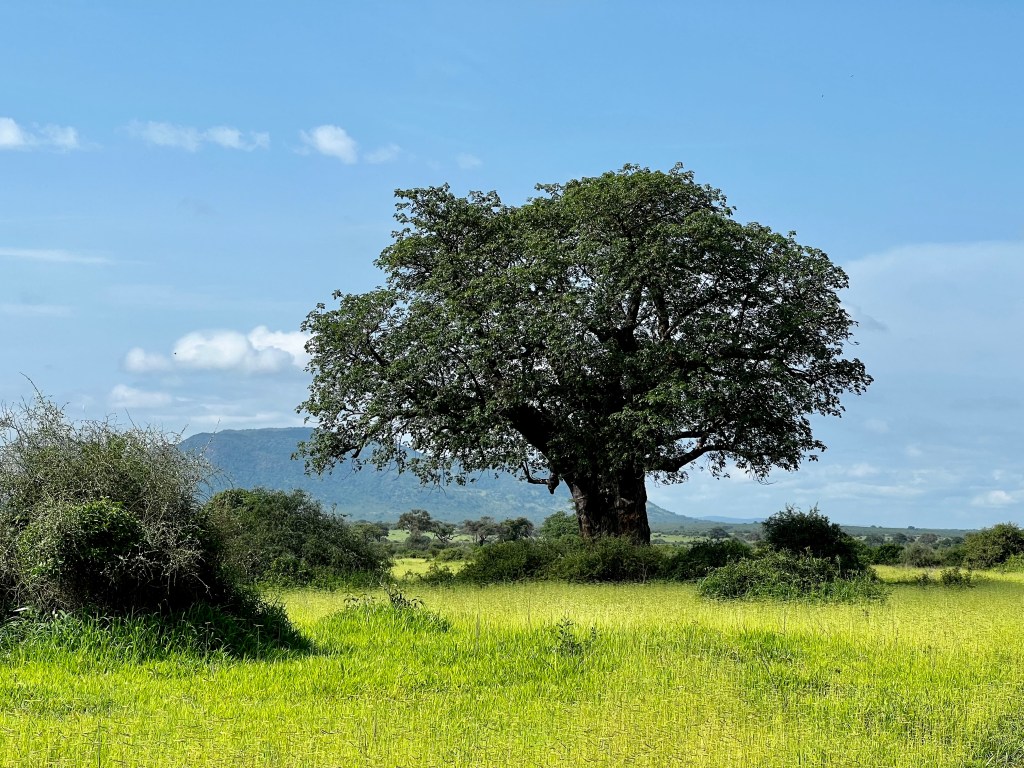
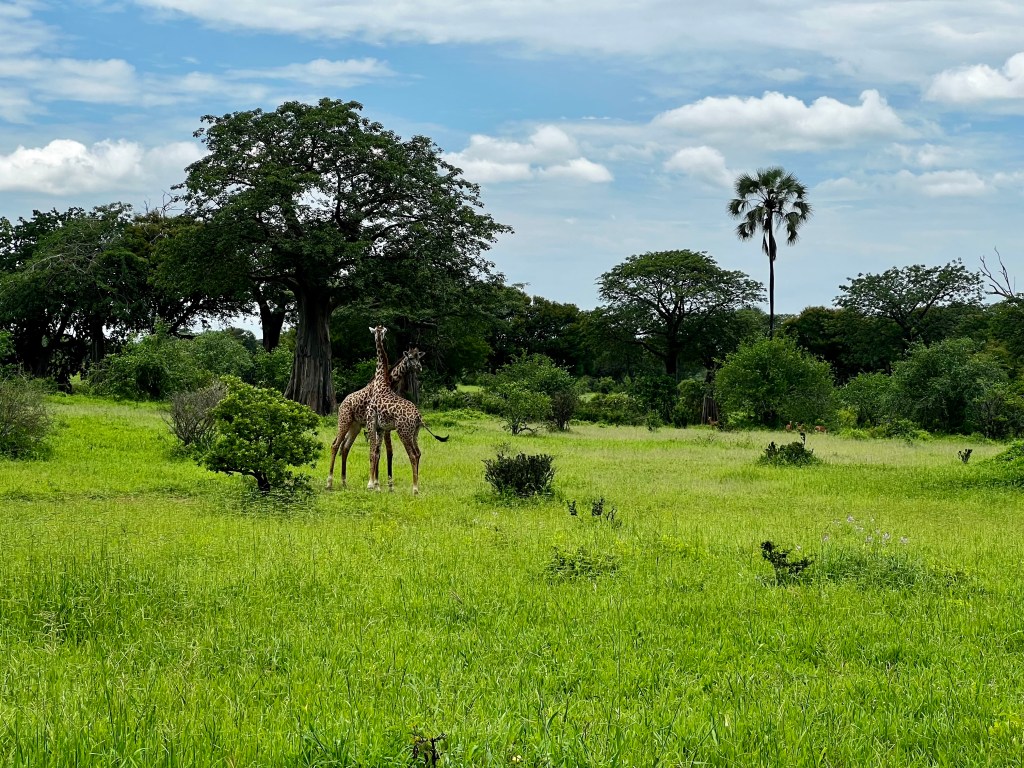
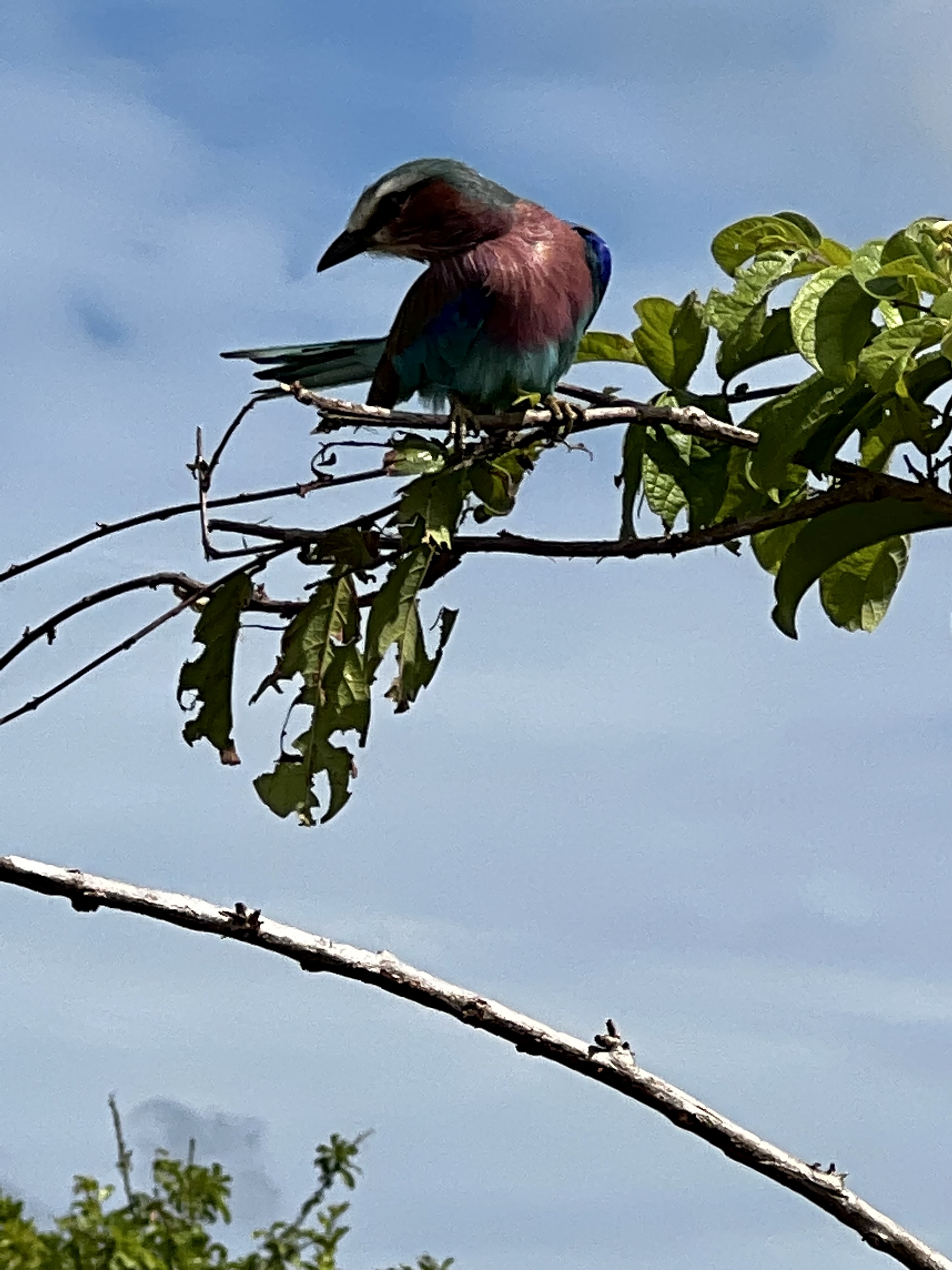
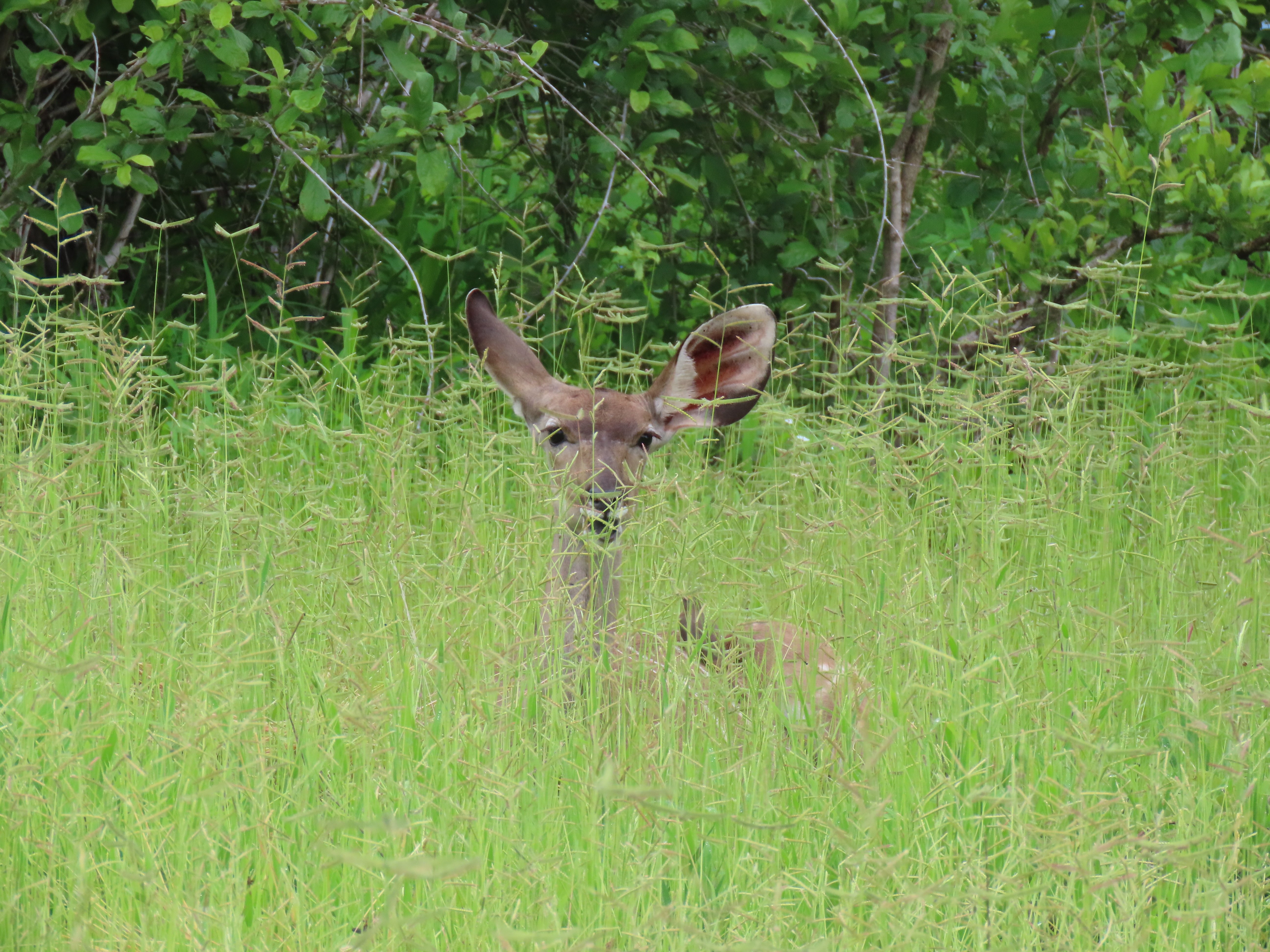
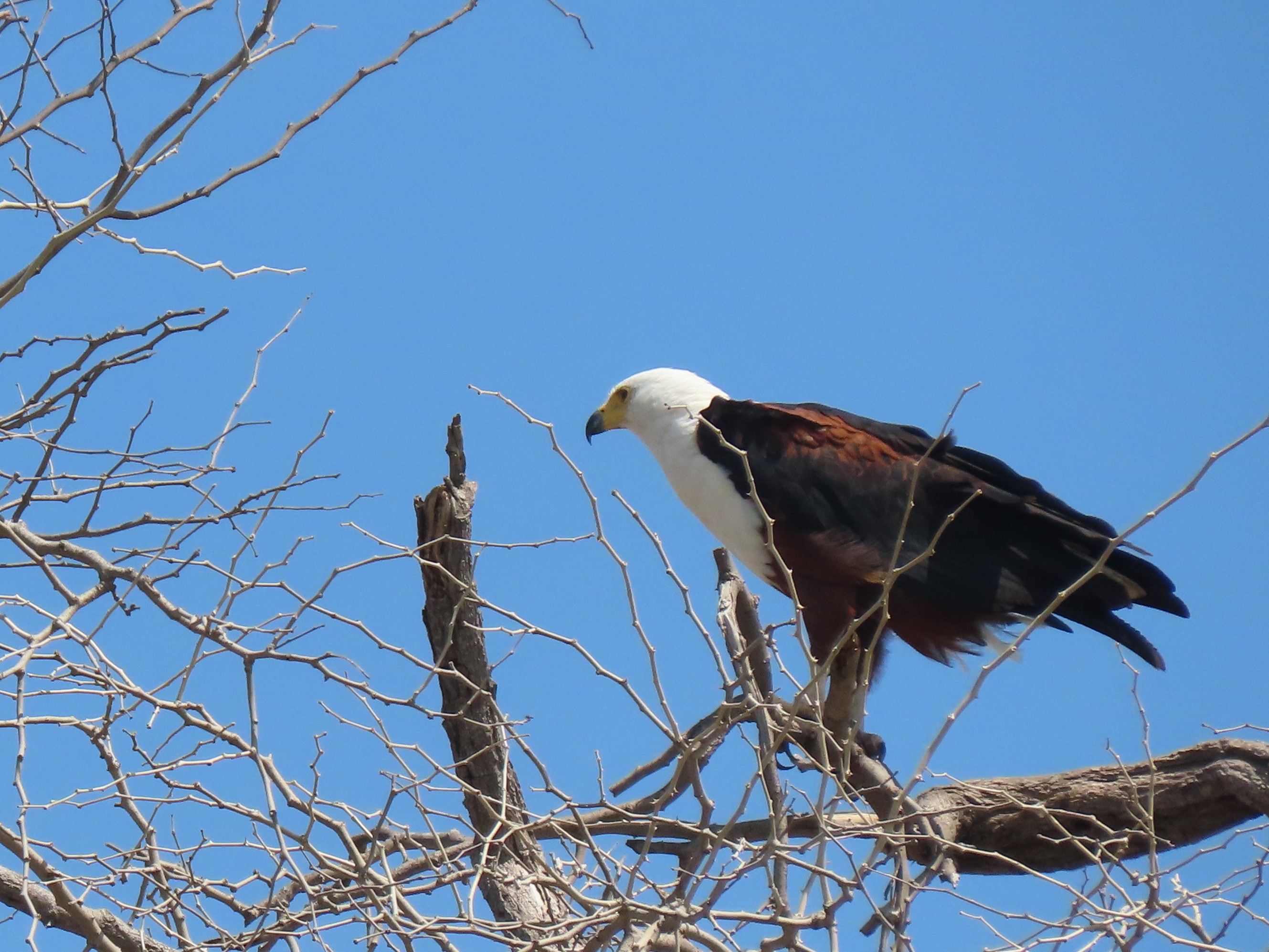
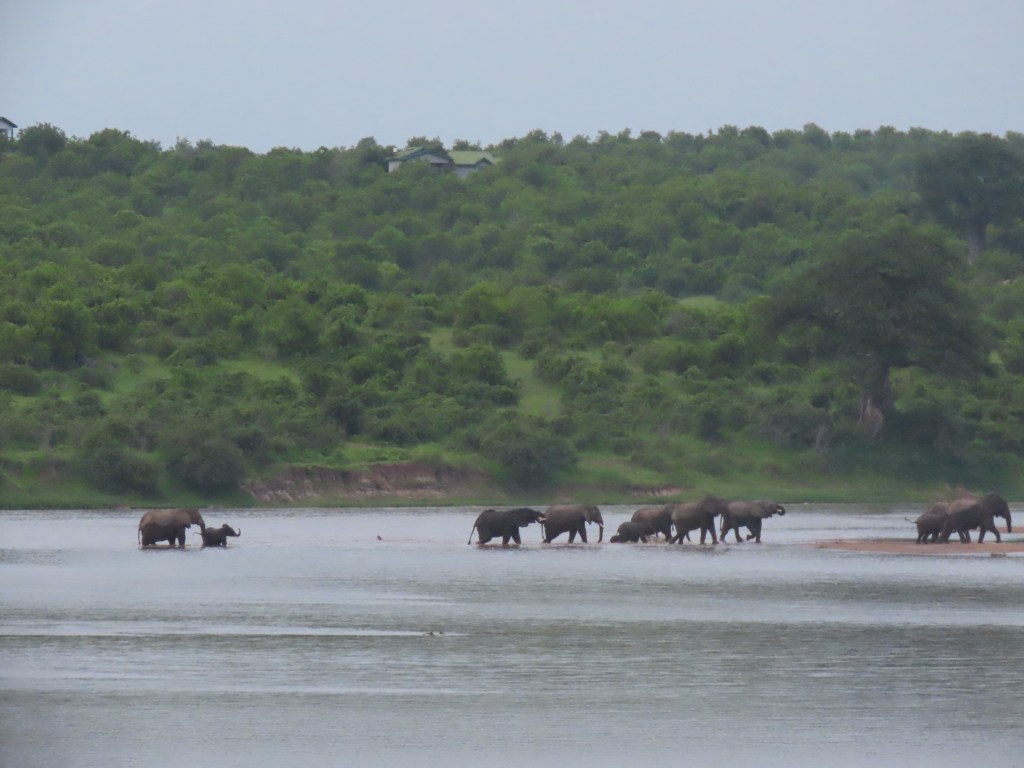
Time in camp spent watching the hippos slip streaming in the river and the elephants crossing, staying downstream of the babies in the deep bits.
At night we are visited by a genet. It waits for the bugs at the decoy light (we set up a lamp some paces away from us to attract the insects – it is very buggy! – and the genet knows this trick, catching the bigger bugs for a quick snack. We hear lion and hyena every evening and early one morning the lions set up a roaring so loud you can almost feel the rumble in your ribcage. It’s very thrilling – it feels like that they are right on top of us – we scan the torch from the safety of our roof top tent but it’s not a spot so the beam doesn’t reach far and we can’t see them. All need to get up for a pee disappears instantly! By the time daylight comes they have moved on.
Camp visitors are not restricted to genets and lion. We get elephant too who come and graze very close to us. Usually chilled we get one who isn’t happy to see us there. I am still up in the tent but Deb is out and about and hops into Shackleton after this stare down:
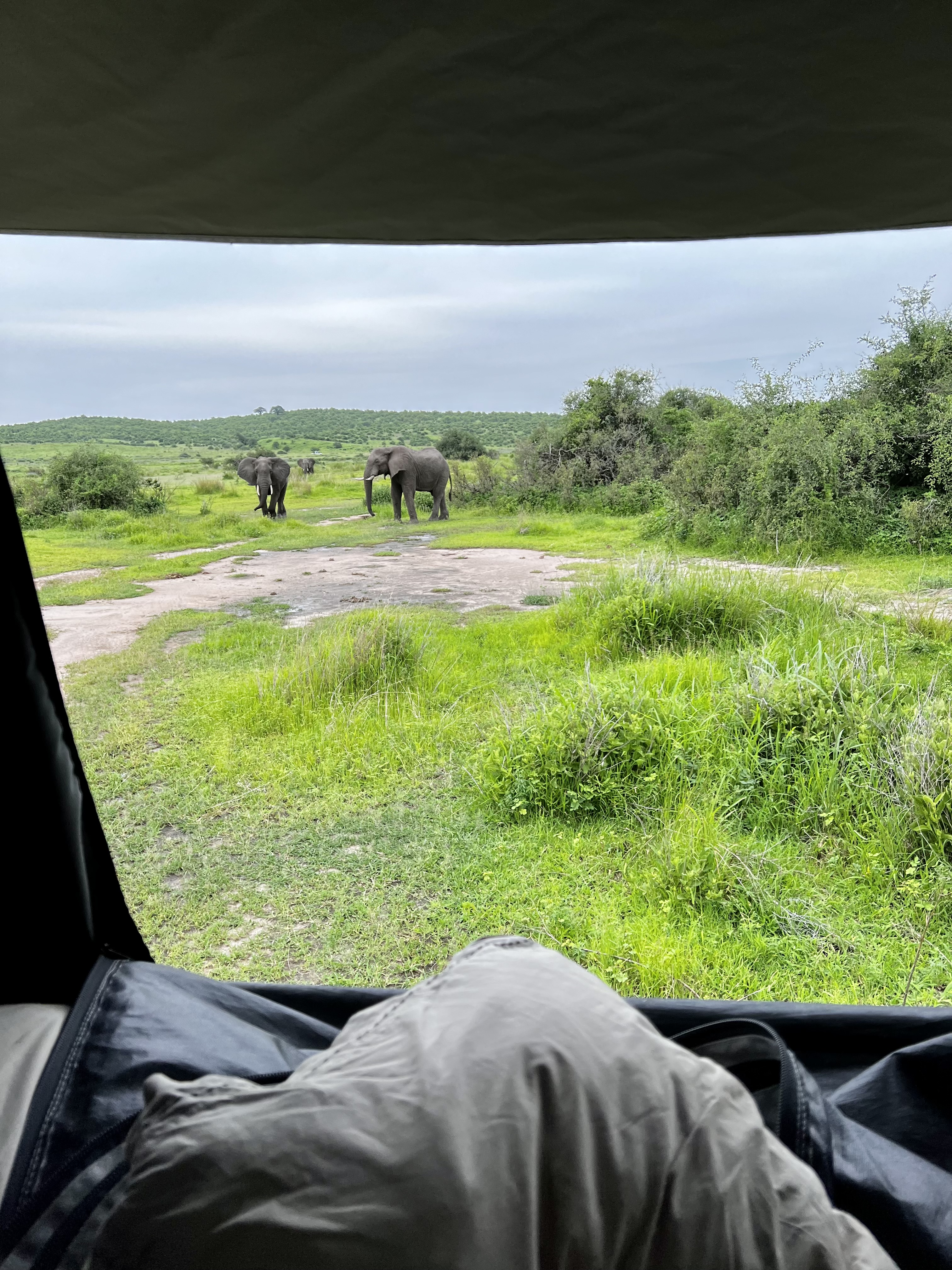
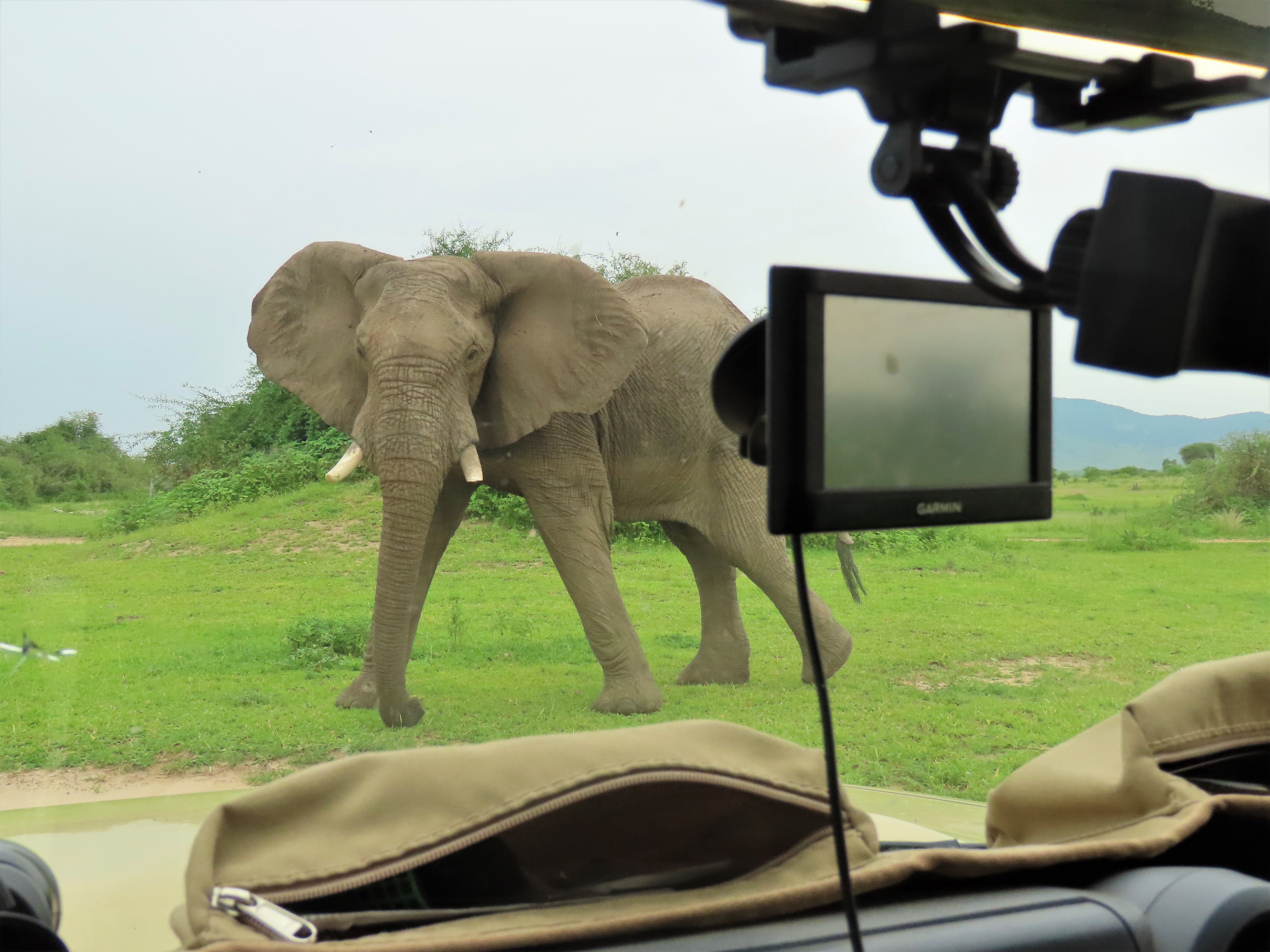
Generally we are lucky with the weather – there are showers but they tend to be late at night, although there are some daytime downpours, but the awning copes and we retreat under it with our books (the awning is designed for sun but it does provide some shelter so long as not too torrential nor too windy).
Leaving Ruaha the original plan was to head to Dodoma, but as we reach Iringa by early afternoon we ask ourselves why? Whose schedule are we trying to follow? And decide rather to overnight in Iringa. We pop in at Neema crafts for a quick lunch (nachos).
And then overnight at Mama Iringa’s. The main focus at Mama Iringa’s is the restaurant – excellent Italian fare – we had eaten here before and while we knew they had rooms, had found out that they now offer camping. And not just the informal carpark(*) type – they are setting up to provide formal campsite, and have now a separate dedicated area and ablutions. The coffee here is also excellent with Mama Iringa herself a tour-de-force. We spent a very pleasant afternoon in the garden, watching the sunbirds go mad for the flowers on the bottlebrush trees, listening to the sounds of suburban Iringa filtering up the valley– chatter of schoolkids wandering home, odd buzz of a boda boda delivery, chickens, cockerels and dogs…and finally the call to prayer – this particular muezzin with the most beautiful lyrical tone. It’s a sound I love.
(*) carpark camping is a term overlanders use to explain camping at an accommodation establishment (hotel, lodge) that does not have a formal campsite but which does allow you to informally camp (in their garden or often just in the carpark), usually opening up a room where you can use the bathroom / shower. It is formal in the sense that it is paid for and agreed. This is different from ‘wild’ camping where you just camp in the middle of nowhere (usually for free and without permission – it’s a controversial subject for another day).
The restaurant is closed (it’s a Monday) but there are happy to open up and prepare us something simple. Try the penne with salsiccia.

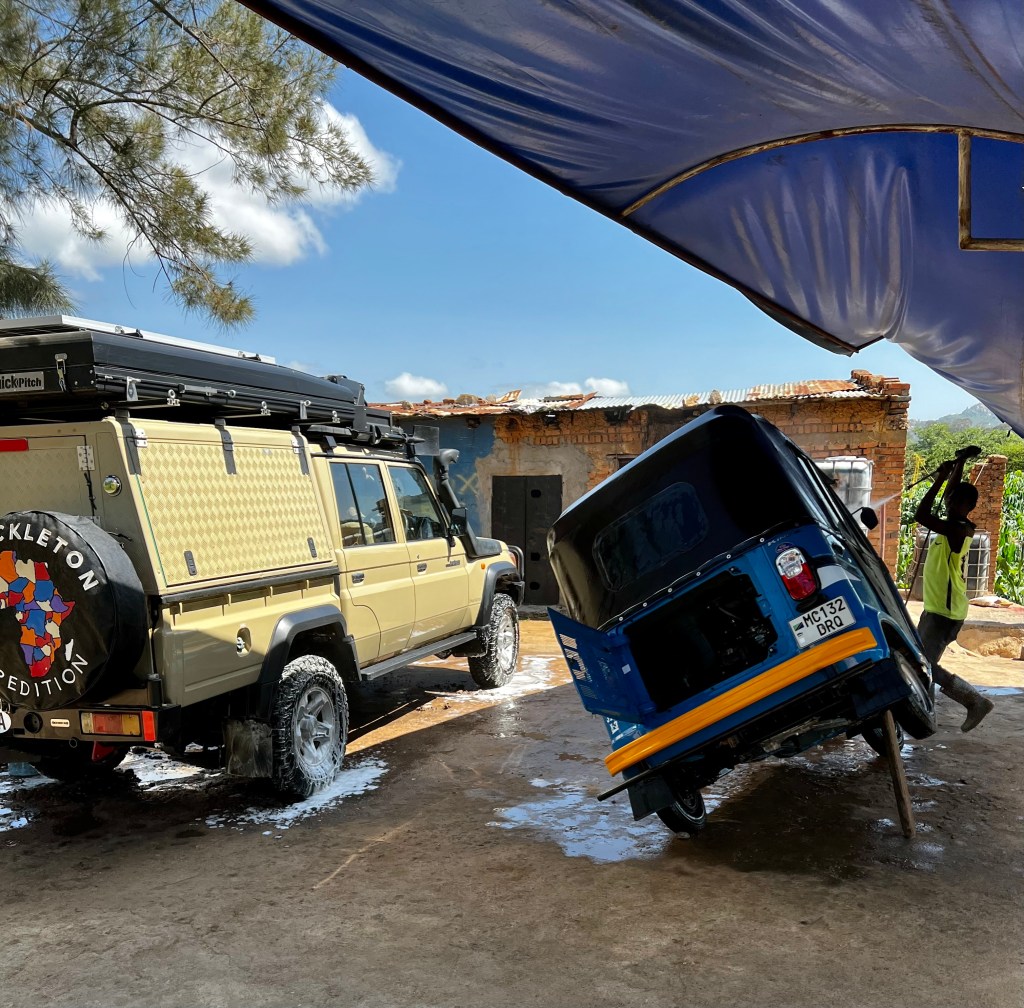
Before we leave Iringa we get the car cleaned and admire these nifty wooden stopes that all the tuk tuks carry in lieu of a jack for changing types etc.:
Next stop Dodoma
NOTES FOR TRAVELLERS
Kisolanza – a must if you are travelling up this way, good camping sure, but dinner excellent and a chance to stock up on fresh produce inc. eggs and meat. We braaied the lamb chops in Ruaha – excellent quality. The water here is potable (from a borehole) and so a good chance to fill water tanks. Camping is $10 ppn, 3 course meal $15 per person
Iringa market – great fresh veg. Shops around the square don’t look like much but peek inside – all expat needs catered for.
Ruaha – remote and wonderful. TANAPA fees are a killer with the vehicle fee, but it’s a matter of choice / priority. I think it is worth it – cut elsewhere or stay for a shorter time. Park fees $30 ppd, camping $30 ppn, vehicle $150 per day. Then VAT at 18% on top of all of that.
Neema’s Crafts – good for lunch. NGO run gift shop. They also have rooms and secure guarded and enclosed parking
Mama Iringa – great food (try that penne & salsiccia). Good ablutions. We were the only guests and snagged the best spot under a tree. The designated camping area for when there are lots of campers is on a level gravel area which is a bit bleak, but there are other places to sit and chill in the garden. Camping is $15 ppn.
 Bonnievale to Burton Fleming