14 – 19 February 2023
At Iringa the main road splits – the main TanZam highway heads off to the east towards Dar Es Salaam, and with it go many of the trucks. Heading straight north towards Dodoma sees lighter traffic (still many trucks though) and a good road. The earth gets redder and redder still there are baobabs everywhere.

Dodoma is the capital of Tanzania, it is also the only wine growing area in the country. What better reason then, to make The Hut of Wine and Cheese our destination for today. The owner, winemaker Atwitye Makweta has made it her mission to promote Tanzanian wines and hosts festivals and tastings for foreigners and locals alike. We find the place easily and check things out – they do offer camping but it is real carpark camping and I think you’d feel on display slap in the middle of things They also have a couple of self-catering units and we are shown one where we can park directly outside – it has a kitchenette, bathroom, bedroom and small enclosed back courtyard its very nice – we’ll take it.
We get our bags into the room and I leave Deb to go and find an ATM. I merrily reverse down the driveway and into the road and then THUD!
Oh no. My heart sinks. What have I hit? I pull forward a bit and get out. Oh dear. I have reversed smack into a yellow school bus (minibus). And broken their rear light. Sh&t!
The driver is standing there, holding out the piece of broken light – do I see? Yes, I see. Sorry.
The bus is full of 7&8 year olds. They are delighted with developments. This is exciting – a crash! And with a Wazungu nogal. The noise and energy levels in the bus crank up a notch or five – all chattering away, making banging re-enactment noises and craning their necks though the windows to get a better look. It’s the best fun they’ve had all day.
What to do? I apologise. In English. (we’ve been practicing from the Swahili phrasebook but haven’t got to the sorry-for-reversing-into-your-bus bit). The driver just shakes his head and points at the glass. At this point the chap from the Hut of Wine and Cheese, who showed us around, comes out to see what is going on. I ask him to translate for me and I can see the bus driver breathe a sigh of relief. Once it’s clear that I am going to make good on the cost of repairs, we all relax and start talking numbers. Next thing the owner of the Hut of W&C barges across, robes flowing, I’m your host for tonight, she nods at me. And what were you thinking – this is directed at the bus driver. She then continues to loudly berate him: Why are you parked here? Didn’t you see what was happening? You should have hooted! This is your fault too! – now the bus driver is apologising and I’m looking at my feet. Cringing. This is, of course, all a face saving exercise for my benefit. No sooner has she delivered the tirade and she flounces back inside.
Anyway, it all ends amicably and reparations are agreed and paid.
I really am not covering myself in glory today. Expensive too (forgot to say I picked up a speeding fine on the way up from Iringa…).
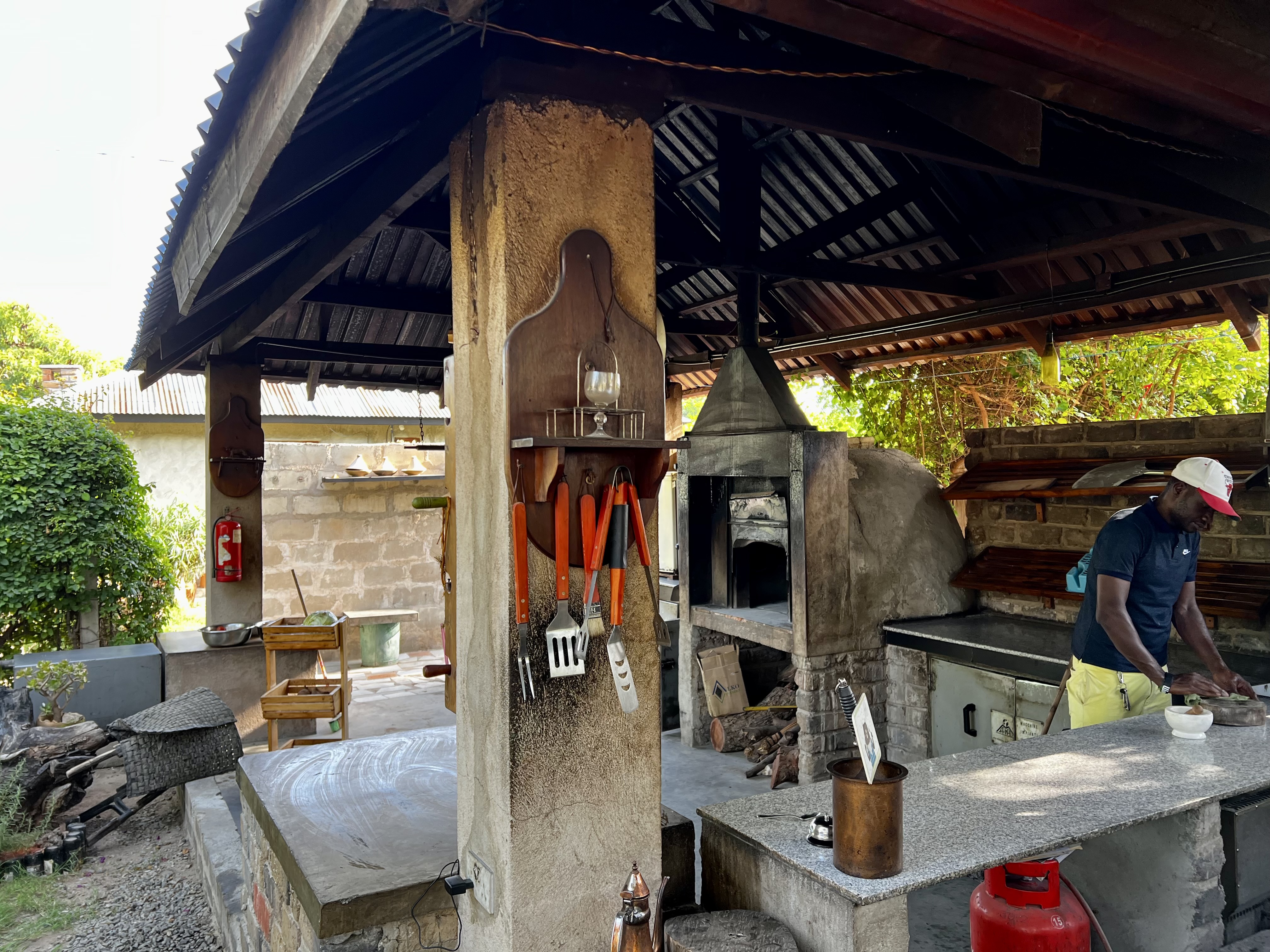
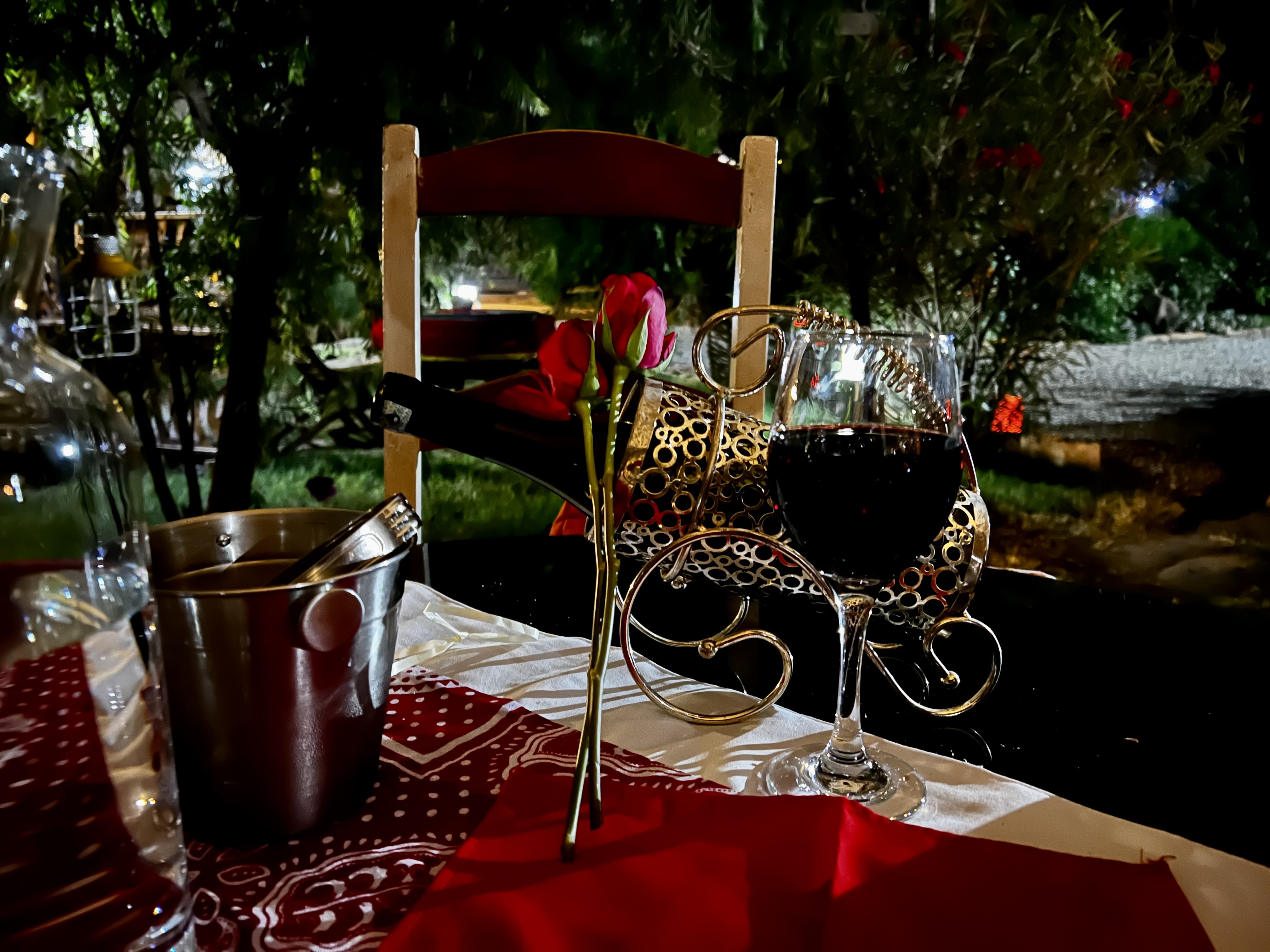
A hot shower and clean clothes later and things are looking up. We ask about supper and are reminded that tonight is a busy night – of course – its Valentine’s Day and I notice all the decorations up in the garden and restaurant.
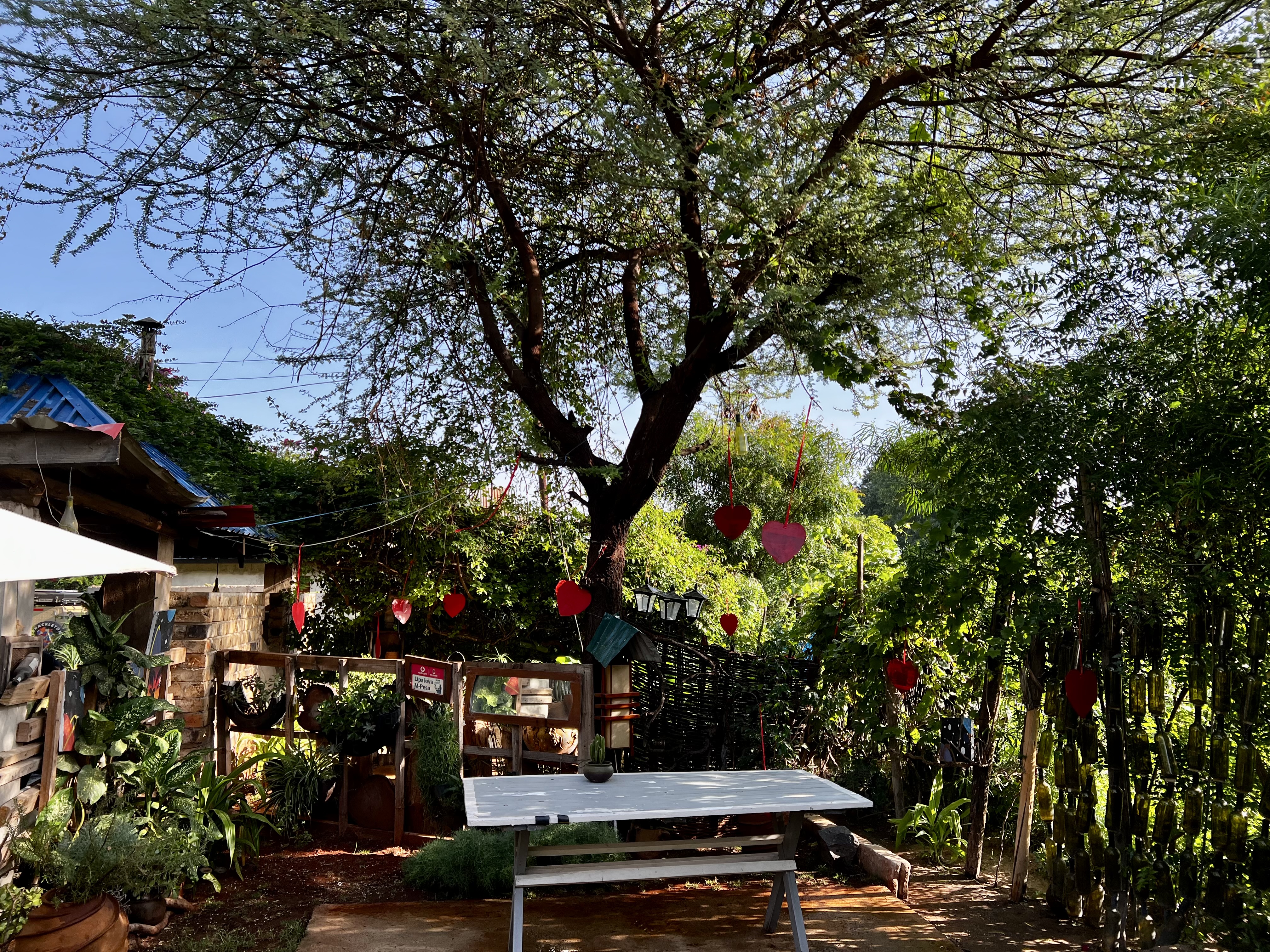
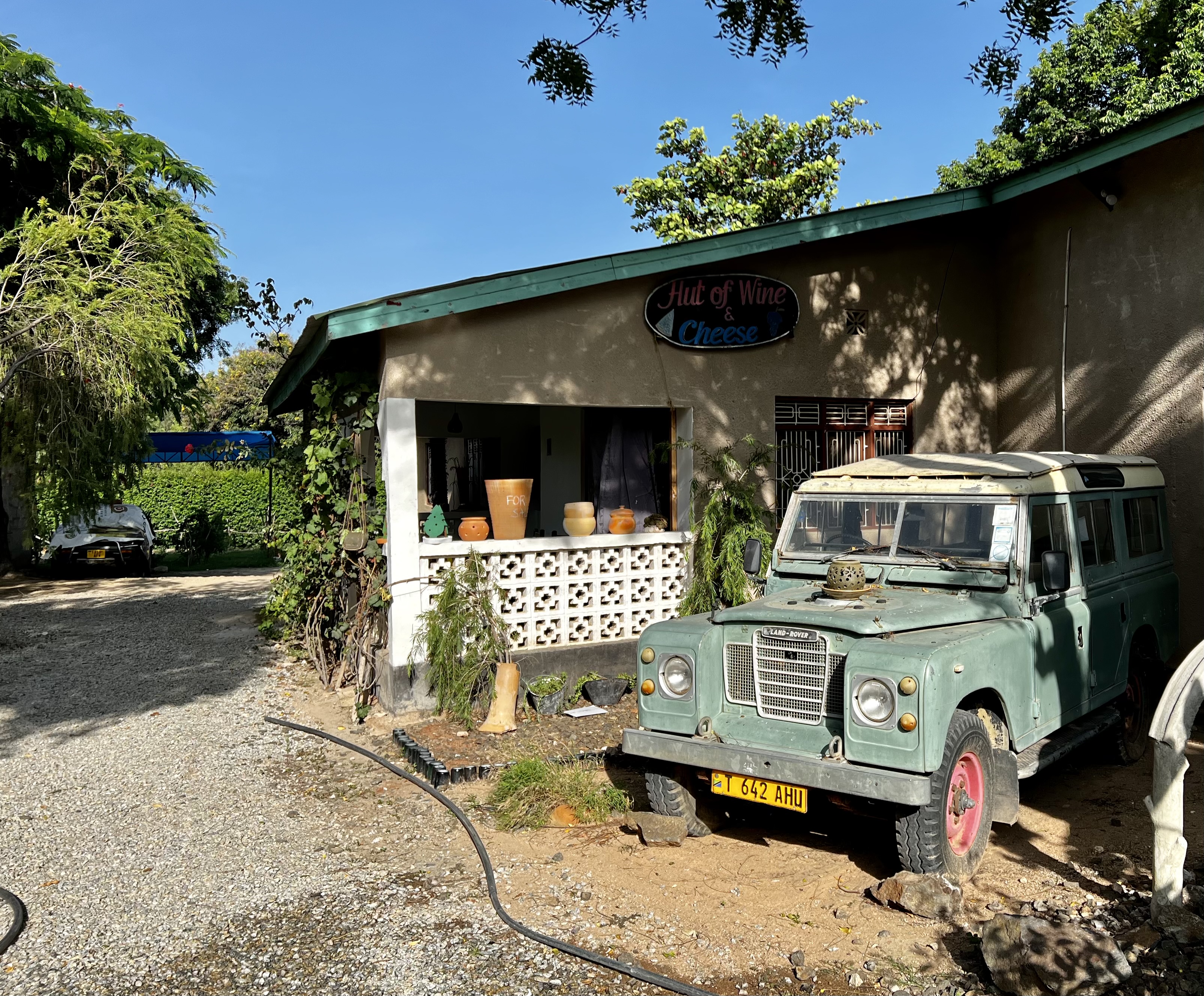
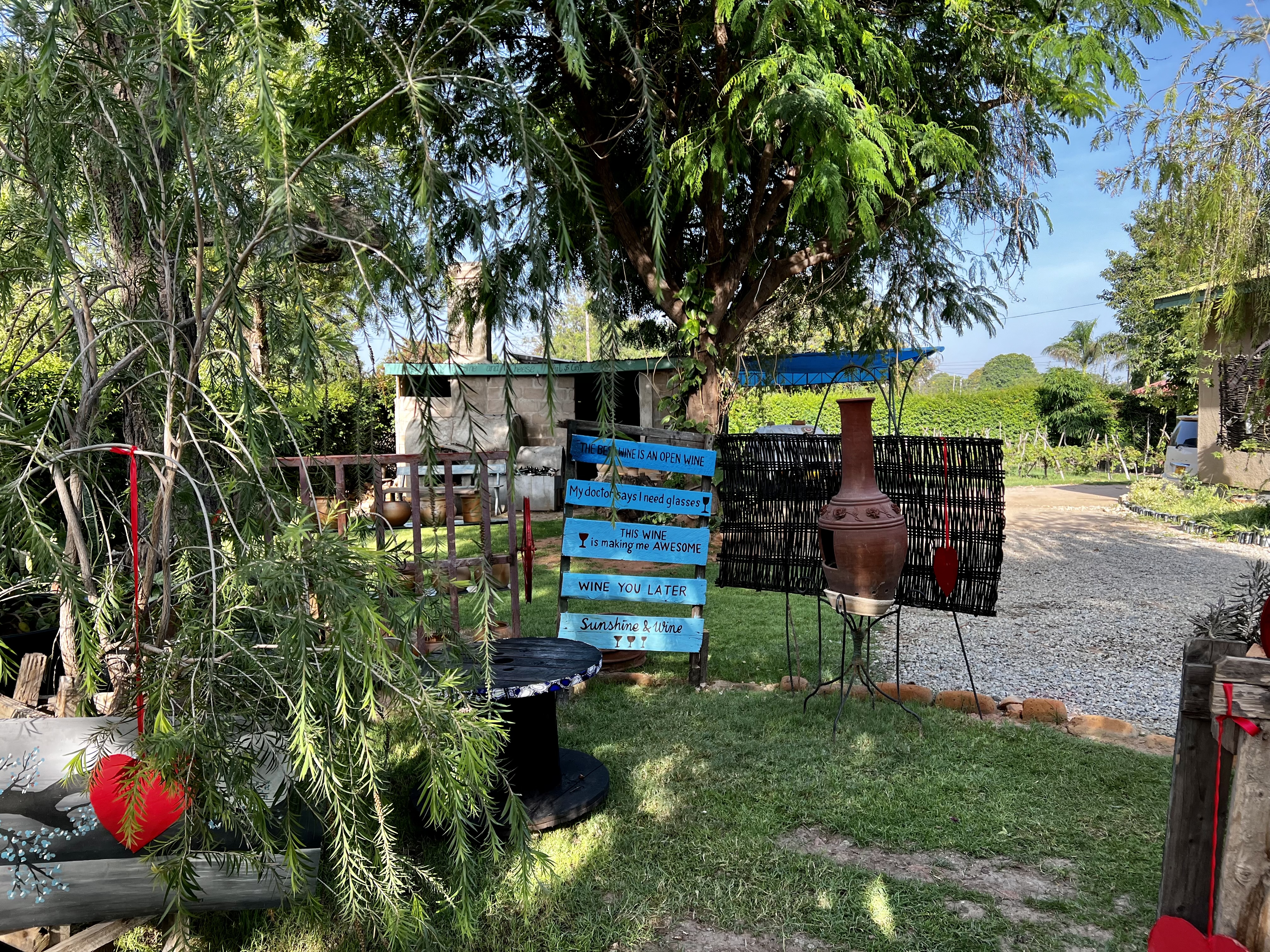
And it is a busy night indeed. A couple of tables of expats and lots of local couples, dressed up for romancin’. The bar next door is busy too and the live music is going and it’s all pretty festive. I am so glad we are not camping (we would have been on top of the band).
We have good pizza for supper (they have a pizza oven) and a bottle of red based on their recommendation: Presidential Reserve – it turns out to be a very drinkable red blend. And the Valentine’s setting makes it worth it:
Our cottage is very quiet and we both sleep soundly, the crisp sheets a novelty.
Next morning we say our goodbyes – the staff are just getting going – the festivities went on quite late we gather. Out of Dodoma, we keep heading north on good roads with easy driving. As we head north the countryside gets drier and drier and the visibility isn’t great – all hazy and dusty with dust devils spinning across the landscape.
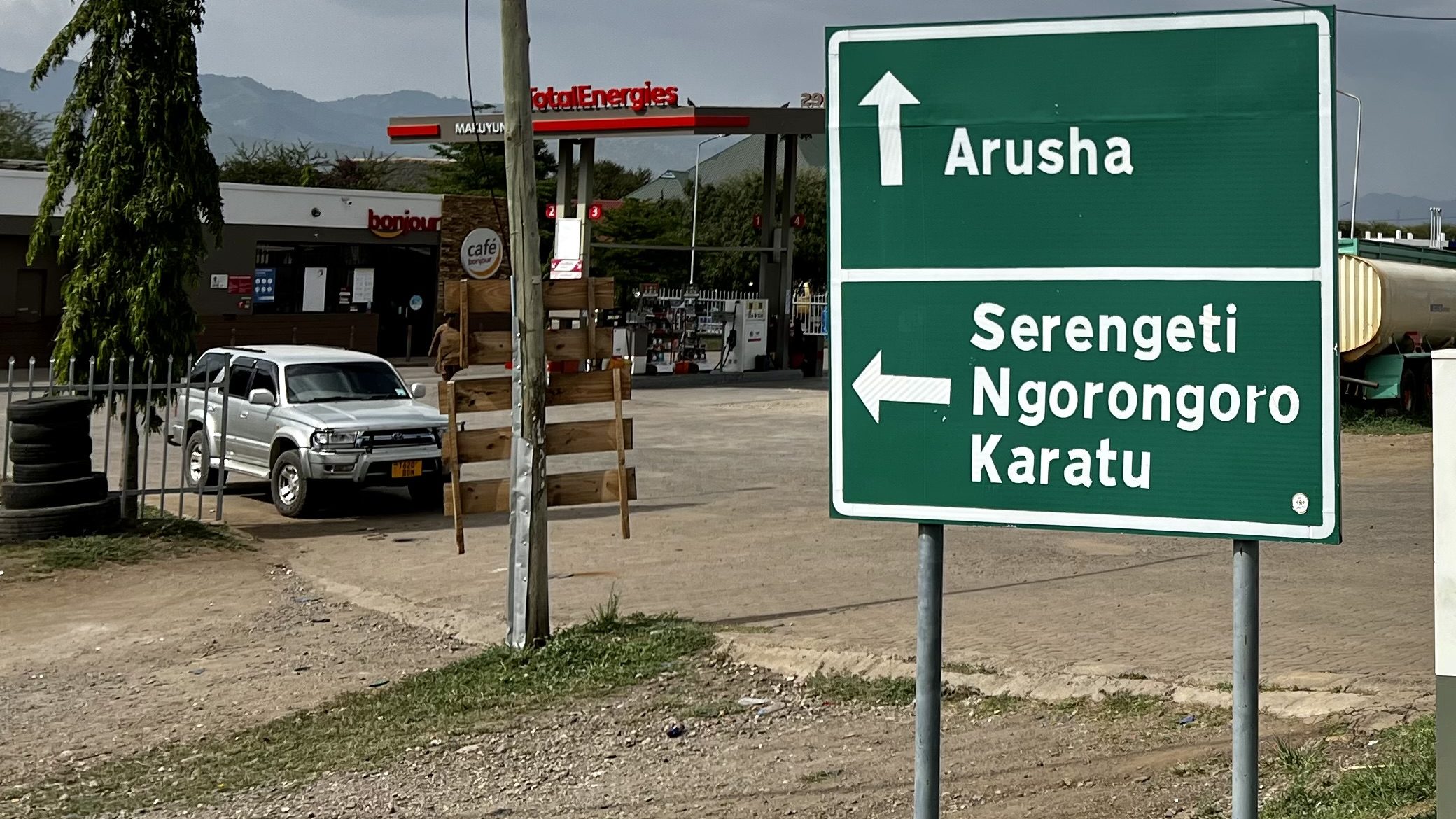
We are headed up to the delights of the northern safari circuit. Now is not a bad time for the Serengeti as the wildebeest will have dropped their young and should be gathering on the southern plains, but Kenya is our focus, so no Serengeti for on this leg (we have the Maasai Mara to look forward to, and it is part of the same ecosystem). We do decide to take in at least one park, so we have a day trip to Lake Manyara in the plan. So north we go – Kondoa – Babati – turn off to at the Serengeti sign and make our way to the village of Mto Wa Mbu (trans. River of Mosquitoes) – the jump off point for Lake Manyara
The Serengeti sign still gives me a thrill – am not sure why – it’s hard to explain. Maybe it is something about a place so iconic, a word that single-mindedly encapsulates the idea of great plains, of true safari… all reduced to a standardised green and white sign. It’s so unexpected somehow.
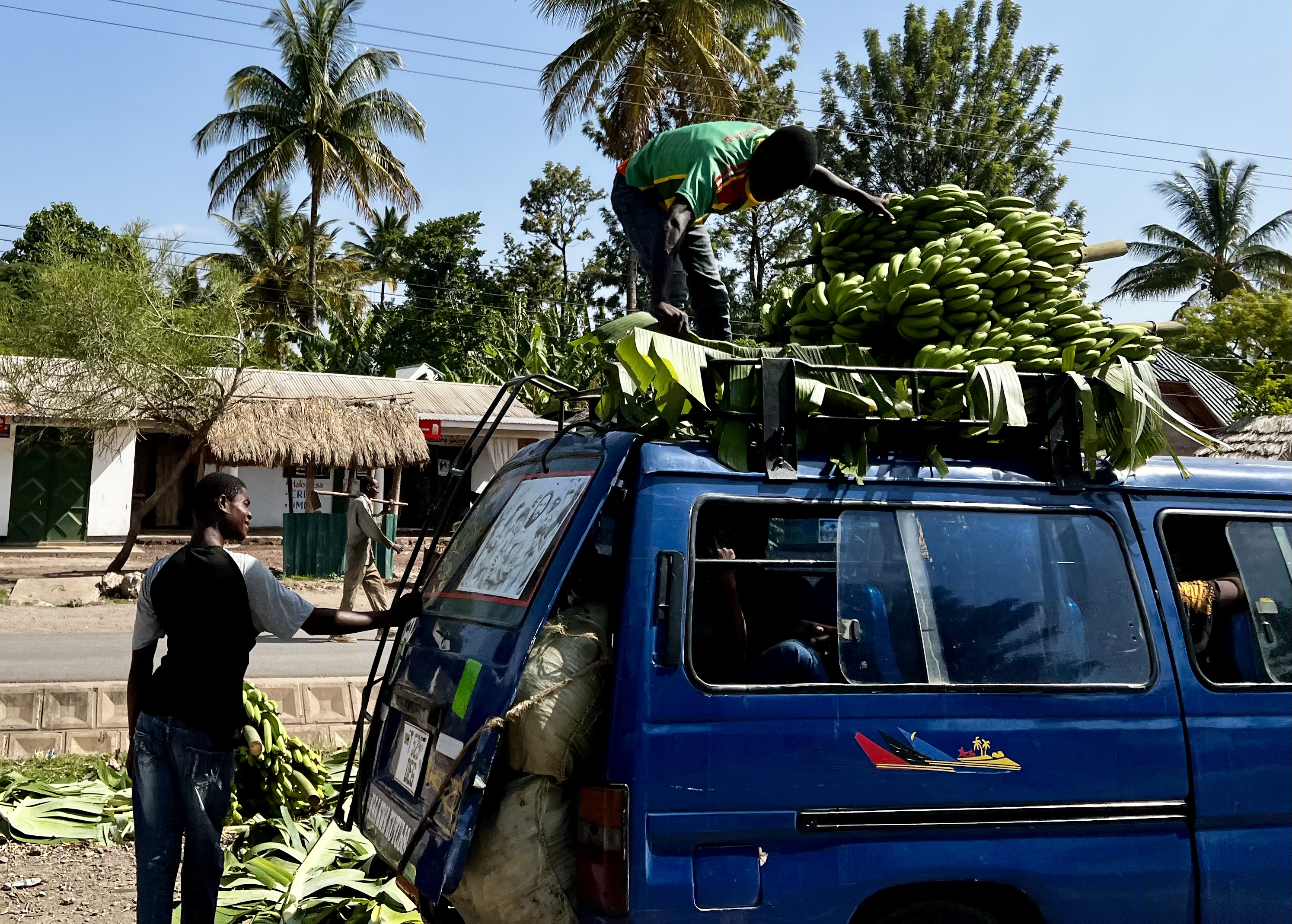
Mto Wa Mbu village:
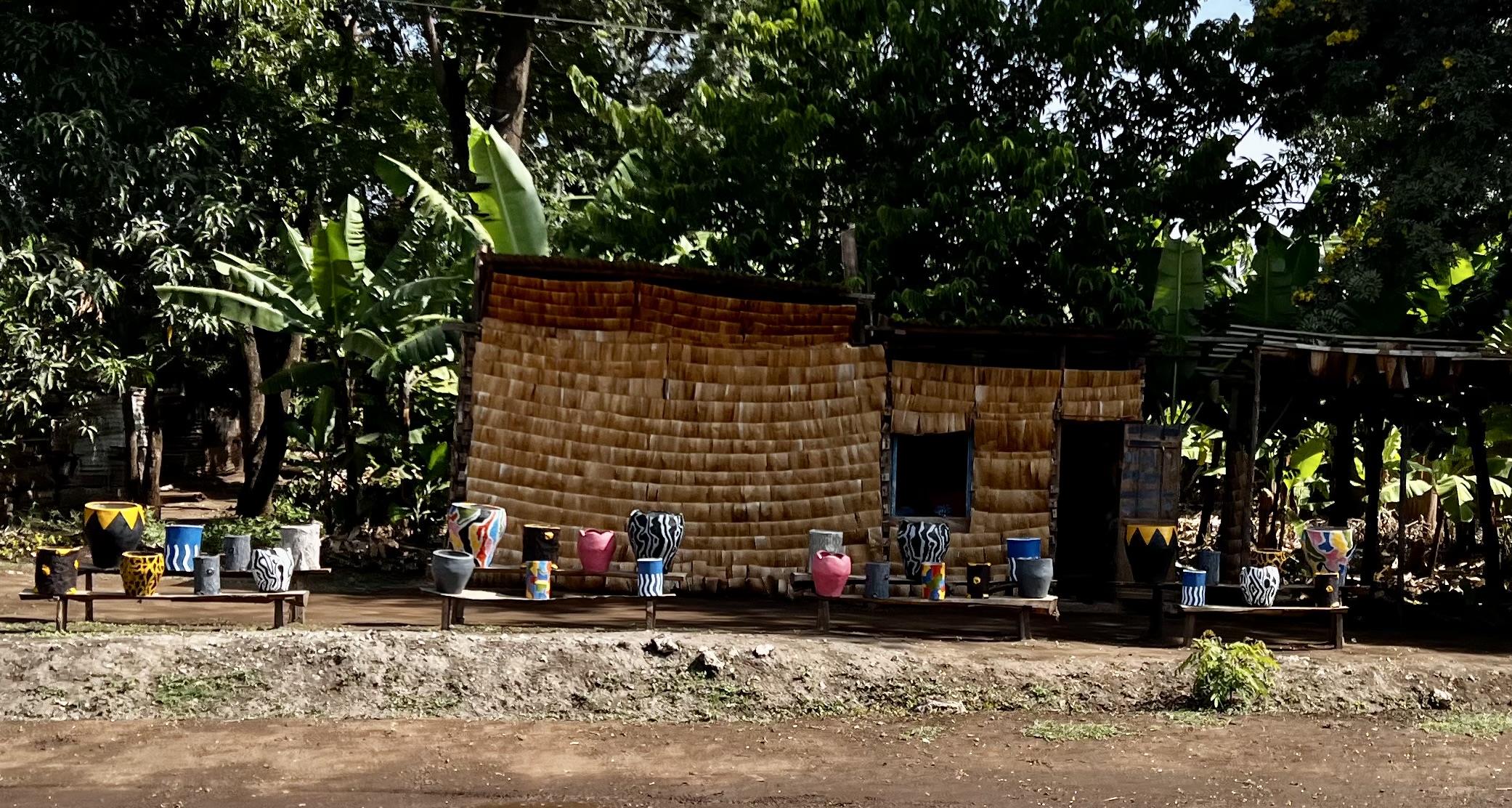
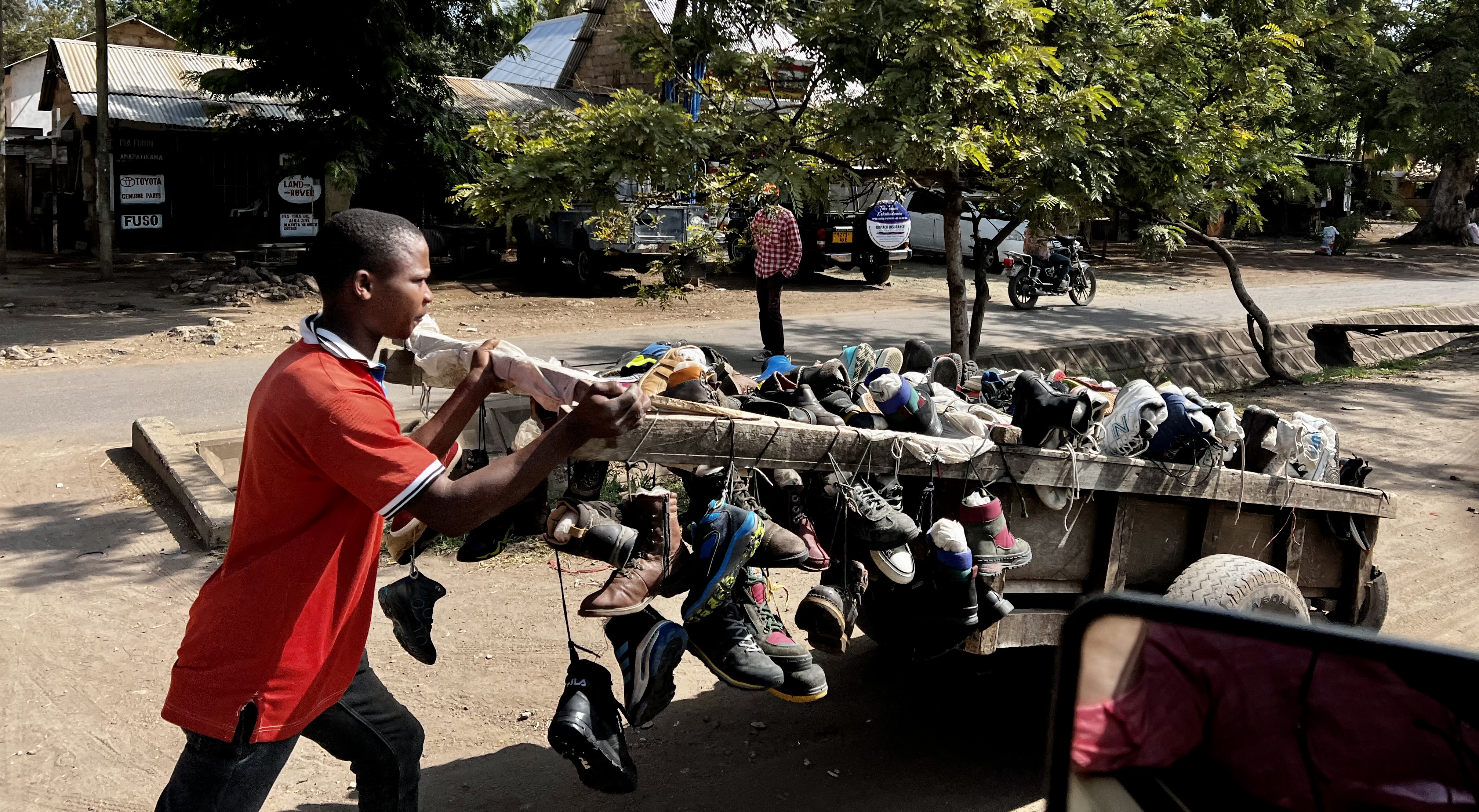
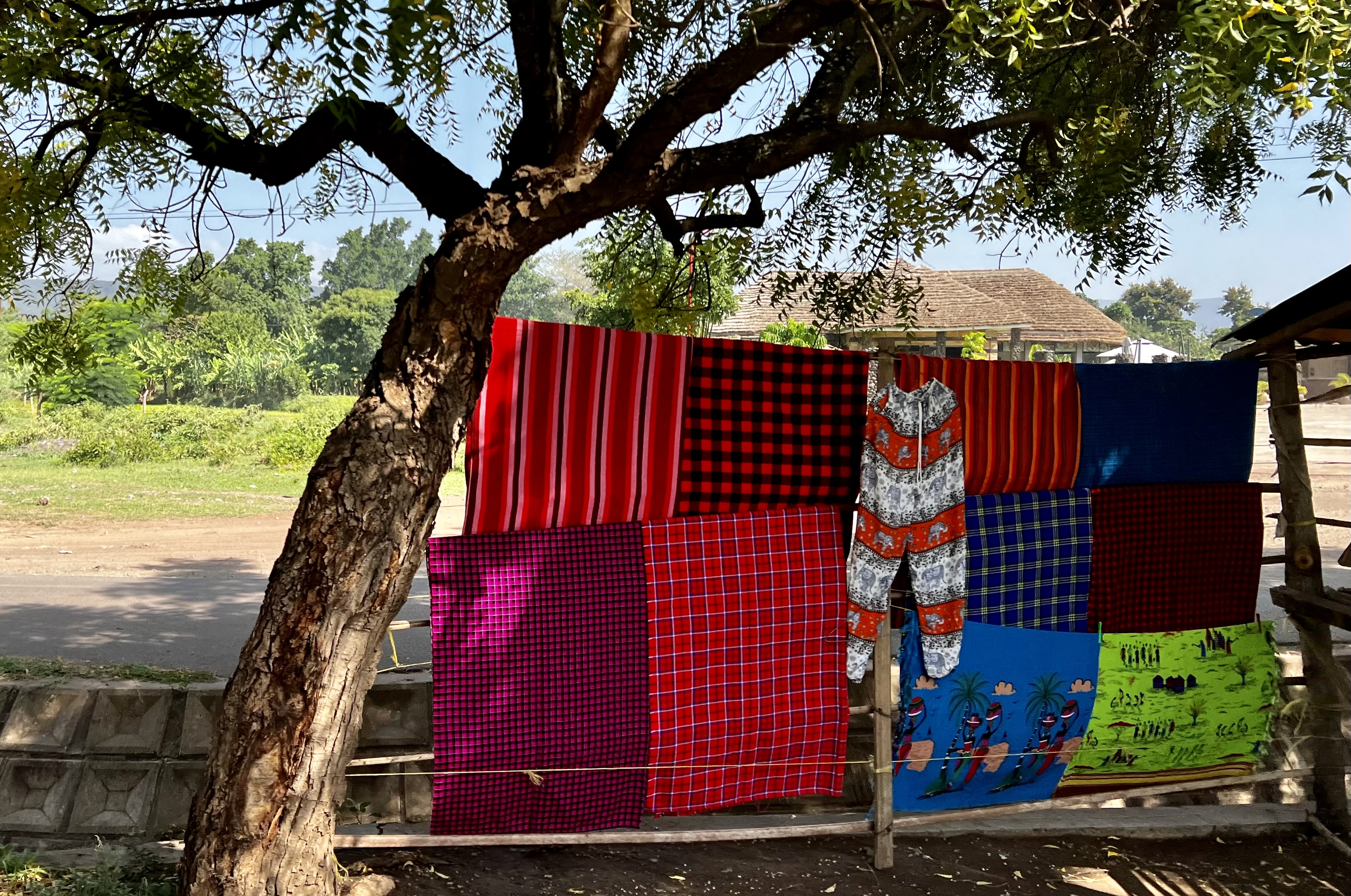
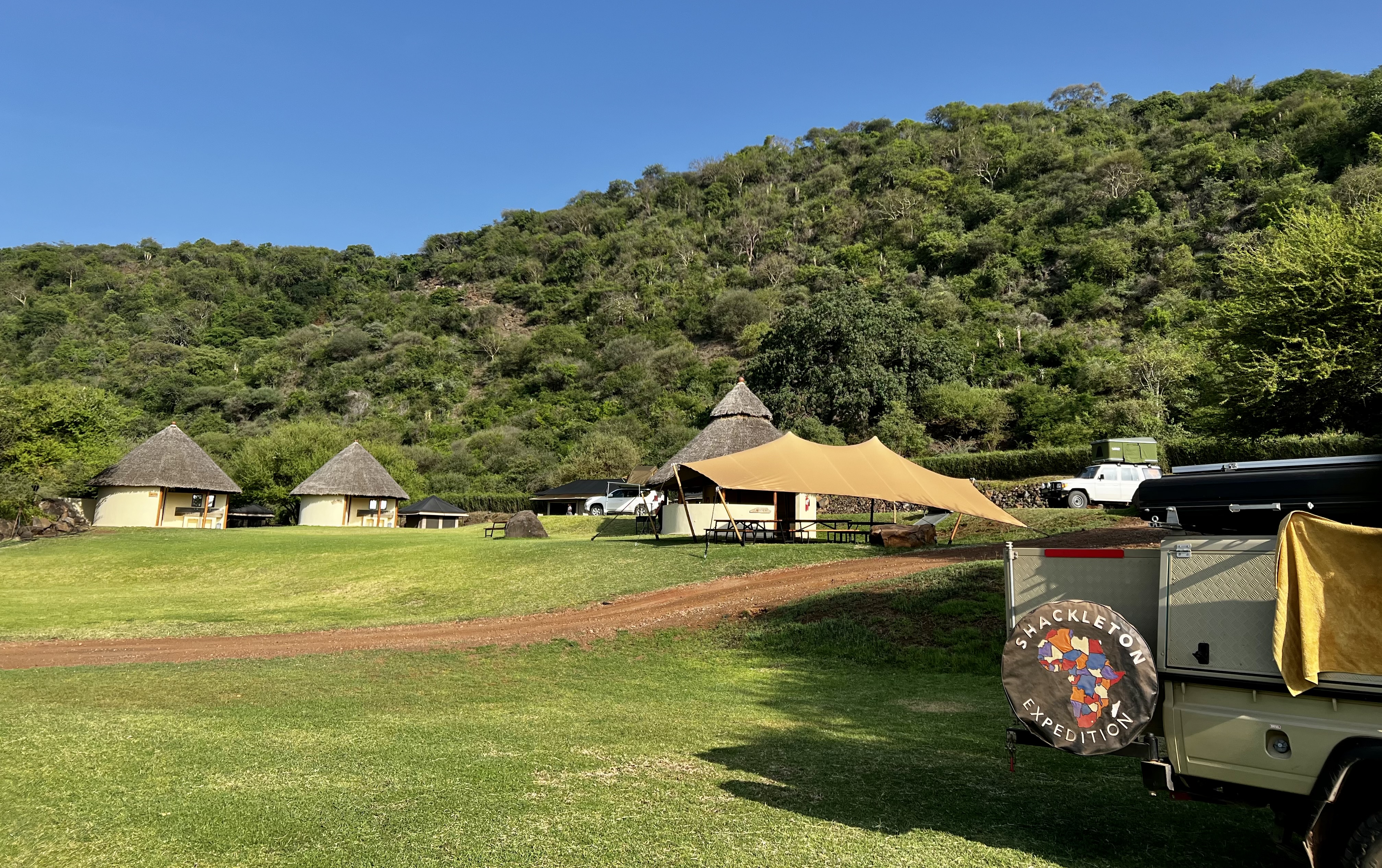
Camp Migombani comes highly recommended. It is right at the entrance gate to Lake Manyara and has a wonderful view over the lake and valley.
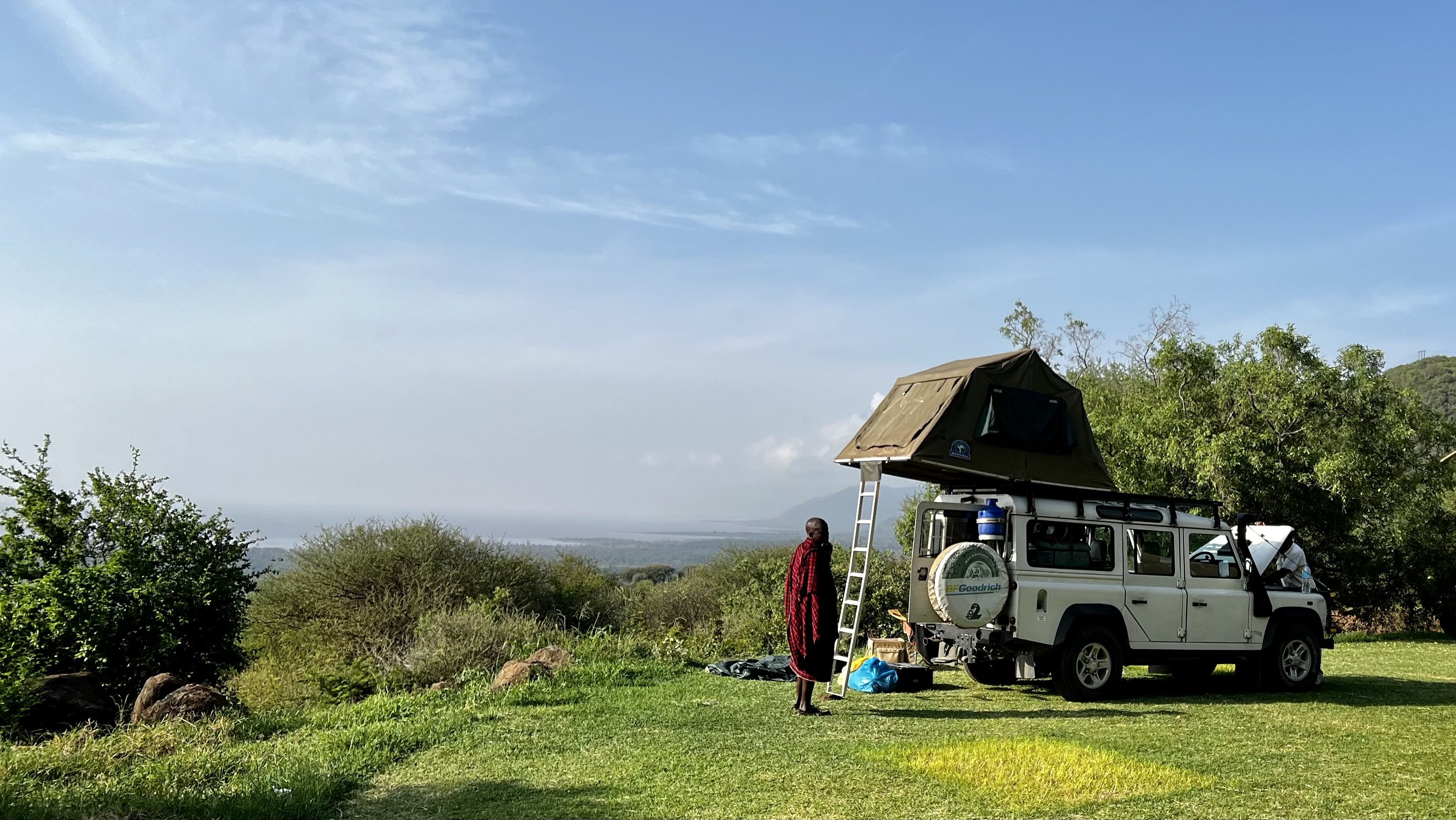
As we make our way up a steep track and into the camp we see that there are many people here. They to cater to groups and here is one such tour in situ– looks like a school or teenage church youth group. No matter. We check in and find out spot, grab a beer and settle in to people watch. Oh the energy of youth! Its bloody hot but nothing stopping this lot, some in the pool, a game of soccer on the go, others throwing frisbee, beach volley ball too. The kids are well dressed, good looking, confident. Mix of races and accents (American, Irish, English, Italian, Tanzanian) all speaking English though. I look at the kitchen area – rows of cooks in chefs whites…..no church group this. Then I spot UWC on the wooden kit trunks and google it – it’s the East Africa international school, with campuses in Arusha and Moshi. Makes more sense now. We sit and watch the dynamics and interactions, the preening and posturing – the girls hog the ablutions a bit but the boys are worse, endlessly checking themselves in the mirrors. I feel my age and one calls me “mam”. I want to say entitled brats but they are great and well, just young. Come 9 pm its curfew and the camp falls quiet. We hear lions in the night.
Next morning we are off to the park. I wait to see what the vehicle fee will be – oddly its $16. OK. I don’t question it.
Immediately after the entrance gate you enter a tall forest with glades and clear streams running off the escarpment.
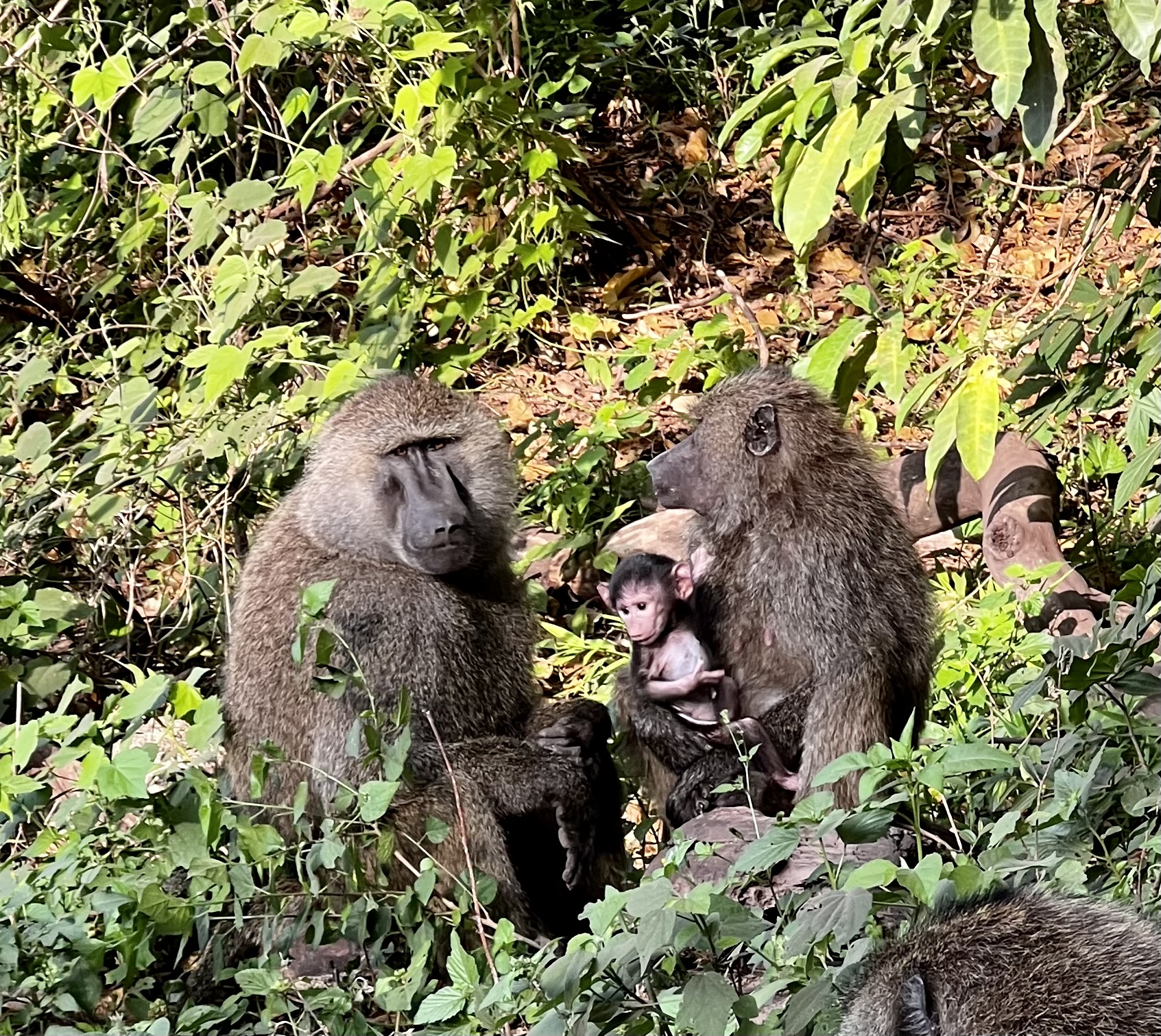
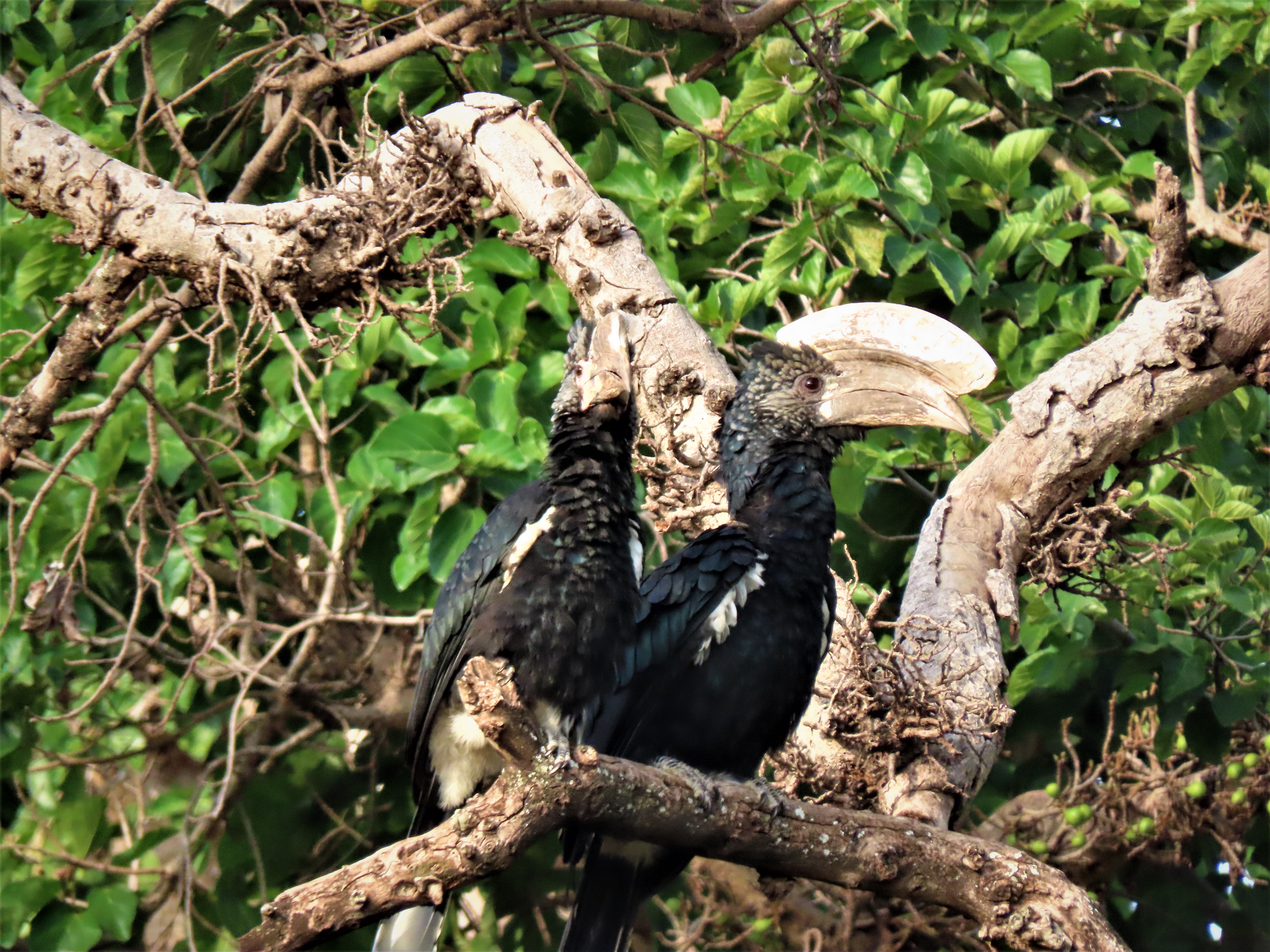
First off we see a pair of casqued hornbill – silvery cheeked – lots of photos and excitement. And then, of course, loads more . Flying from tree to tree high in the canopy. Also big groups of olive baboon – so much better looking than their southern Chacma cousins
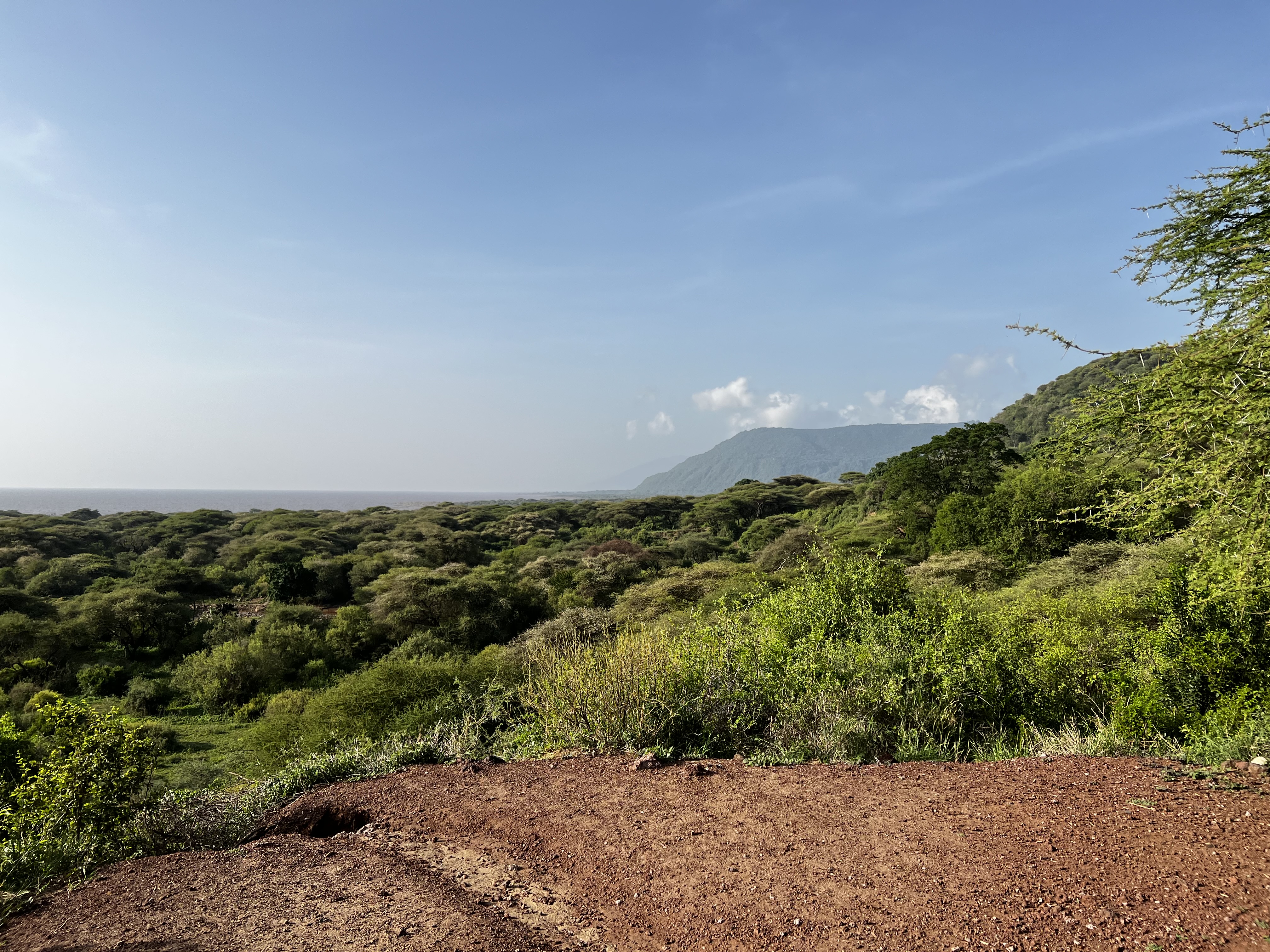
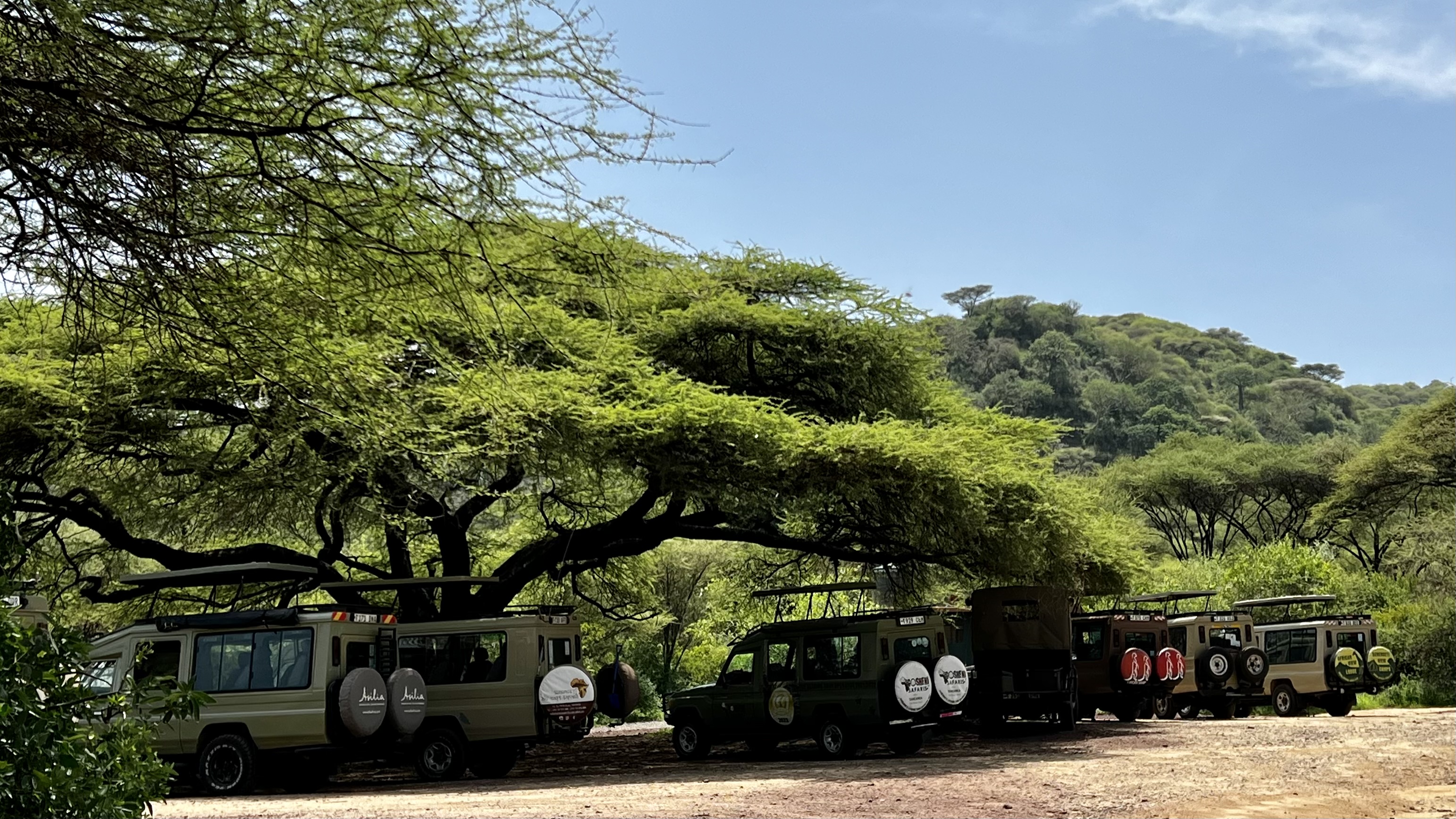
Stopping at the picnic site for tea, the Landcruisers are ubiquitous – Shackleton feels right at home! The view from here is usually spectacular but now it is so so hazy – we can’t even make out the other side of the lake.
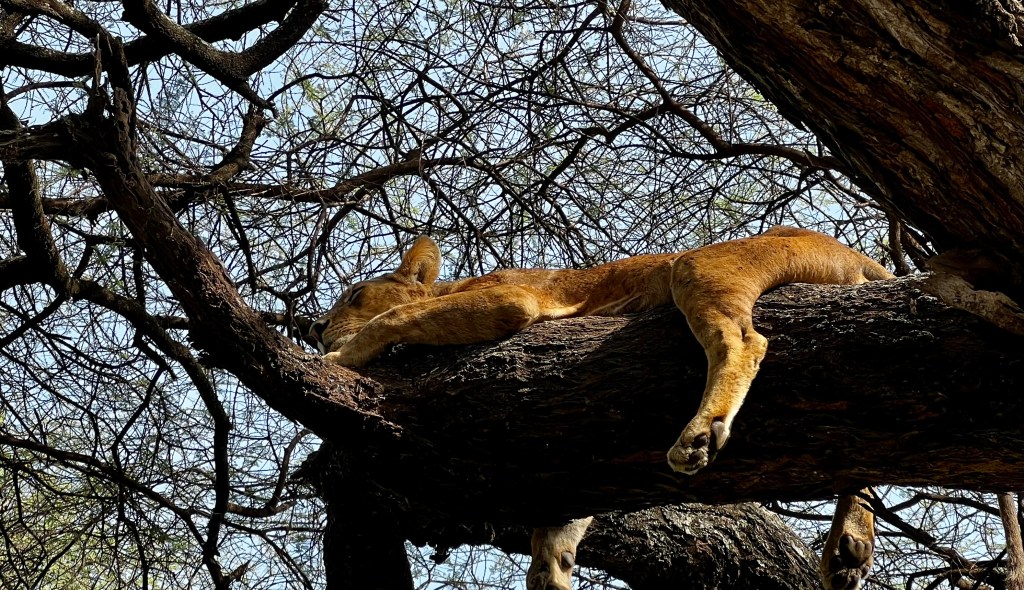
We see loads, duiker, giraffe, kudu, buffalo, dik dik, lots of elephant and then wayhey! Lions in a tree. Looking like a set piece – legs dangling out of an acacia bending over the road. We are delighted! Notwithstanding the fact that this is how the park positions itself – land of tree-climbing lions – they aren’t actually seen that often, so this is a treat. And it’s just us and one other vehicle (news spreads fast though and it turns into a bit of a bunfight but we manage to escape).
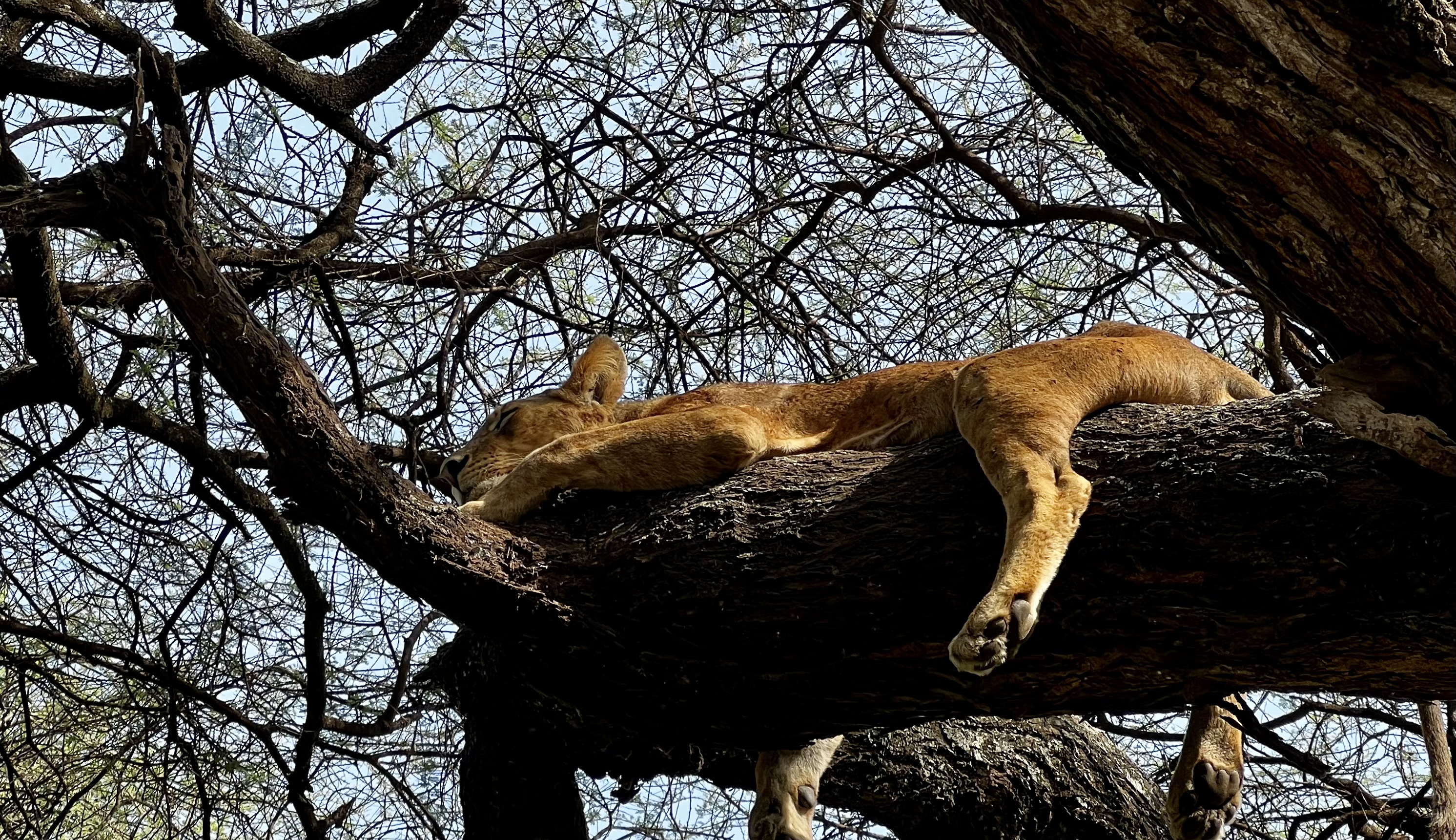
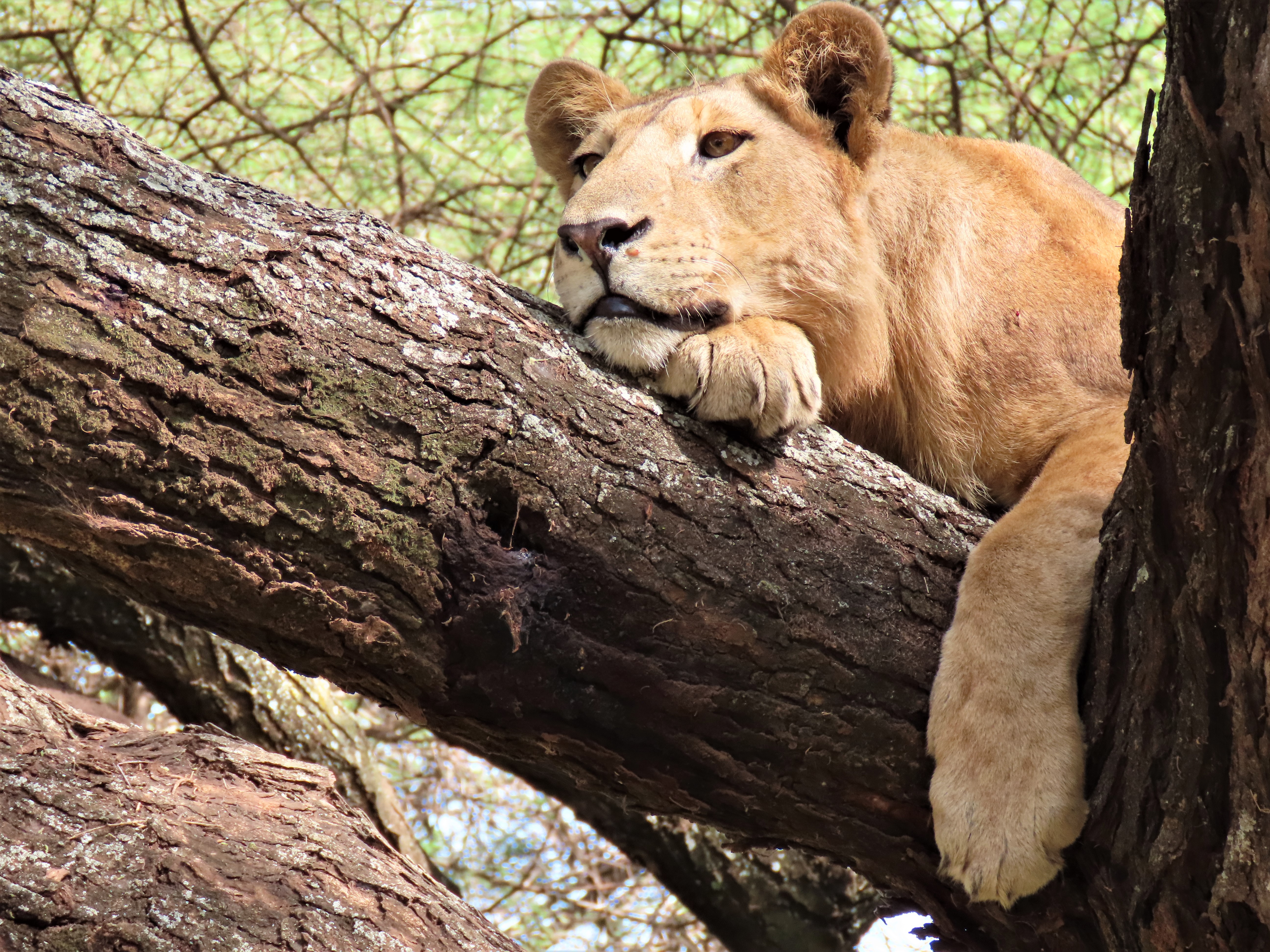
We then get lucky again and spot a pair of Manyara lions with more terrestrial habits. Along with lots of other game including elephants and blue monkeys.
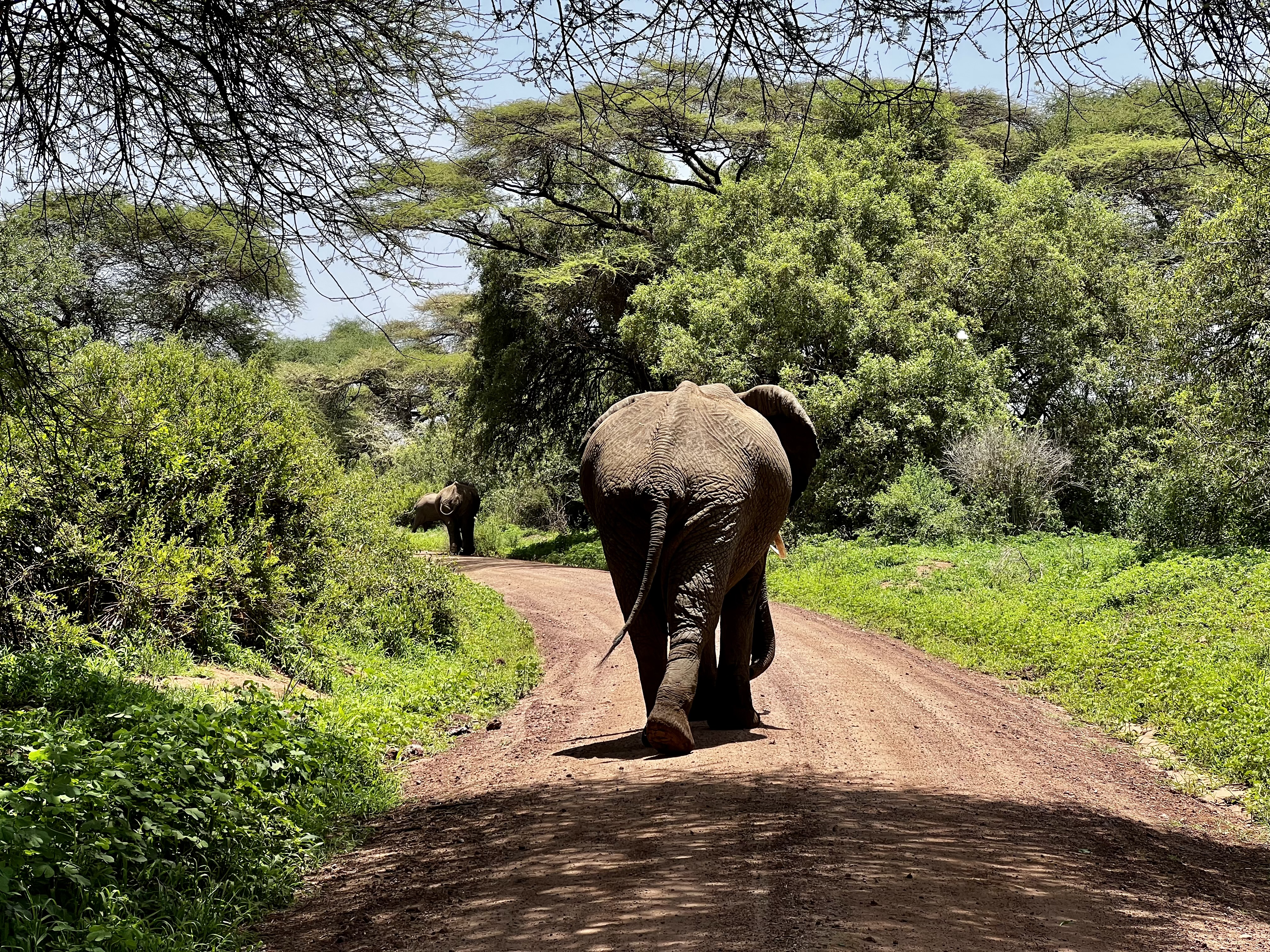
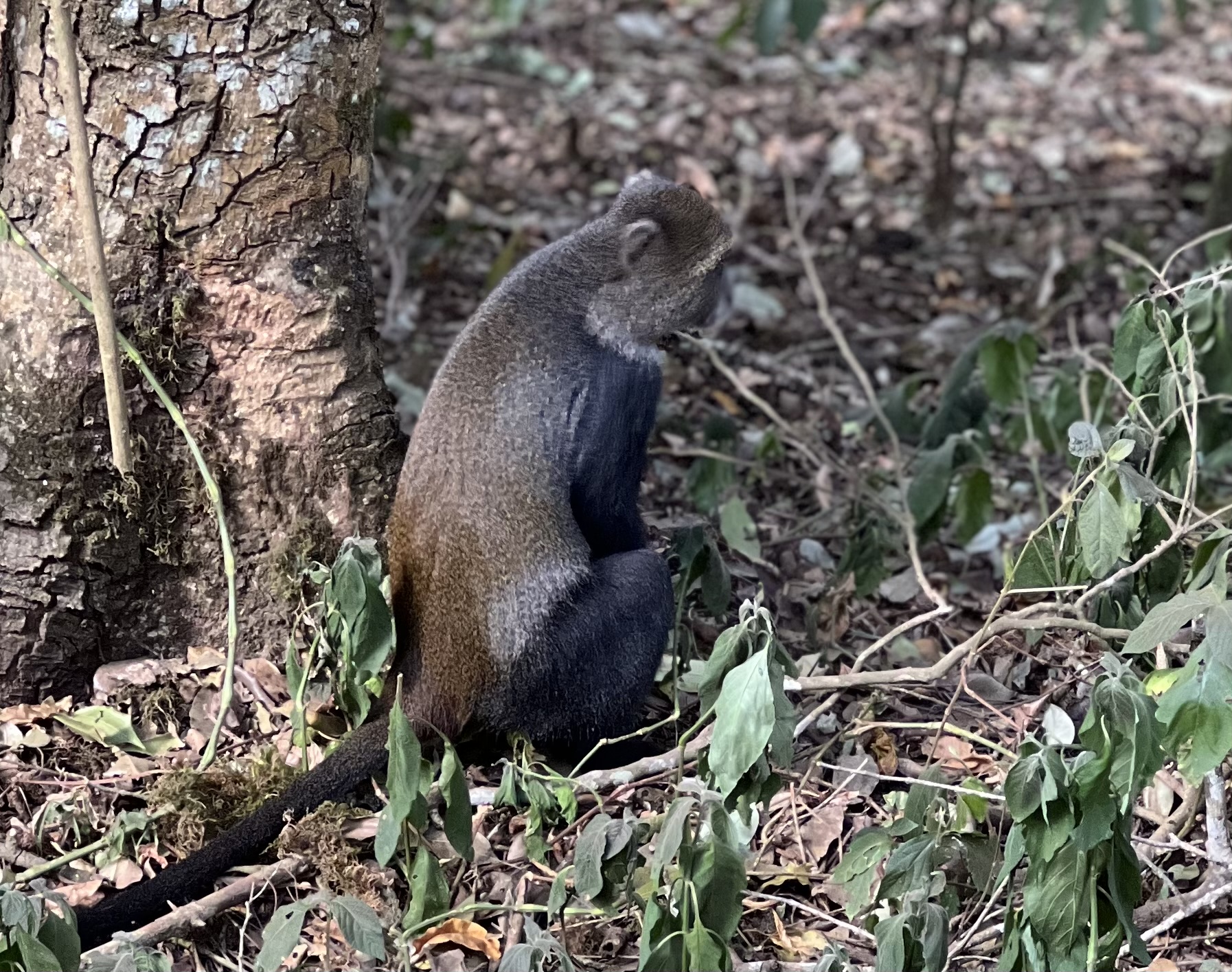

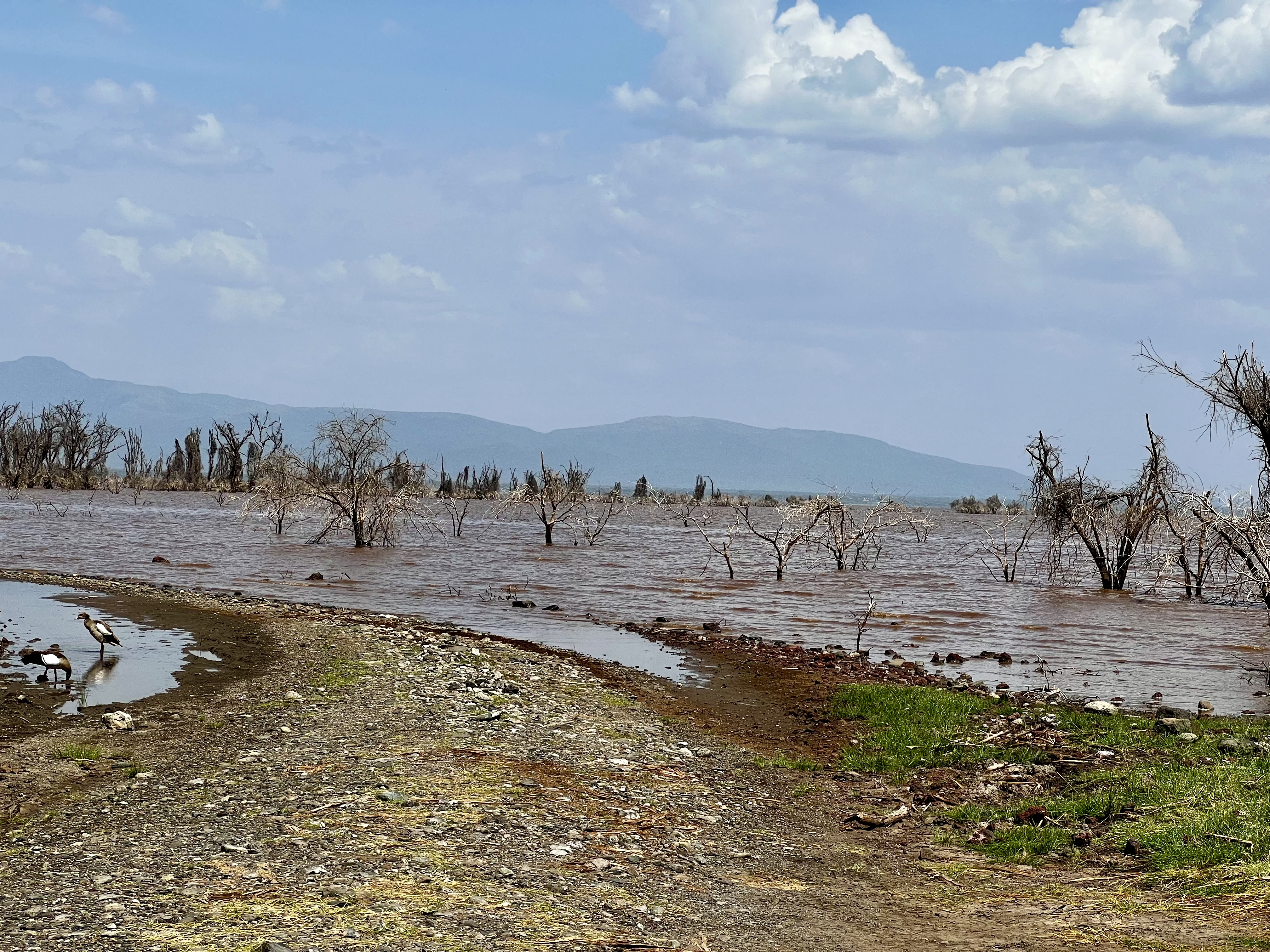
Many of the tracks near the shore are flooded and there are large tracts of drowned trees. The water is very muddy and the usual pelicans and flamingos are absent. The water level is very high – Manyara is one of the southern rift valley lakes and appears to be suffering the same fate as its Kenyan counterparts – rising levels brought on by a combo of changing weather patterns / poor land use, tectonic activity – leading not only to higher water levels but also changes in salinity. So despite the excitement of the lions we both felt a bit down after our visit. What with the drought, and now this. And evidence on the clear fight for resources between wildlife and pastoralists. There is no escaping it. And here we are driving a thumping great diesel powered truck. The irony (although that isn’t really the word) is not lost on me. We are all complicit.


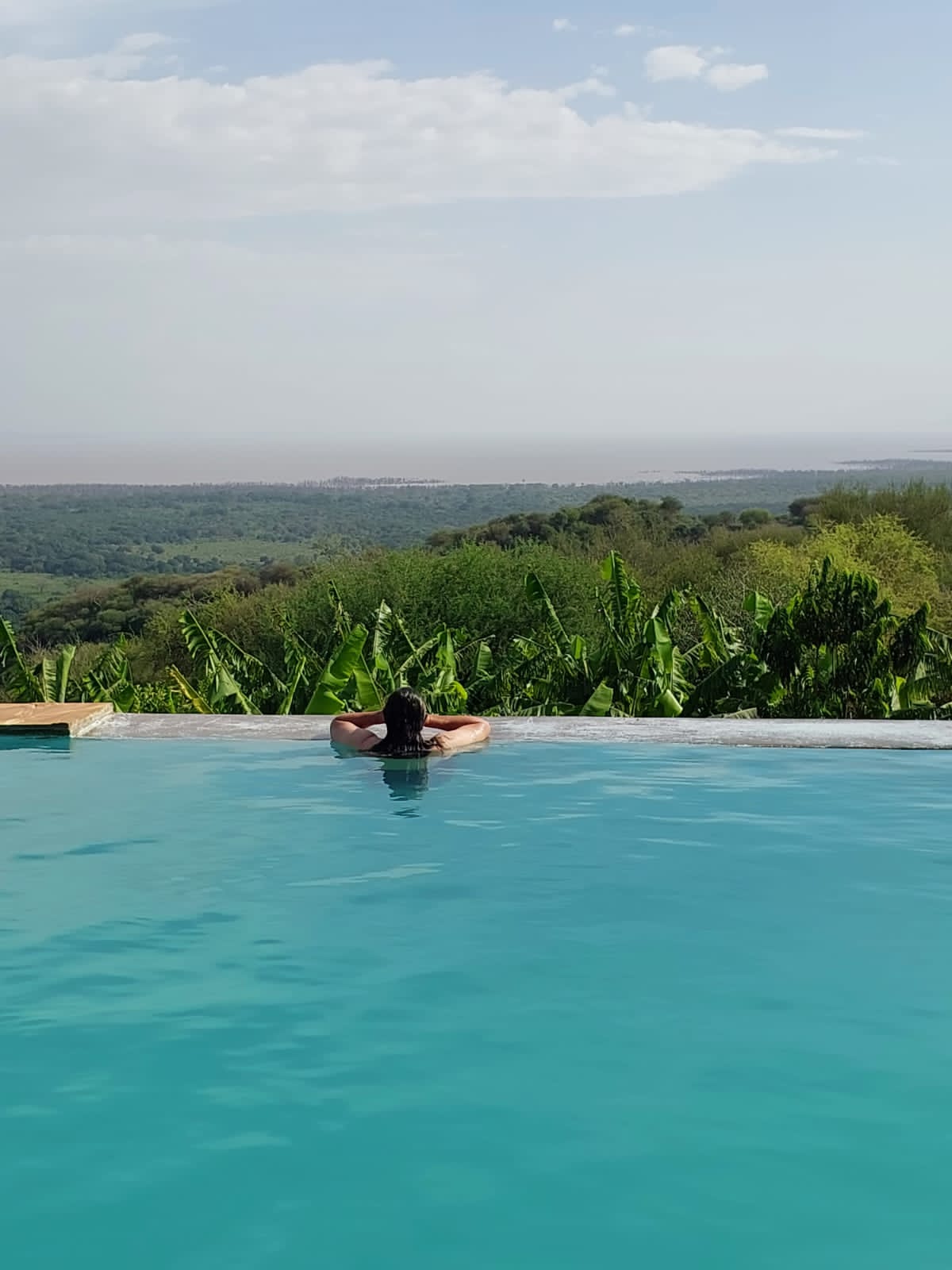
Back at camp the international school has left and all is calm. We get chatting to some fellow overlanders – two Dutch women who have just flown in and on the way to tour Serengeti with Landrover and guide and a solo expat living in Arusha and taking a break. Also take advantage of the wonderful pool.
From Manyara we head towards Arusha. The road out is full of litter. It consists, in the main, of 500ml blue disposable water bottles. Locals aren’t using these. These are clearly from tourists and supplied by their guides and tour operators. Surely there must be a way to police this and keep it under control? It’s horrible.
Driving towards Arusha the dust builds up and the visibility gets worse. The land has been grazed within an inch of it’s life and yet herds of goats and skeletal cows continue to be driven across it in search of something, anything, to eat. This is not a surprise to us – we were well aware in planning this trip of the ongoing drought in the area. But it is one thing to read about it – it is quite another to witness it first hand and so in your face. And here we are, chasing up the continent hoping to get to Kenya before the rains set in and all the time hoping and praying that the heavens will open and give these poor people and animals some respite.
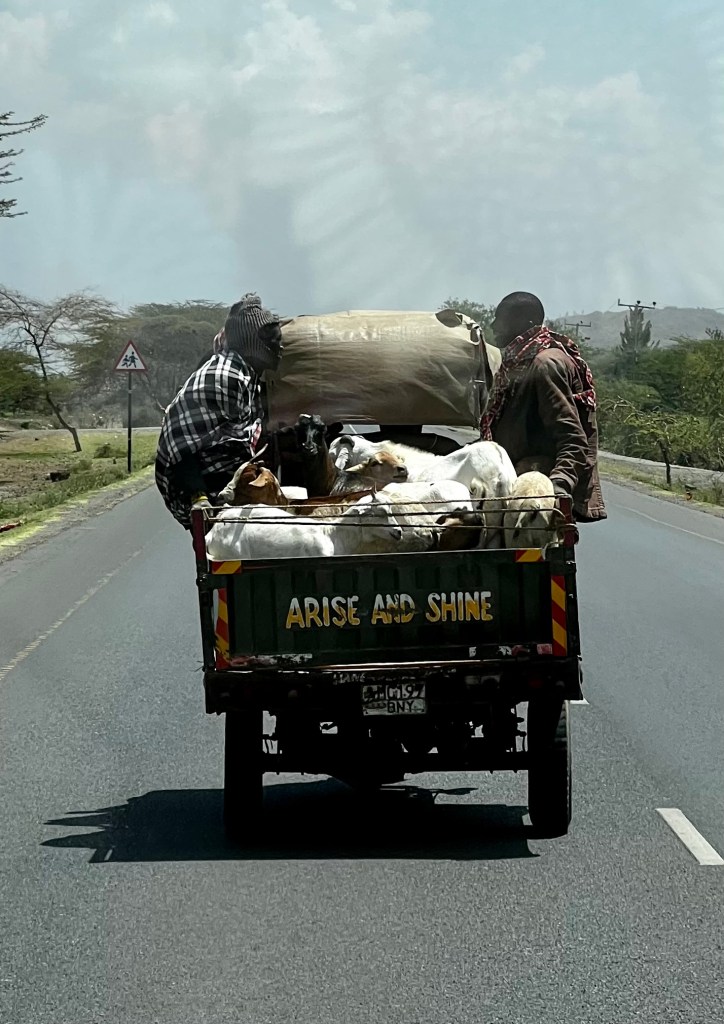
Don’t get me wrong, its not all doom and gloom, we are loving the trip, and then you see this in front of you which puts a smile on your face:
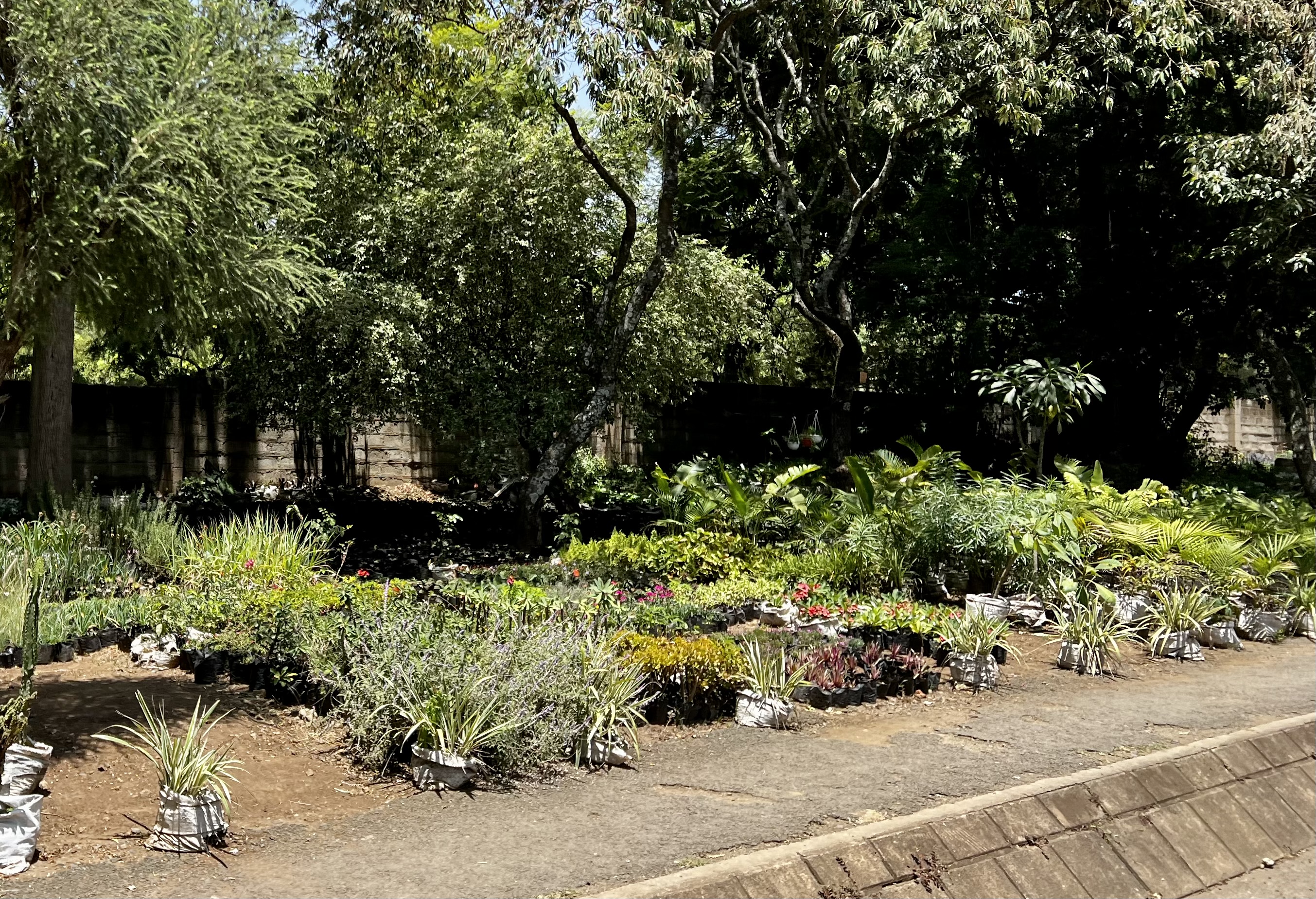
Arusha is a big bustling town, and surely has the highest concentration of land cruisers in the world. We make out way slowly through the town. Deb is driving and I can’t help but notice how relaxed she is in the slow but noisy and chaotic traffic – we are both getting used to the flow of things. The town is energising with all the hustle and bustle. Am completely taken with the roadside plant nurseries – on one street they stretch for over a kilometre – shade loving plants under the trees on one side – sunny plants on the other, along with various pots , garden ornaments etc. The selection is vast – indigenous and exotic, simple and hybridised. Love it. We nickname this street nursery lane – it turns out to be a helpful landmark for navigating.

Destination for today is Twiga Lodge, in Usa River just beyond Arusha. Here we plan to get the vehicle serviced and to catch our breath before crossing over into Kenya at the Tarakea border. We WhatsApp Twiga and get no response but decide to try anyway. After Arusha the traffic thins although there are many Landcruisers going back and forth (to Arusha NP no doubt but also ferrying tourists to and from Moshi for Kilimanjaro climbs).
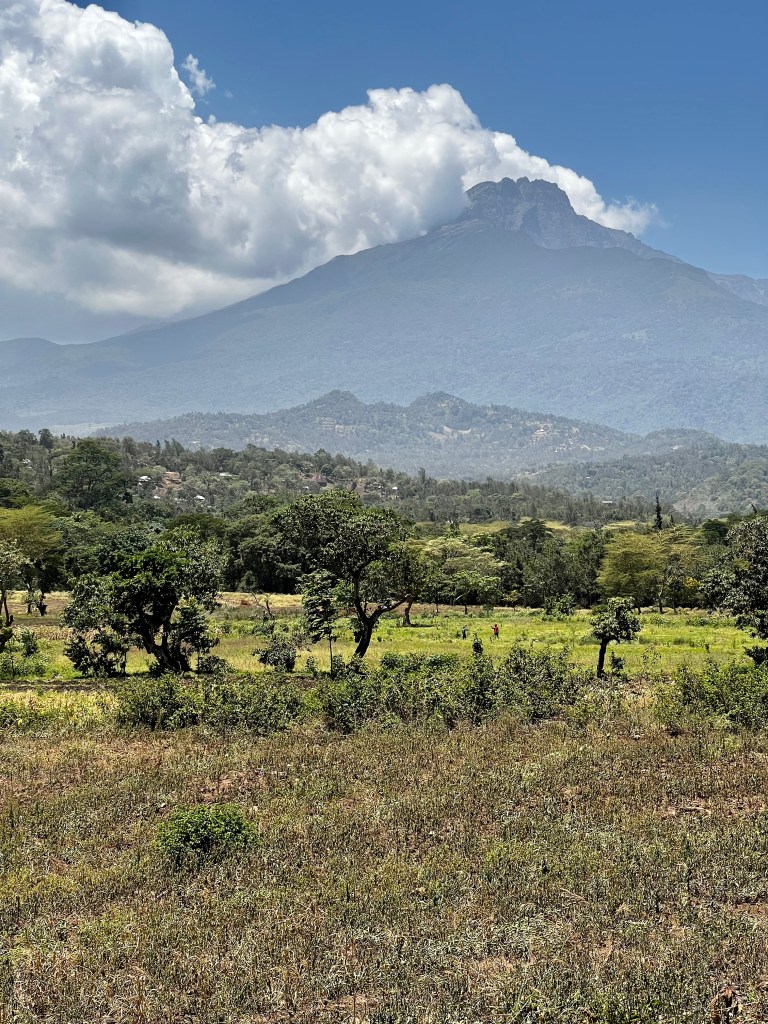
At Twiga lodge we are greeted by Peter. Yes we can camp, and yes he can sort out a service – Paul and Erica are away in the Serengeti but they will be back tomorrow. Later that afternoon I get a WhatsApp from Erica communicating same and saying Peter will take care of us. Which he did.
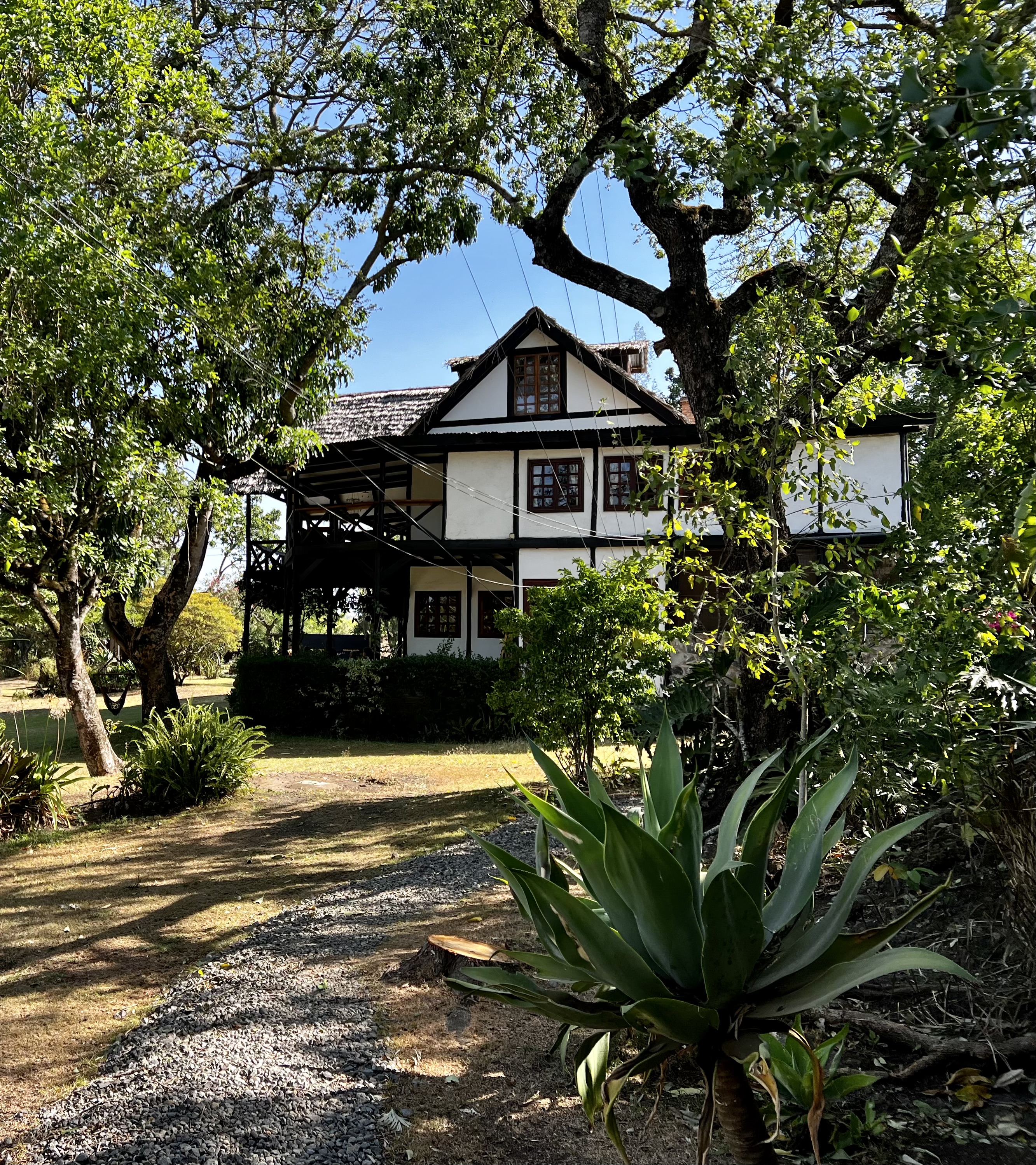
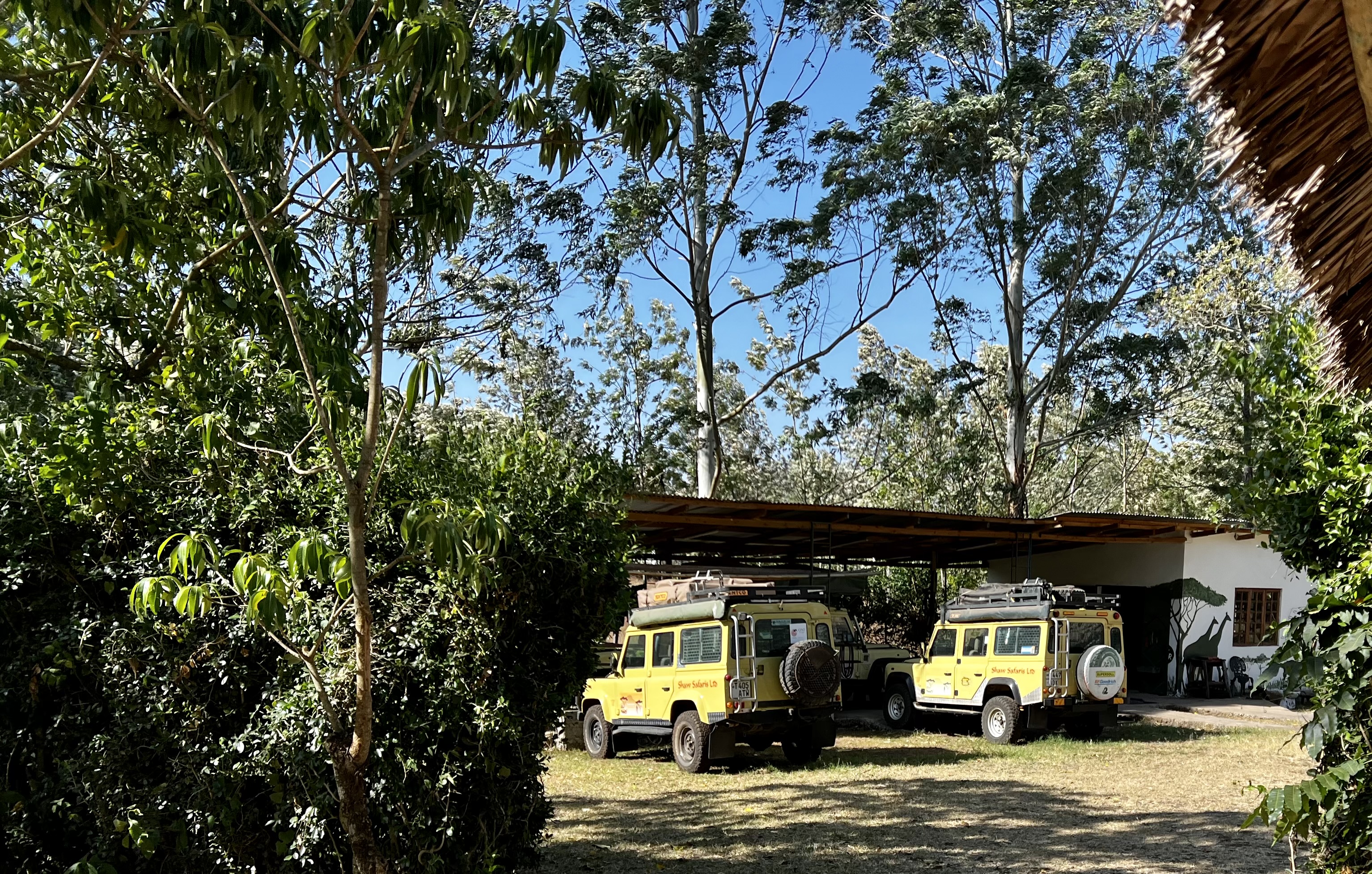
The following evening Paul and Erica get back from their trip and invite us up to the lodge for a beer. They are the consummate hosts. The Serengeti is stunning at the moment Paul says, with the best gathering of herds he’s seen in years. He urges us to go. Immediately. He also sings the praises of Arusha NP here on their doorstep, saying that it is often overlooked. His enthusiasm is infectious.
Back at camp we debate this. Sorely tempted by the Serengeti idea. But we have been before at this time of year and had fab sightings, and it would mean back-tracking and not a little expense as we would have to pay to cross the Ngorongoro Conservation area to get there. In the end we opt to stick to the Kenya focus – for a number of reasons, but mainly I think because when we plumb for the Serengeti I want to do it properly and organise special campsites etc. But, we do decide to take an extra day and day trip Arusha NP. I WhatsApp Paul to tell him our decision and ask if we can stay another night. I also ask if I am likely to be able to buy a map at the gate and if not does he have one I can borrow. Next thing Paul is down at the camp with his map (followed by their cat “Socks”) and sits down with us to explain a good drive route and point out the highlights. Really very kind.
So the next morning, Paul’s well used and precious map in hand, we head off the Arusha NP (all of about 150m – Twiga Lodge is basically at the entrance).
Once again I wait to see what the vehicle fee will be. I have the Manyara receipt on top of my folder and the ranger at the office asks to see it so that he can copy the reg number – I hand it over hoping he will copy the $16 vehicle fee. He looks at the receipt with some consternation and then apologises saying the Manyara peeps made an error. The fee is $150. So be it.
Arusha NP is lovely and a real surprise. In my mind I had dismissed it as a small park – used by operators to pass the time with newly flown in guests before the main event. Wrong. Well worth a visit in its own right.
The forests here are spectacular as are the crater views and views of Mt Meru. We see our first black and white colobus monkeys ever! Flinging themselves with abandon from tree to tree high up in the canopy in the morning light.
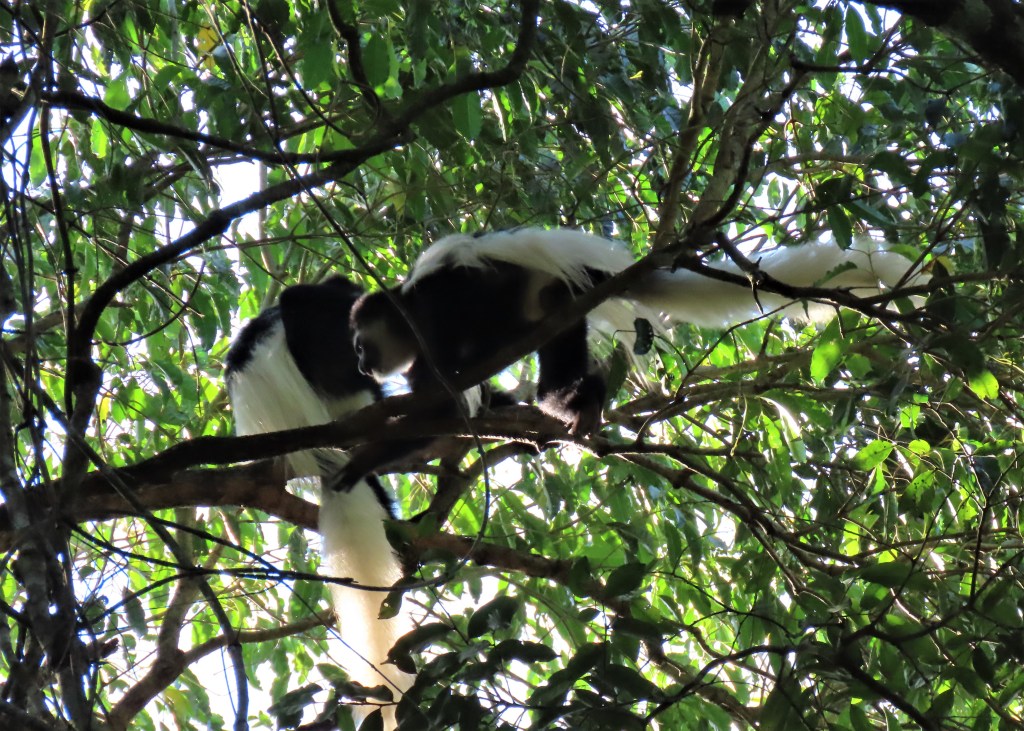
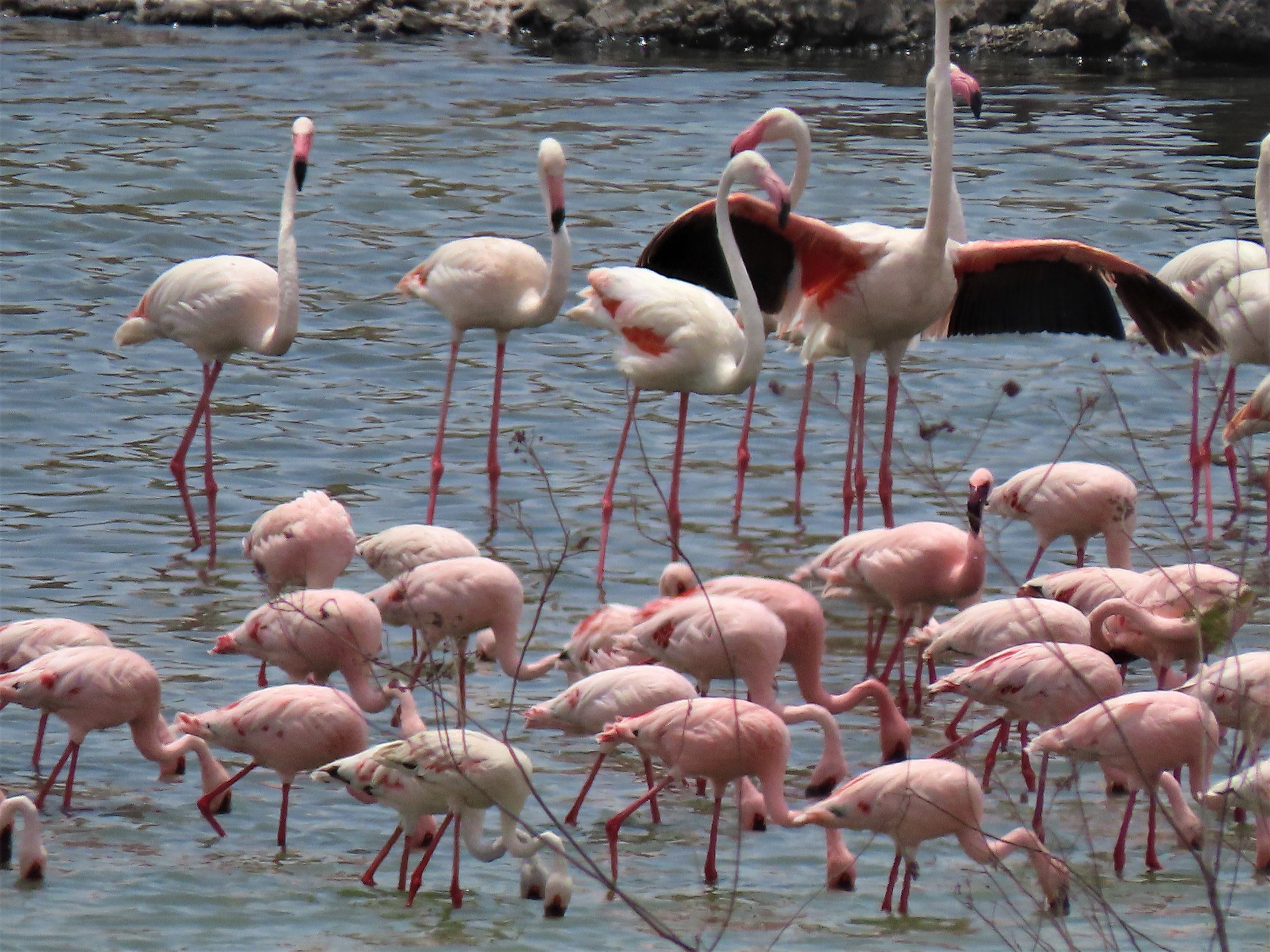
We spent the day exploring: forests, craters, lakes, mountain climbing giraffe, flamingos …
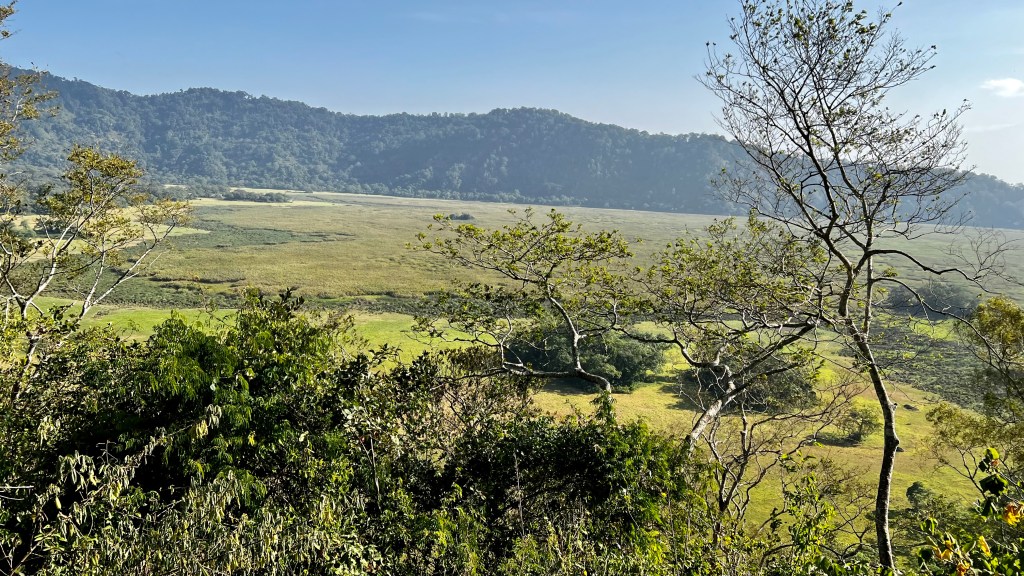
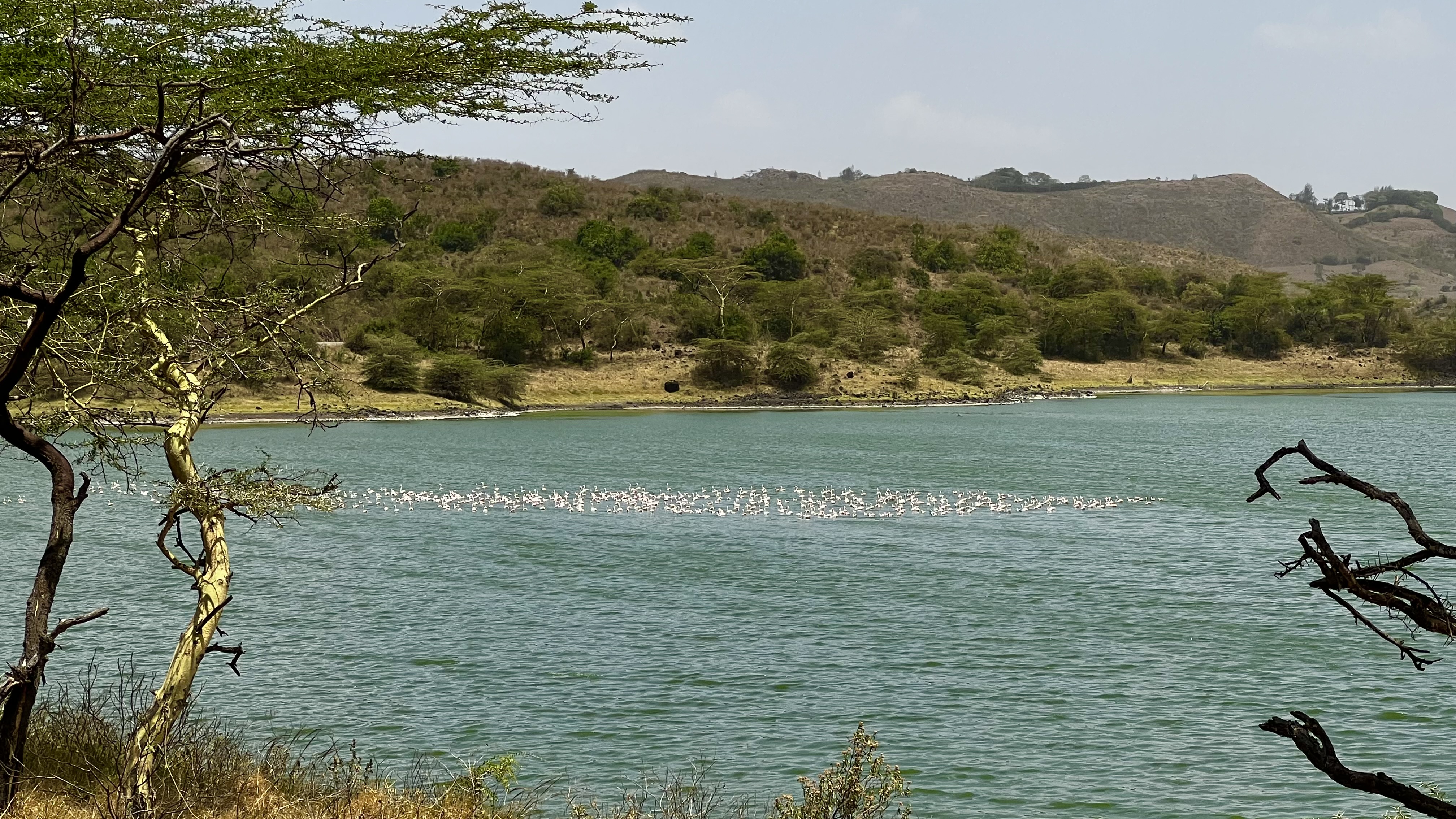
The tracks climb up quite high – up a proper 4X4 track that takes you to the trail head for those climbing Mount Meru. Even on these steeps slopes in the forest we see elephant and giraffe high up.
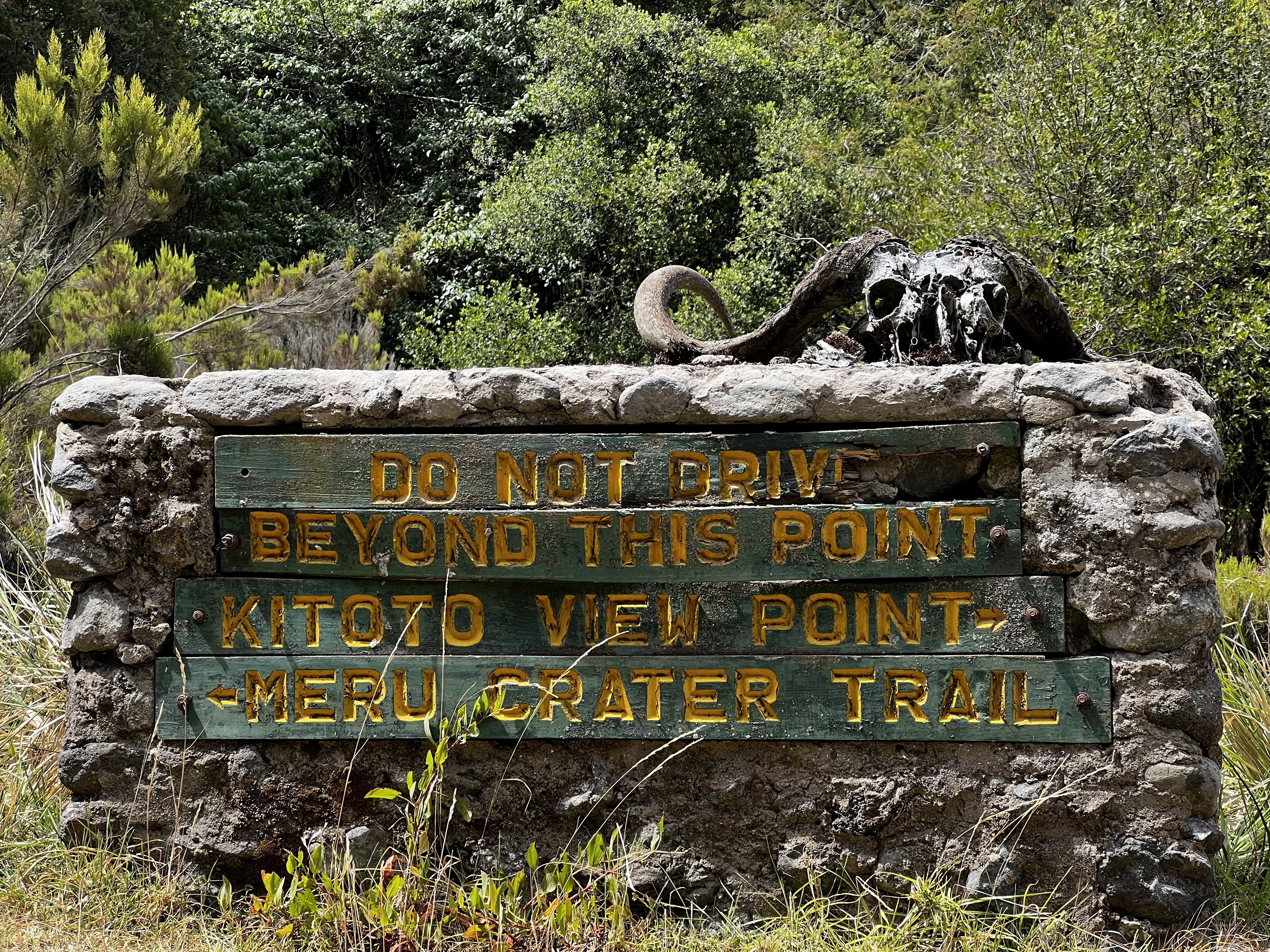
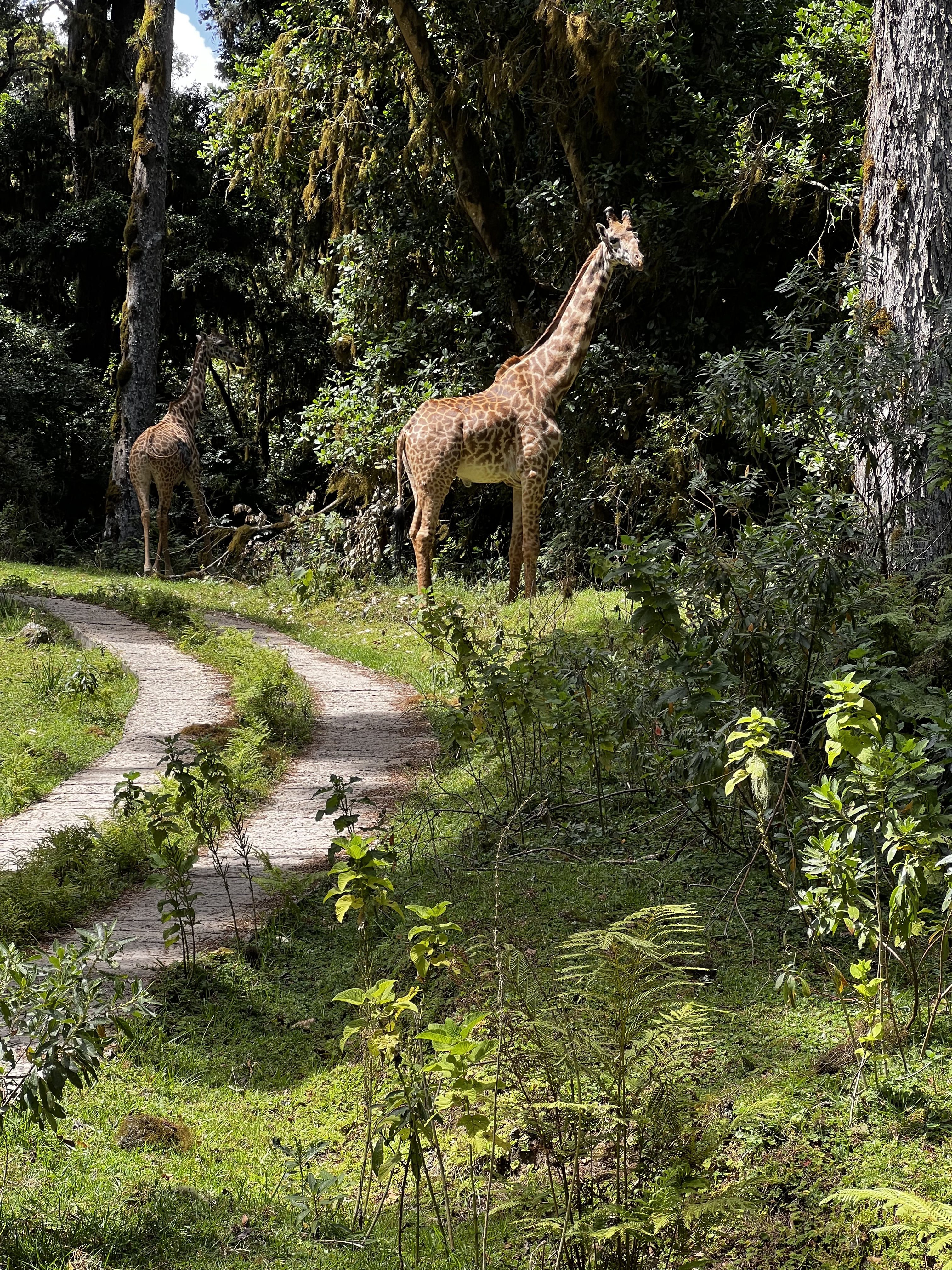
One again we only encounter a handful of other vehicles, but do encounter some hikers slogging up the steep tracks. Oh, and a group of cyclists with an armed ranger.
The following day we back track to Arusha in a newly serviced and cleaned Shackleton. We need to refill one of our gas bottles and Arusha is one of the few places in Tanzania that can accommodate South African bottles (the thread is different from the East African ones) so smaller re-fillers can’t do this. Here in Arusha you pay at the retail outlet in the centre of town and take your receipt and bottle for refilling at the main depot in a semi industrial area on the outskirts. It is simple enough but it all takes time, and we find ourselves headed for the Kenya border later than ideal.
The Tarakea border is smaller than the main one at Namanga, and therefor likely to be quicker with fewer touts / trucks etc. The other reason for favouring this route is that the road snakes around the eastern flanks of Kilimanjaro promising fabulous mountain views. Not such luck for us on the view front, yes some cloud gathering around the peak but main issue is the thick haze obscuring everything.
Next Stop Kenya.
NOTES FOR TRAVELLERS
Hut of Wine and Cheese: self catering unit Tsh 120 000 (about $50) for the unit.
Migombani: lovely lawned sites, great pool overlooking the valley, good ablutions. Ideally situated for Lake Manyara. Camping $15 ppn
Lake Manyara NP: Park fees $50 ppd, vehicle (should be) $150 per day. Then add 18% VAT
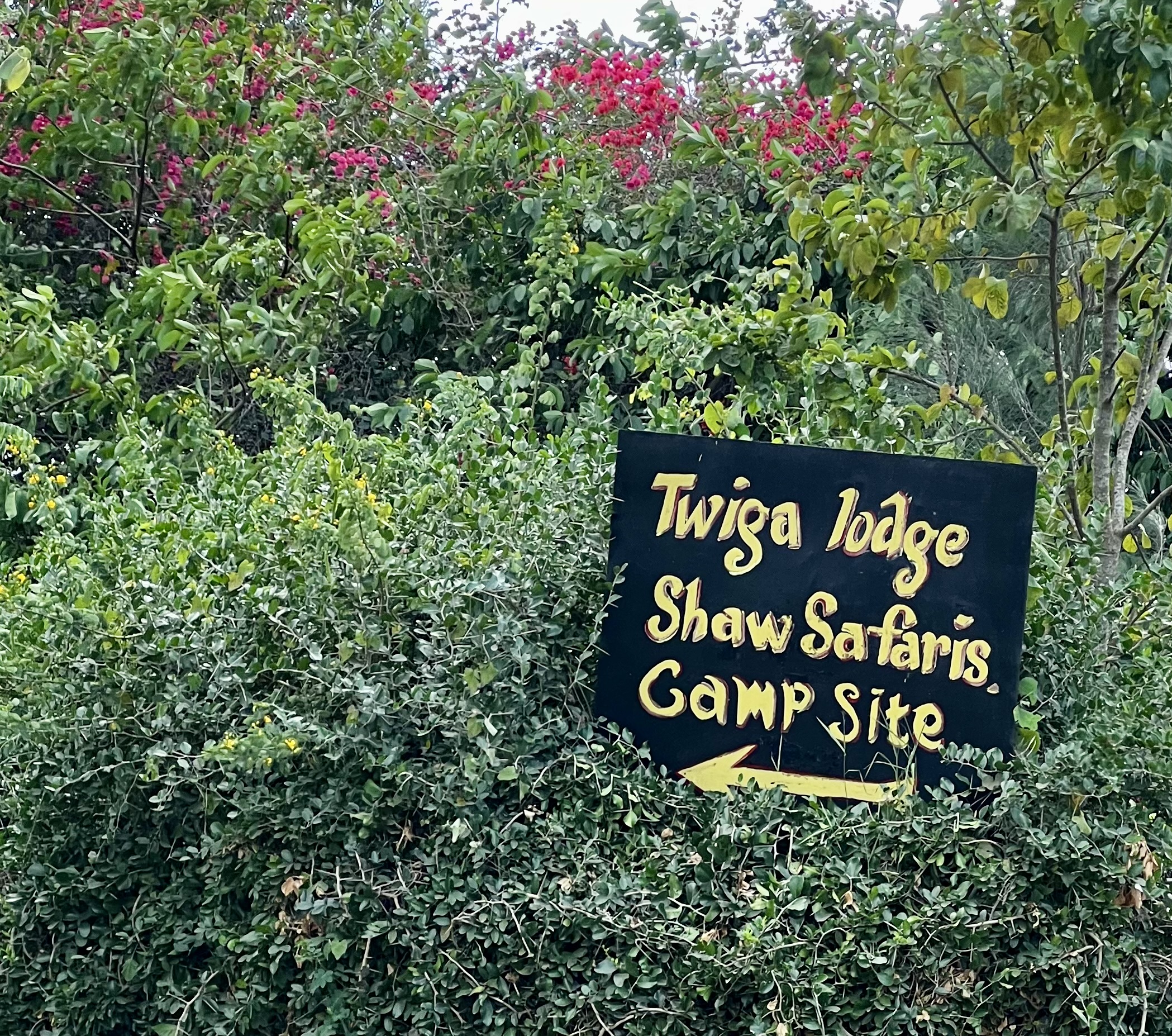
Twiga Lodge: Paul and Erica are great hosts and very generous with their knowledge / sharing suggestions etc. They also rent out fully kitted Landrovers (see Shaws Safaris) and will also store vehicles (there were a few in storage whilst we were there). They are Landrover specialists (although I see Paul has gone over to the dark side and bought a fully kitted out Hilux from an overlander who fell in love with a fellow traveller and had to follow that calling, offering the Hilux at a clearly irresistible bargain!). They do service Landcruisers too. Fluids and spares at cost (plus the cost of the boda boda to bring them from Arusha). Labour v reasonable – we asked for a full service / run through but they are also happy to just do an oil change if that is what you want. Camping $15 ppn
Arusha NP: Park fees $50 ppd, vehicle $150 per day. Then add 18% VAT
Gas bottle refills for SA cylinders. Manji’s gas (detailed on T4A, iOverlander and 4X4 community forum). Set fee based on size of bottle regardless of how full / empty it is. We paid Tsh 19 000 (about $8 or ZAR 150) for a 3kg cylinder re-fill.
 Bonnievale to Burton Fleming