20 – 22 February 2023
From Usa River we climb up steadily, hugging the eastern flanks of Mount Kilimanjaro. It is very green here despite the drought. The landscape is a mix of steep farmed terraces and patches of bananas, interspersed with tracts of remaining forest.
We reach the Tarakea border, gather our papers and take a deep breath. I don’t like borders – I don’t know anyone who does. But the small border is quick and efficient and pleasantly tout free. The officials and on the Kenyan side instantly mark the changes of the new country. They are friendlier, better English, more relaxed (more confident?) – the whole process is just more efficient.
From the border we make our may through the usual border town hustle and bustle, through the town of Oloitokitok, turning off at the sign to Amboseli just before the town on Kimana. We had hoped to visit Kimana sanctuary, having read of others’ spectacular experience in this conservancy, but it has since been sold and camping is no longer offered. I had mailed them to see if perhaps we could day visit but unfortunately this is only open to those staying ant Kimana house which is out of our league. No matter though – we have Amboseli to look forward to.
Amboseli, Amboseli – another name that conjures up iconic imagery and all kinds of romantic notions. Imagine this – snowy cap of Kilimanjaro – tuskers and giraffe on the plains below – well this is it – the poster child for Kenyan wildlife.
I always thought the name sounded faintly Italian but it is in fact derived from a maasai word meaning salty dust. And dusty it is!
Our base for Amboseli is the Kimana Community Camp. There are big Acacia tress for shade and the air is sweet with their blossom which litters the ground only to be snatched up by the odd goat that passes through. There is also a steady hum of bees gathering nectar from the blossoms and a nice array of the usual camp birds: superb starlings, sparrow weavers, white headed and red-billed buffalo weavers.


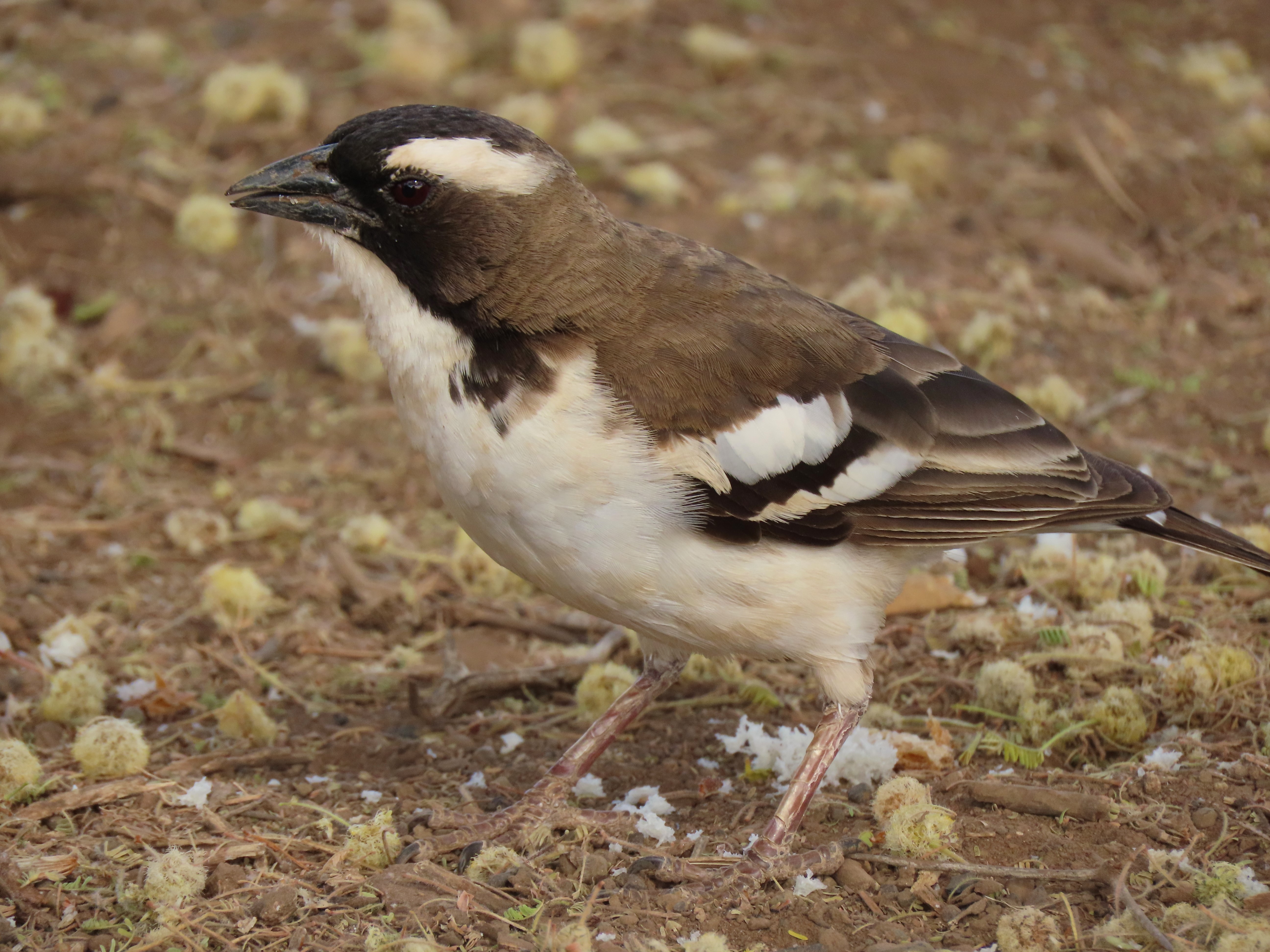
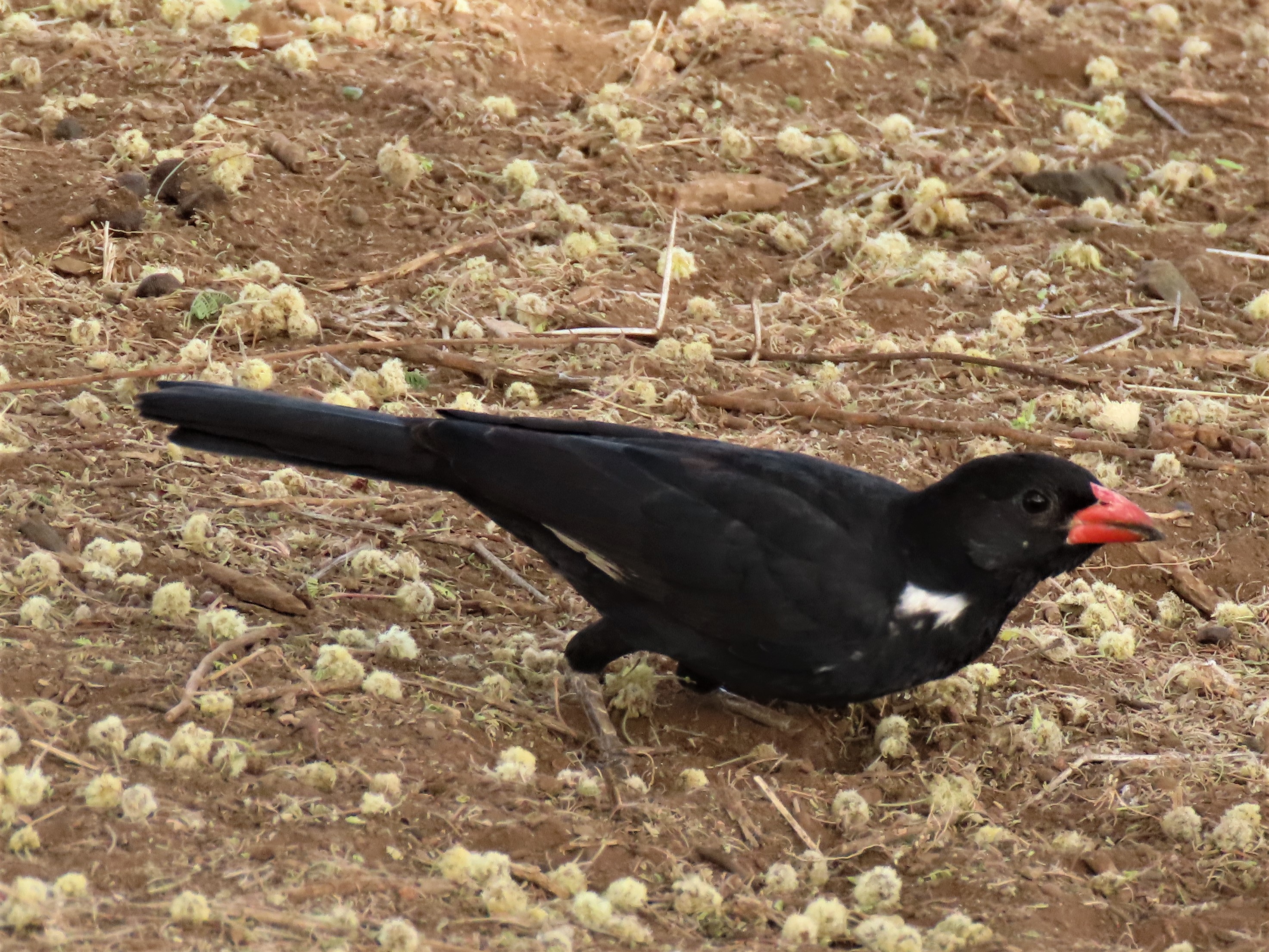
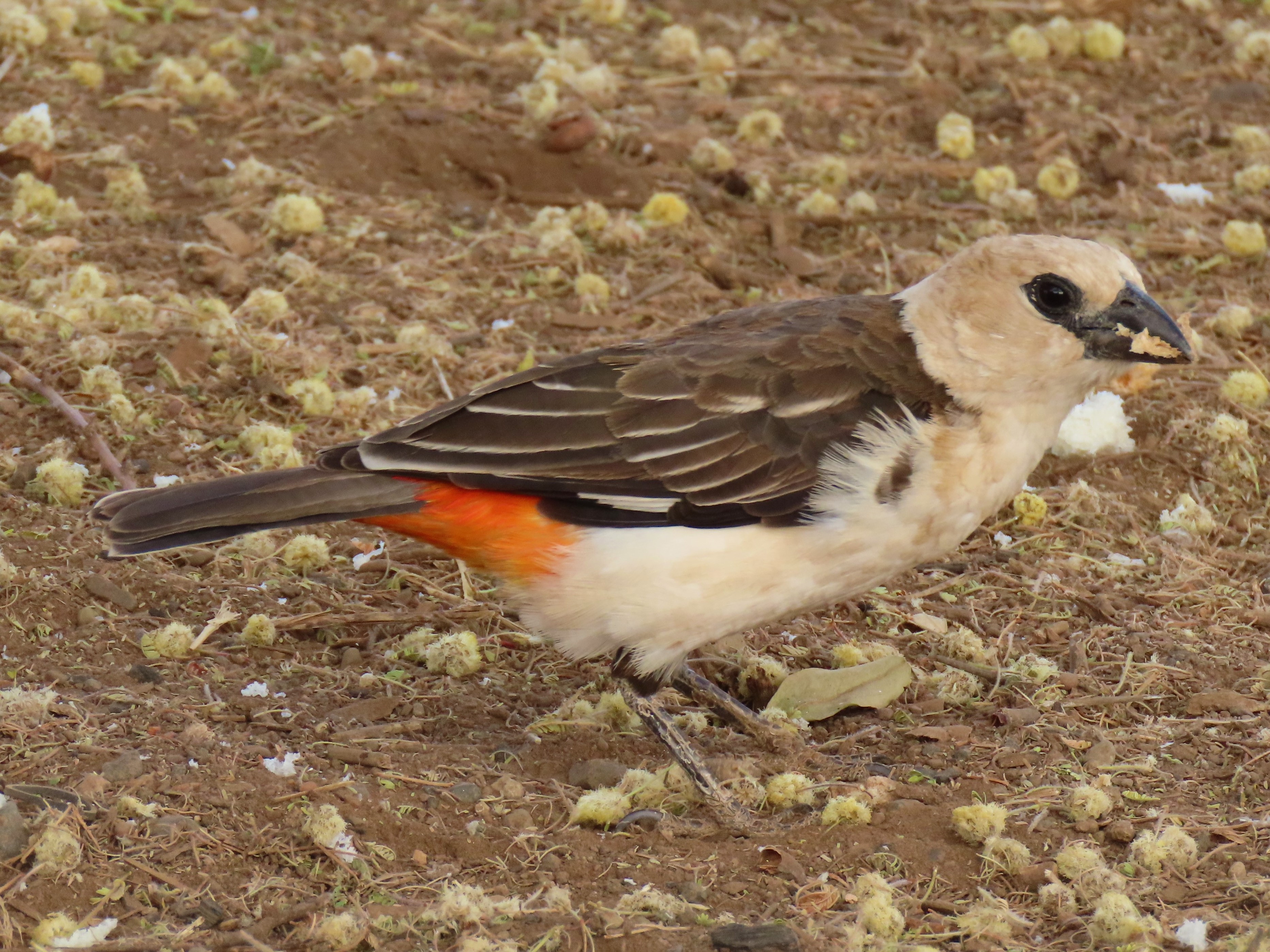
Once again we are the only guests, although the following night we are joined by a young Portuguese couple from Mozambique. They are driving a VW camper and proudly give us a tour of the inside – they built it up themselves, importing what they needed from SA, but getting local Moz craftsmen to help with the carpentry and fittings. It’s very neat.
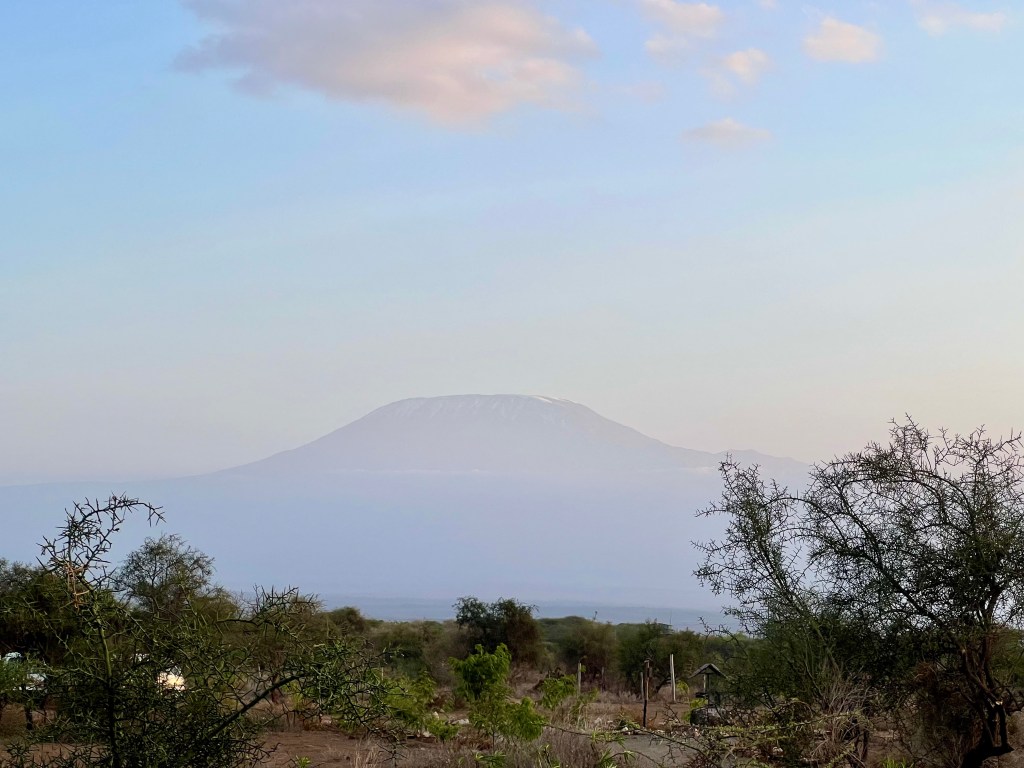
The camp does have a view of Kili, and there it is in the morning – hazy but unmistakable:
The community camp is ideally located. It is just outside the park gates. KWS (Kenya Wildlife Service) fees are based, like most of East Africa, on a 24 hour rule when it comes to daily fee charges i.e. if you enter at 10am you have to be out by 10 am the next day. (As against park fees in Southern Africa which work of calendar days). In most instances KWS allow multiple entry – so it works out well for going in for an afternoon drive and early evening light, and then back in again in the morning. That is our plan for Amboseli.
At the entrance the difference between Kenyan and Tanzanian officials is again evident. To some extent I think the uniform helps. The TANAPA (Tanzania) rangers have military style unforms, whilst the KWS ranger get-up (at least here at Amboseli) is more relaxed – chinos and an open necked shirt, complete with name tag. They seem genuinely pleased to see us, recognise the SA plates and are quick to use that as a hook to chat – how is SA etc. And they have a map for sale! It’s part of a community initiative and the cash goes direct to community coffers – it is a simple laminated booklet – clear map and some short history write up and a bird check list. I wish the TZ parks did this – such a simple way to raise a bit of cash.
Anyway into the park we go and oh boy is it dusty and dry. The vehicles ahead of us (2 or 3 game viewers) kick up clouds of fine powdery dust – its super-fine, talcum like and despite rolling up the windows it finds a way in. We hang back and let it settle.
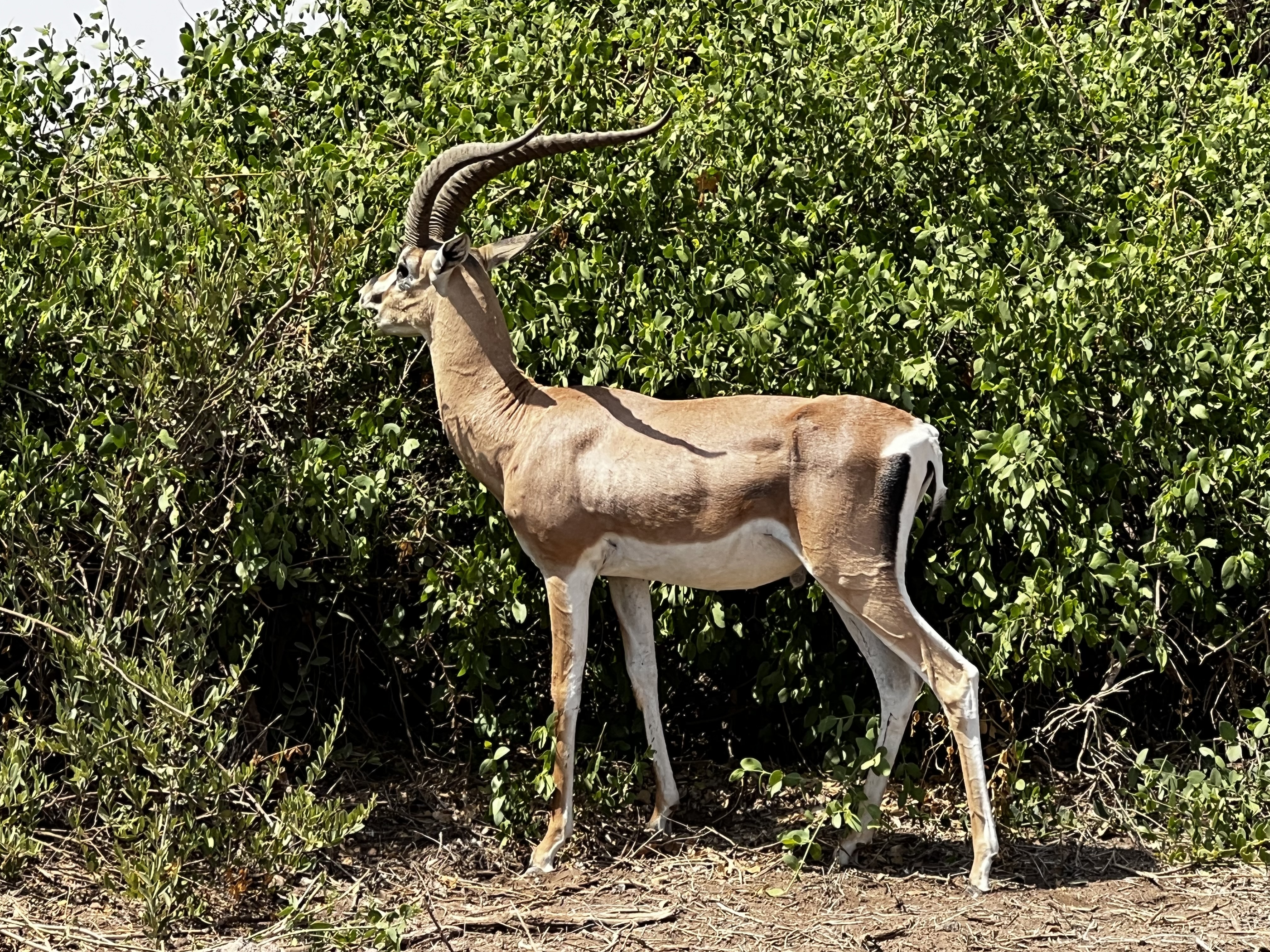
It is very bleak driving in, and you do see a lot of carcasses of long dead animals (mainly wildebeest). These are quite old now – apparently the worst die off happened last year before the short rains. It’s all pretty harsh. I know that KWS did / are supplement feed(ing), but this drought has been going for so long, the gradual loss of condition clearly just too much for some. The gazelles are here in the dry. We see Thompson’s (smaller with the dark flank stripe) as well as the larger Grant’s gazelle.
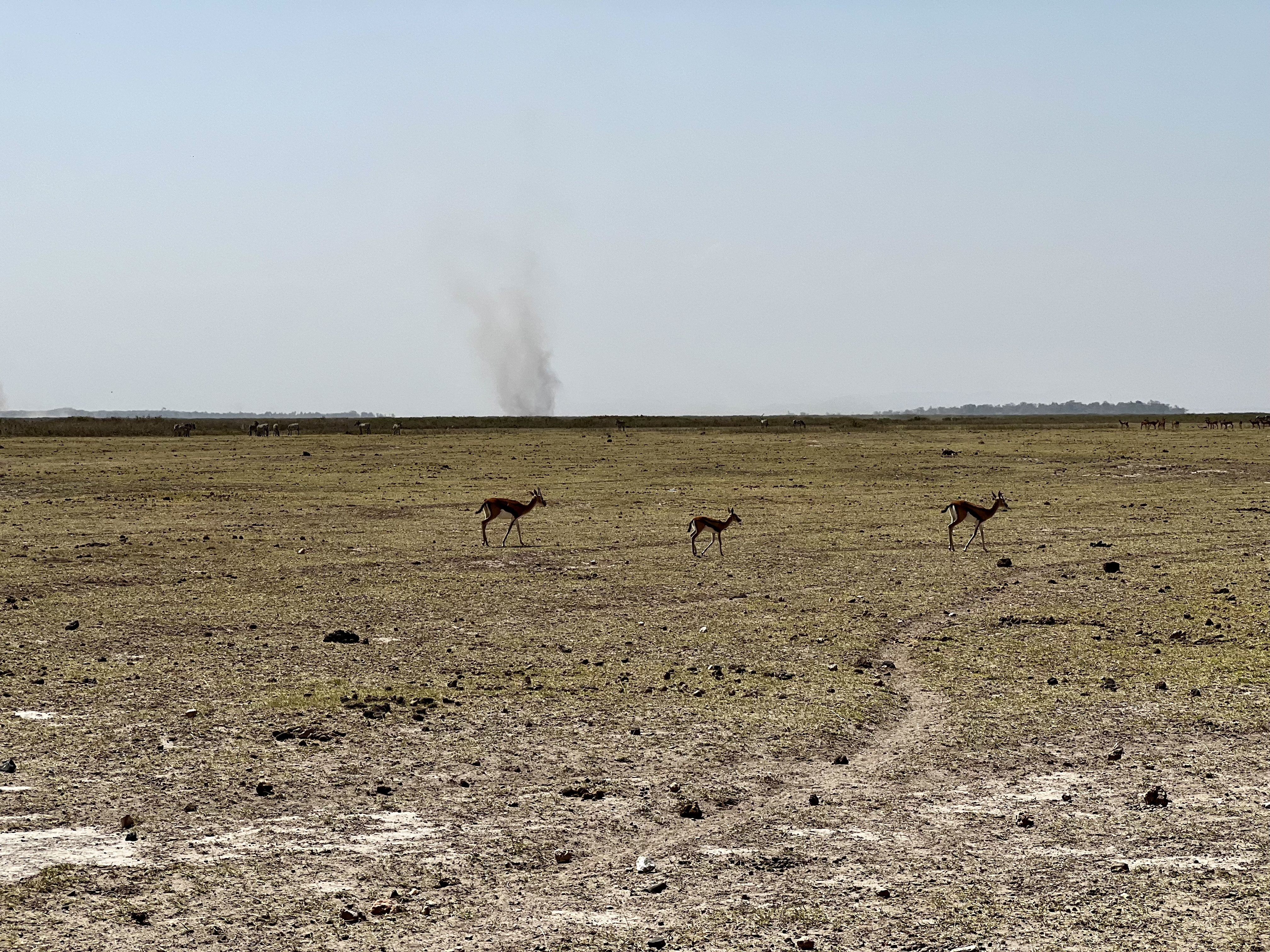

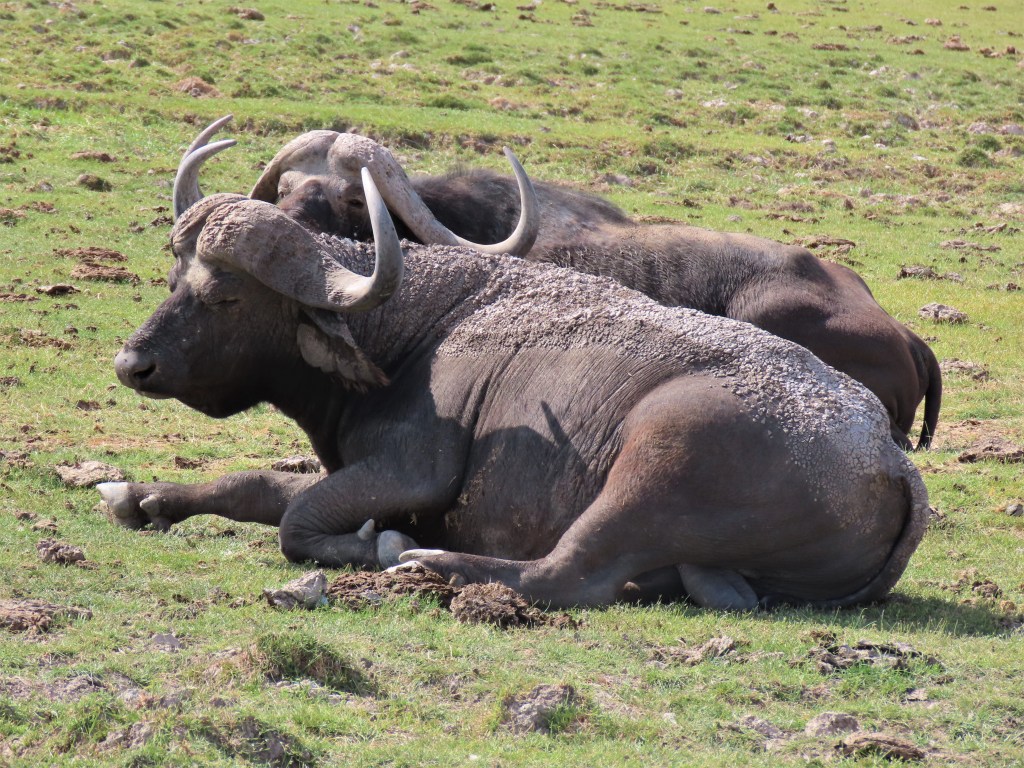
As you approach the centre of the park you hit Lake Amboseli – in essence a huge marsh with open water at the centre. And thank goodness for this. This is what has allowed the game to hang on, and here it is: Big herds of zebra, elephant, wildebeest and buffalo. What game there is looks thin but well and the green of the marsh is a welcome relief from the dustiness. In places you can just make out the outline of Kilimanjaro but its altogether too hazy for mountain views.
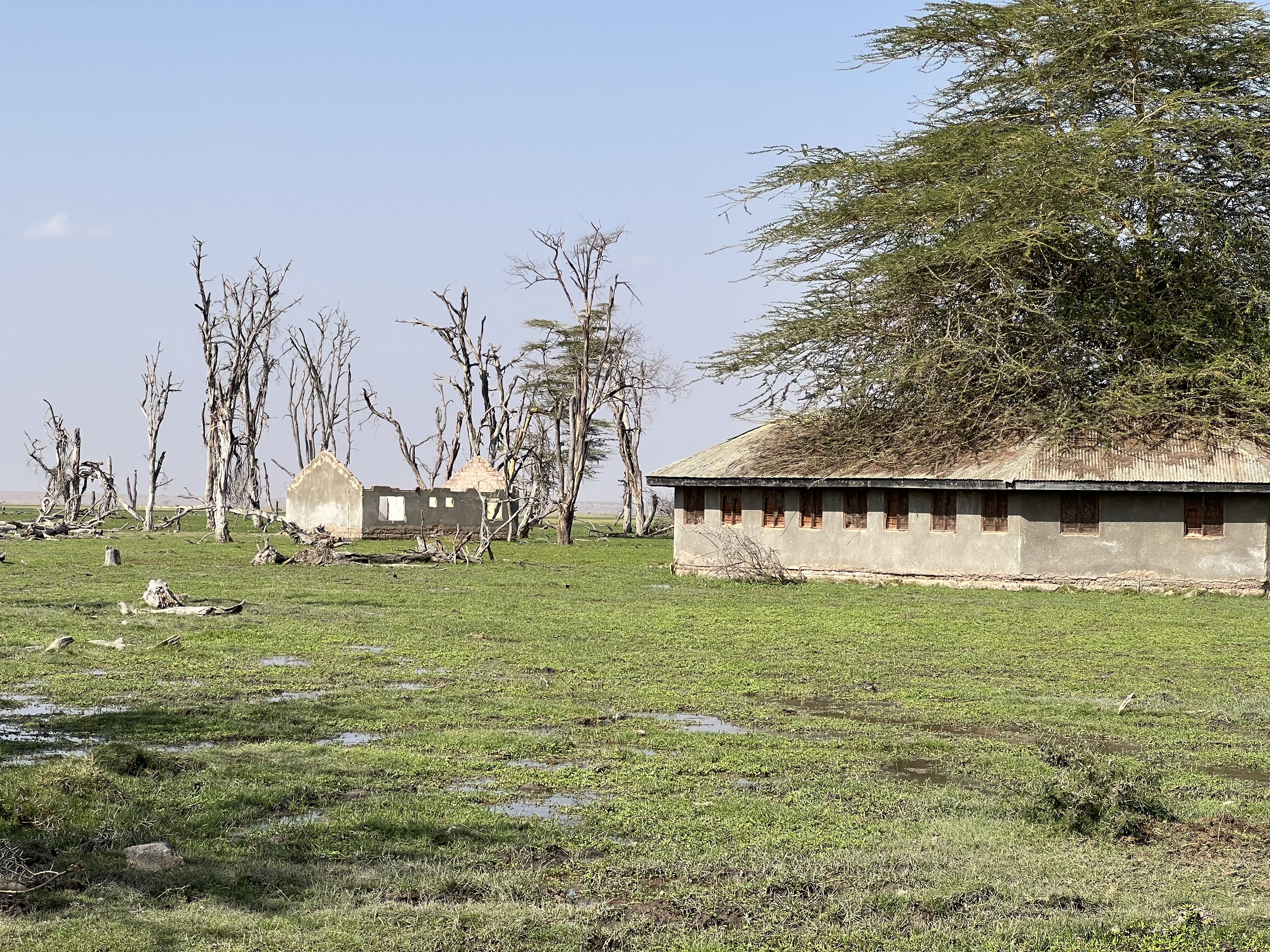
The irony in all of this, is that in the midst of this severe drought, the water levels here at Amboseli are actually rising. You see evidence on this in the all-weather game drive tracks where the roads have been raised and culverts built to channel the flow. The most stark evidence though, is in the remains of sunken lodges that litter the centre of the park. Squint and you can imagine the glamorous lakeside bandas and cabanas in their heyday – these would have been some pretty upmarket spots.
Few remain – in the centre I think it’s just the Ol Tukai lodge hanging in there. It appears busy and well supported currently, but it must be odd for guests arriving and driving through all those abandoned lodges to get to their digs.
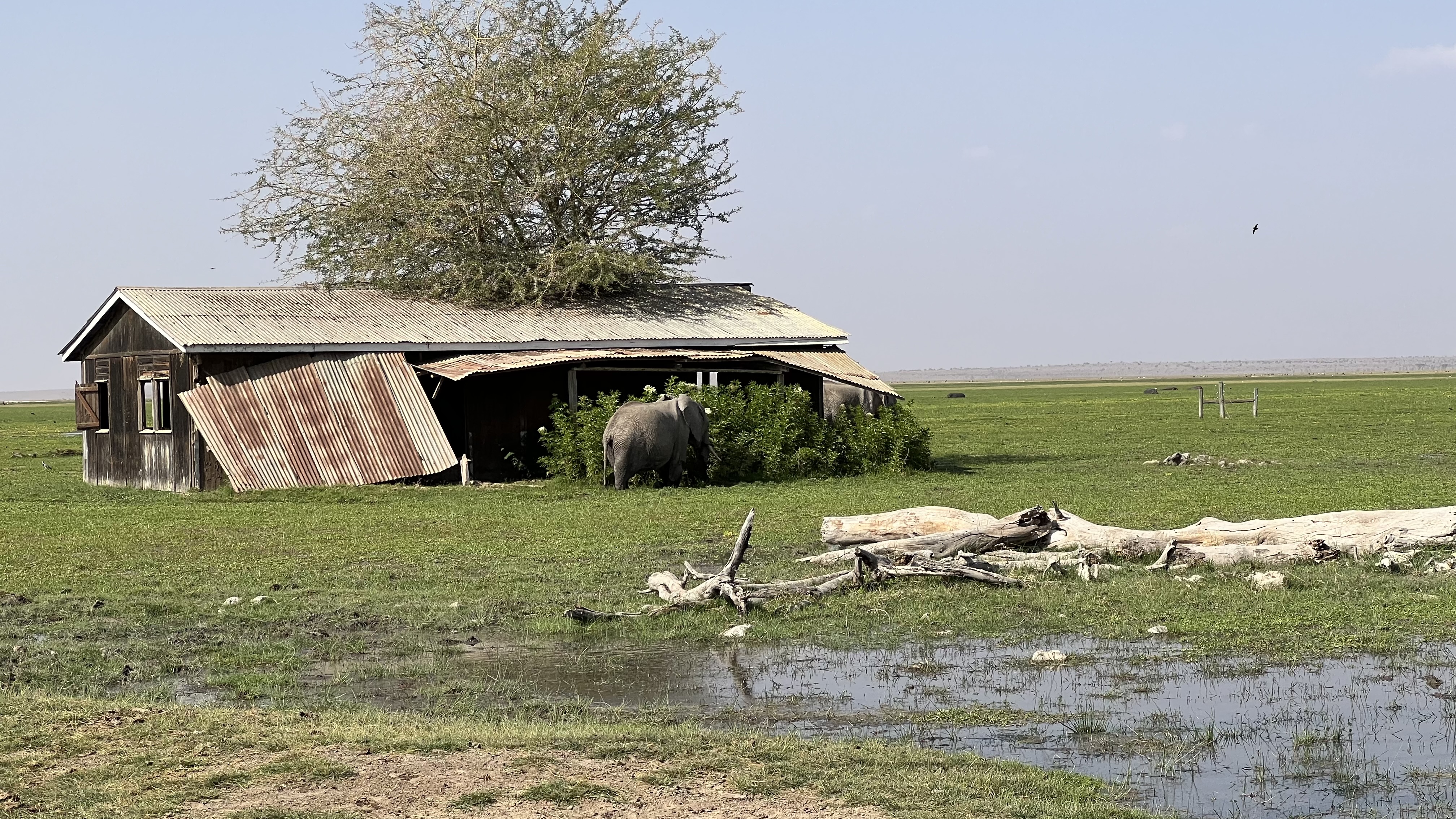
Causes of the raising water levels are multiple and a source on ongoing debate. There is some conjecture that the tectonic activity affecting the rift valley lakes may have a hand in things here too. Certainly 2020 saw exceptionally high rainfall in the Amboseli catchment area, and overgrazing in surrounding areas contributed to increased run off. In fact we should be grateful for the 2020 flooding – but for that the situation would be much worse. The extensive flooding of Longinye Swamp in 2020 has helped carry wildlife through this drought with far fewer deaths than in the 2009 drought when the swamp contracted sharply. Specific causes aside, the fact remains that man’s insatiable appetite for consumption is at the root of all of this. For those interested in further reading and in particular the struggles faced by pastoralists in all of this may find http://www.amboseliconservation.org of interest.
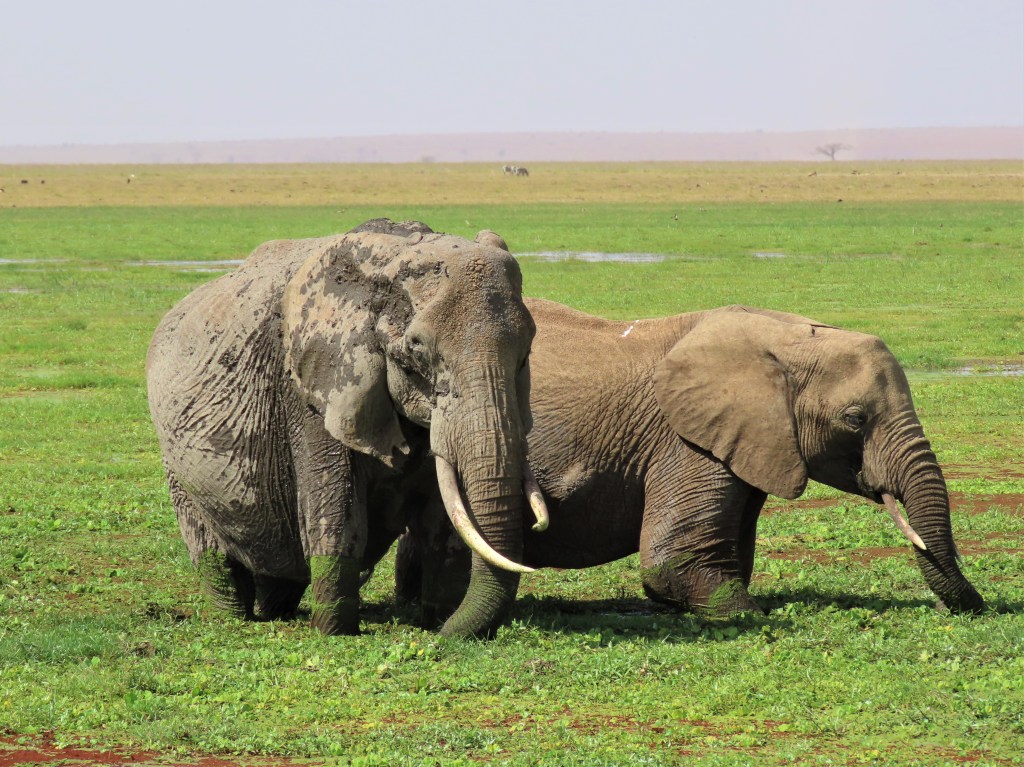
Despite the dust and the missing mountain, the landscape is extraordinary and the elephant are relaxed knee deep in the marsh.
We even spot cheetah in the distance (a far shot below for evidence).
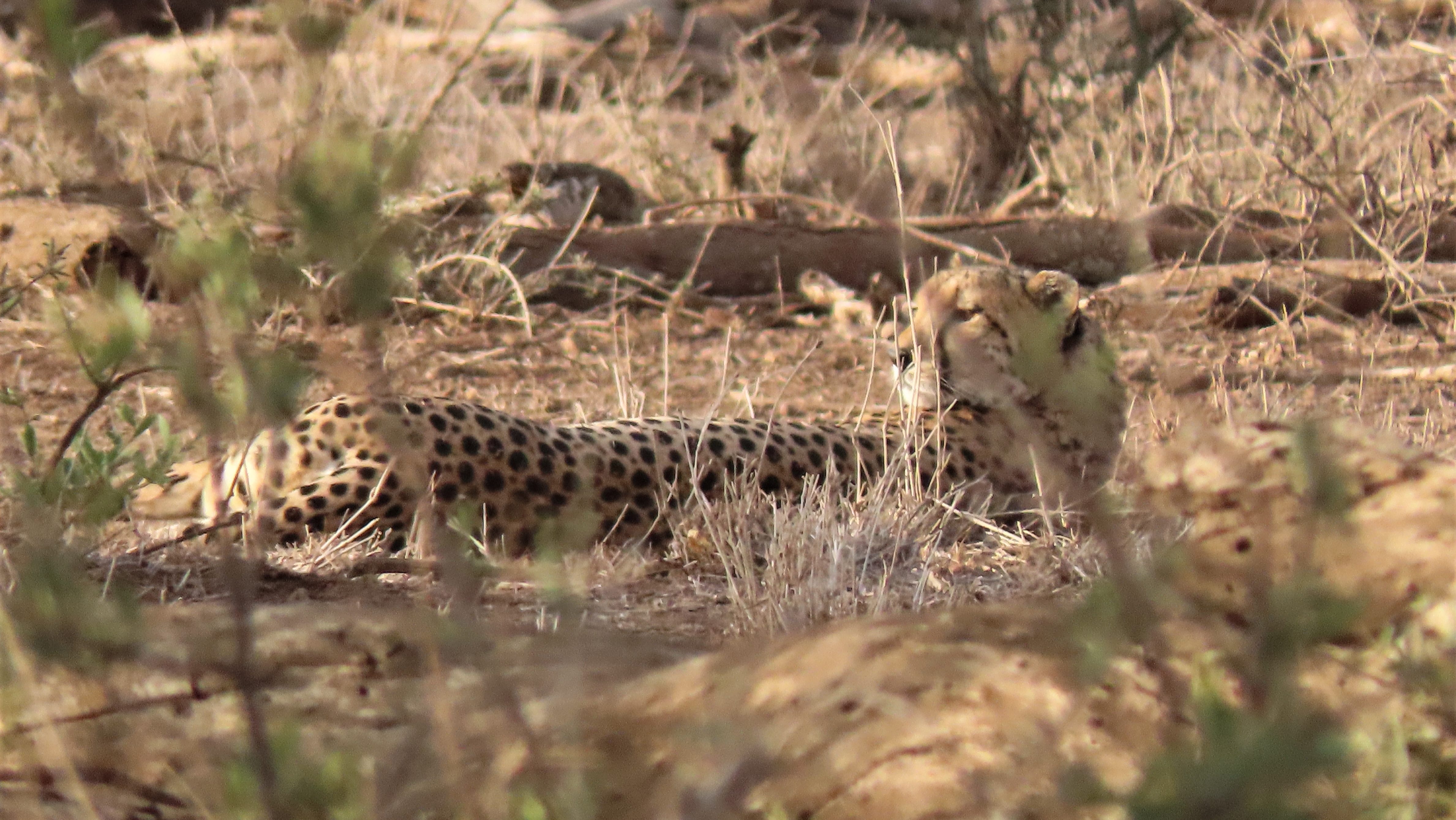
As we watch through the binoculars we realise that it is, in fact, a whole cheetah family. Mum and four almost fully grown cubs. Well done girl – imagine raising 4 young in these conditions. (Before leaving on this trip I had read a report by one WW (a generous and prolific contributor on the East African and Kenyan sub-fora to the 4X4 community forum) of a sighting of a cheetah mother and 4 teenage cubs on Tawi Conservancy (which adjoins Amboseli). She tells an account of her Tawi guide of another successful cheetah mum in the main Amboseli reserve, also with 4 large cubs. This surely must be that individual (or the Tawi cheetah family on walkabout). Unfortunately just too far away for a decent photo of the cubs.
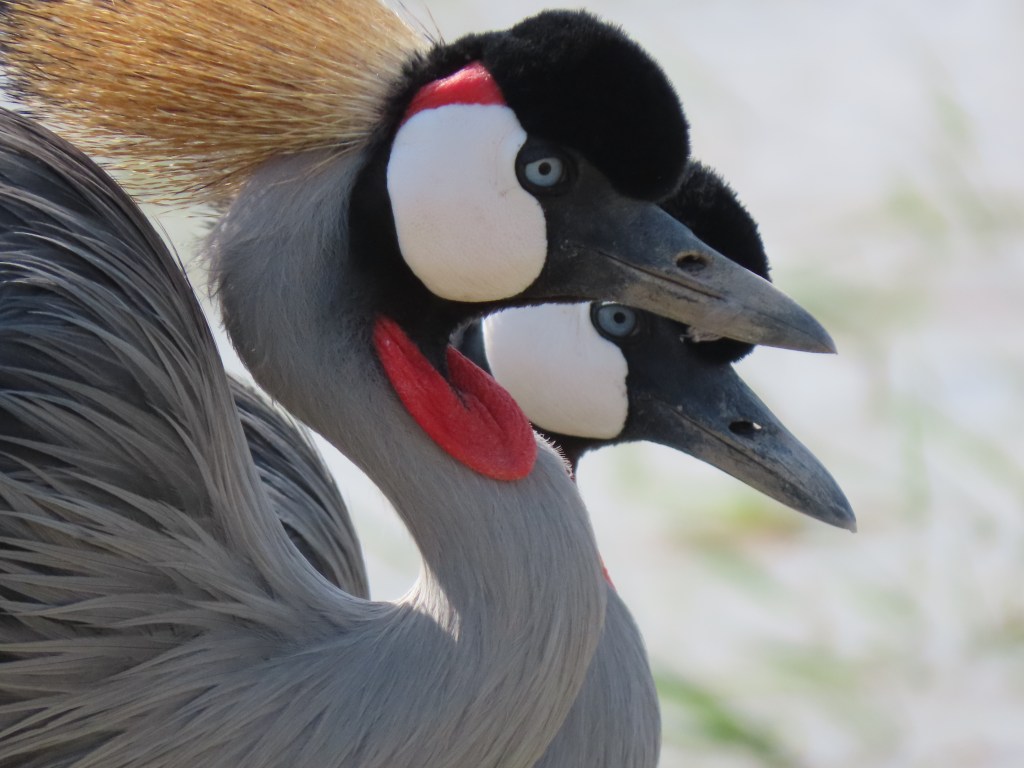
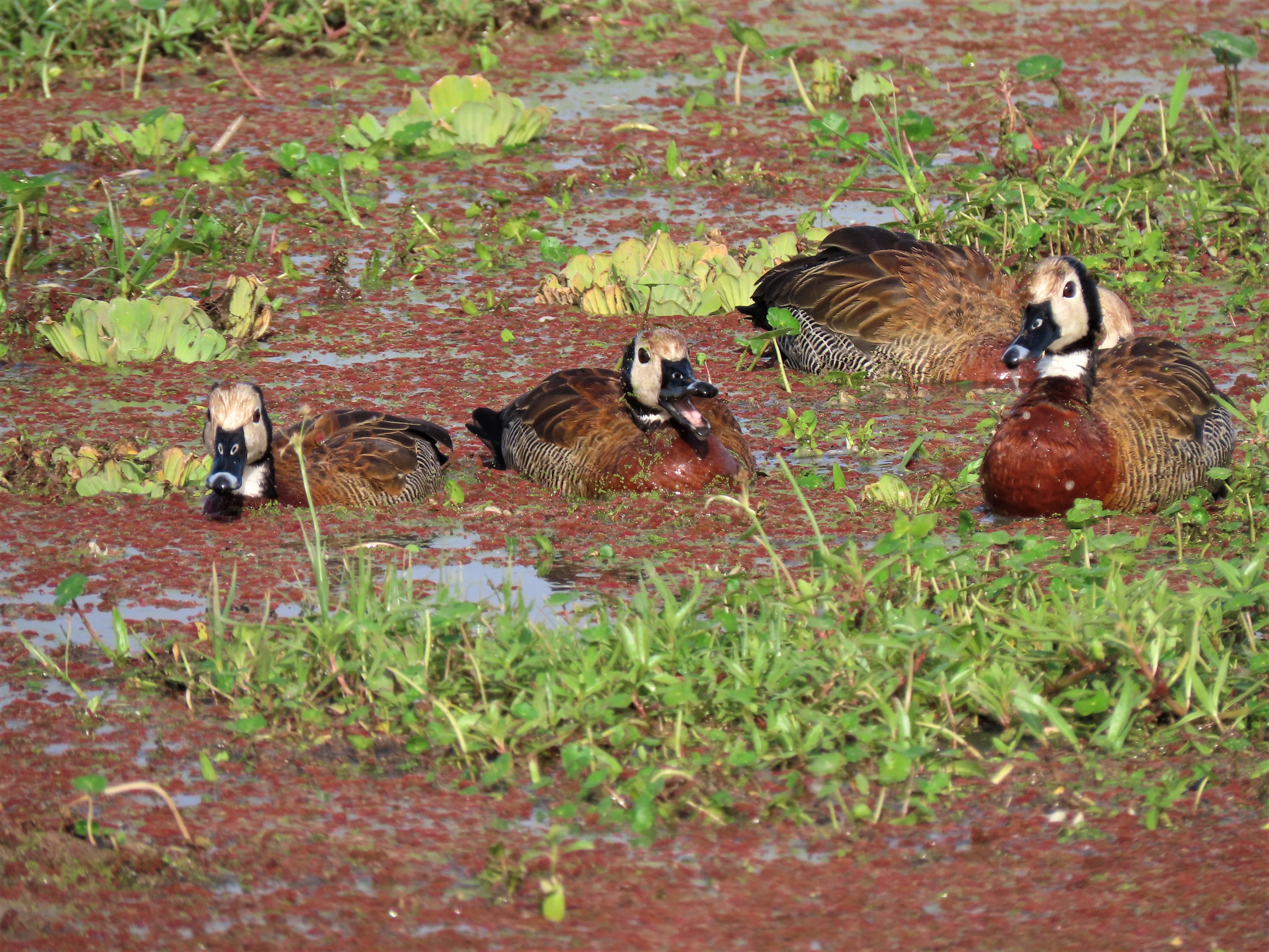
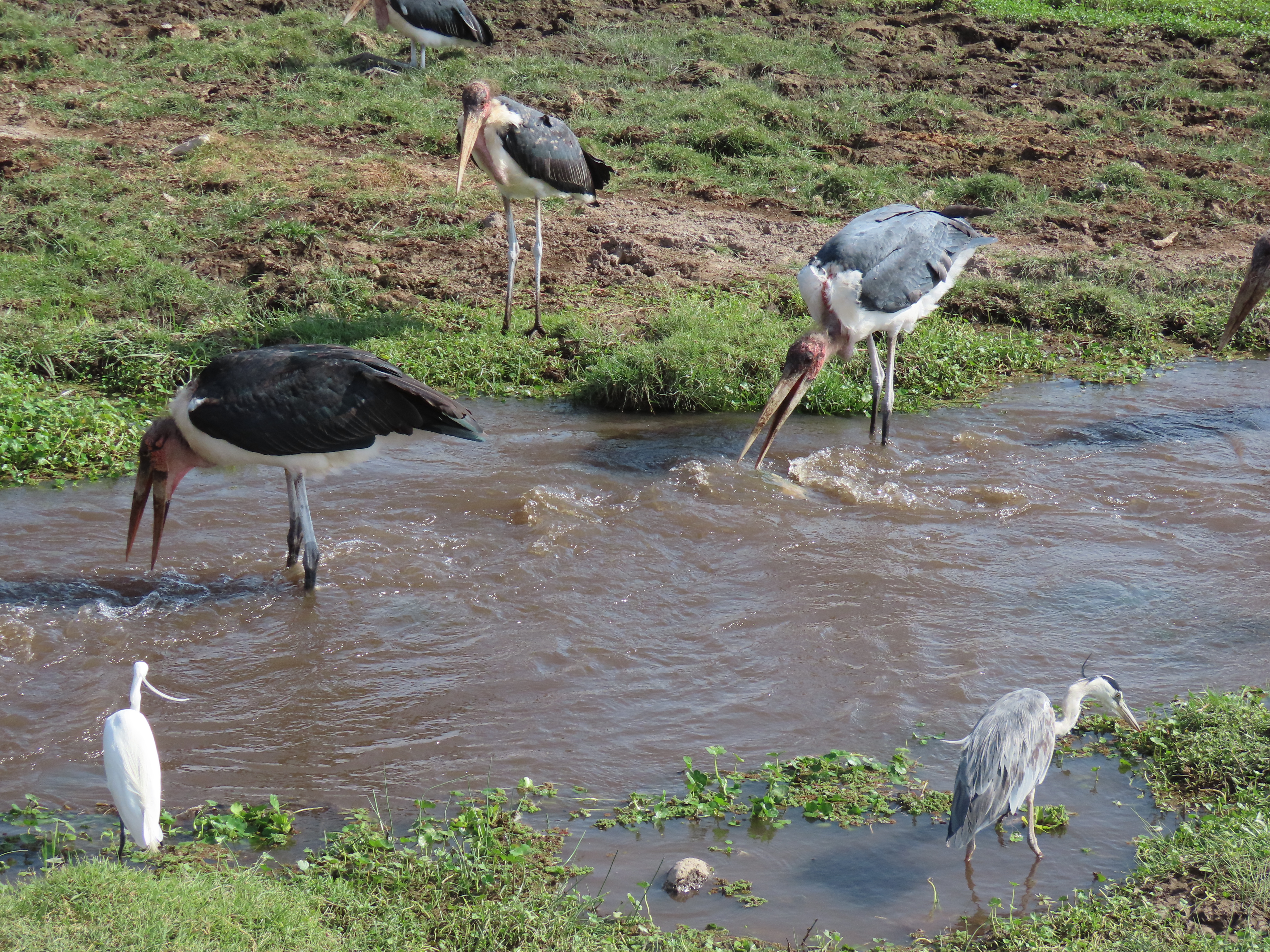
For us however, the highlight of Amboseli were the water birds – oh WOW. Here are some pics – we are not the most conscientious photographers and there were many, many other species that we did not capture. But here is a small sample as a teaser.
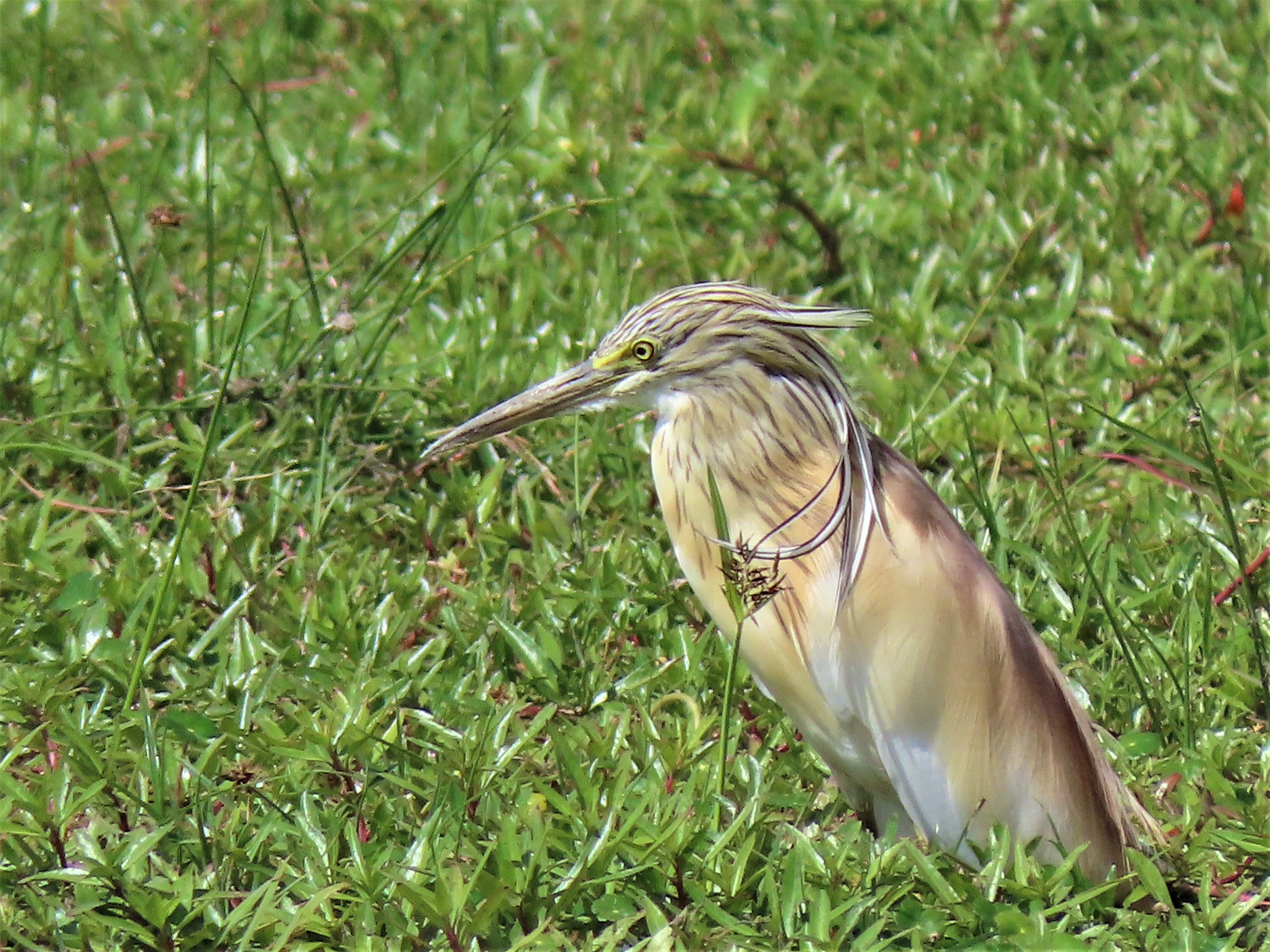
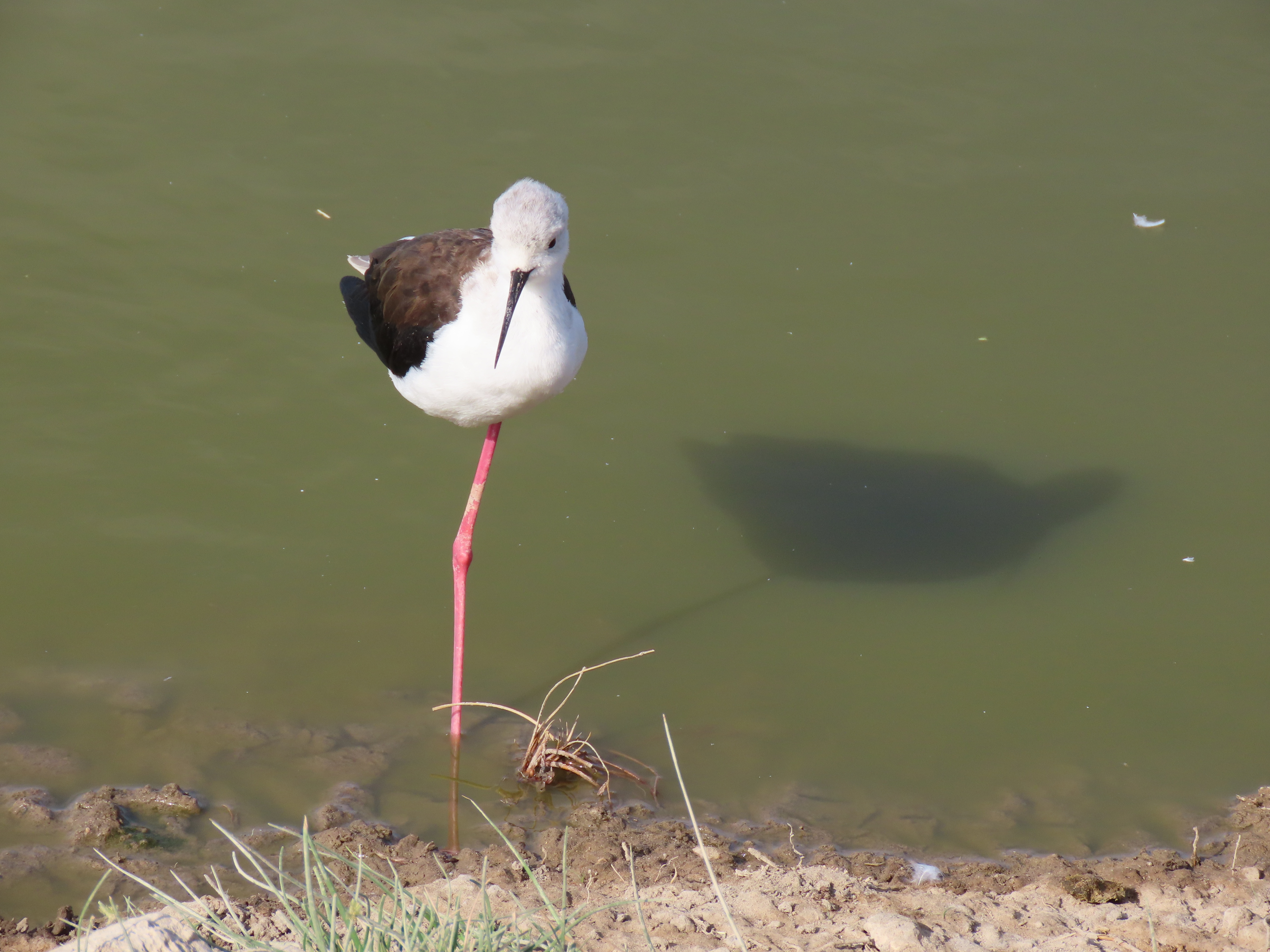
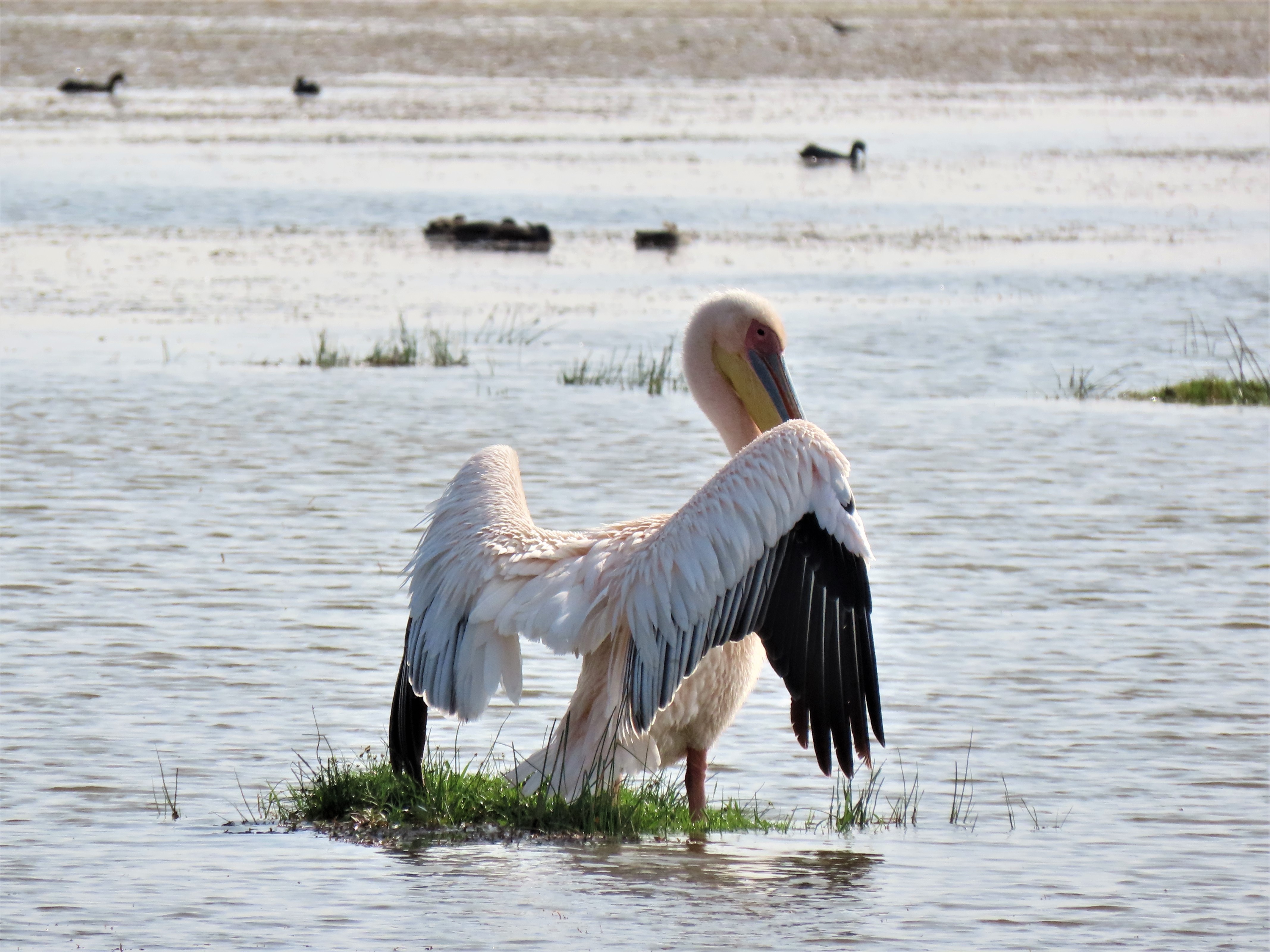
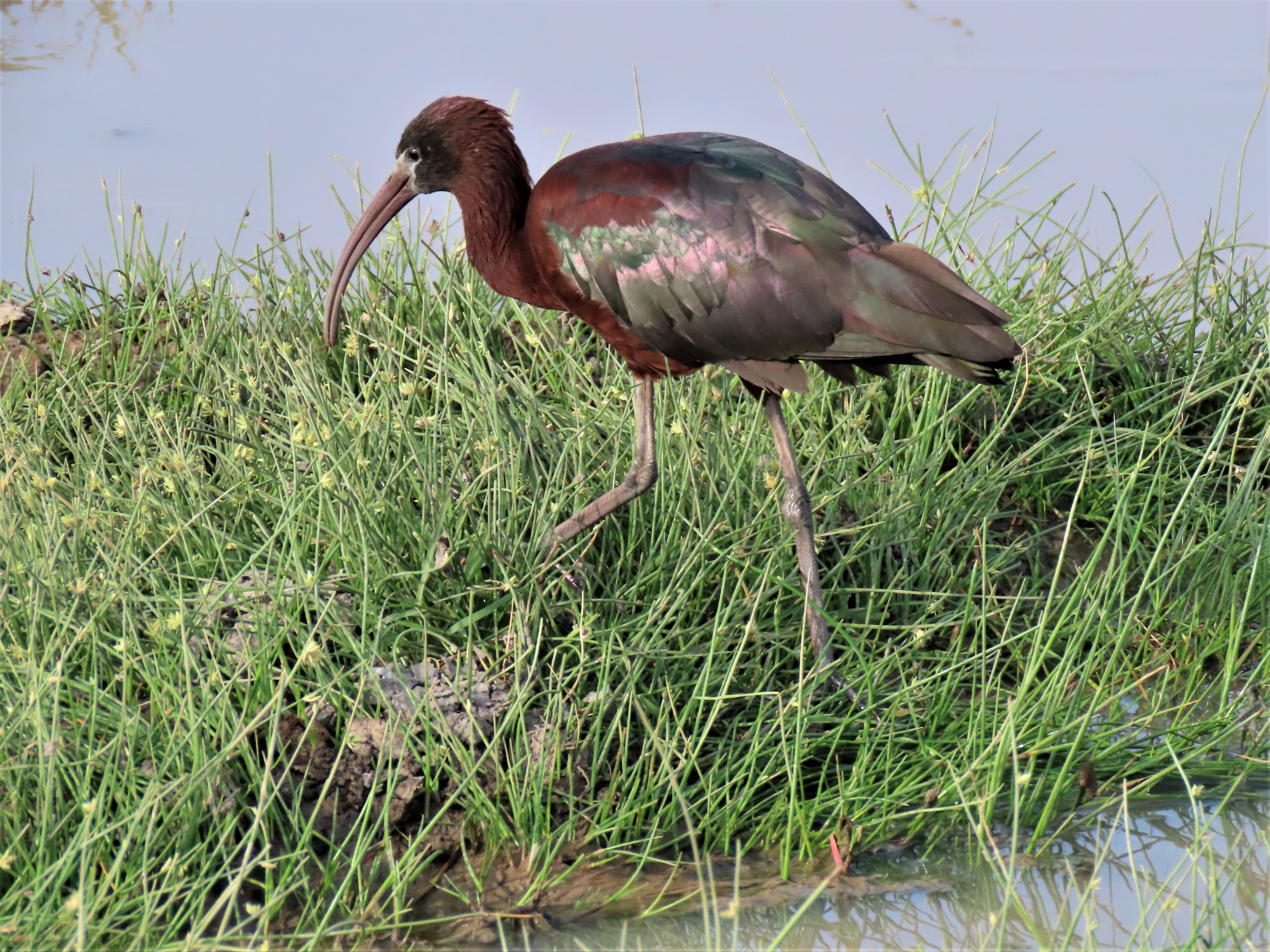
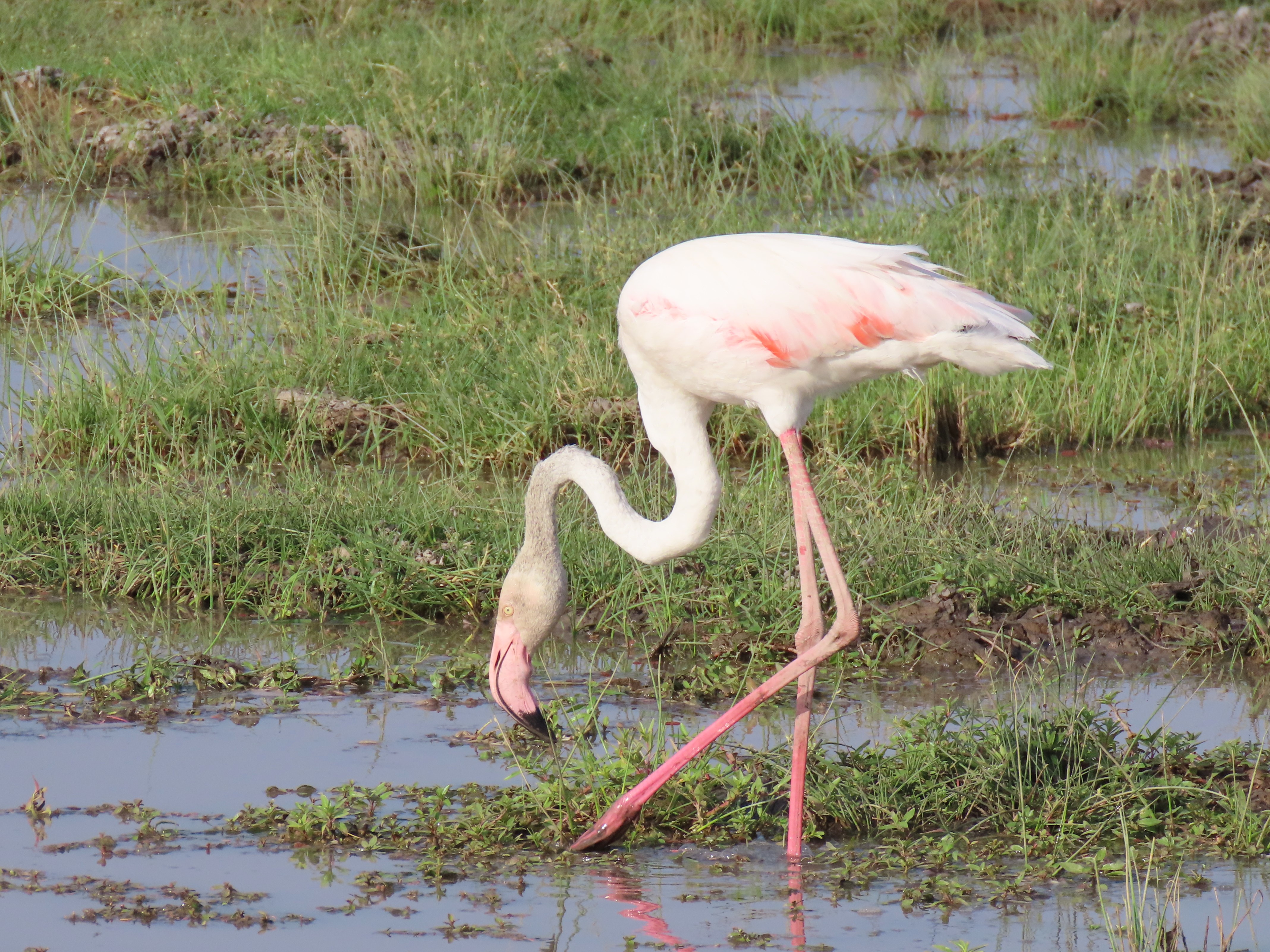

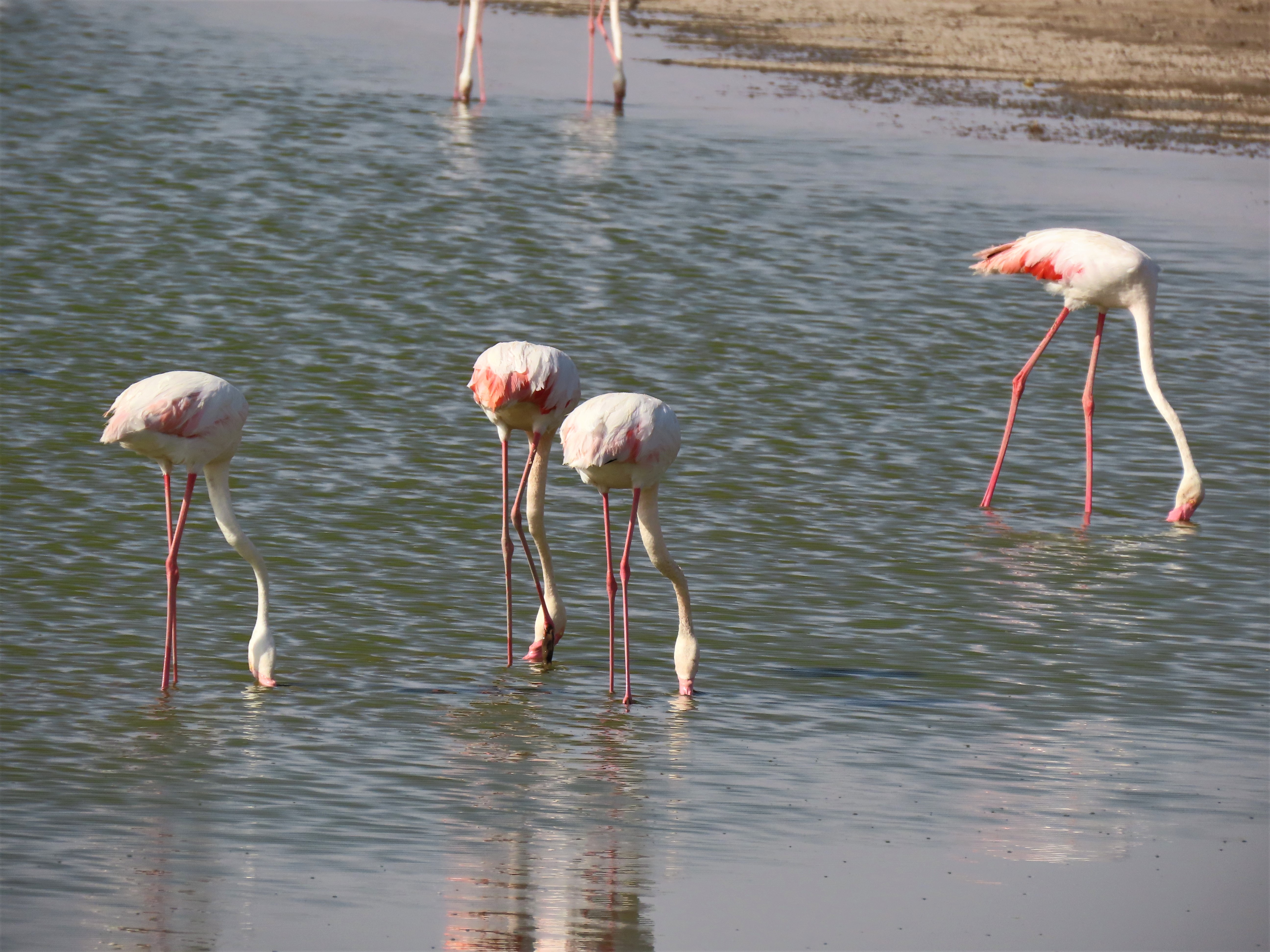
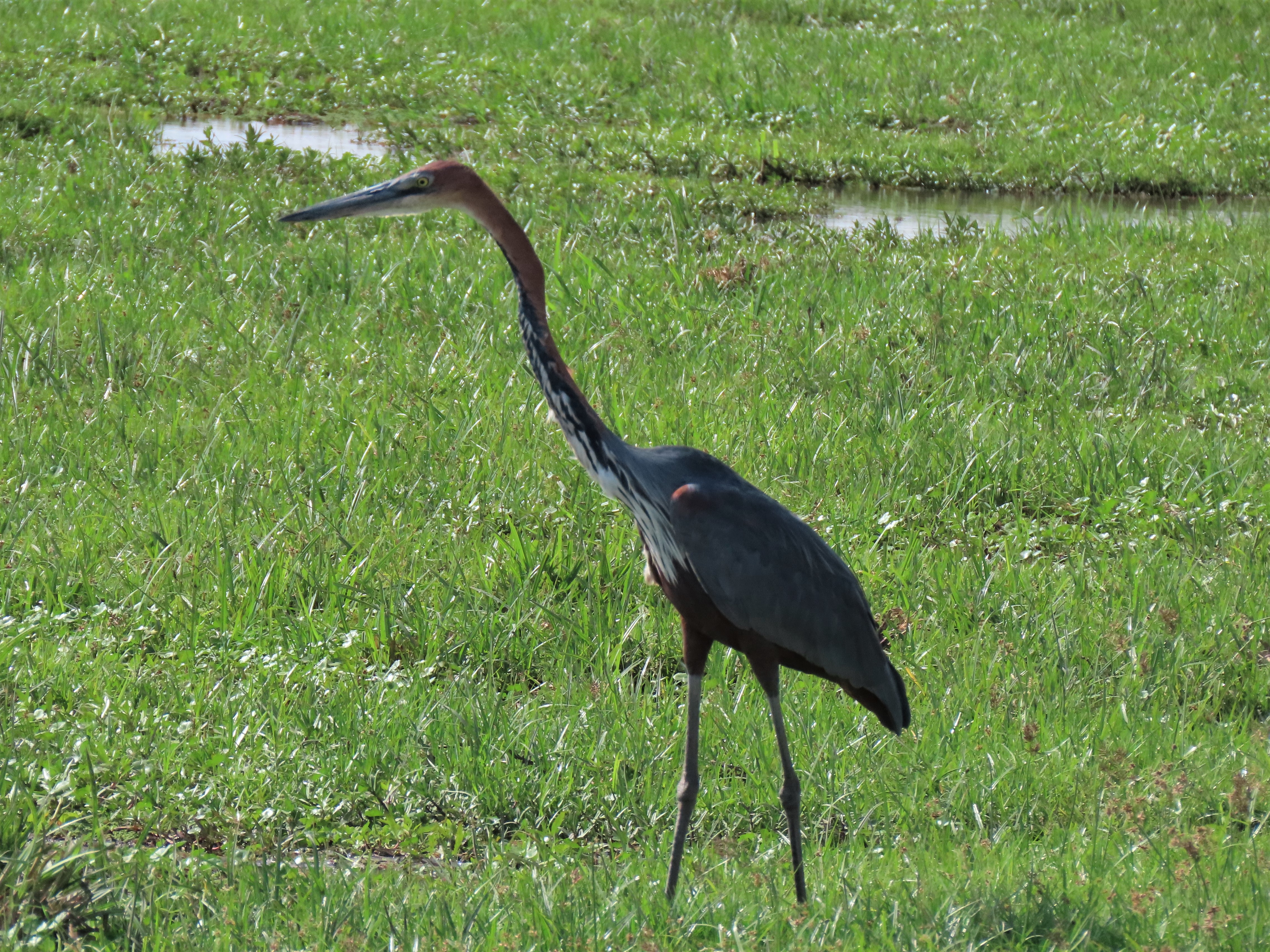
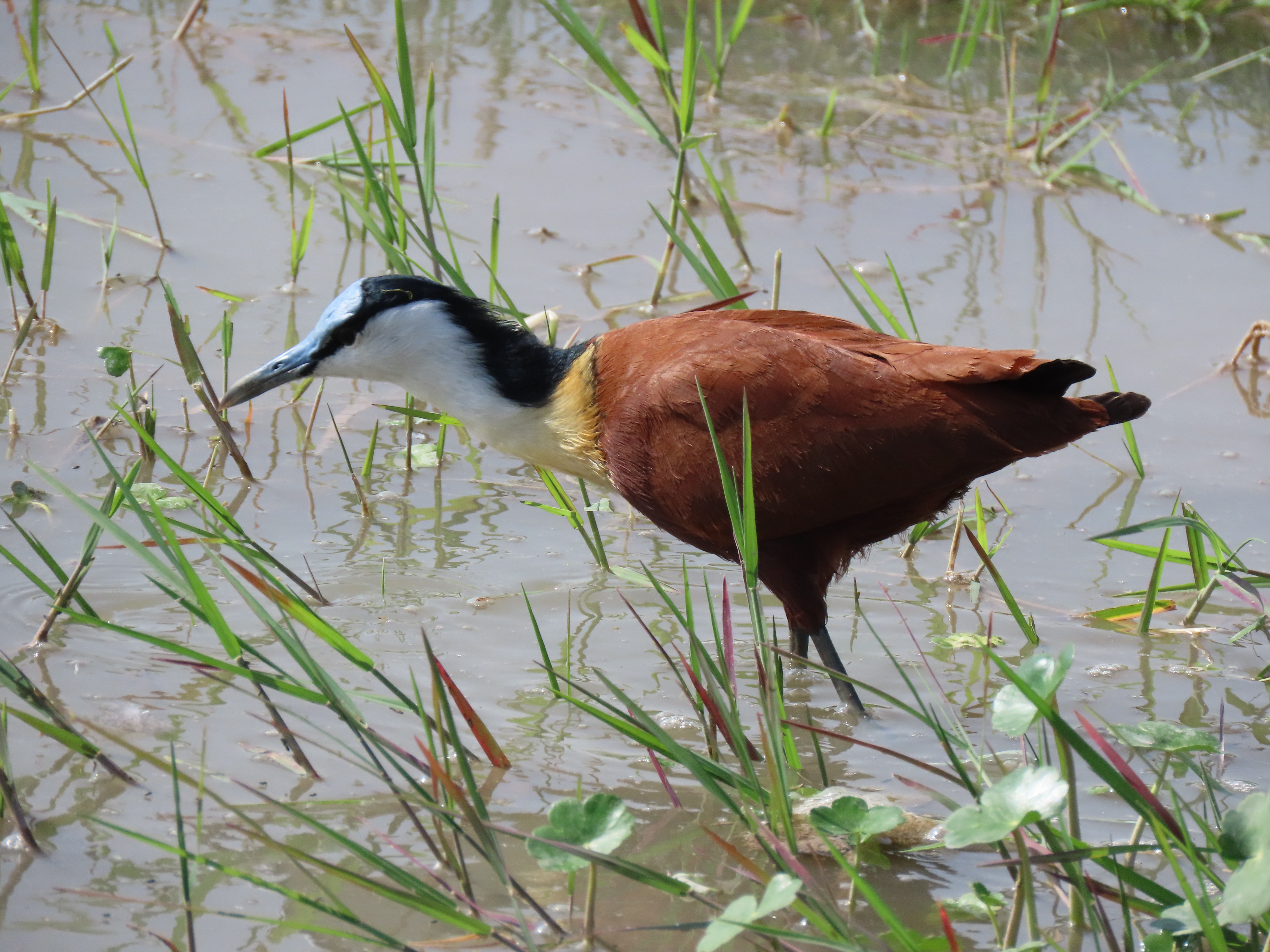
My personal favourite were the spoonbills and their interaction with the black herons. I’ve only seen black herons doing their “umbrella” fishing thing singly or in pairs before. Usually they form an umbrella, shading the water with their wings and waiting patiently (seemingly for hours) for prey to swim underneath and relax “in the shadows” before being nabbed. It’s a game of patience.
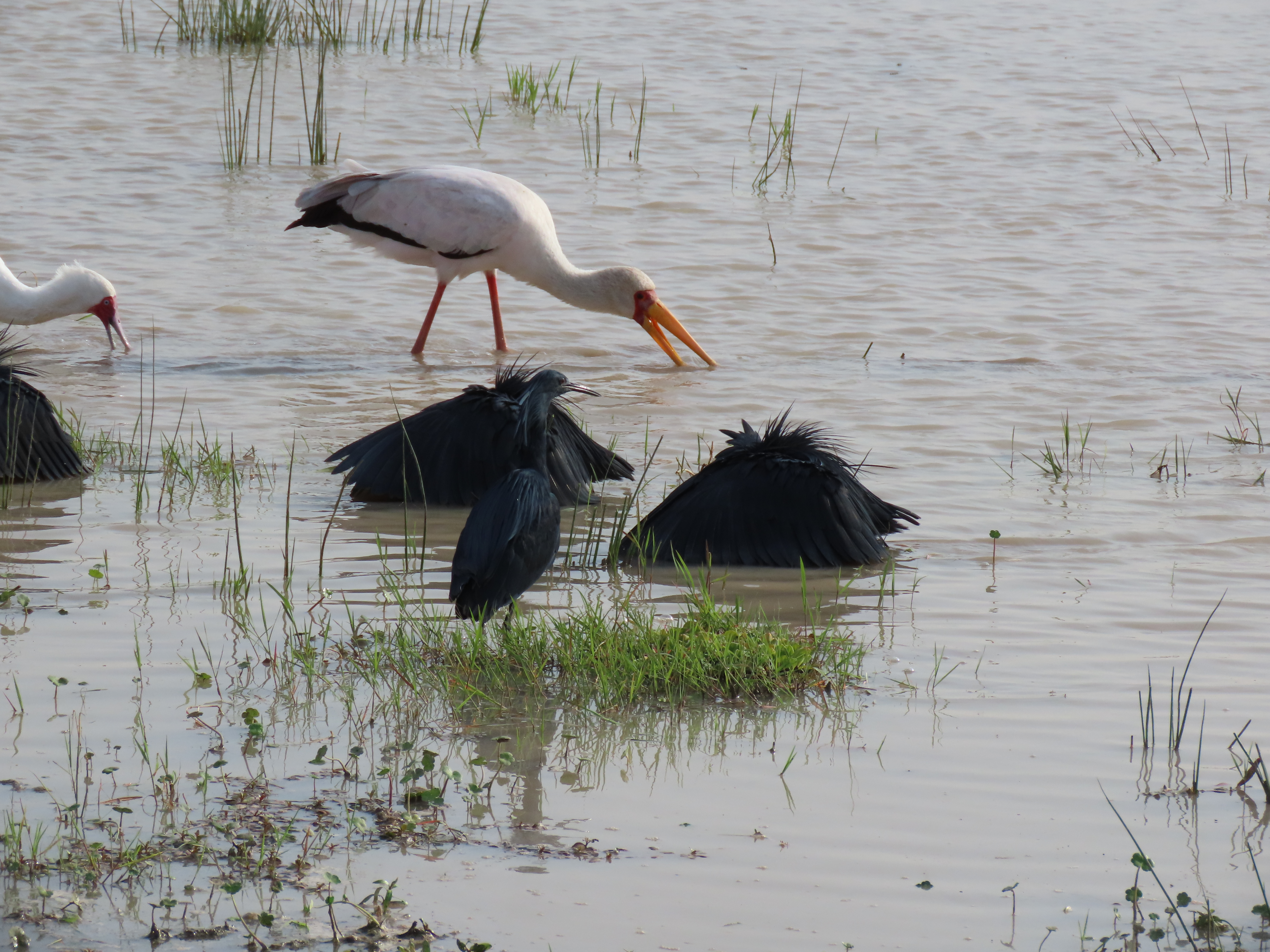
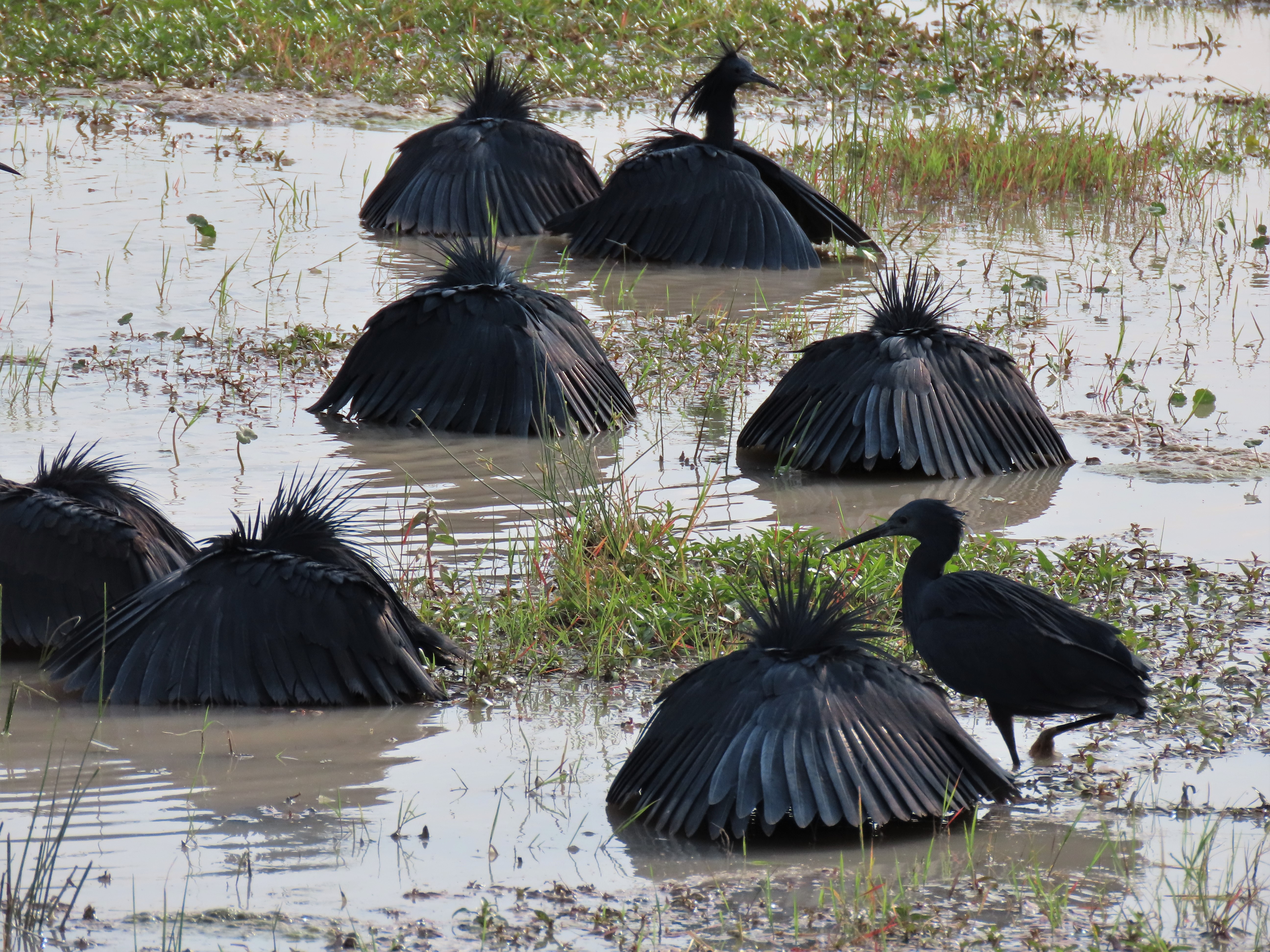
Unless you are in Amboseli and there is so much food about (and all on the go) that you don’t know what to do. Stop, umbrella, ooops missed it, fly forward, umbrella, get pushed out the way by a spoonbill, hop forward, umbrella again etc. etc. It’s quite comical. Every now and then one breaks ranks and just dives in head first. I took a quick video of this:
We enjoyed Amboseli very much despite the haze and the dust. The KWS rangers here were exemplary – helpful, interested – they even remembered our names when we came back for our return visit in the morning. A return to Amboseli, in the green, is on the list for future Kenya visits, especially as I don’t think we saw the park in its prime.
Next up Tsavo West and Tsavo East
NOTES FOR TRAVELLERS
Tanzania to Kenya border crossing
- Tarakea / Oloitokitok border highly recommended for various reasons:
- small border so quicker, fewer trucks and touts.
- road up is beautiful as it twists and turns through the green. Even without the expected Kili views
- Easy to go from TZ (Arusha or closer) and be at Amboseli early afternoon
- Had to insist that TZ stamp out the carnet (they were only interested in the White TIP paper). Seemed confused by the carnet. Did not fill out or take the “middle” bit – much to the tut tut of their Kenyan counterparts. I have since torn it out myself.
- On Kenya side we were asked for Covid certificates (first time anyone has checked)
- Carnet worked like a dream
- I was not asked to apply for a FPV (foreign vehicle permit). I did ask specifically about this as other travellers have had to get this / fallen foul of this requirement. Plus reports of the hassle of having to renew same. I was told that it is not necessary if you have a carnet. (We have since left Kenya and I wasn’t asked for the FPV on departure nor at any of the roadblocks in Kenya. I didn’t ask about it again on departure as I thought let sleeping dogs lie. ….so the jury is still out on this).
- South African’s get 30 day visa on arrival, but I think they still encourage e visa for this? We had applied for online (and been granted) an East African e Visa a few days before. This is valid for 90 days travel though 3 East African countries (Rwanda / Uganda / Kenya) (NOT TZ) and allows for multiple entries across all three. Cost $100 each plus a small admin fee (1$ or 2$). Figured that even if we don’t get to Rwanda and Uganda on this leg, this will save us the pain of having to renew Kenya visa.
- E Visa application process is easy. Mine went through first time. Deb’s was a bit glitchy but went through eventually so persist. They ask for copies of your passport etc. I had diligently scanned pdf’s of these at home and stored them on my PC. Needn’t have bothered as system only accepts small .jpg files anyway, so I just took photos of what I needed and attached that. Are asked for an itinerary (I typed a para, took a screen shot and attached that). Ditto I typed up a receipt for our (non-existent) Kimana booking and took a photo of that. It really is just a question of ticking the boxes. They also ask for details of previous Kenya visits and evisa’s so make a note of these if they are in an earlier passport.
Kimana Community Camp:
- Nice setting, Kili views
- Excellent location near park gate
- Ablutions OK, flush loo
- Ksh 1 500 ppn (about $12)
Amboseli
- $60 ppd plus $5 for car
- Map 1 500 Kenyan shillings
 Bonnievale to Burton Fleming