4 – 5 February 2023
200 metres, that is roughly the length on the one-stop border compound at Nakonde / Tunduma. Just 200 metres, but it may as well be to the moon and back for the difference it makes.
The moment you drive into Tanzania you know you are in a different country. There it is. Right in your face. So many people all hustling and moving. Boda boda* drivers hooting and whistling , bajajis** nipping in and out the traffic, traders, goats, pimped up cars, trucks and tankers, women in hijab whizzing past side-saddle on the back of boda bodas, mad busses – all swirling around the large roundabout that the border complex spits you straight into. It’s Africa meets Asia. Lights! Action! It’s intoxicating.
(*) Boda boda is a motorcycle taxi
(**) Bajajis are tuk-tuks – from the brand name Bajaj, the pervasive Indian manufacturer of those three wheeler tuk tuks as well as motorcycles
We are swept up into the action and make our way through the chaos and out onto the open road with a rainbow to greet us.
The road isn’t bad and the driving is easy but slow going. The speed limit on the open road is 80km for trucks and commercial carriers (busses etc) and whatever you will (within reason) for everyone else. The problem is that the stretches of open road are few and far between as the main roads have villages all along them, and the speed limit through these is a strict 50km / hour. This is enforced by traffic police as well as pairs of really mean speed bumps that you don’t want to hit at speed. And there is invariably lots of pedestrian and livestock traffic in these villages, so you don’t want to push it much beyond this in any event. We know this from our previous trips but had forgotten how frustrating this can be. Especially when, like us, you are running behind and chasing the daylight to reach your destination for the day. The border took at least two hours longer than expected (see Notes for Travellers section for the gory details) and our target (Mbeya or thereabouts) is some ways away. Looking at the time and how far we have to go its clear we are going to break what is probably the first rule of driving in Africa: don’t drive at night.
It is a rule that we try hard to stick to. Concern is generally not about hijacking or robbery (although in some parts it is), but rather about hitting something in the road: game or a large pothole, a cow or donkey, or, god forbid, a person. As night starts to fall our immediate worries are people on bikes and motorcycles. None are wearing any hi-viz gear and none have lights o, so they come at you by surprise, looming out of the darkness. As we make our way slowly along we decide to plumb for somewhere we have stayed before: Utengule Coffee Lodge. The comfort of the familiar is very alluring. We are tired, a bit tense driving in the dark, and at least this is a known entity; we know what we are getting and, more important, know how to get there.
I often think about the allure of the familiar and following a well-trodden path vs trying to make your own way or find something novel and different. Especially when it comes to where to stay. I had resolved to at least occasionally steer away from the tested, to try new spots but sometimes it’s easier to return to the known or to stick to the tested.
I think back to a time in my 20’s, off on a gap year, backpacking around Australia and the established trail through SE Asia, Thailand, Vietnam and then India, Nepal. We were so young and fearless, or so we thought. But there we were, all clutching copies of Lonely Planets and trying to look cool. Doing the same thing, hitting the same guesthouses. All queueing up at the Poste Restante desperate for a word from home. Travel in a time before the internet, before GPS – it is almost unimaginable now.
And yet, the more things change the more they stay the same.
The toys are bigger and it’s Bradt for Africa and of course the internet is always there, so now it’s iOverlander, Tripadvisor and 4X4 Community and other forums and self-published reports and blogs, and most (myself included) continue to follow a pretty standard route. Which isn’t necessarily a bad thing, established routes are exactly that for a reason, often taking in the best on offer. But I do think that the availability of information sometimes makes the quest for adventure (whatever that means for you) more difficult rather than easier.
But I digress…
So we phone ahead and yes, Utengule can fit us in for camping and would we like supper? Would we ever. Anyway, Victoria WhatsApps us photos of the menu and we WhatsApp our order back promising to let her know our ETA as we get closer. We find we are using WhatsApp a lot on this trip. Its use is ubiquitous and data coverage very much improved.
We roll into Utengule just after eight to a very welcome lamb curry and ice-cold beer.
Utengule aren’t really up for camping, but they do allow campers to set up next to the helipad and use the tennis court / squash court ablutions. What is good about helipad camping is that a least you know the ground is level. We are a bit obsessed with that (levelness) even carrying a small spirit level like caravaners use to check our levels. We hardly ever get it 100% right but it is something to aspire to. Levels are a thing with a rooftop tent especially width wise – lest one of us (usually me) ends up mashed against the side of the tent in the morning.

So last time we were here at Utengule Coffee Lodge we were in the lodge, now we are on the helipad. Alert readers will note the pattern, revisiting old spots but “downgrading” to camping. It’s not that we’ve suddenly fallen in love with camping although I do enjoy it and the rhythm and simplicity of it (that’s another post altogether). At home in SA we rarely camp when travelling locally, preferring to use our smaller SUV to travel and stay with friends / family or take self catering accommodation. It’s only in the bush proper that we tend to camp.
But on a longer trip like this it comes down to affordability. The cost of fuel and park fees (for non-residents) really drives up the cost of a trip like this and doing it on the weak Rand adds to the pain. So we camp where we can, although we do crack from time to time and take a break from the tent.
Another reason why we are happy to camp more is that we are now better set up with the RTT, solar power, proper storage etc. It is so much easier even for one night stops. Before this we had a ground tent – great for longer stays but a real pain for short stops. Our ‘storage’ was also a semi-chaotic collection of bags and boxes. We are now so much better organised in the cruiser with everything in its place (when I remember).
The following morning and after a good night’s sleep but in a rush of intrepidness (I jest) we set off the next morning to try and find Ngozi Crater Lake.
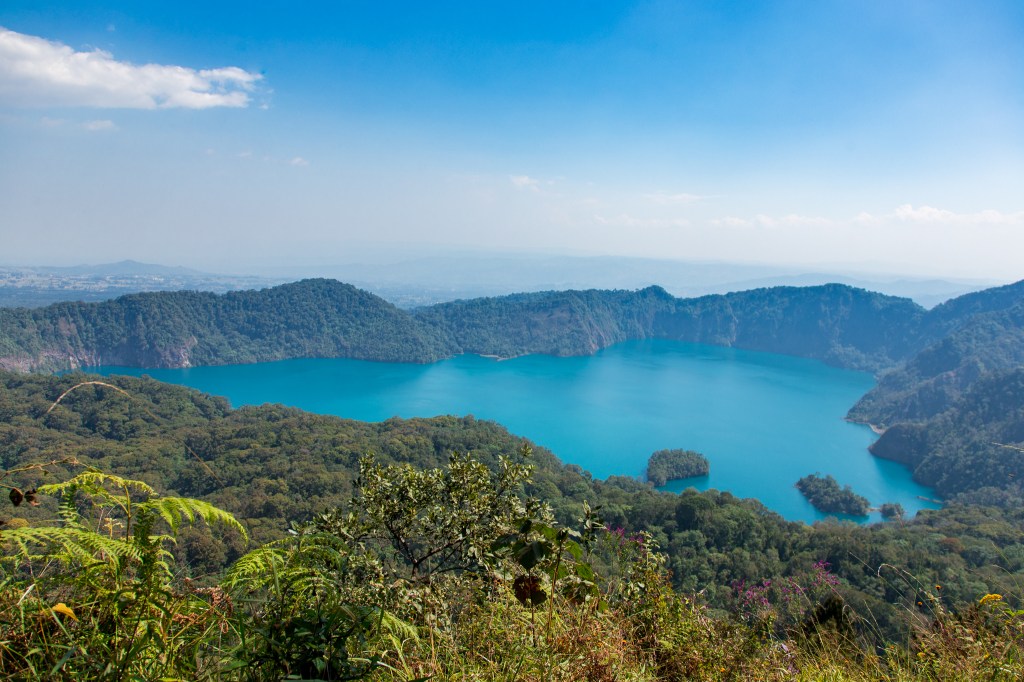
Ngozi Crater Lake is a large volcanic crater lake in southern Tanzania. It is described as having ‘bright emerald green waters’ and breath-taking on a warm, sunny day. It’s also the subject of local folklore and other myths – including hidden treasure. One myth is that fleeing German soldiers dumped gold into the lake, meaning to retrieve it later and put a spell on the lake to protect their loot. This causes the emission of poisonous gasses (a limnic eruption?) and/or a twelve headed snake that protects the treasure and comes to the surface on sunny days.
Either way it sounds like a good way to start our foray into Southern Tanzania; being described, as it was, as an easy drive from Mbeya and then an easy walk up through the forest to the crater rim. How hard can it be?
So off we set, blithely following T4A turning off the main road and winding up through small villages and terraced fields. Finally we see a (battered) sign to the lake and turn off. We are immediately set upon by two youths insisting on payment to travel up the road. They have no uniform, no ID, they could be anyone, so we demur. They let us go saying we will “have to pay more at the top to get in”, we just shrug it off and carry on. And on. And on. Until we come to a boom across the track. With no one in sight, but a cell number scrawled on a ‘guardhouse’ building. We debate just opening the boom and carrying on but in the end call the number and to my surprise it is answered. Yes, he is the man on duty. And no, he is not here because he is at church. (OK, it’s a Sunday, but really?). And yes, we can proceed but it is $10 each to enter and he will be along to collect. Okay, fine.
So off we head. On up the trail which gets steeper and narrower as we climb up. The cruiser gurgles in low range but happily trundles up. This is proper ‘jungle’ and the track is very narrow and overgrown in places and I don’t think anyone has been for a while. On we go, narrower and narrower with fallen trees across the track – we either drive across these logs, or just sneak under the ‘bridges’ that they form across the track.

All is well until I get to one where I misjudge it and hit the trunk with (something) on the roof of the cruiser. I brake but our momentum still pushes us forward a bit and we get firmly wedged. I try to reverse but we are entangled in vines and foliage all in an around the awning, jerries and solar panel – all ensnared and twisted. We clear some and try again edging back slowly and suddenly CRACK! The trunk has broken or cracked somewhere and now we have a bloody great log teetering and groaning on our roof.
We get out to see if we can lift it or lever it off. No way. It’s too heavy. Roll it maybe? But even if we could, rolling it backwards or forwards means serious damage. Aargh. Here we are. Stuck in the jungle. With a log on our head.
And it is hot. And humid. And lots of miggies. And it this is not lekker. And it is my fault. And we are both being polite. Which makes it worse.
And then two local men appear out of nowhere, sauntering down the track ahead. They stop and all four of us survey the scene. Eventually we establish that with three people (Deb and the two blokes) pushing up as hard as possible we can take enough weight off to allow me reverse, but they can’t hold it for more than a second or two so the retreat needs to be swift else all will come crashing down on the windscreen or bonnet.
So with a deep breath, and awash with adrenaline, we give it a go. It works! Yahoo! And then the work starts to push / pull this log off the track.
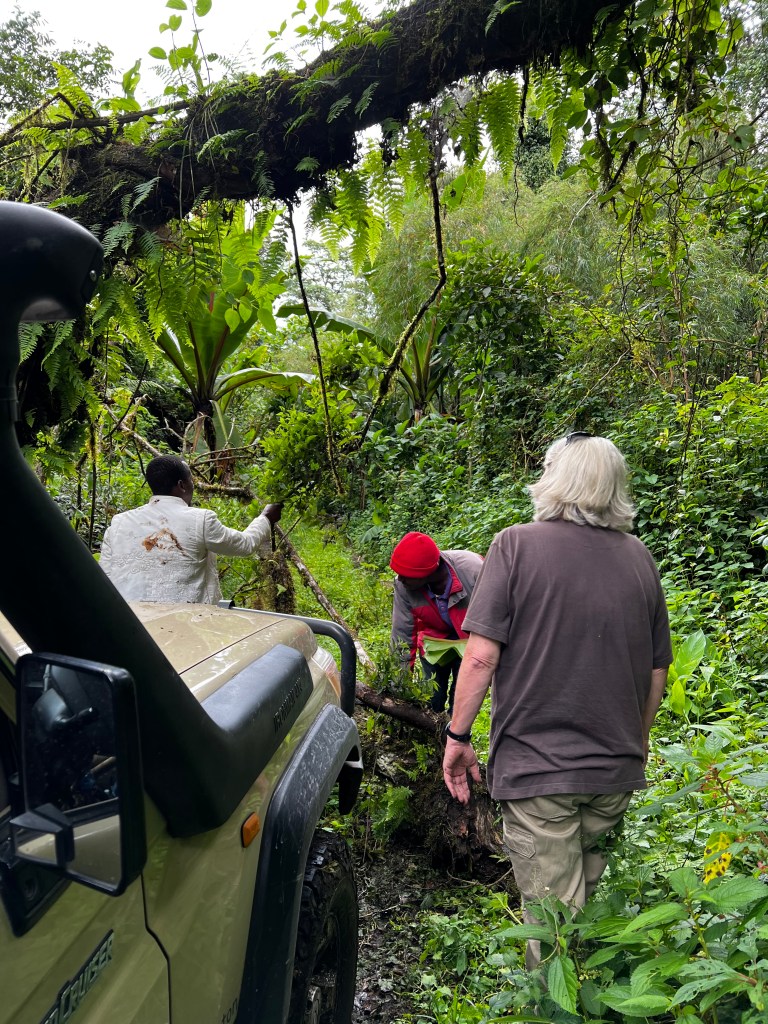
With profuse thanks we tip our helpers generously and they bounder down the track, cock-a-hoop with their Sunday windfall.
And off we set again, up along the narrow track until we find a clearing where the tweespoor ends. Here w e park and continue of foot.
The rainforest is exceptionally beautiful with a tall canopy full of birdsong. We also hear monkeys (we assume) jumping from tree to tree, but we never get a clear view of them. The ground is slippery underfoot (it has been raining on an off for the last week or so) and it is very steep in parts. I’m grateful Dad’s walking stick, but often it’s still two steps forward, one slide back.
Up and up we climb, the track twisting and turning. A steep bit. A flat bit. Another false summit. On we go.
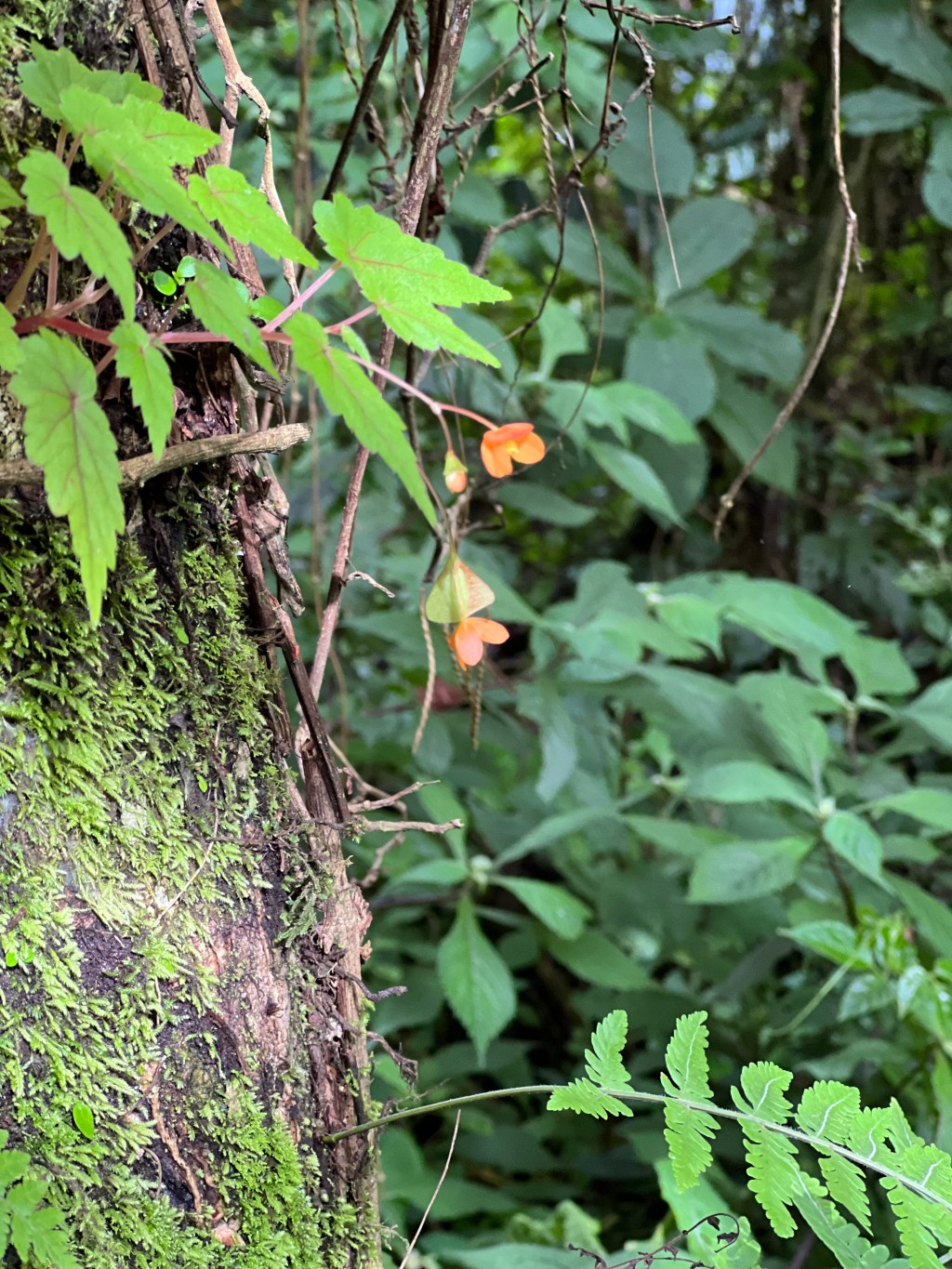
The flowers are amazing. Simple forms of garden plants we know so well in their hybridised form: impatiens, begonia, crocosmia.


All the garden favourites are here as well as lilies and orchids and ferns. It’s a pot plant bonanza!
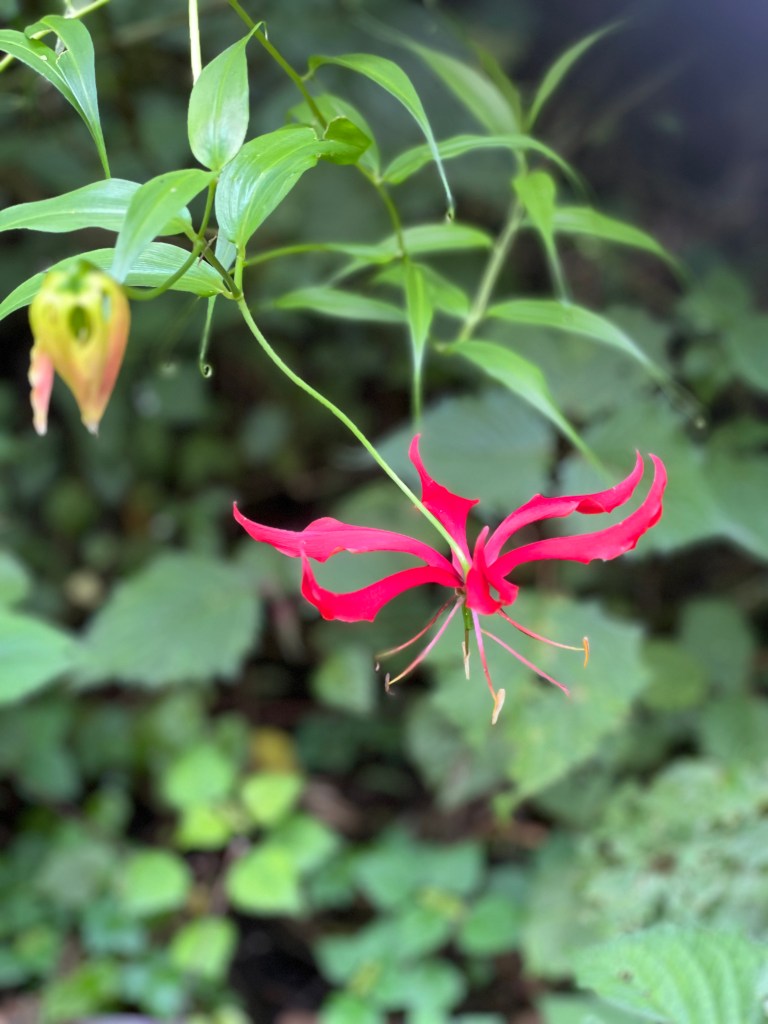
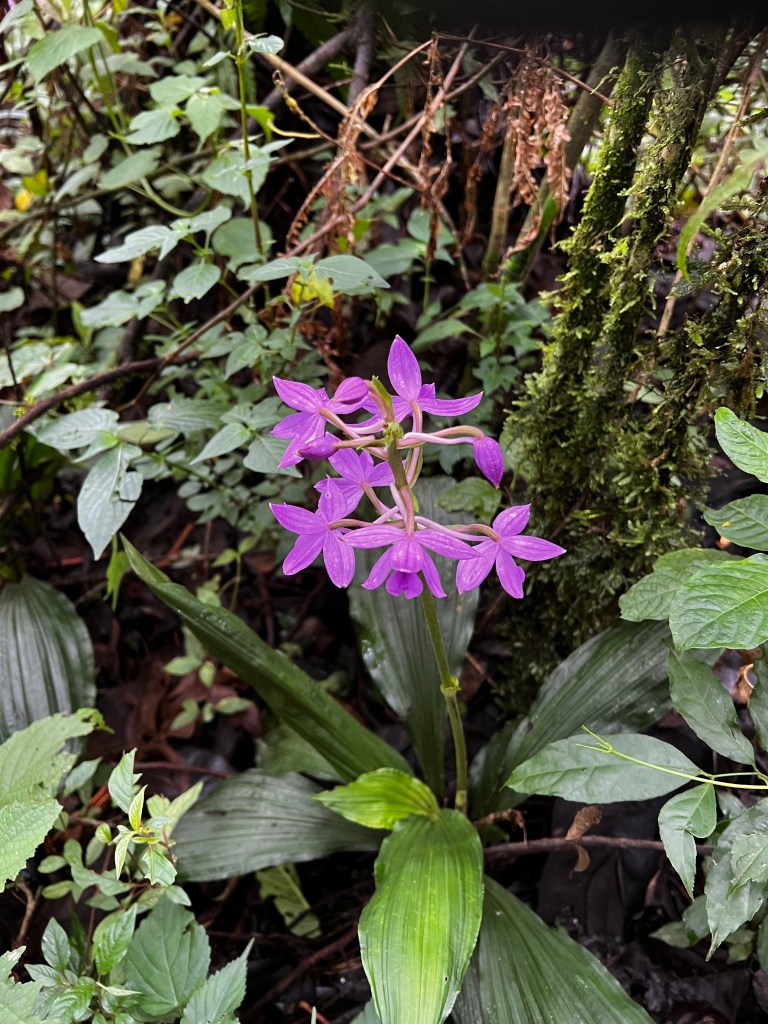
But it takes forever, on we go and hours pass with false summit after false summit. I start to curse myself for not having read this up better. Where are we? Are we even on the right track? Sure we aren’t the fittest, but no way should it be taking this long. But we have come this far, and what if that wondrous view is just round the corner? What a waste if we turn back now.
Deb finally calls it. “Íts 3pm and we’ve been going for hours. We need to turn back’.
I mutter to myself that it’s not a bloody Everest summit attempt. But she is right. Of course. Which irks. We give it another 20 min or so and turn around.
Deb leads the way back. Much faster than me on the downhill, and I am met on the way down by one of our church-going rangers who has climbed up the track to see how the old lady is doing.
The rangers seem nice enough, but they are not in uniform and we have no idea if they are official or not. But they have a book (those ubiquitous Croxley lined school notebooks), which we sign, and pay the fee and bid goodbye as they leave us at our vehicle, scooting down the track on their motorbike.
Disappointed, but relieved to be off our, feet we make our way home. As a consolation prize, however, the late afternoon light on the hills driving back out is spectacular. The traces are a vivid green and fields of white flowers add to the countryside feeling.
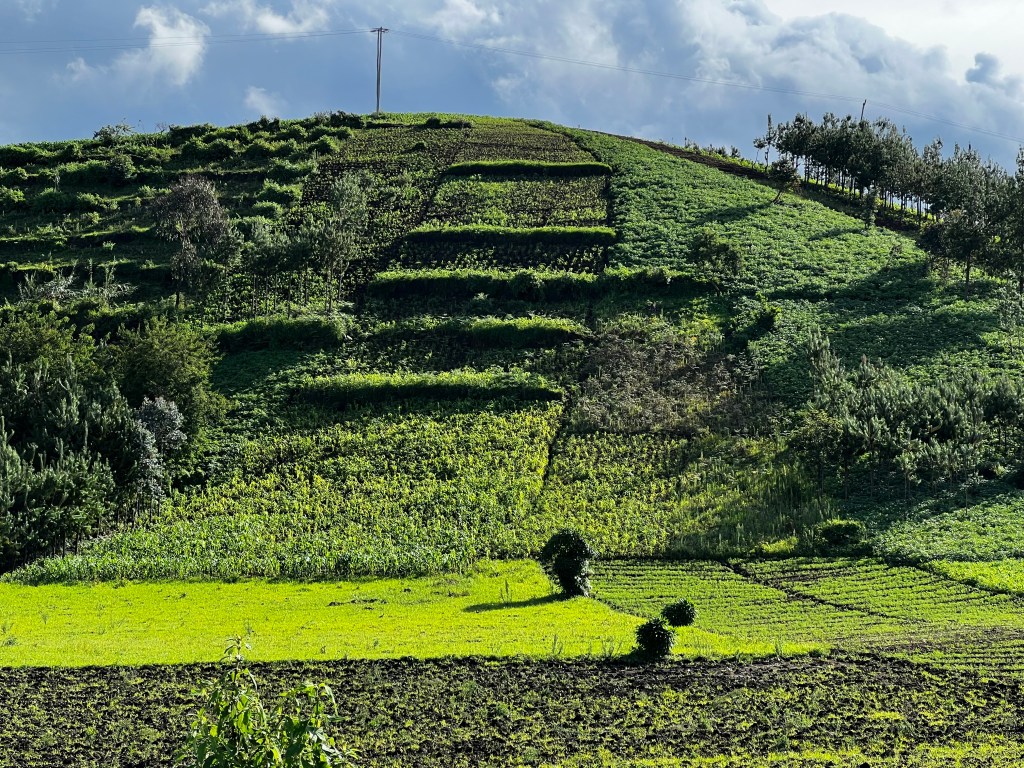

The while flowers are in fact pyrethrum daises – part of the chrysanthemum family. The flowers are harvested, dried and sold as a cash crop to a central board. Pyrethrum is a natural insecticide – check the ingredients on most household insecticides and you’ll find it there.

Back at Utengule their guide Mustapha consoles us by saying that we took a much less used access point that has a way more difficult and longer hike with an inferior view that in all likelihood would have been clouded over at this time of year. Maybe this was just to make us feel better but it worked! The easier and better access point is directly off the Mbeya main road.
So no Ngozi Crater Lake view for us, but I leave you with a view of what could have been:
NOTES FOR TRAVELLERS:
Nakonde / Tunduma border:
- Kapishya / border / Mbeya, in retrospect too long to do in one day given the state of the great north road,. If we do this again would break the journey at say Kings Highway, Kalungu just before the border
- A one stop border but still two complexes – one for leaving TZ / entering Zambia (which you hit first, but this isn’t the one you want) and then the one to enter TZ / leave Zambia
- Took us ages to find someone to stamp our carnet out of Zambia / lots of conflicting instructions / sent back to the first complex but Zambia customers there (dealing with those entering Zambia not leaving), are unable to assist, Customs in second complex has TZ personnel but Zambian authorities are AWOL. Eventually locate Zambia customs in a temporary container at the weighbridge
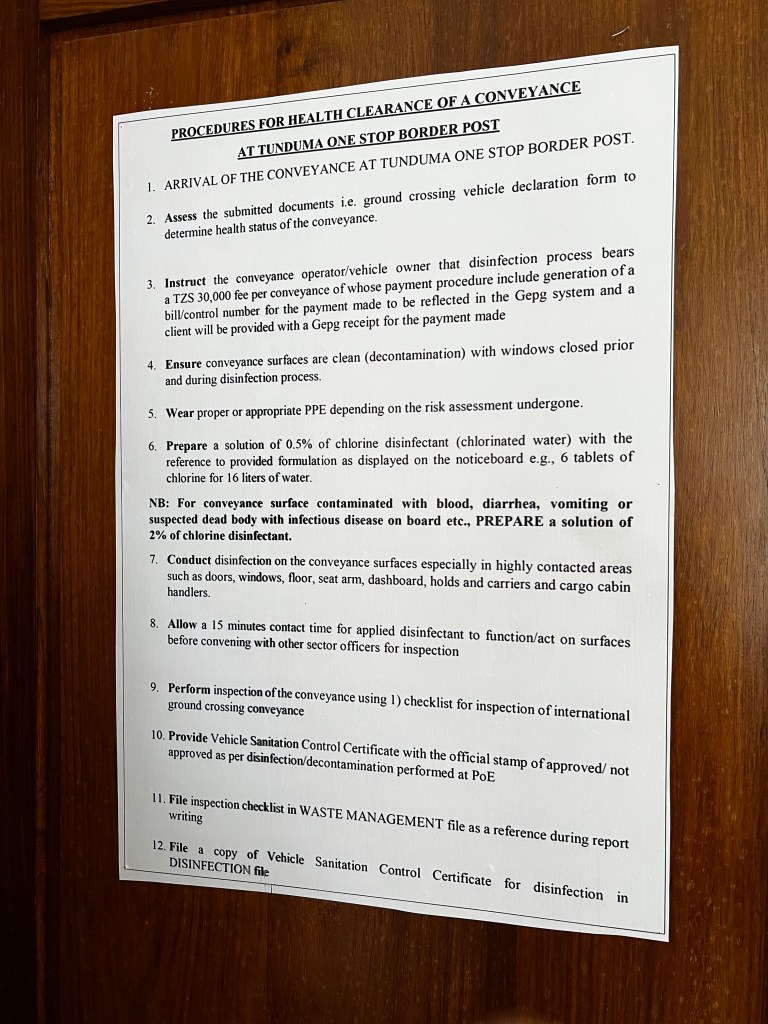
- Tanzania health authority point at the Covid regs but don’t ask to see our vaccination certificates. But do go on about the need to disinfect the vehicle. I question this but am pointed to the regs and they are insistent. TSH 30 000 (about US$15) but no they can’t issue a receipt because it’s a Saturday. I insist. This means visits to upstairs offices where eventually someone prints a receipt. The vehicle gets a cursory spray, I fib and say we are not carrying food when they ask for fear of getting sprayed inside. I think it’s a nonsense but here are the regs: (I might add that they had just finished spraying when the heavens opened and washed it all off).
- I tried the Carnet but TIP insisted on. And carnet (I think because they objected to me saying that they don’t accept a carnet, which was taken as inferring that they don’t know how to, which then meant proving a point and endless entering and re-entering of data. Anyway Carnet signed.
- For the TIP I was continually asked if I had an agent. I took this to mean a tout or a fixer and said no, I don’t need one. But, as I find out, I in fact did need an agent. Why? Payment for the tip can only be done via bank transfer or clearing agent. Not by credit card and they do not accept cash. There is a bank in the complex but it is a Saturday and they are closed, so the only what is to pay an agent who will make the payment for us. But I don’t have an agent. In the end the lady at TZ customs takes matters in hand and WhatsApps and agent with my details, the clearing agent pays and I pay her. TIP cost is $25.
- Utengule Coffee Lodge camping $13 ppn
 Bonnievale to Burton Fleming
One response to “Into Tanzania and the hunt for Ngozi Crater Lake”
Good info wow what a journey but that is a beautiful lake
LikeLike