6 – 7 February 2023
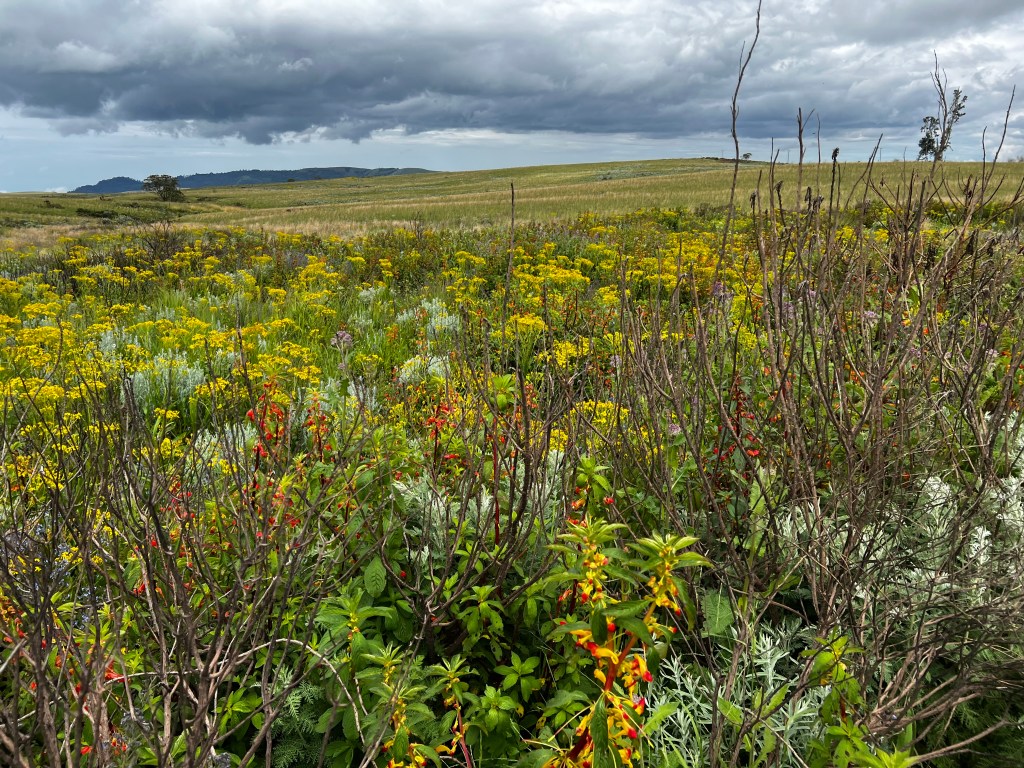
The rainy season brings a special delight to southern Tanzania: the flowers of Kitulo National Park.
The park is in the southern highlands at 2 600m and consists of montane grassland and patches of forest. Nicknamed God’s Garden (Bustani ya Mungu) or the Serengeti of Flowers, it is one of Tanzania’s newer national parks, having only been officially gazetted in 2005. It is the only botanical reserve in tropical Africa and was formed specifically to protect the flora. The Kitulo Plateau is probably most famous for its orchids (some 45 different orchids can be found here), but it has many, many other species of flowering plant including irises that are endemic to the region. The grasses too are exquisite – in flower it is a must see destination for anyone remotely interested in botany or gardens. The area needed / needs protection not only from encroachment, but also from poaching – specifically orchid poaching both for international trade (for their beauty / plant trade) but also from locals who harvest the tubers (as a delicacy, but also as a foodstuff of last resort in times of drought).
Flowering times are a movable feast but typically from late December through to March, so after there has been some rain. And this year there has been a lot of rain.
So off we set – leaning on local knowledge for instructions this time, after the hunt for Ngozi crater lake. There are a number of routes to Kitulo from where we are here at Utengule Coffee Lodge. The most infamous of these is the Hamsini na Saba pass – a series of some 57 switchbacks as the road ascends from Chimala on the main Mbeya / Iringa road up to the Kitulo plateau. We are advised that this is not currently driveable given some wash-ways in the recent rain. There are two other options – one is longer, but better road…the other is shorter but there is a risk of getting stuck for hours on the steep muddy tracks. Stuck yourself, or more likely stuck behind stuck trucks that you are unable to pass, (due to the steep muddy drop off), so you have to wait until they can get going which inevitably means off-loading their cargo etc.
We opt for muddy route simply because the longer route involves doubling back. See Notes for Travellers for a description of the route.
We follow the same road we took up to Ngozi, climbing steadily through the farm terraces and pyrethrum daisy fields. Cows grazing in paddocks, goats in the road, houses surrounded by banks of blue hydrangeas. Higher and higher we go, it’s overcast and nippy and at times it reminds me a lot of Nepal. On past the villages (huge sacks of potatoes on the side of the road waiting to be collected).

And then we hit the trucks. One is very stuck – teetering somewhat precariously over the edge. I follow a line of trucks edging past . Slowly slowly, Shackleton steadily trundling up in low range. Next thing lots of shouting and whistles, stop, go back! Go back! It’s directed at us and as we reverse back I see the truck ahead is in fact a tipper truck, here to help out the marooned one I presume, and suddenly he tips his load just (but only just) as we get out the way. Disaster averted, we wait as gravel is shovelled about and finally we climb over it – on we go.

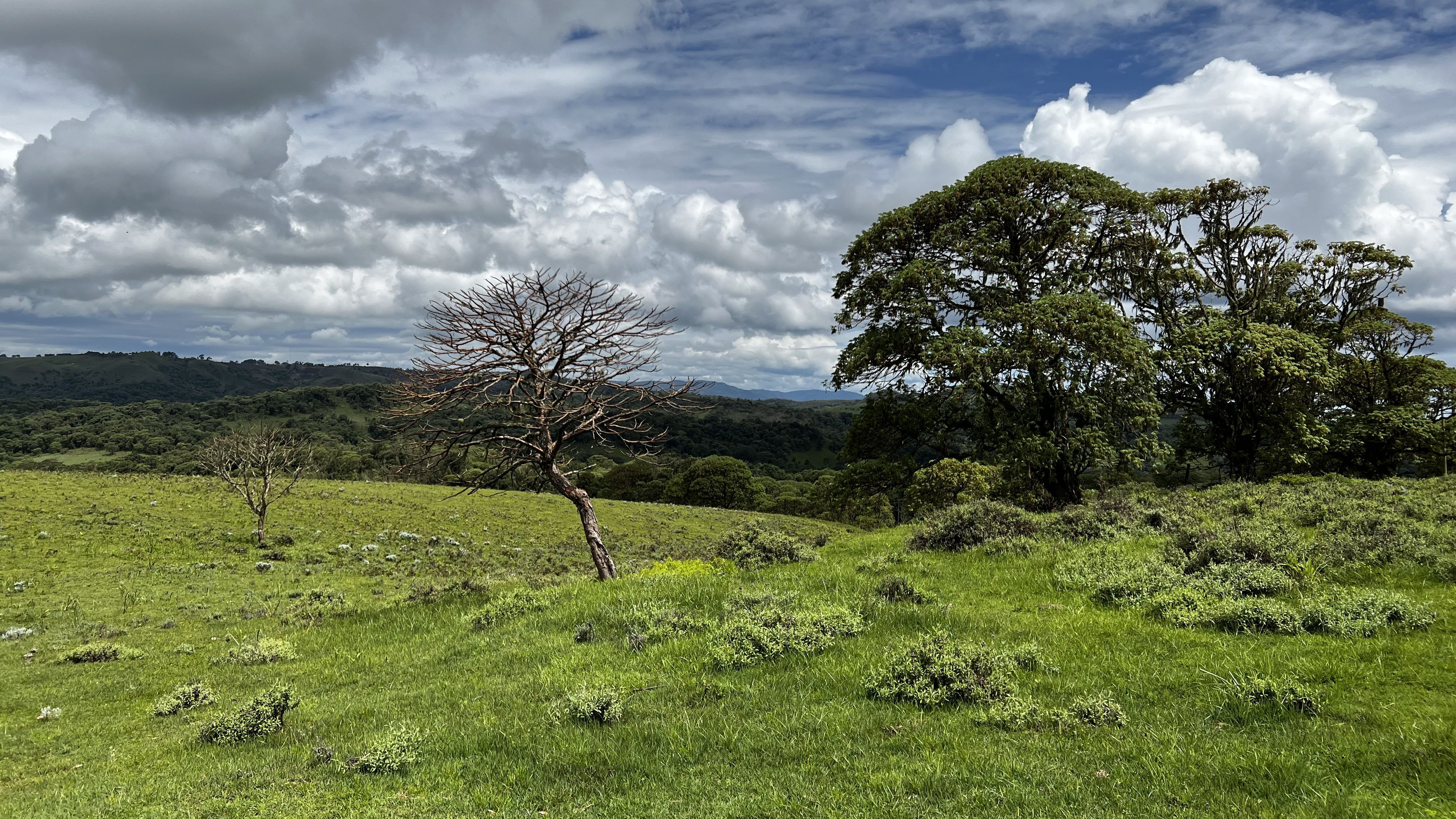
Finally we bust out onto open grassland and hedgerows (reminiscent of English countryside) with sweeping views of settlements below.

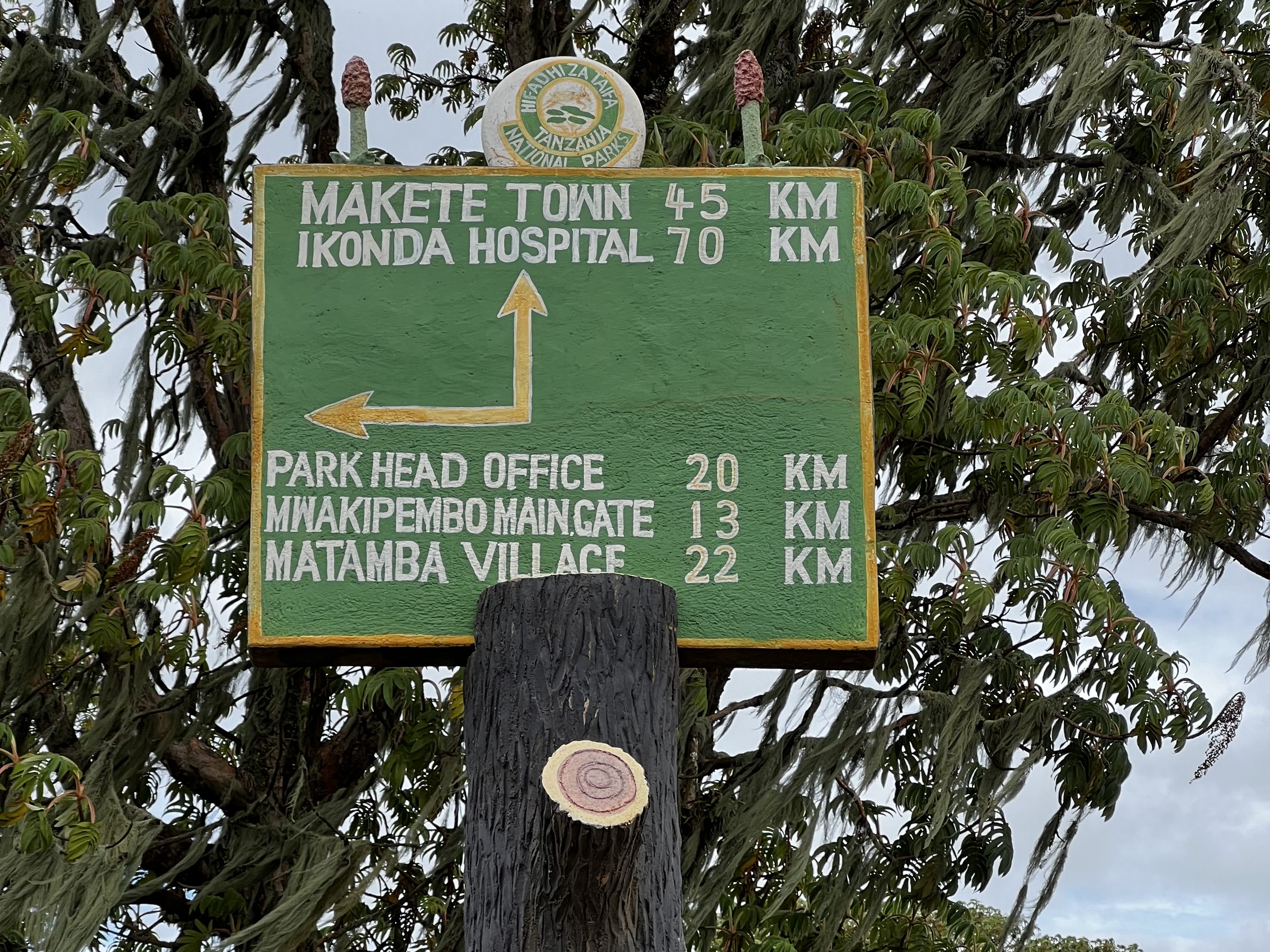
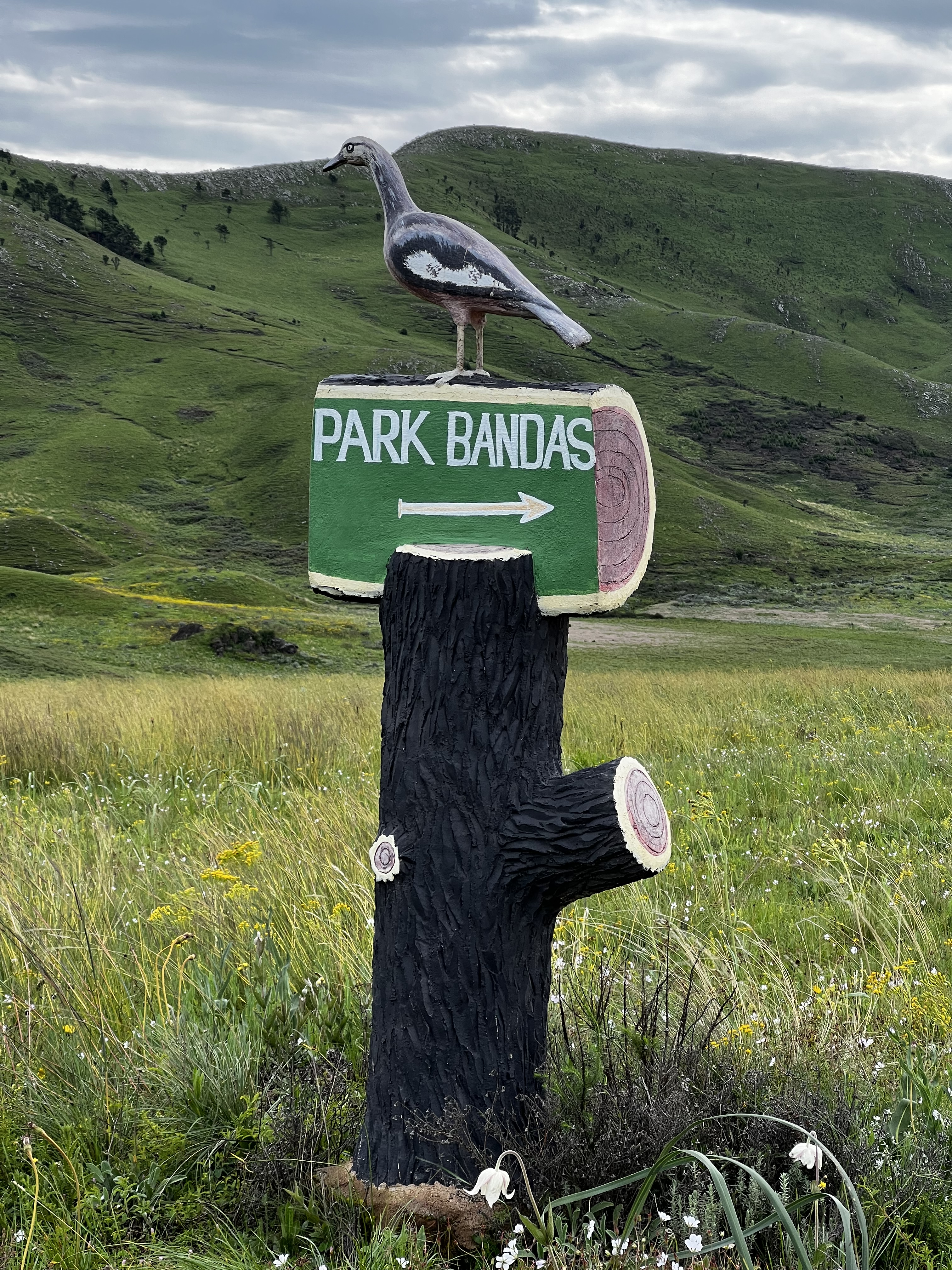
Finally we reach the turn off to the Park. Someone has been let loose on sign design so we have these cement logs with flowers on top.
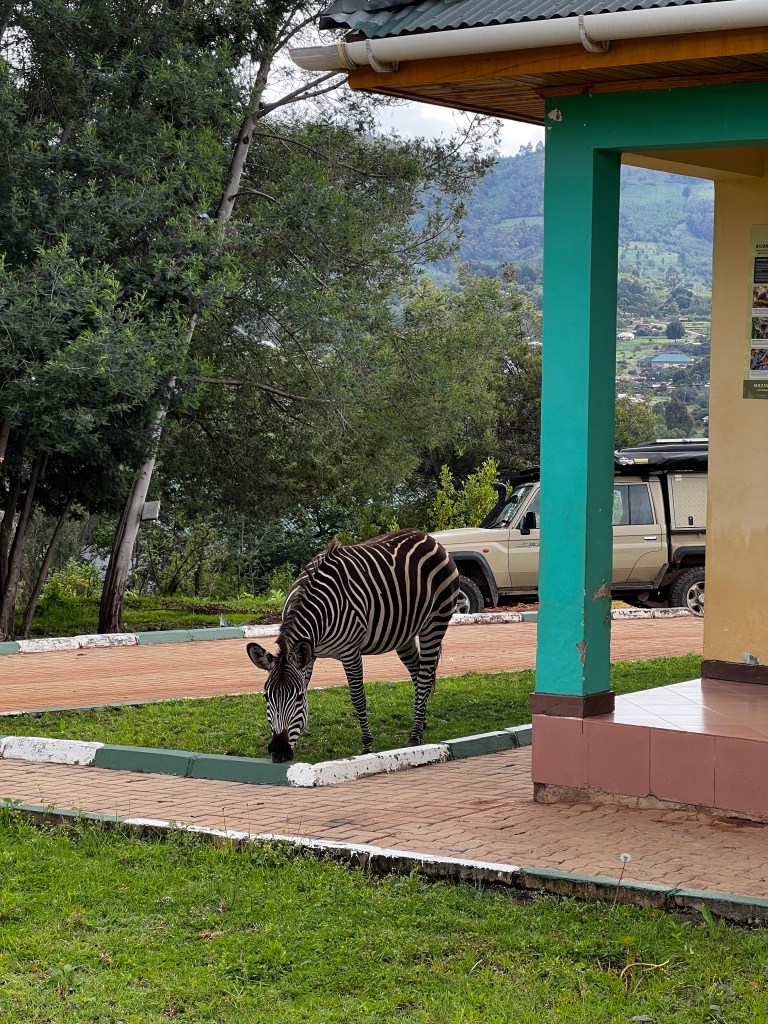
We pass the rangers’ gate / office but it looks abandoned so we press on to HQ. Here there is just one ranger around and a half tame zebra. She (the ranger) seems surprised to see us. She summonses the “accountant” who arrives some time later by boda boda to check us in.
And here the hassles start. He seems uncertain how to check us in (I think most operators pre-book with a voucher number?). But it is all very relaxed and I sit at the computer with him as he keys in security codes in front of me and asks me to help him in navigate to the right section for vehicle fees. I sense IT security people turning in their graves….
But the system will not accept our reg number. What follows are numerous attempts and call to IT (it’s a new system it seems, else he is just unfamiliar with it), but it takes forever and an hour and a half later we are no further along. I put the pressure on – we need to find the campsite before it gets dark…he suggests a work around – he finds an old receipt for a TZ reg vehicle of similar weight and uses that. And voila we are in. (At $27 vs the usual $150 that our vehicle usually attracts)
What if someone checks and calls me out of the discrepancy in reg number? – no matter he says – show them this – he scrawls a message on the back of the receipt and signs it. It’s in Swahili – but I get the gist – “bloody IT again!” or similar.
So thus armed we head for the campsite, backtracking past the ranger post – which, it turns out, is manned – they saw us pass but were hunkered inside because of the cold (turns out you can do you entrance admin here too).
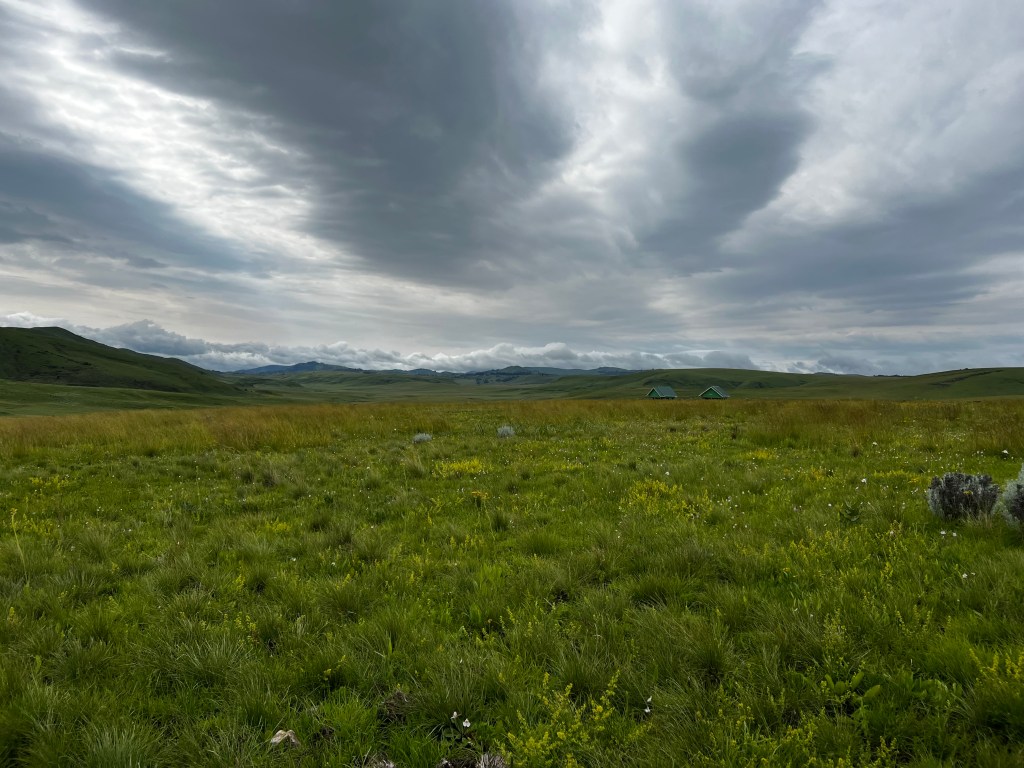
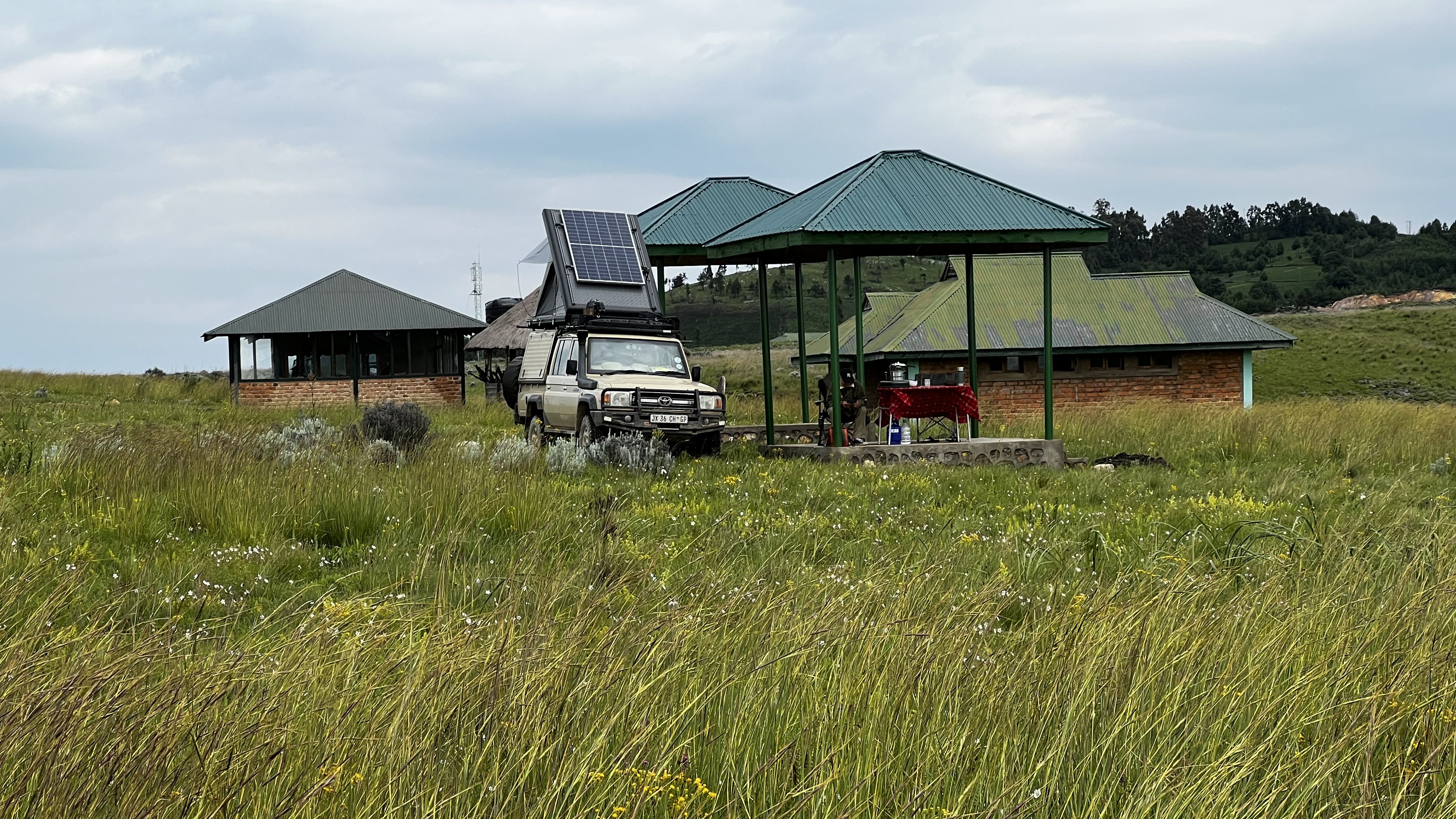
The campsite consists of loos, cold showers, a dining hall of sorts and an odd ‘’warm room’’ with a central fire place and weirdly upholstered swivel chairs in an arc around it. There are then two roofed cement slabs (to camp under?) but set very close together.
Anyway we set up – it has a splendid view down the valley and you can see the bandas off to one side.
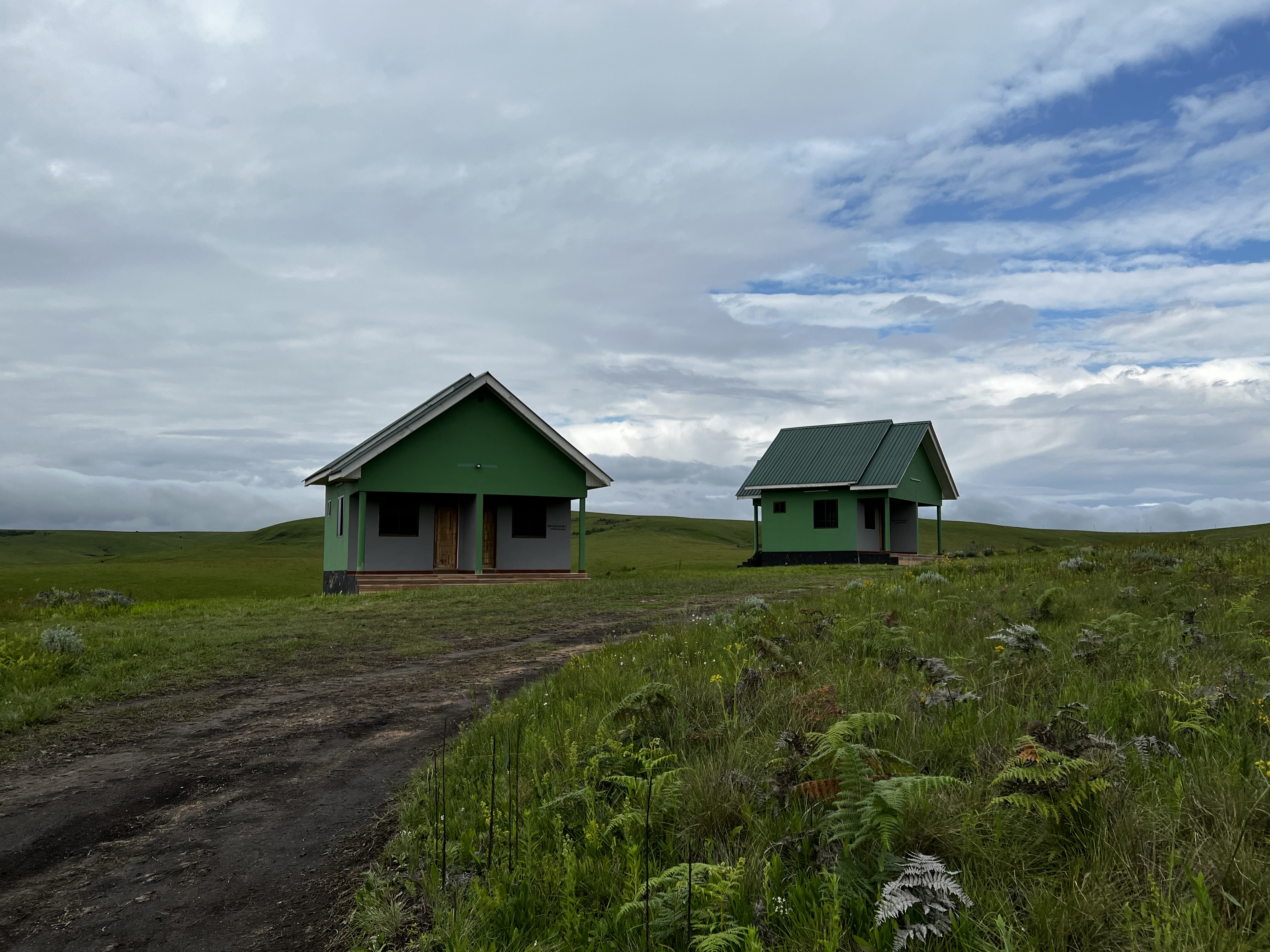
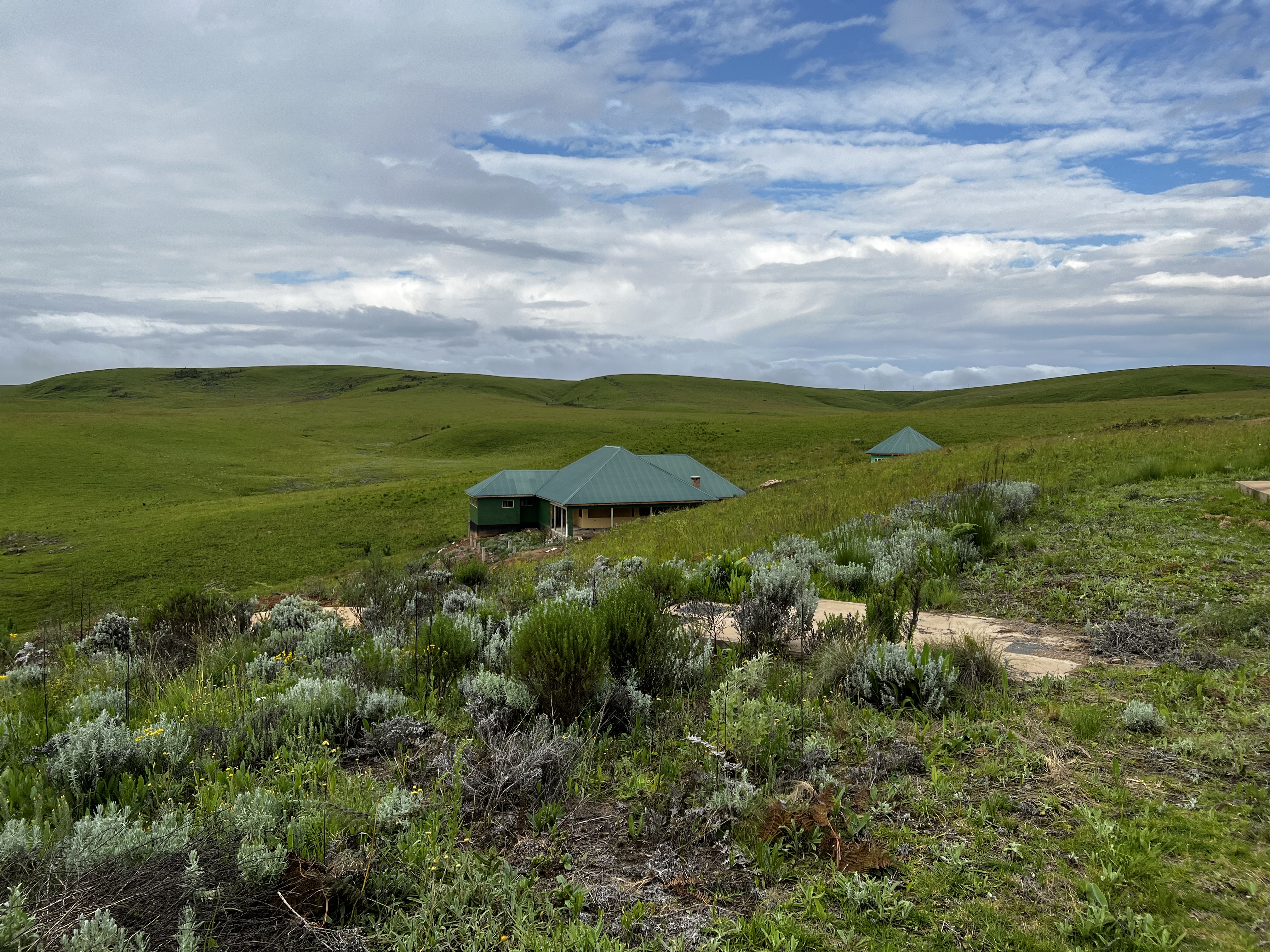
The smaller bandas are quite exposed on the edge of the valley – each consist of 2 two-sleepers in a semi-detached set up. The larger ones are tucked away a bit down the hill and more protected. There are more under construction.
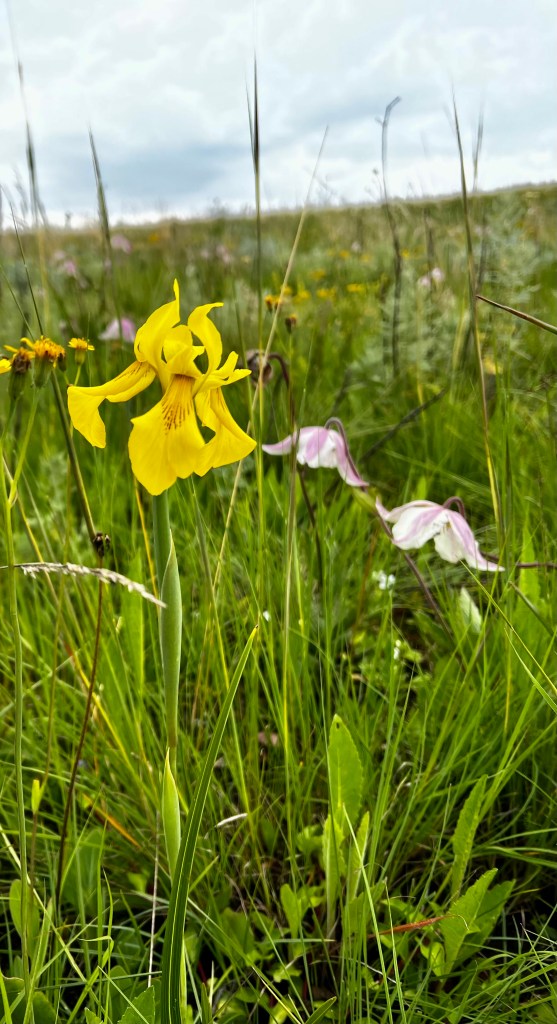
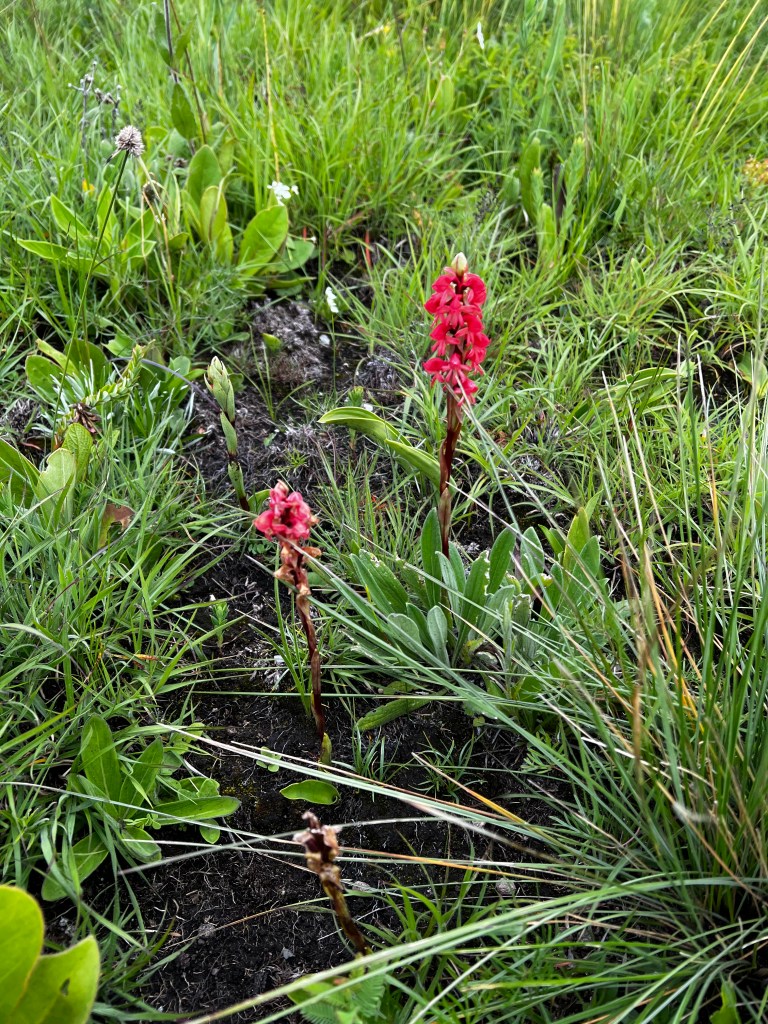
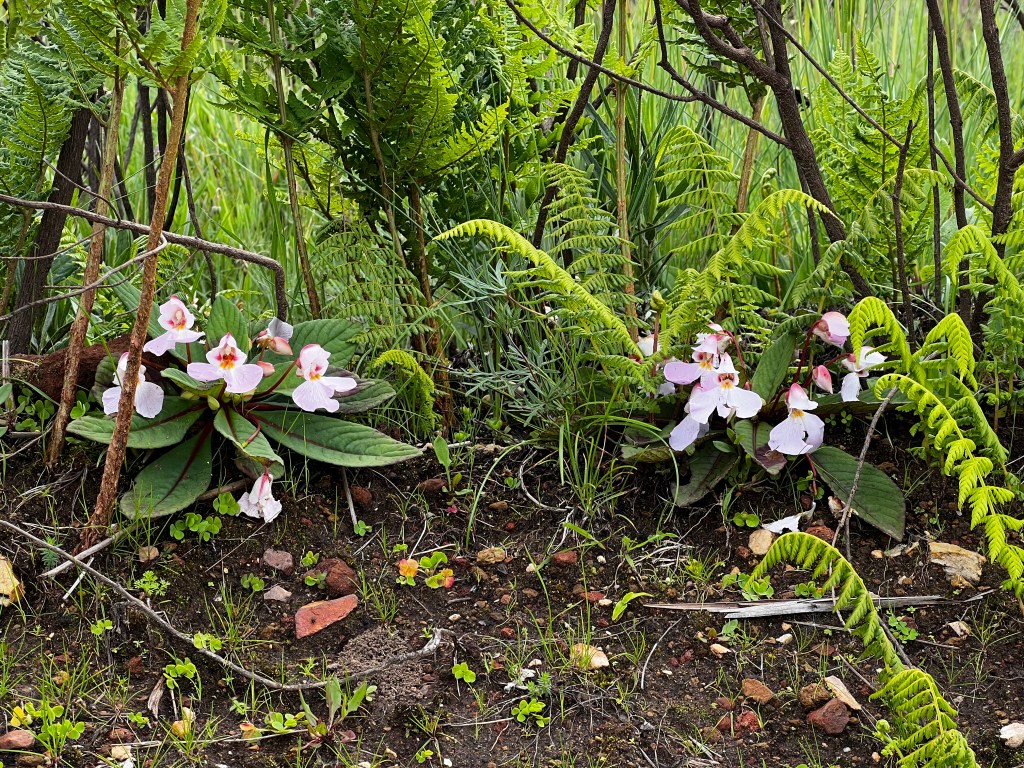
We only spent a day in the park – driving the valleys and getting out for short walks from time to time. There are established hiking trails if that is your thing, and I think if would be worth visiting for that even outside of flower season. But at least some walking is essential if you want to understand the diversity of plant life – just standing in the grassland looking down on a two metre radius reveals an immense variety of plant life. It really is spectacular – I’ll let the pics do the talking:
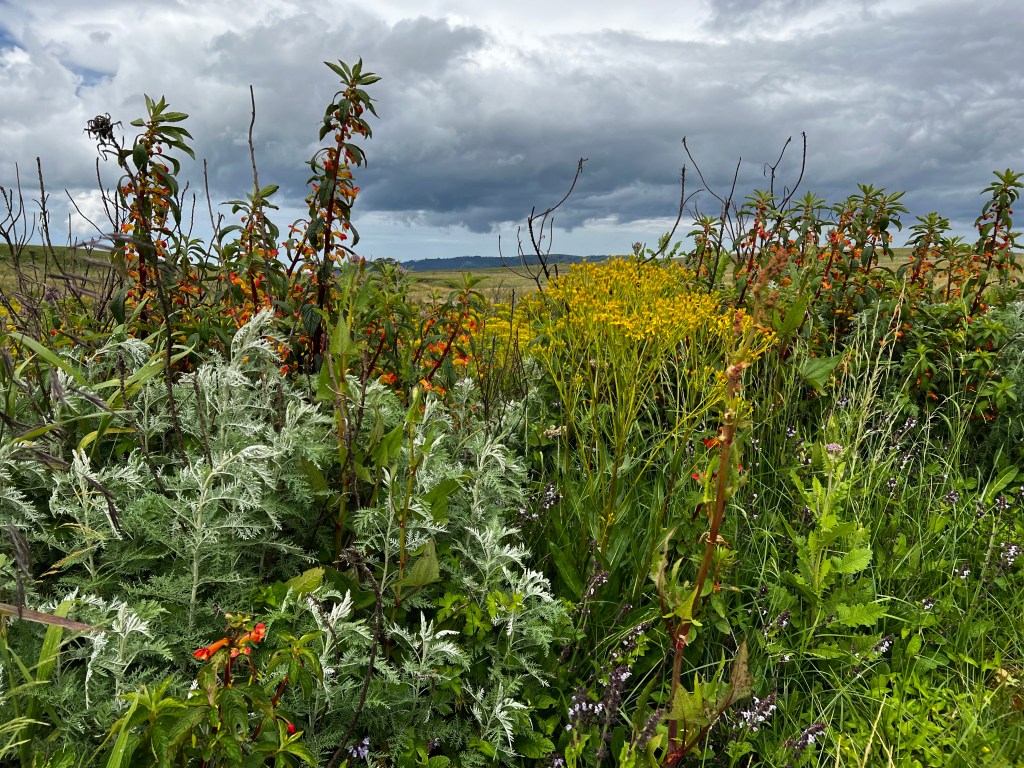

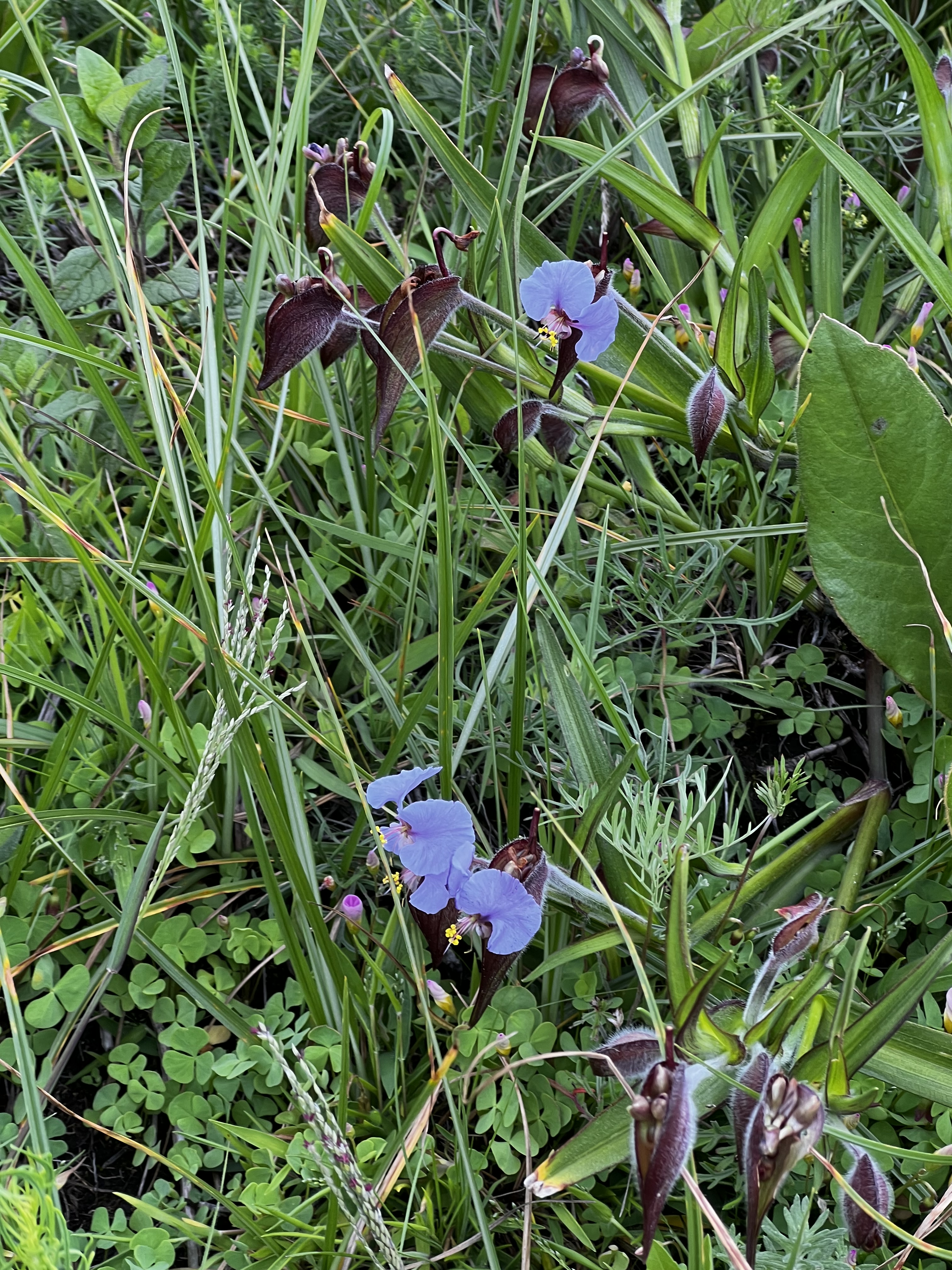
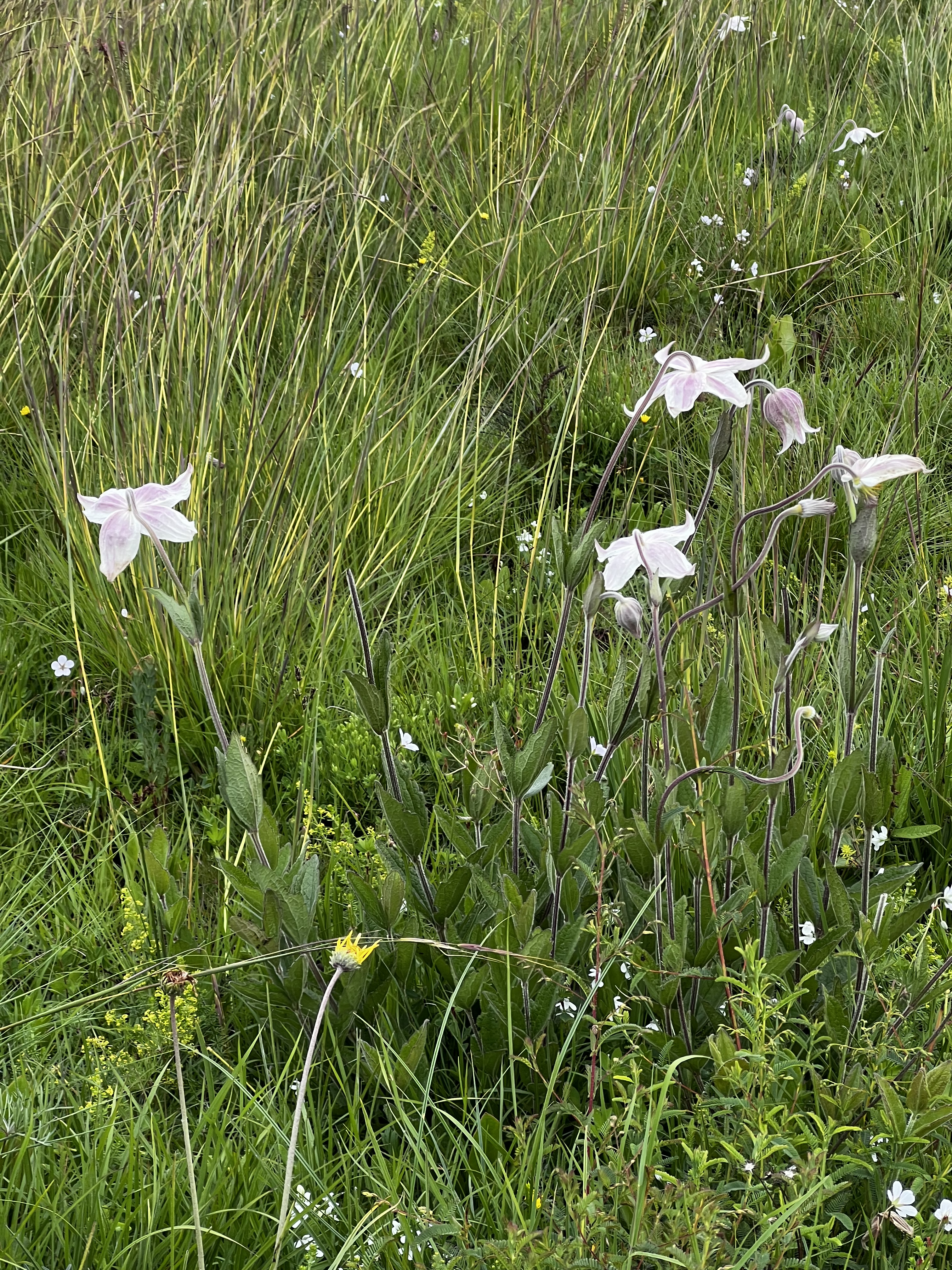
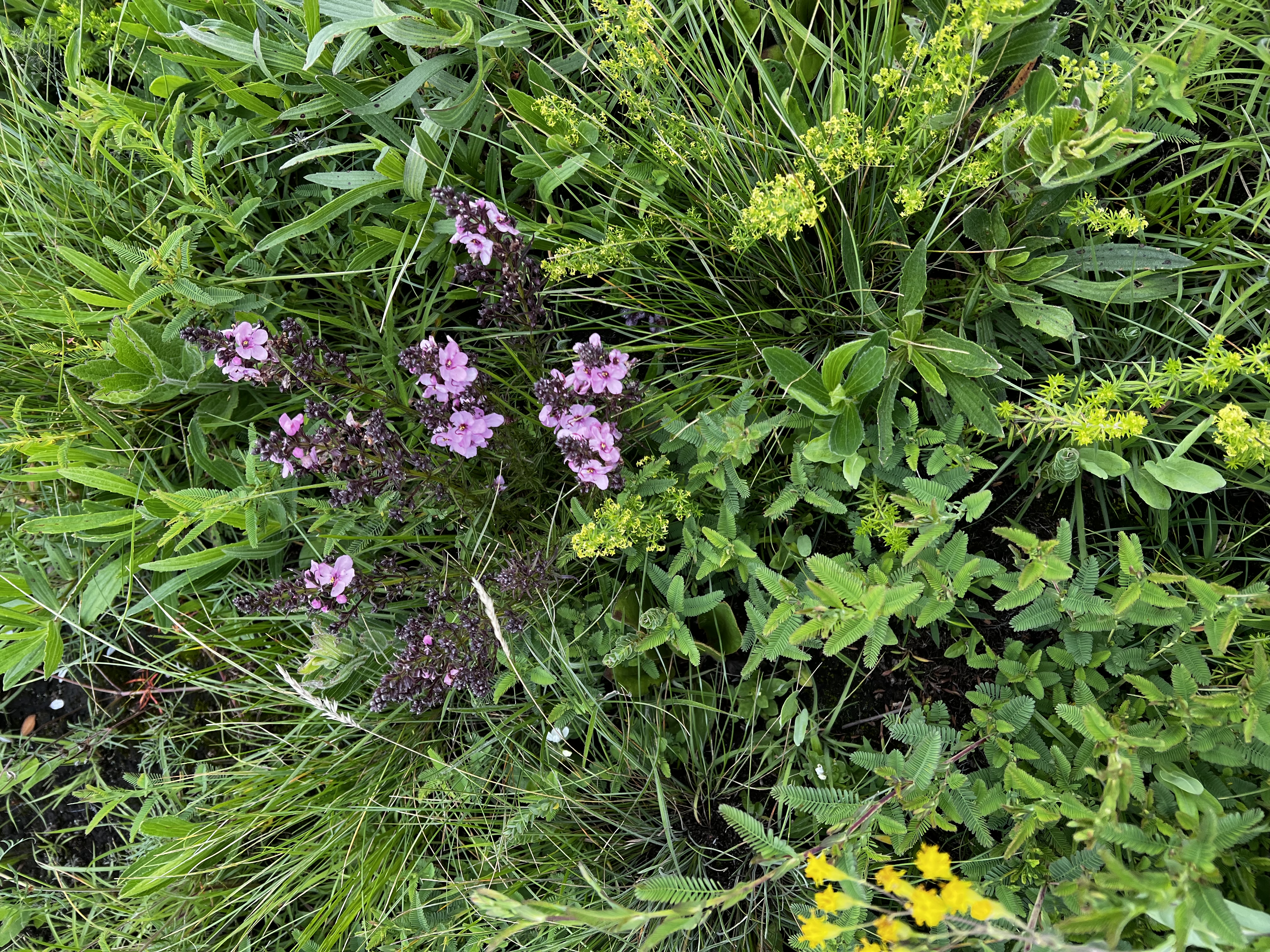
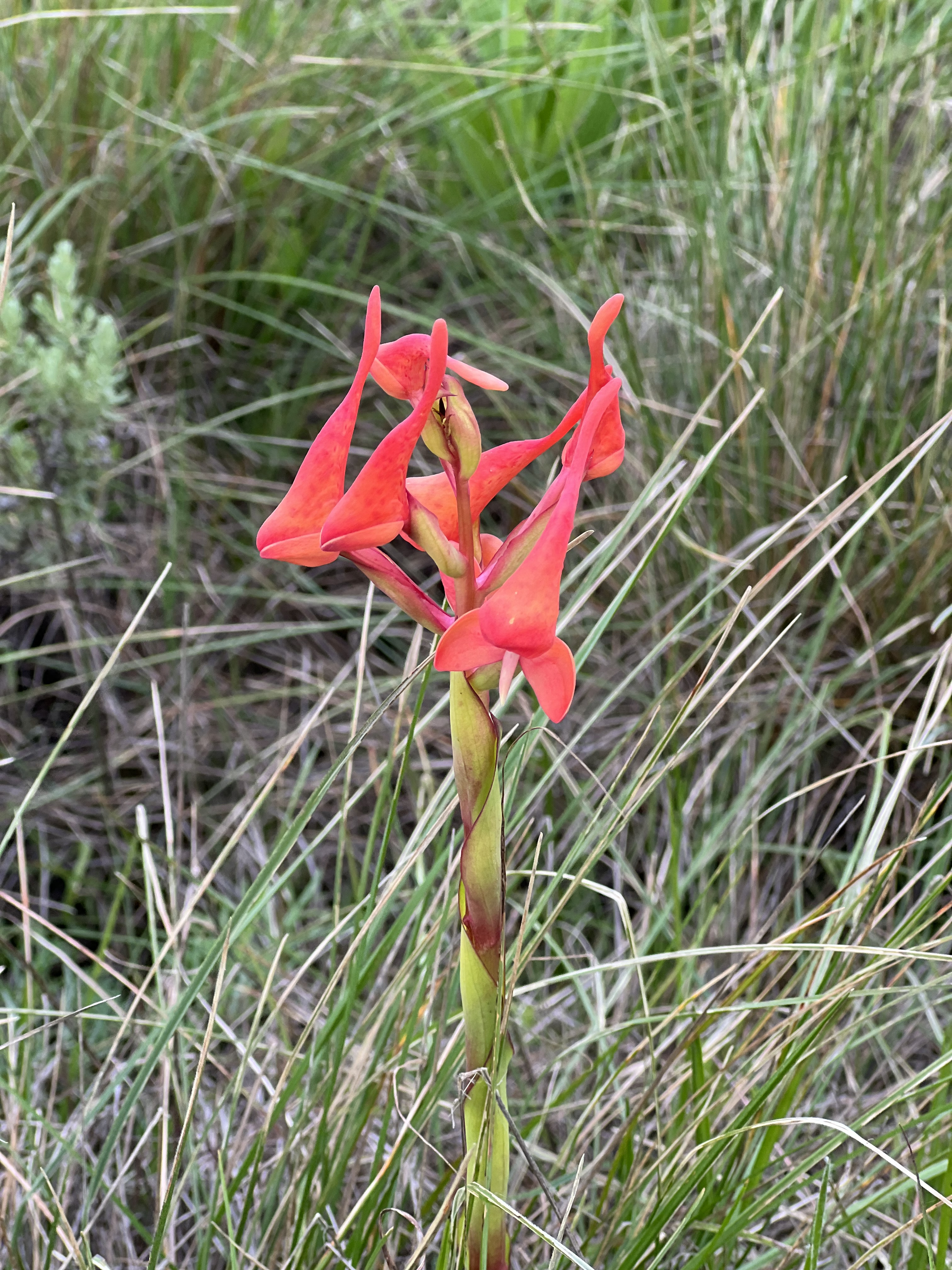
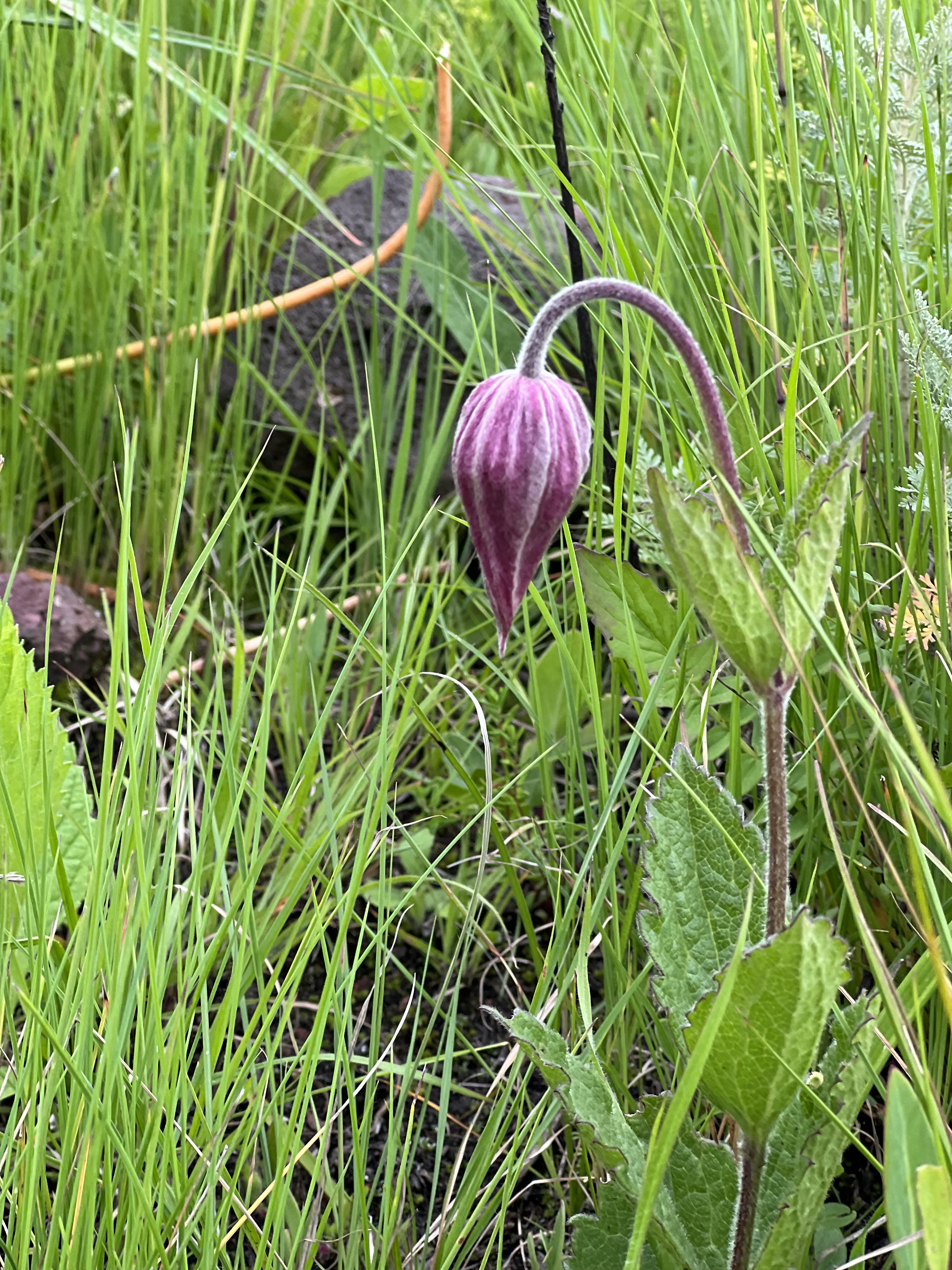
Clockwise from top: Spiderwort, Clematopis uhehensis (part of the buttercup family) only found here at in Nyika, Figwort, one of the disa’s / orchids (not sure which), same buttercup family as 2nd pic, just in bud
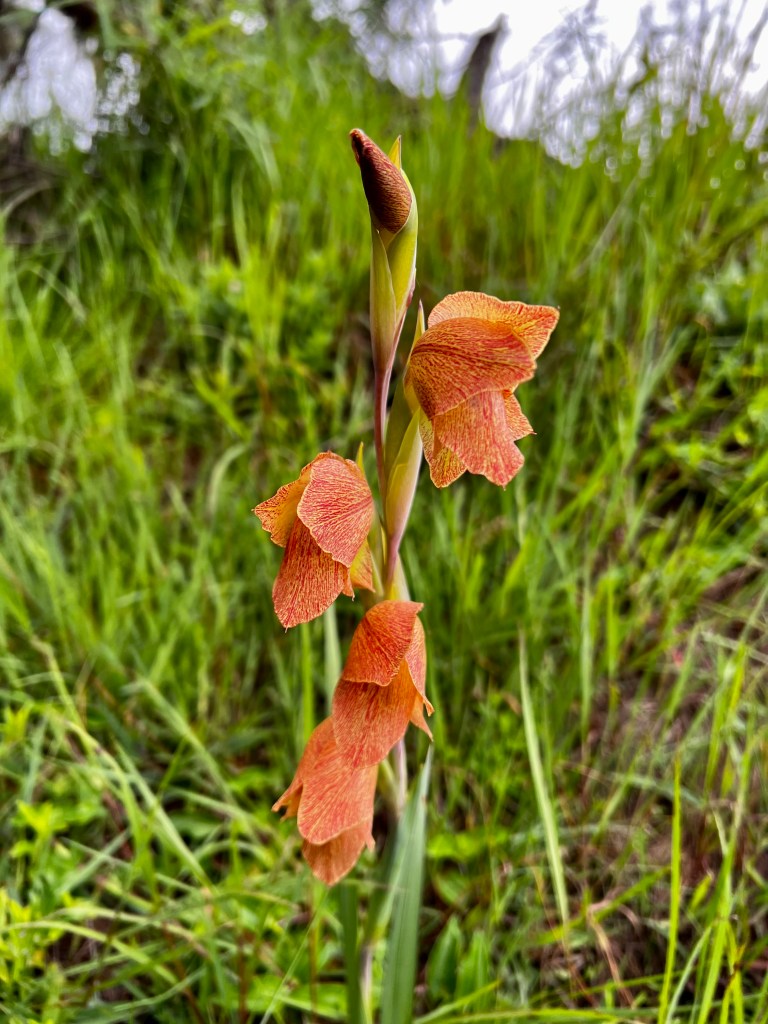
Lots of waterfalls – good to see the effort to build walkways

The range / diversity is immense. From small delicate almost alpine plants to these great big thistles making bold statements in the grass

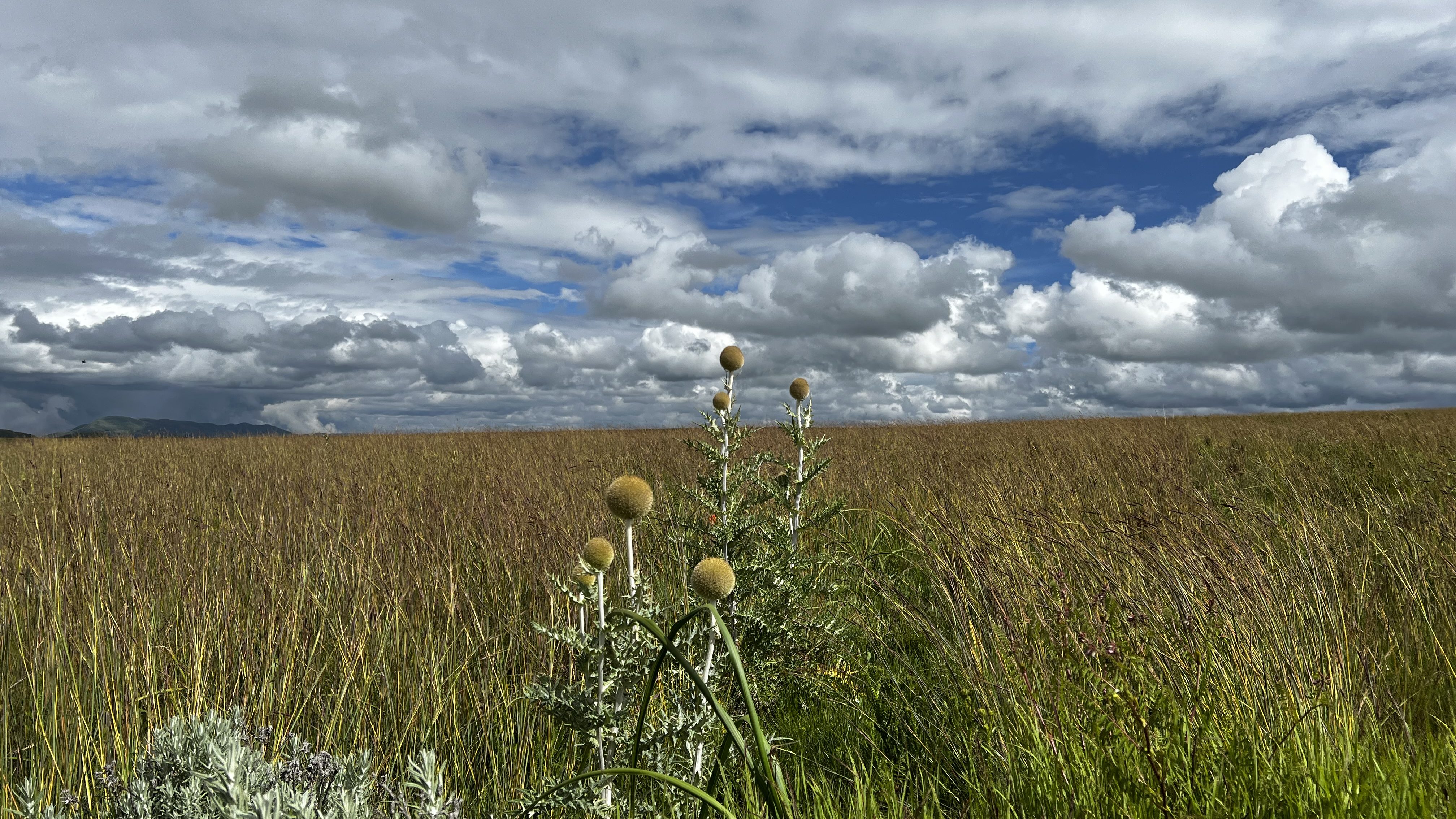
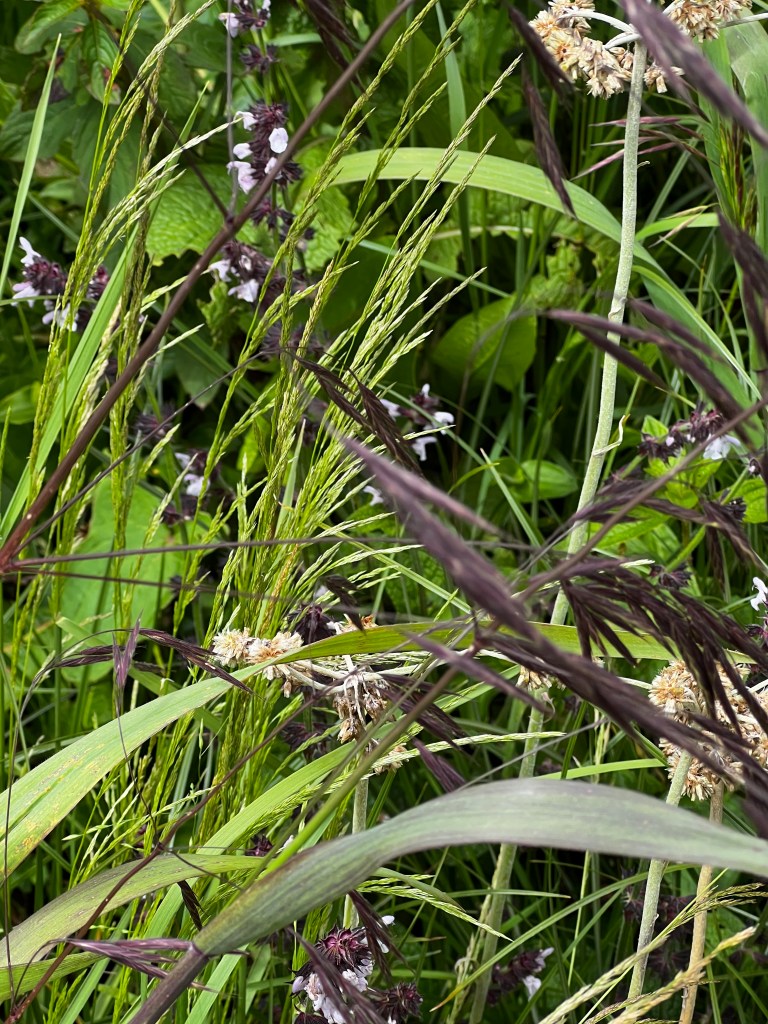
My personal favourite is this tall grass with a purplish black seed head…this together with the thistles had me daydreaming planting schemes for our gravel garden all the way up to Iringa.
We didn’t take a guide, but all the research I did beforehand and again confirmed by the guide at Utengule led to one name : Japhari. He is a trained botanist and has trained a series of other guides who work for him, and focusses his business on Kitulo now. His details are in the notes for travellers section.
Also NB that it is VERY COLD at night. We hauled out our long johns for the first time and could have done with an extra blanket.
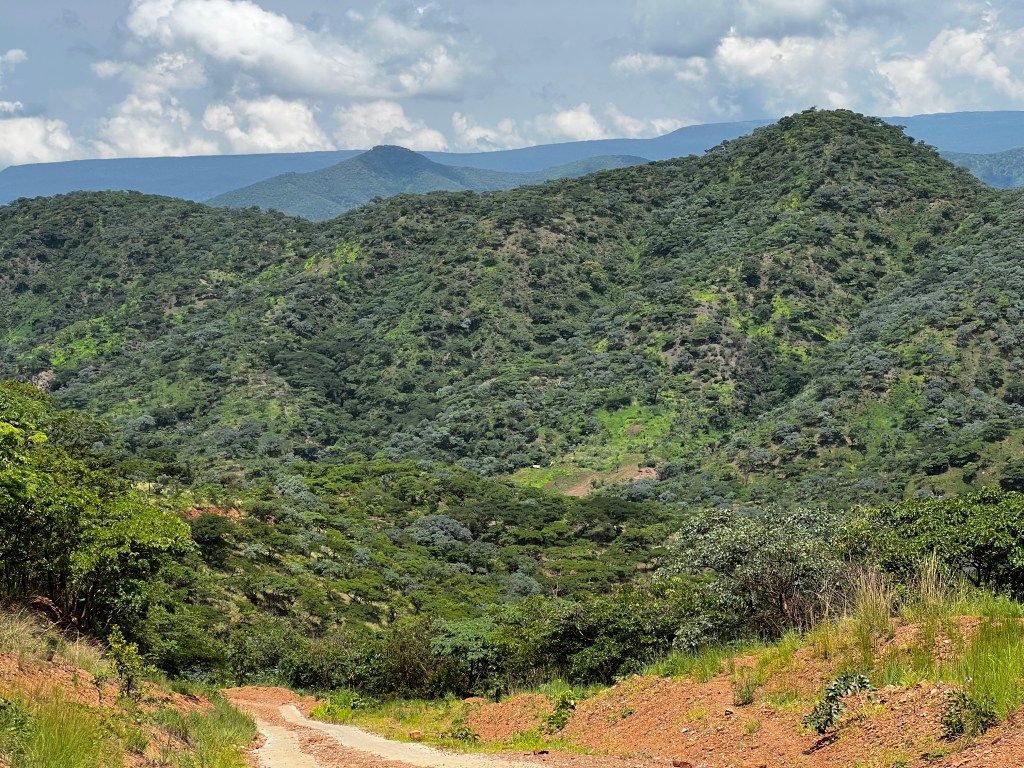
The road out is a steep drive down the escarpment and through some lovely bush (a protected area) . Thankfully the steepest bits are paved / concreted.
NOTES FOR TRAVELLERS
Getting to Kitulo
We don’t record our GPS tracks – but looking at a map the route we took is: Utengule – back on the main road (T1 / A104) towards Mbeya – TR at Uyole onto the T10 – Turn left towards Isyonje and follow that road all the way to the park which you enter around Kimondo, driving through the park towards the Mwakipembo gate, then on through a mixed use area to Park HQ.
The public campsite is near Mwakipembo gate.
Then to leave you pass past HQ again – Matamba – bear right there (straight takes you to the switchback road) and just keep going, down the escarpment until you emerge onto the main Mbeya/ Iringa road ( T1 / A104) somewhere after the village of Ruaha (not to be confused with Ruaha NP).
We were warned off the switchback road (turn off the T1 / A104 at Chimala for this route), but I understand that it is a spectacular drive. Just not in the wet.
Park Fees
$30 ppd, plus $30 ppn camping. Vehicle should be $150 per day (this is a killer in Tanzania, sometimes we get away with the under 2 000kg charge which is $40), here we paid $27 due to difficulty of registering our vehicle on the system. Then at 18% VAT on top of all of this.
Kitulo Guide
Japhari tel: +255 757 741 195
Map
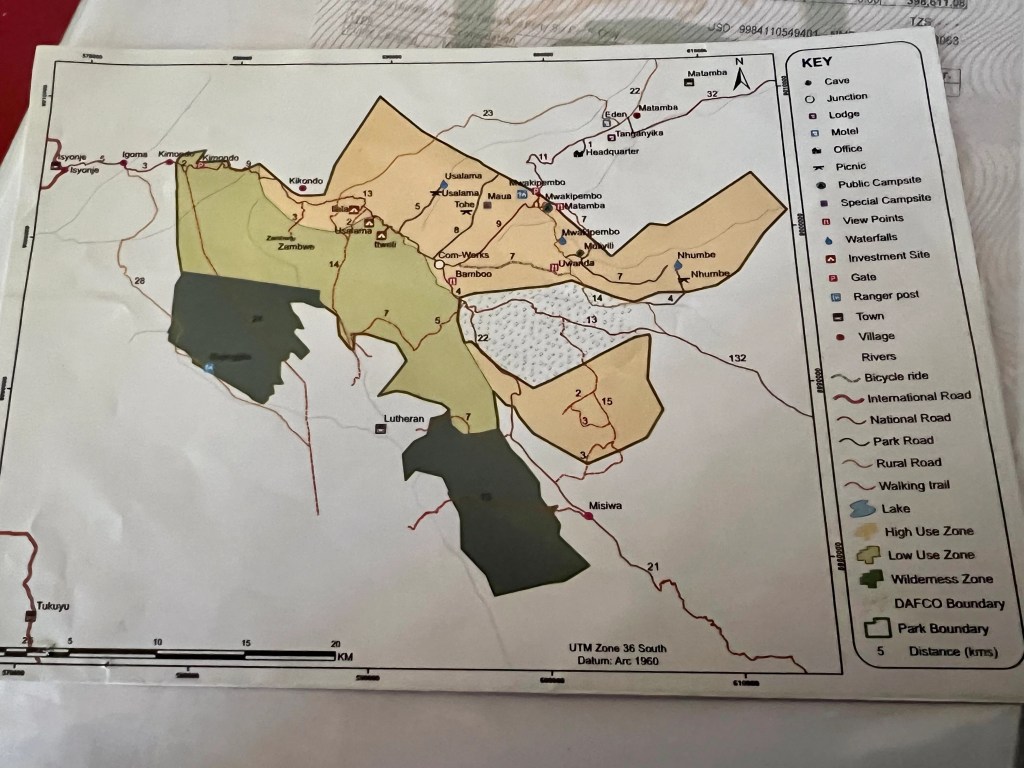
We begged for a map at the entrance and got this one:
 Bonnievale to Burton Fleming
2 responses to “God’s Garden: Kitulo National Park”
Hi to both of you, wow what an adventure, just loving reading about it all. The best for me being those fabulous flowers, I wonder how many they have compared to the Cape.
Take special care and have a fabulous different Easter.
Big hugs, Joanah
LikeLike
Thanks Joanah. Kitulo was a real highlight
LikeLike