23 – 27 February 2023
In plotting the Kenya part of our trip I was struck by how many movie and literary references came to mind. Out of Africa, West with the Night, Born Free, The Constant Gardener, White Mischief, The Ghost and The Darkness, and many other documentaries and films about the man eating lions of Tsavo.
Growing up as a kid in Zambia in the ‘70’s the TV was pretty limited and a bit random. In between Zam Arts (lots of drumming), reruns of Bonanza and Little House on the Prairie, there was a black and white film about the man eating lions of Tsavo that both fascinated and terrified me.
And now I get to go there.
And I might even get to see one of the descendants of that pair of male lions that terrorised workers building a bridge on the Uganda – Mombasa railway line in 1898. Their tally is a matter of some conjecture, but seemingly in the 100’s. They are stuffed and on display at the Field Museum of Natural History in Chicago. I shall pop in if I am ever in Chicago. I have since found out that they have been joined (in 1998) by the Man Eater of Mfuwe. I didn’t even know that there was a man eating lion of Mfuwe (South Luangwa, Zambia) and whilst this one was huge (3m long(*), 230kg) the name doesn’t have quite the same ring about it as the Tsavo pair. (* I’m assuming this includes the tail!)
So off we set – headed for Tsavo West. Bring it on.
Leaving Kimana community camp we head west, re-tracing our steps back to the main road, heading south for a bit before turning off to on the C103 towards Chyulu gate. The landscape is still very dry and dusty but the haze has abated a bit and we press on enjoying the views on the Chyulu Hills to the north. Deb tells me these stood in for the Ngong Hills in the movie Out of Africa as Sydney Pollak felt the real Ngong hills weren’t scenic enough. They are beautiful. Checking in at Chyulu gate we are again greeted by a cheerful and welcoming KWS ranger and we book in for 2 nights at the Chyulu public campsite. No map for sale but he hands us a laminated one-pager, not ideal, but better than the few I’ve got printed off the internet.
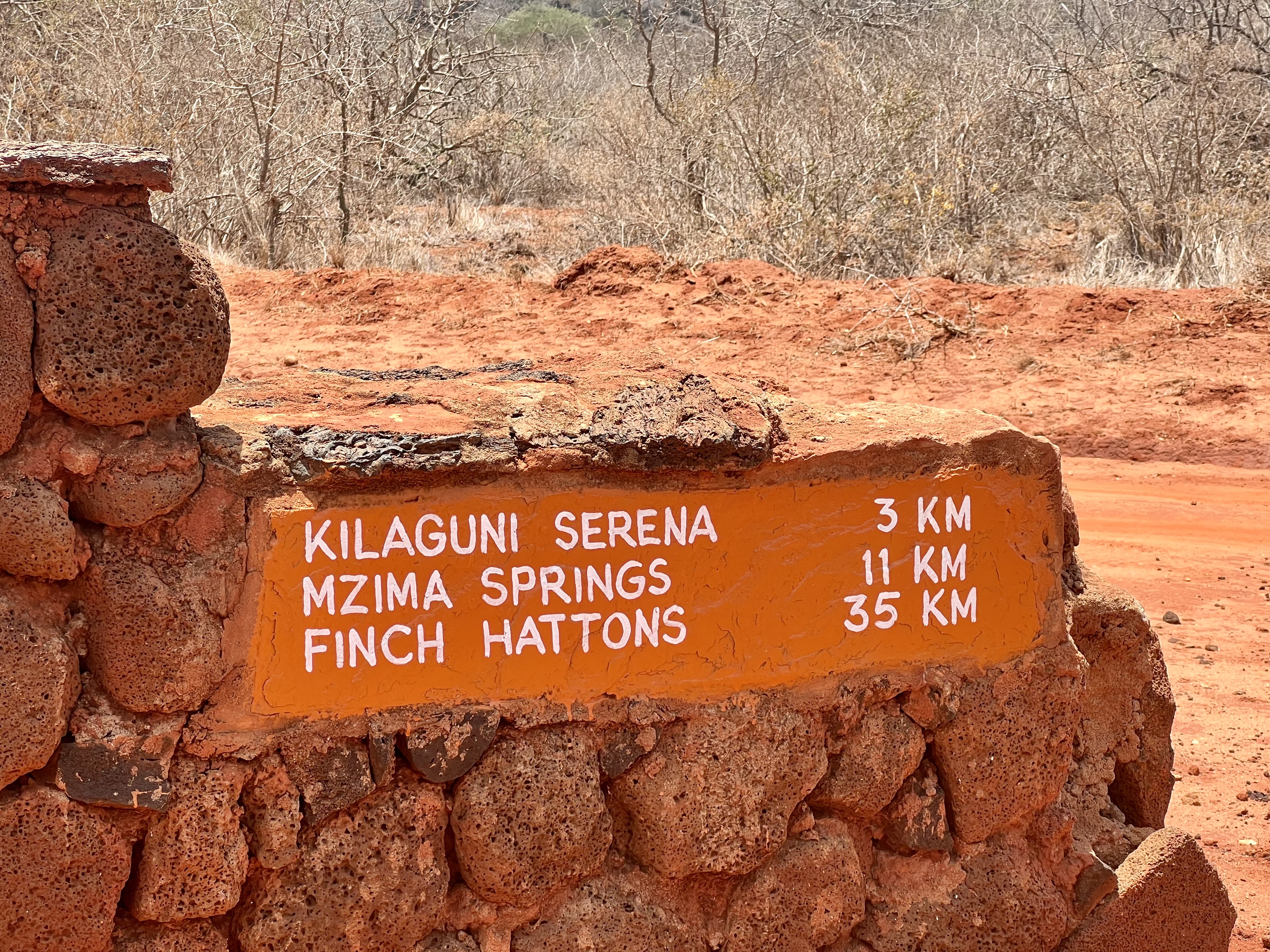
We see the signs to Denys Finch Hatton’s camp (Me: Who? Deb (eyeroll): aka Robert Redford in Out of Africa) and so the movie references continue to build. There is now a swish camp on the site of his original camp.
Deb is re-reading Beryl Markham’s West With the Night and we spend a lot of our time pondering that era – the description of some of the great herds she saw from sky are beyond glorious (never mind that a lot of the time she was scouting for tuskers for her then (or soon to be) lover Denys to blast into oblivion). A different time indeed.
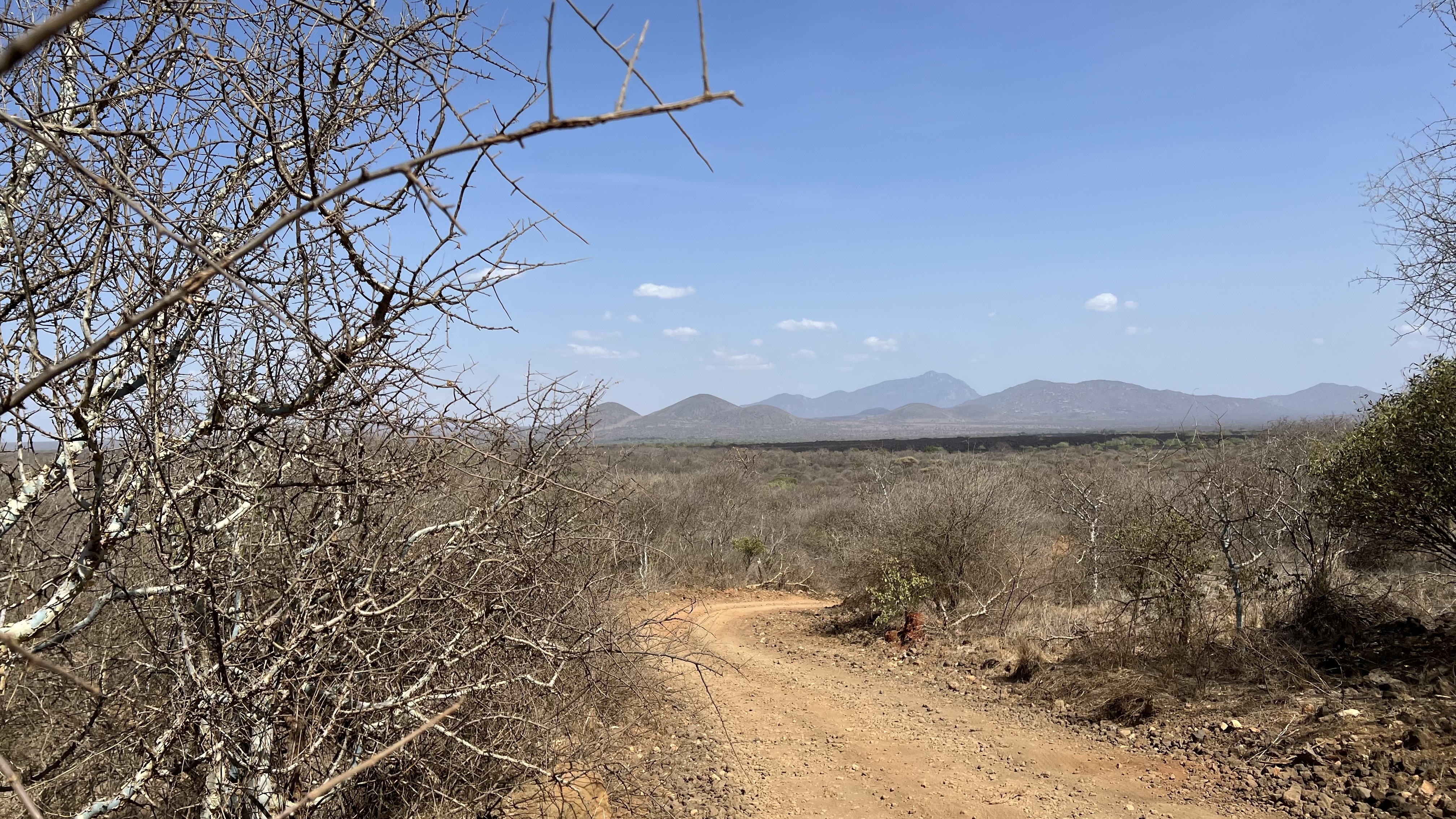
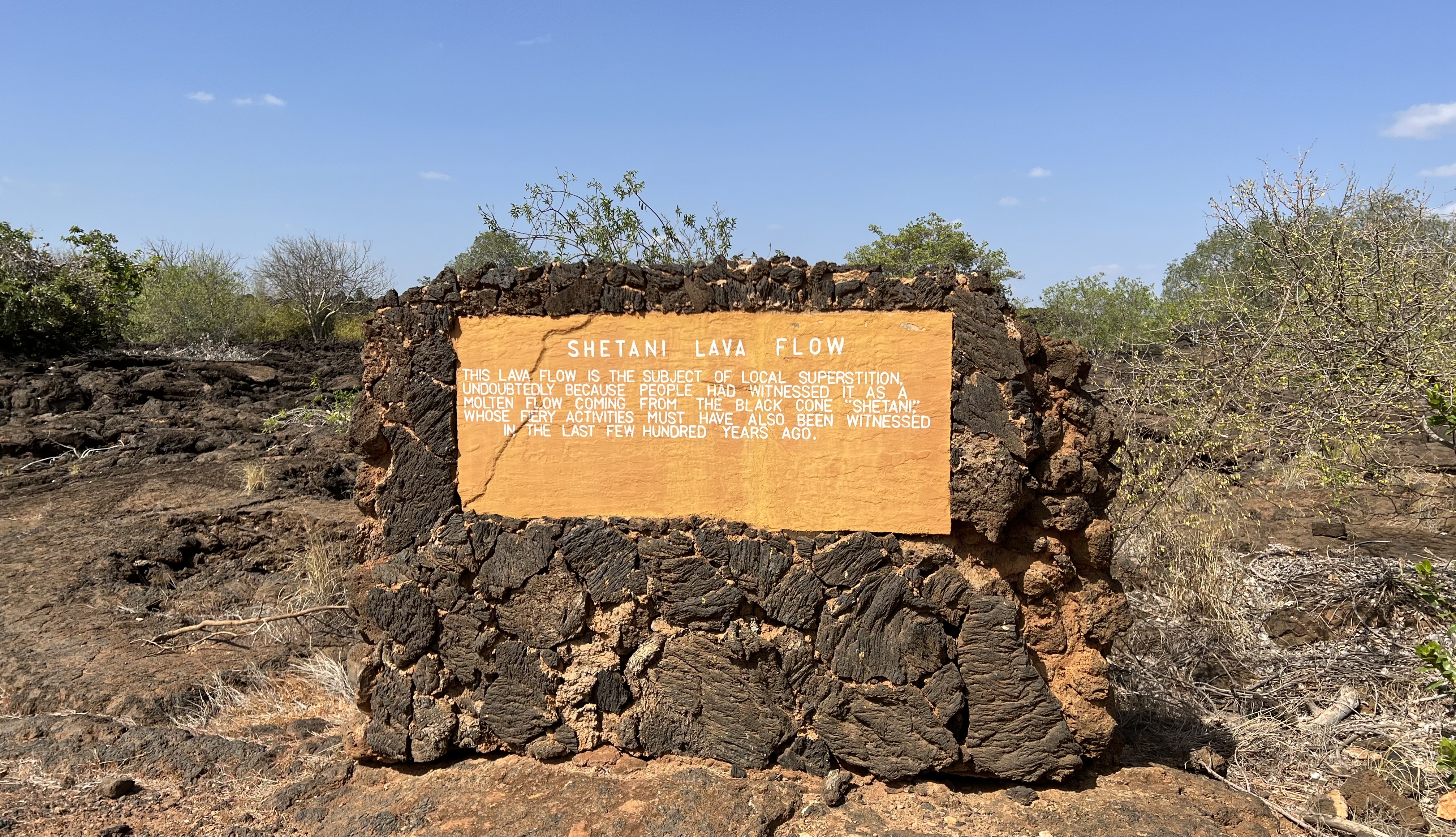
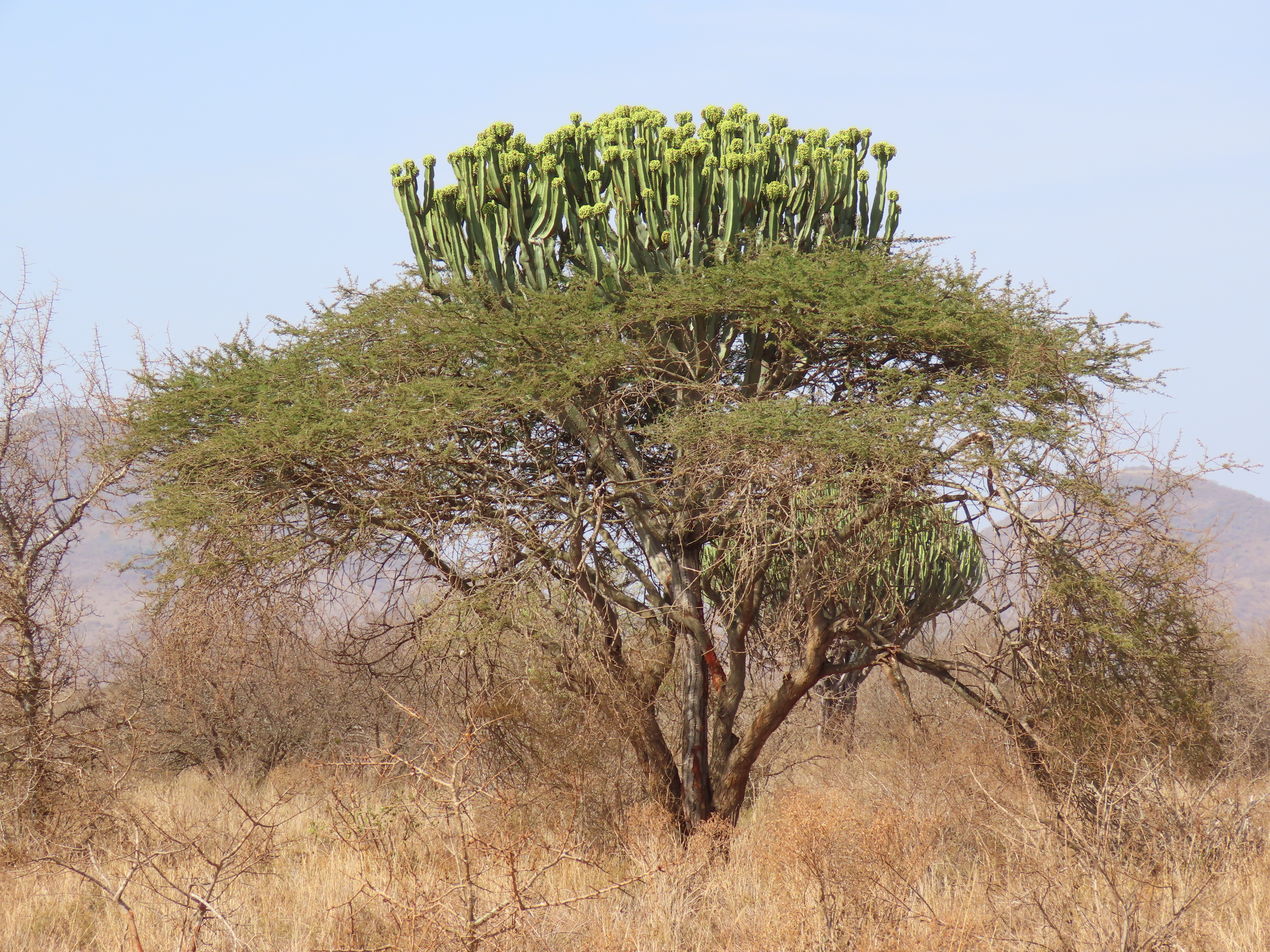
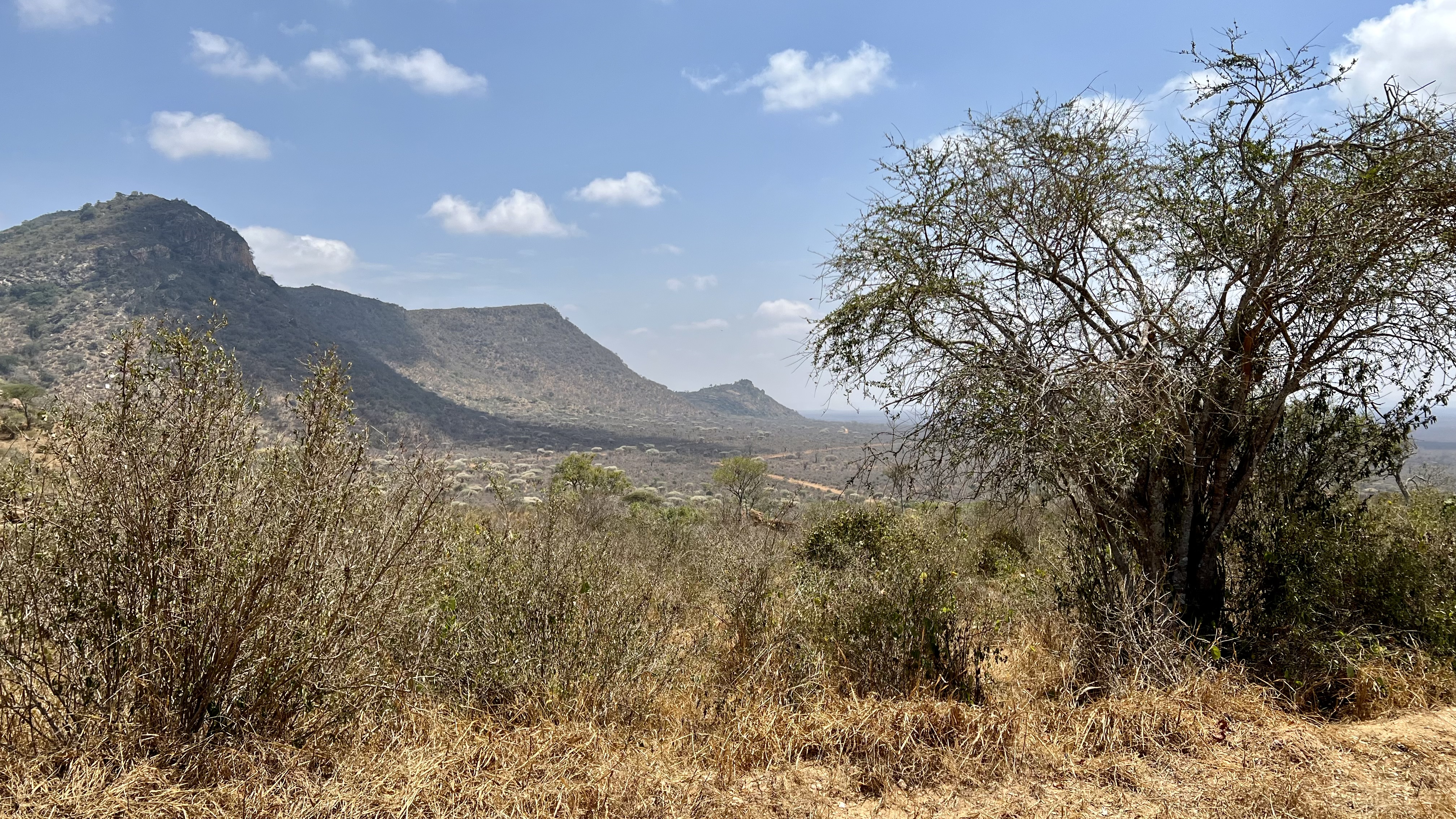
West Tsavo is renowned for its landscapes and sweeping vistas – and what vistas they are – red earth, mountains, volcanic rock. It is very dry but the dryness seems to sit better here than Amboseli, and it’s less bleak. We drive through the Shetani (devil in Swahili) lava flow, some 50 km of black lava rock, like a river through the landscape. The blurb in the guidebook says its only 200 years old. And it feels new, like it has only just cooled and hardened. What a spectacle it must have been.
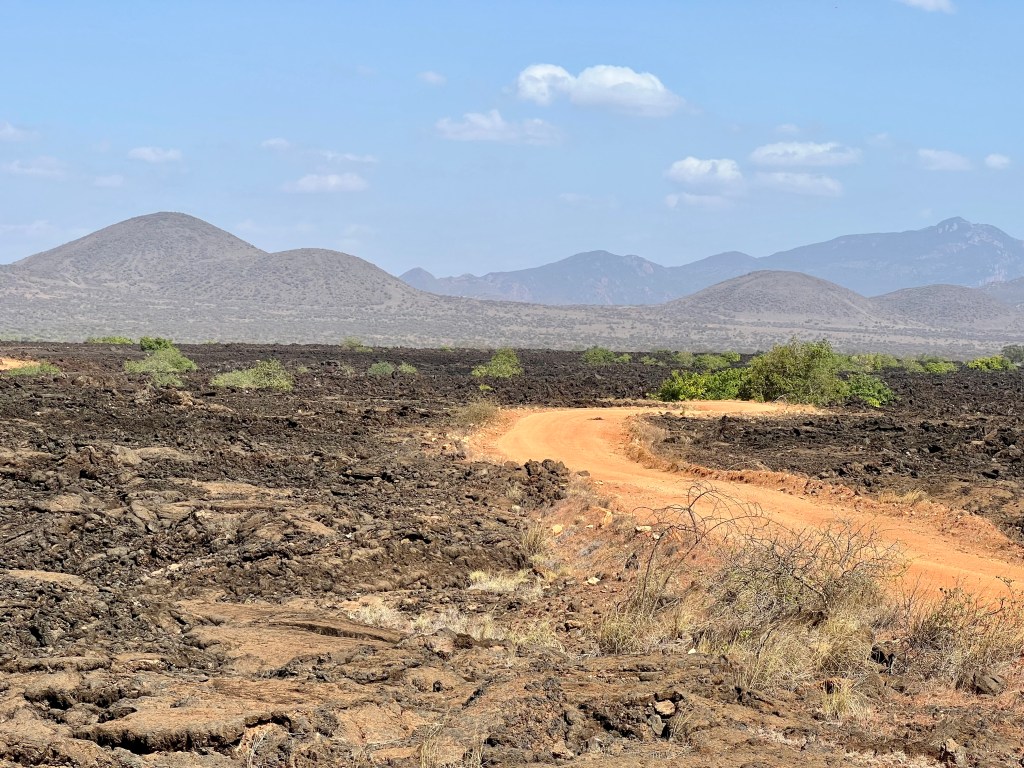
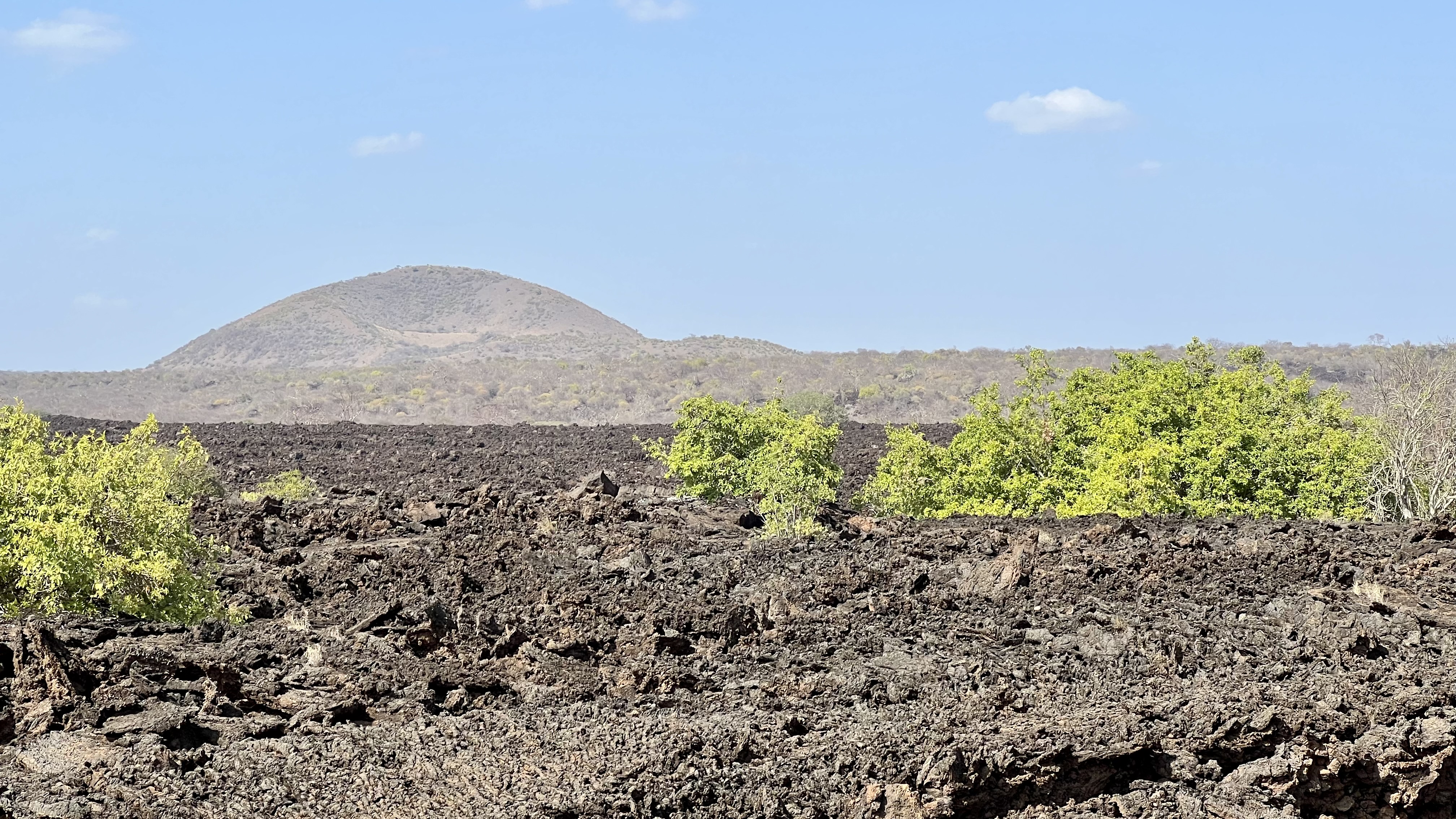
Here and there are trees growing out of the rock – bright green against the black pumice. It’s hard to believe plants could take hold in this stuff, but look closely and there are signs on life everywhere with pale green lichens patterning the surface.

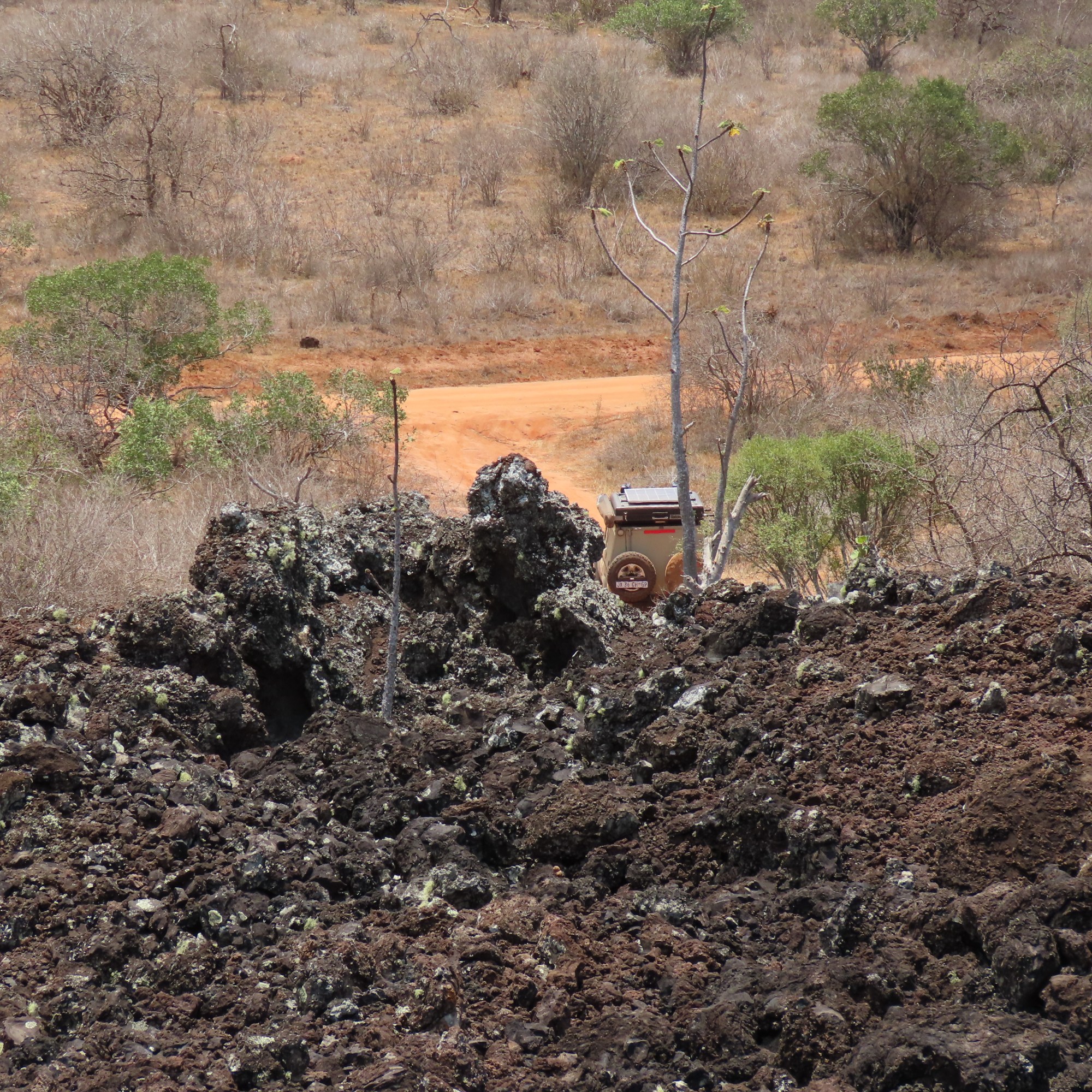
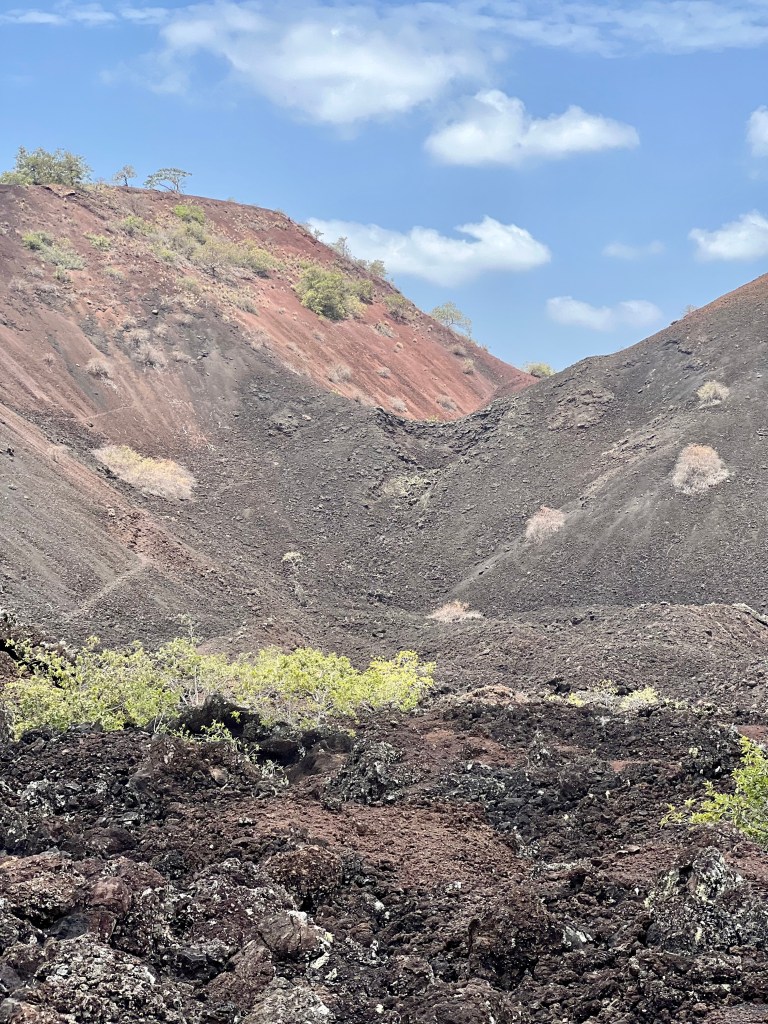
There are places where we get out and walk and at Lava hill you can still see the cone where it blew out.
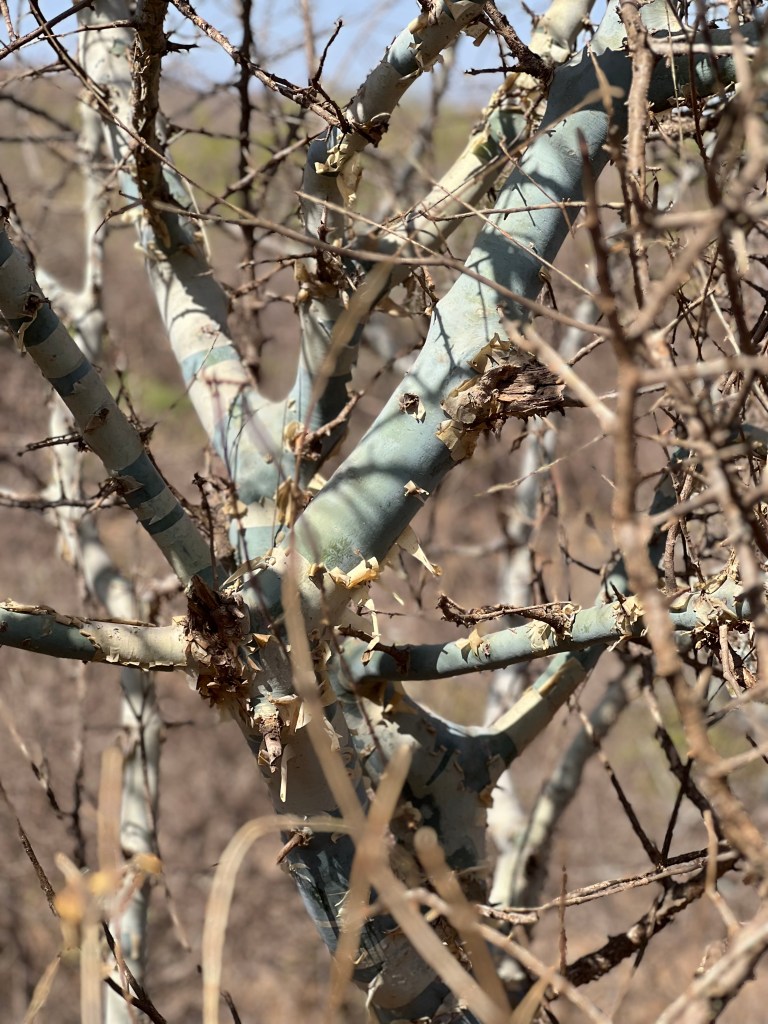
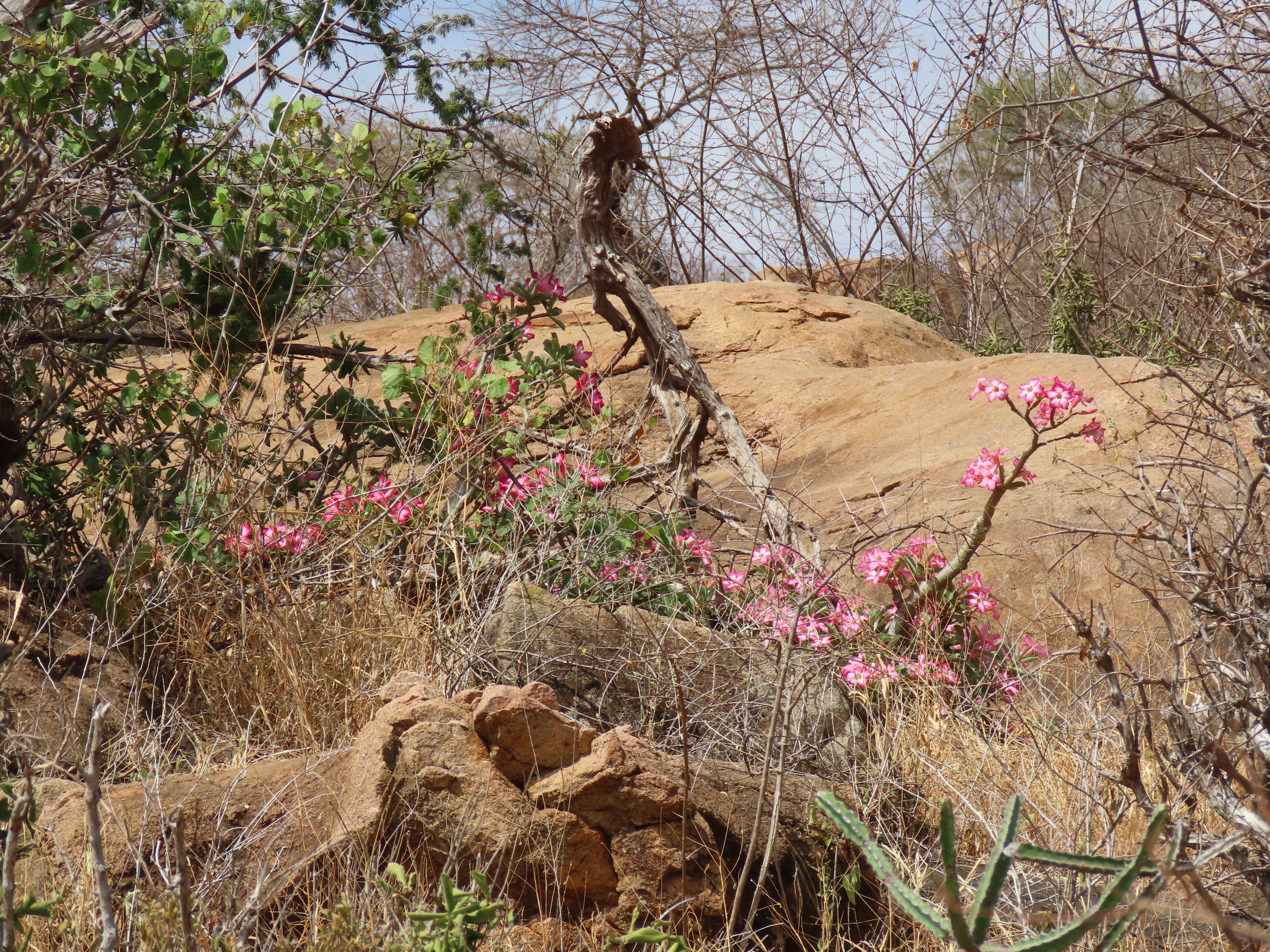
Once you get your eye in and used to the scrub, you start to notice more complex vegetation – the pink flowers of a kind of Impala lily and then these blue trees – I don’t know what they are. But for the colour they look like a paperbark acacia, googling suggests a type of commiphora (corkwood or Kanniedood in Afrikaans), same family that gives us the fragrant resin myrrh. Please if anyone knows – put me out of my misery
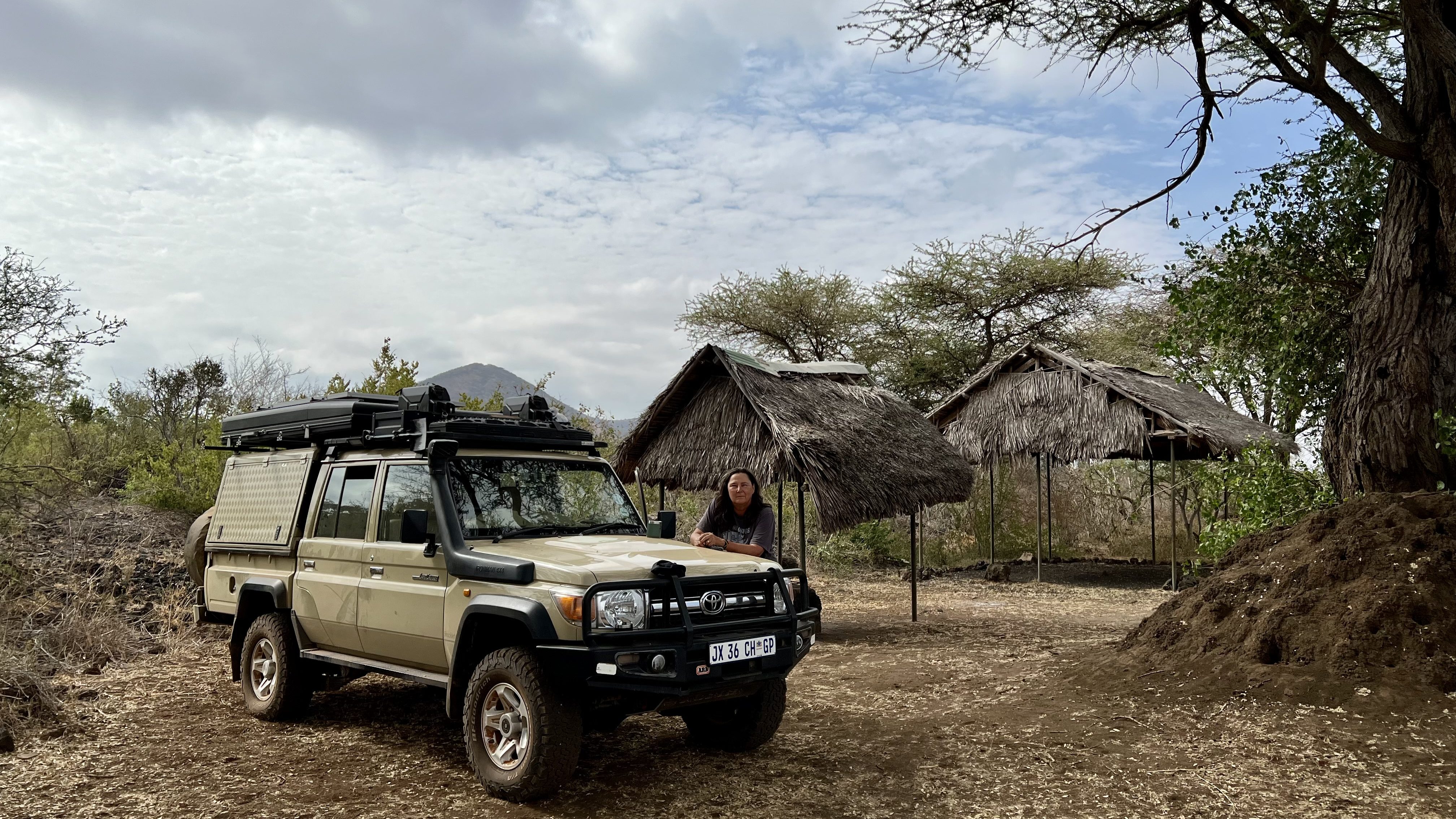
At Chyulu campsite we are once again only campers there, although we are joined by a solo Kenyan traveler the following night. The campsite is fine, with good ablutions and open thatched bandas for shade, with a friendly ranger / caretaker at the nearby ranger station, but the site itself is it’s nothing special. And it is insanely hot… starting to get more and more cloud cover building up during the day, teasing us the possibility of some cooling rain, So far it’s just increasingly hot and humid.
That evening I get my laptop out, it’s month end and I need to pay our PAYE. I also need to pay our Malawian gardener for his weekly visits. Like many Malawians working as gardeners or housemen in Johannesburg’s suburbs he is unbanked, flying under the radar. I usually pay him cash, which I obviously can’t do, so I pay him via instant money (a code to his phone that allows him to draw money, cardless, from an ATM). A South African sitting in Tsavo West in Kenya sending money to her Malawian gardener in Johannesburg. On his phone. It’s mad.
It’s also financial year end for our business and I see a mail from our auditor asking me to OK our provisional tax calculation. Really? Do I have to? We might be on a big adventure but these mundanities don’t go away… I look at the numbers and mail him back saying I think they look close enough. It’s a far cry from our usual year end boxing match. The reason I share this anecdote is to try and explain what this kind of travel does to your headspace. I love the luxury of so much time to think, to really clear your mind and put your thoughts in order. Or even just let your thoughts wander. All the driving and thinking I find therapeutic, much like walking and thinking. It’s very calming and I’m basically blissed out.
Nearby to Chyulu campsite is one of the main attractions in Tsavo West: Mzima Springs. Just before we left on our trip I’d been watching a series on Netflix narrated by Barack Obama: Our Great National Parks. One of those episodes focusses on the Tsavos and shows superb aerial footage of hippos gliding through crystal clear waters of Mzima Springs. Can’t miss that.
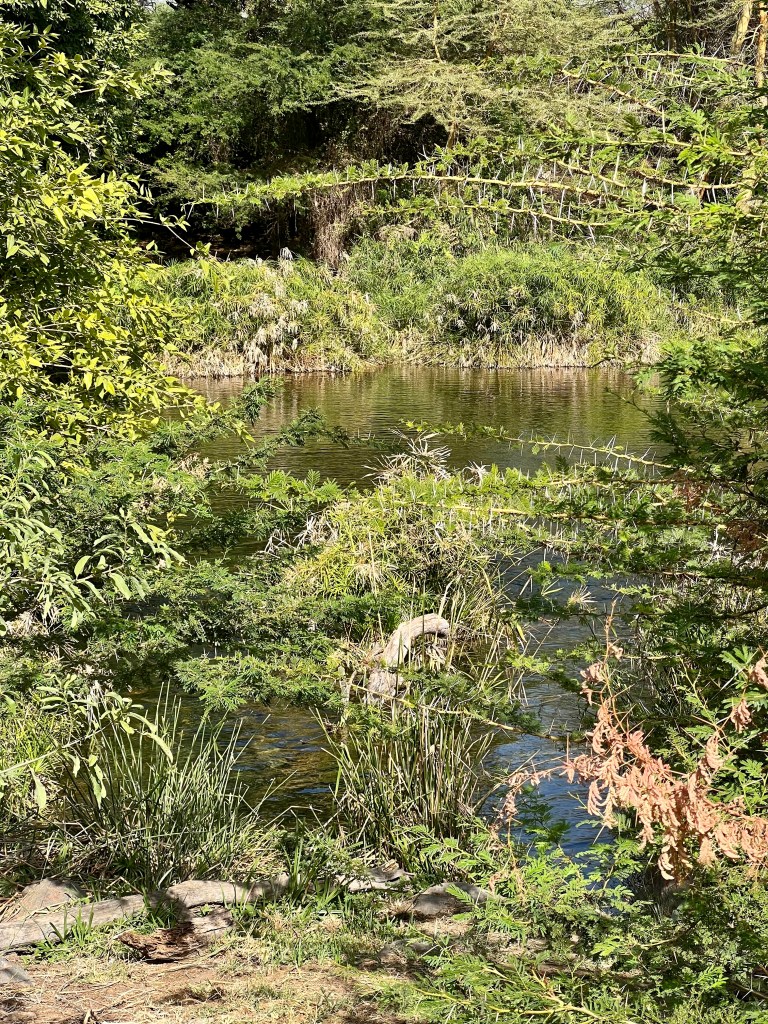
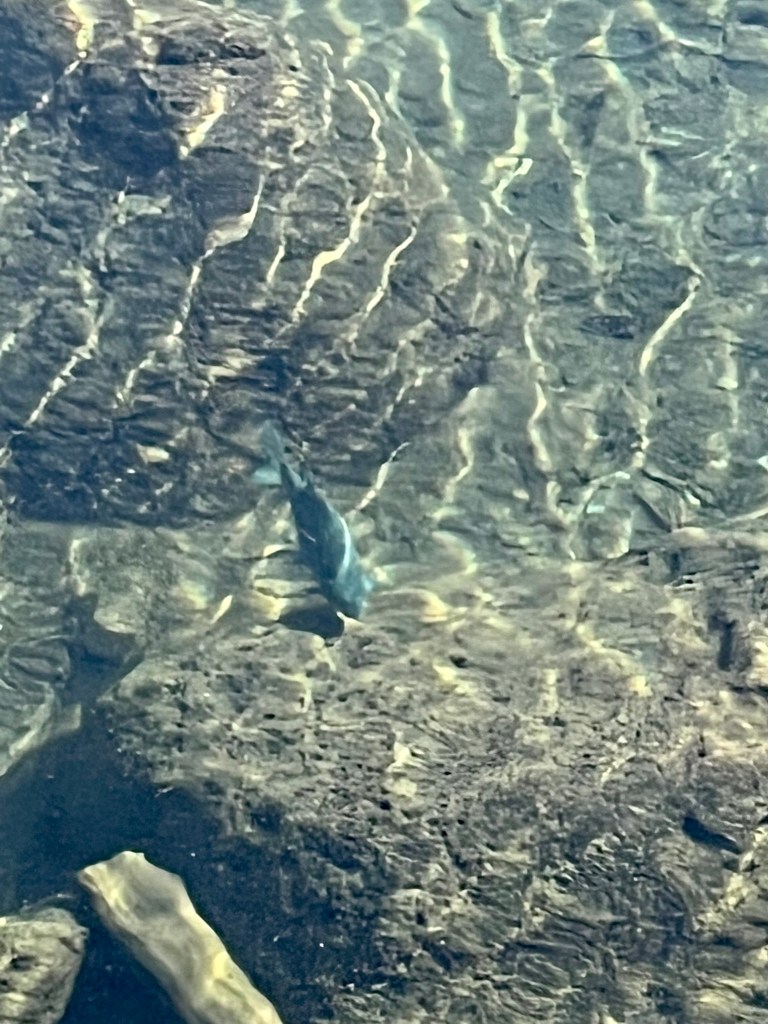
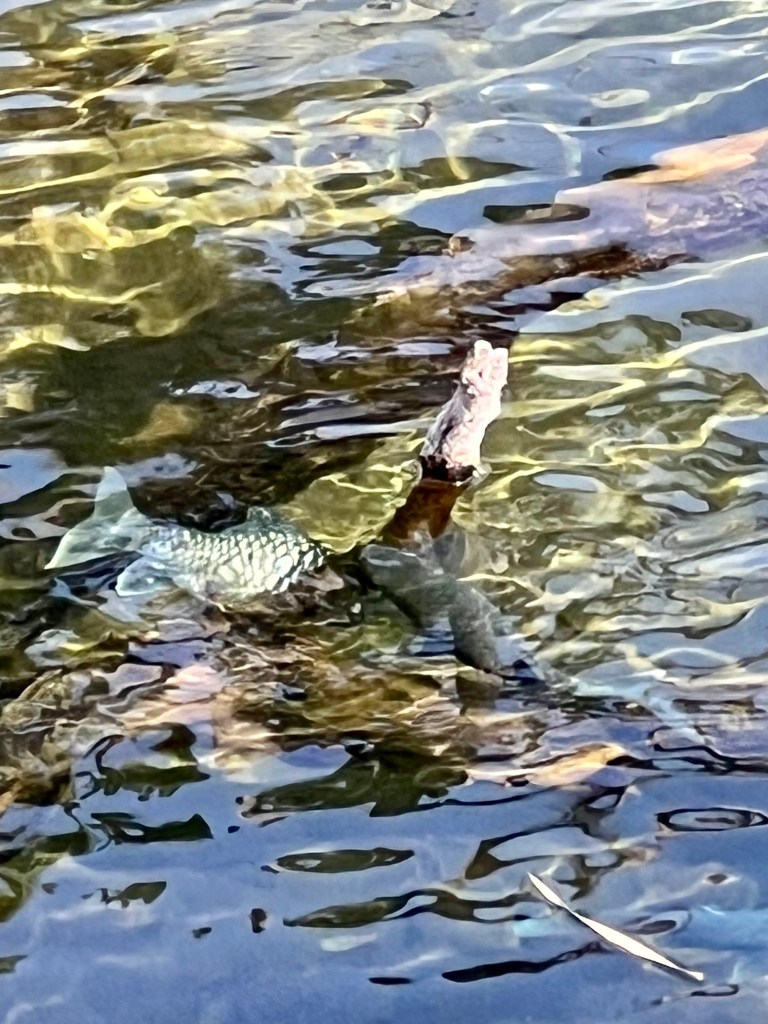
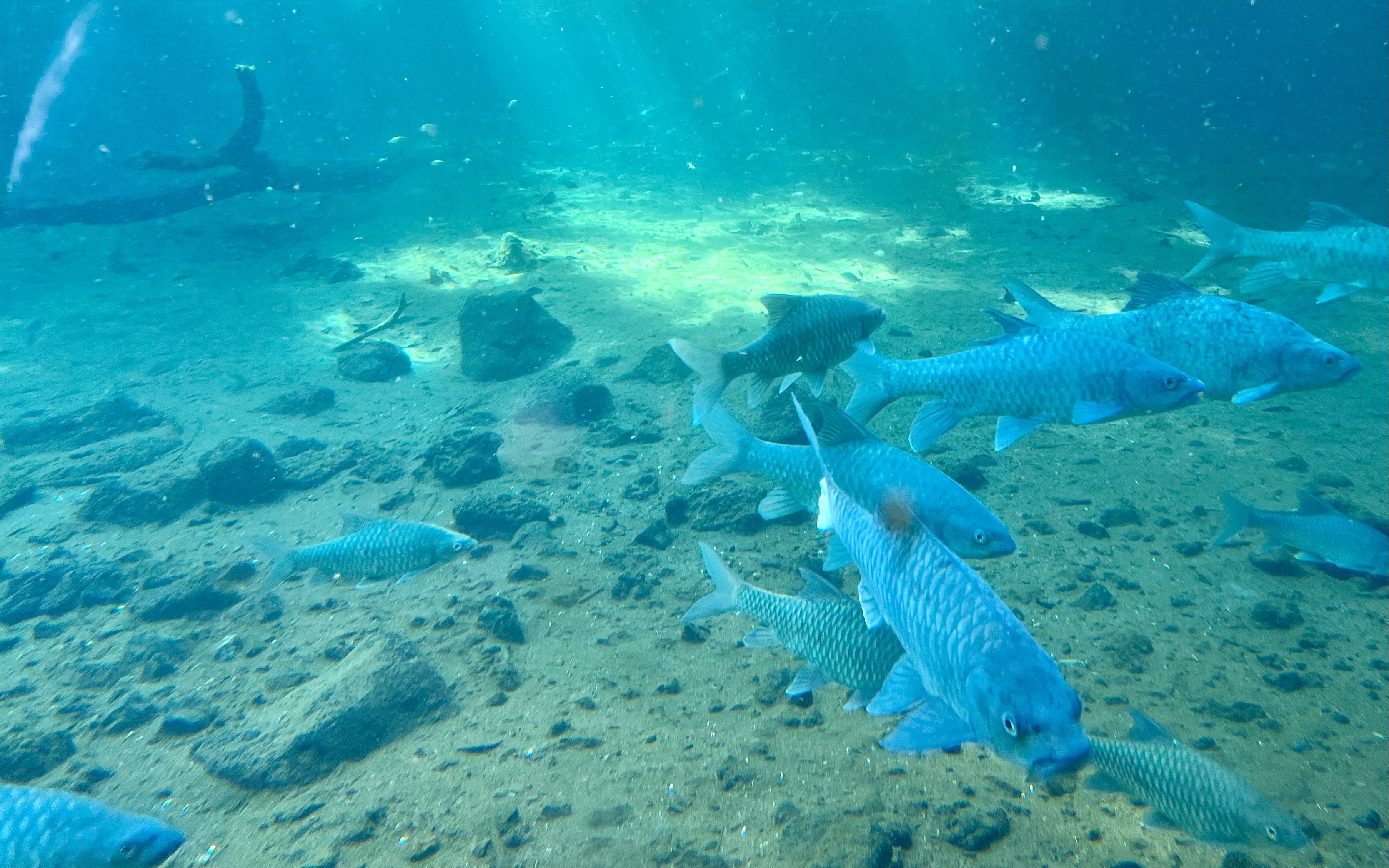
The springs are beautiful with insanely clear water all percolating up through volcanic rock. From here it travels all the way to the coast, supplying drinking water to the city of Mombasa. No hippos today but we see loads of fish, glittering blue as the sunlight catches their scales though the water. And then all turquoise looking through the window in the underwater observation chamber:
Our time in Tsavo West is mainly spent game driving and enjoying the Ngulia hills and scenery in and around Rhino Valley lodge. There is a lot of game despite the drought. Giraffe, Cokes hartebeest, dusty red zebra.
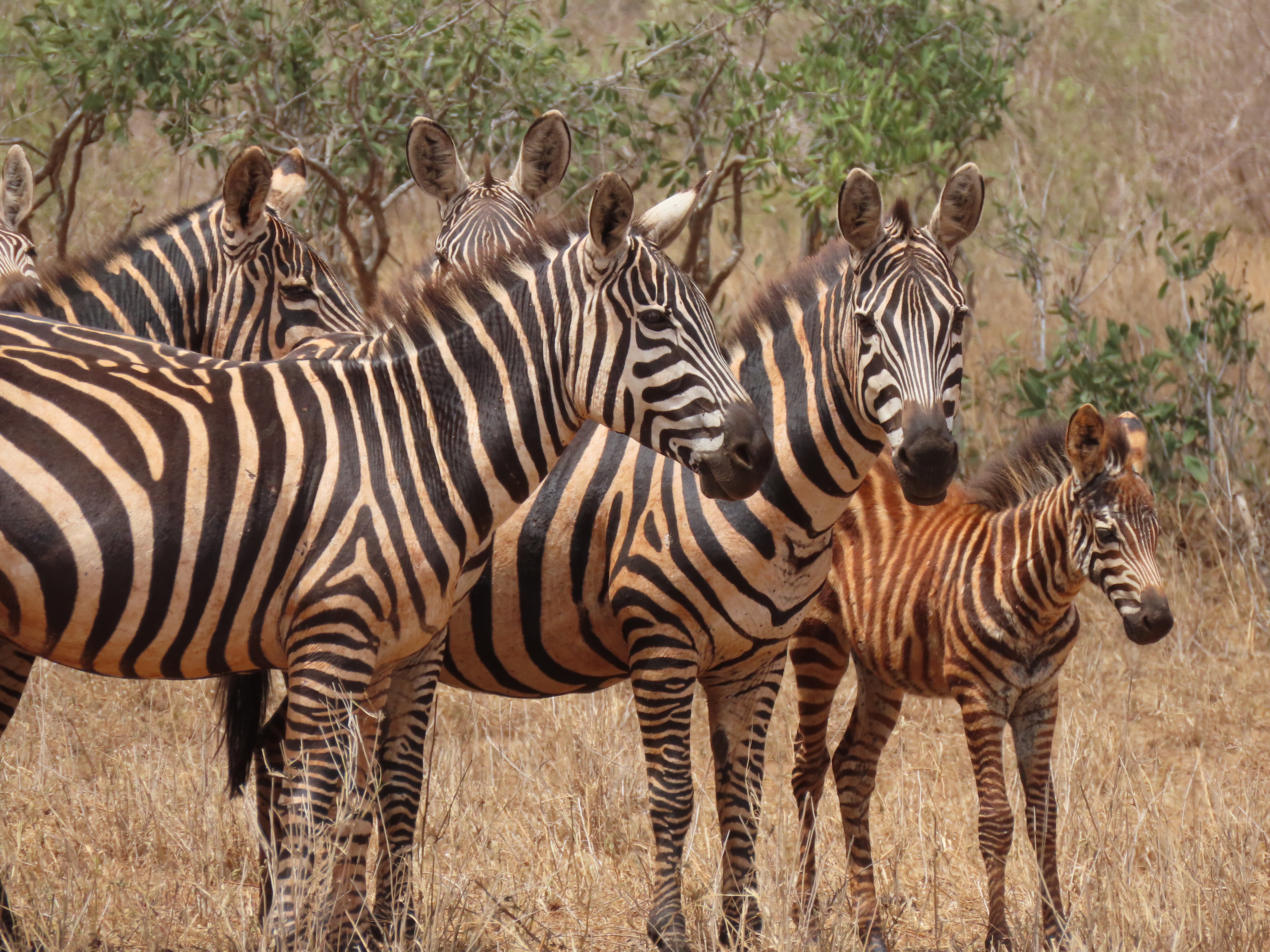
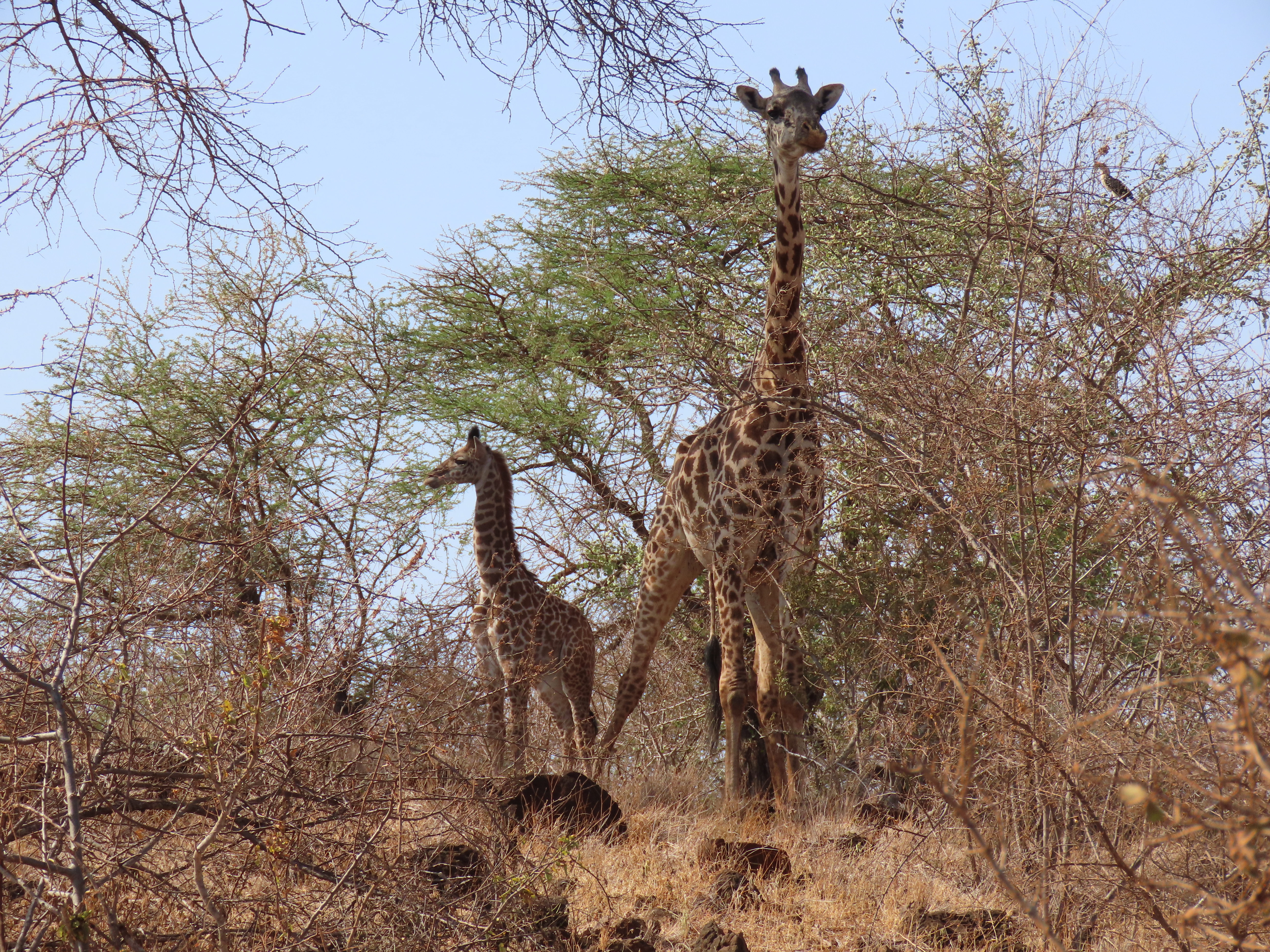
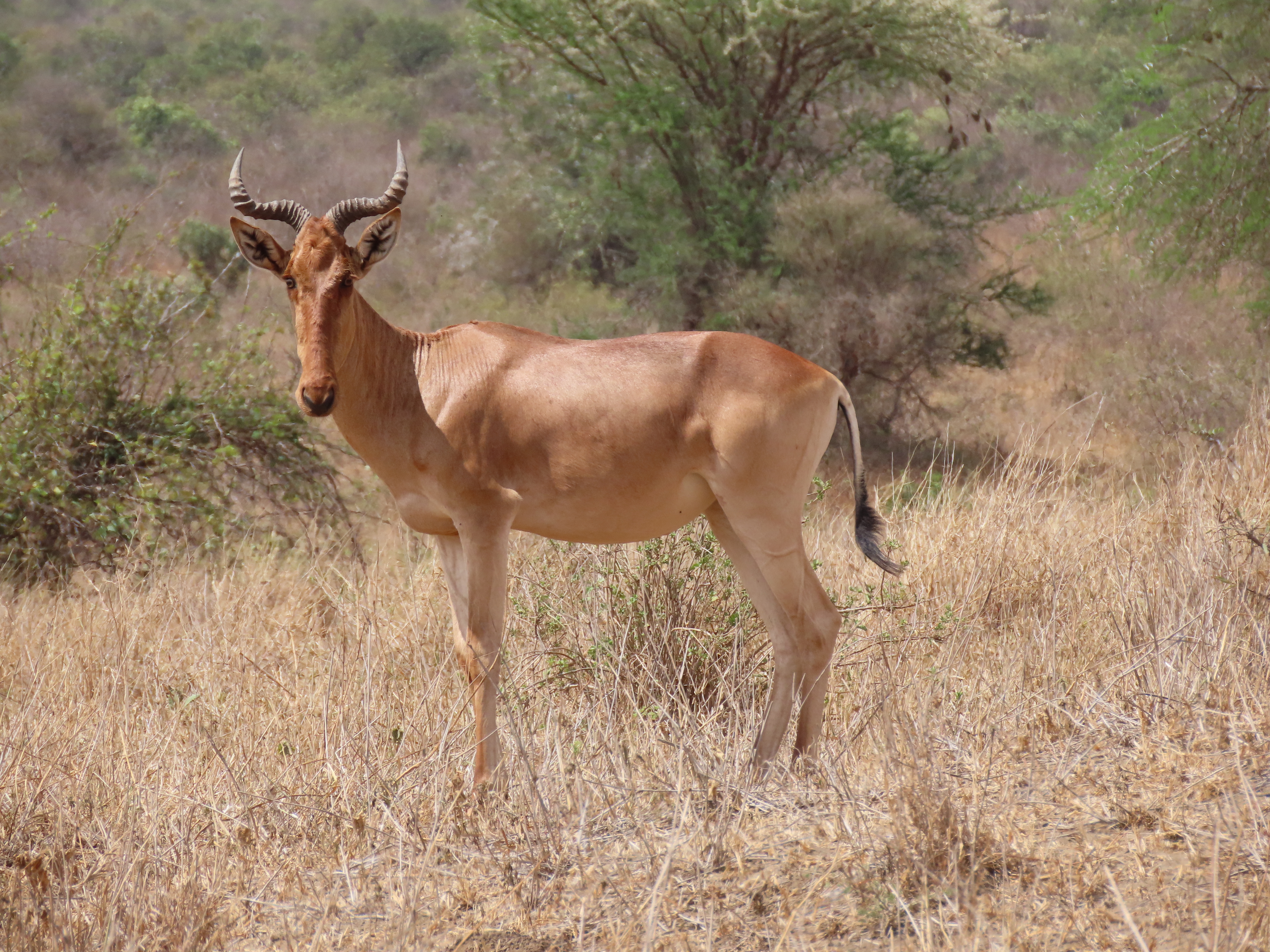
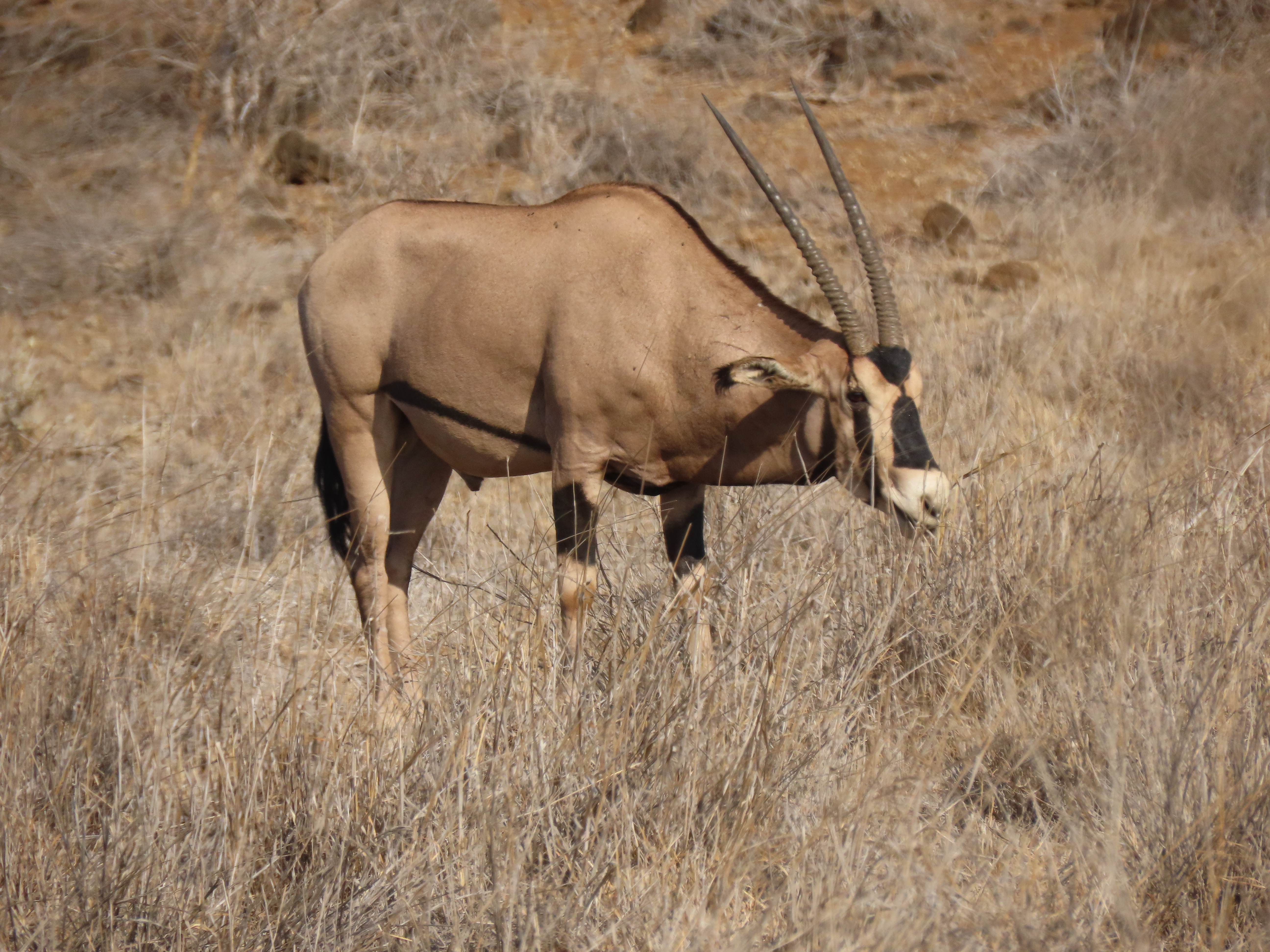
Lots of European rollers about and we also get to see our first Fringe Eared Oryx (also called a Besia Oryx – of which there are two sub-species – Fringe Eared and common – but I like the name Fringe Eared). Similar to our Gemsbok but redder with different stripes and shaggy ears.

And then, as a treat for us, we have the most wonderful leopard sighting. We are parked at a small waterhole, watching the pecking order of zebras coming to drink when a leopard casually strolls by, cool as a cucumber. We followed it for a bit but it leapt up into a tree settled down for a nap. Perfectly camouflaged and impossible to pick out (even through with binos and even though we knew it was there – who knows how many of these beautiful cats we have driven past.).

From Tsavo West we head on to Tsavo East, making our way out of Tsavo West along the fence of the rhino sanctuary – through that red landscape again dotted with baobab. Keeping an eye out for rhinos but no luck.

These two adjoining parks (Tsavo East and West) are separately administered and roughly divided by the railway line and the Nairobi / Mombasa highway. Our route spits us out onto this stretch of road and it’s a sudden adjustment with all the trucks whizzing past. We exit at the gate near Man Eaters Station (I kid you not – there is a station (fire as well as train station) named after those lions, I love it.)

Once out of Tsavo West, we bomb along the highway down to the town of Voi (where, Deb tells me, Denys Finch Hatton crashed his plane and died). We stop and do a bit of grocery shopping, pick up some beer and head for the entrance gate. There are lots of roadworks and resurfacing going on so we follow the detours and wiggle through suburban Voi to the gate which is practically in town. Again no map for sale and am advised to take a shot of the map in the wall of the office. Which I do. It’s not bad (the map that is) and most of the track intersections are numbered which helps.
Off we head to the Ndololo public campsite – Tsavo East here we come.
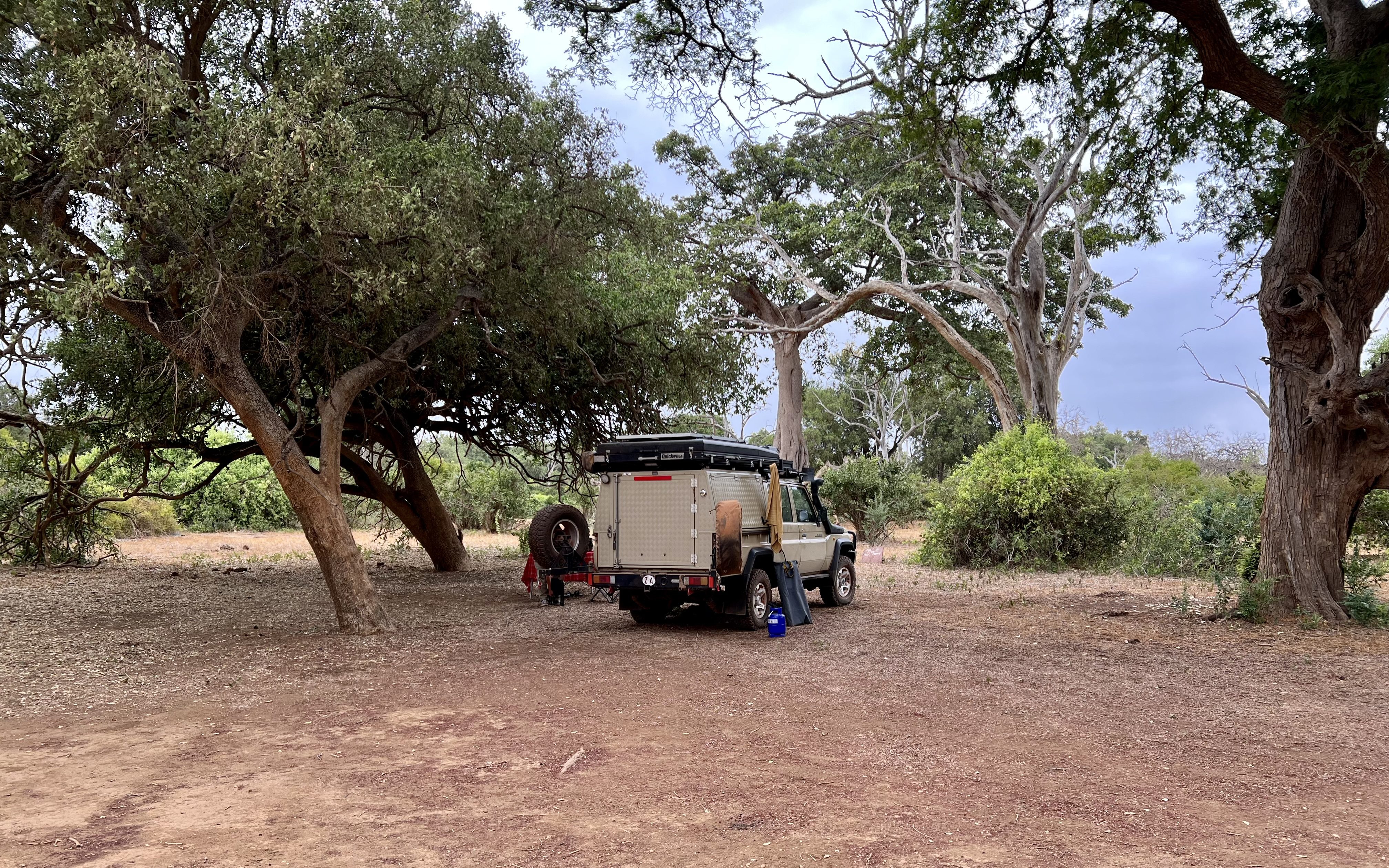
The campsite isn’t far from the gate and has lovely big trees. It’s probably the most campers we’ve seen so far although I’d hardly call it crowded. Our fellow solo camper from Chyulu is here too – he’s a man of few words but we get a wave and a nod of recognition. As we set up camp the monkeys are a nightmare and sneaky beyond. You cannot leave a door ajar or window down for a second and they are in there. We lose a pear and some bread and Deb is incensed, chasing them around. But quite frankly it’s too hot for that. Now they have a bit of loot, we all calm down and there is an uneasy truce. And actually they are really fun to watch – lots of little ones leaping off trees, onto our bonnet, sliding down the solar panel and well, monkeying around, basically.
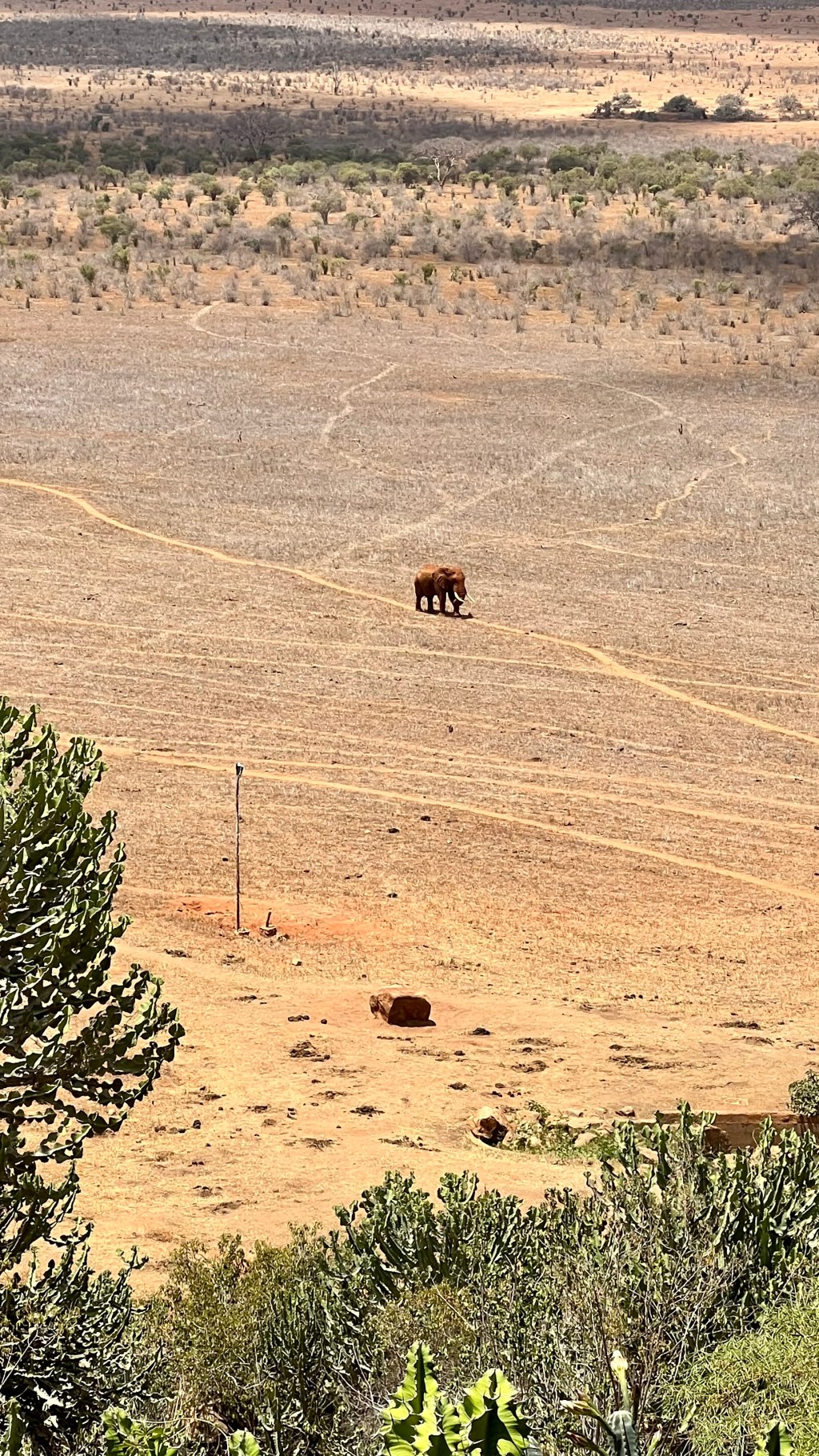
Late afternoon I head out on a solo game drive, leaving Deb in camp with her book (and the monkeys). It’s a short drive and I focus on the area around Kanderi swamp. Lots of game and so many elephant – and then lions in the distance and buffalo, zebra, giraffe and all other kinds of plains game. I pull up in some shade, get out the binos and enjoy the spectacle. It’s lovely.
Evening in camp is chilled, lots of elephant walking through as well as a resident heard of impala that clearly call the campsite home.
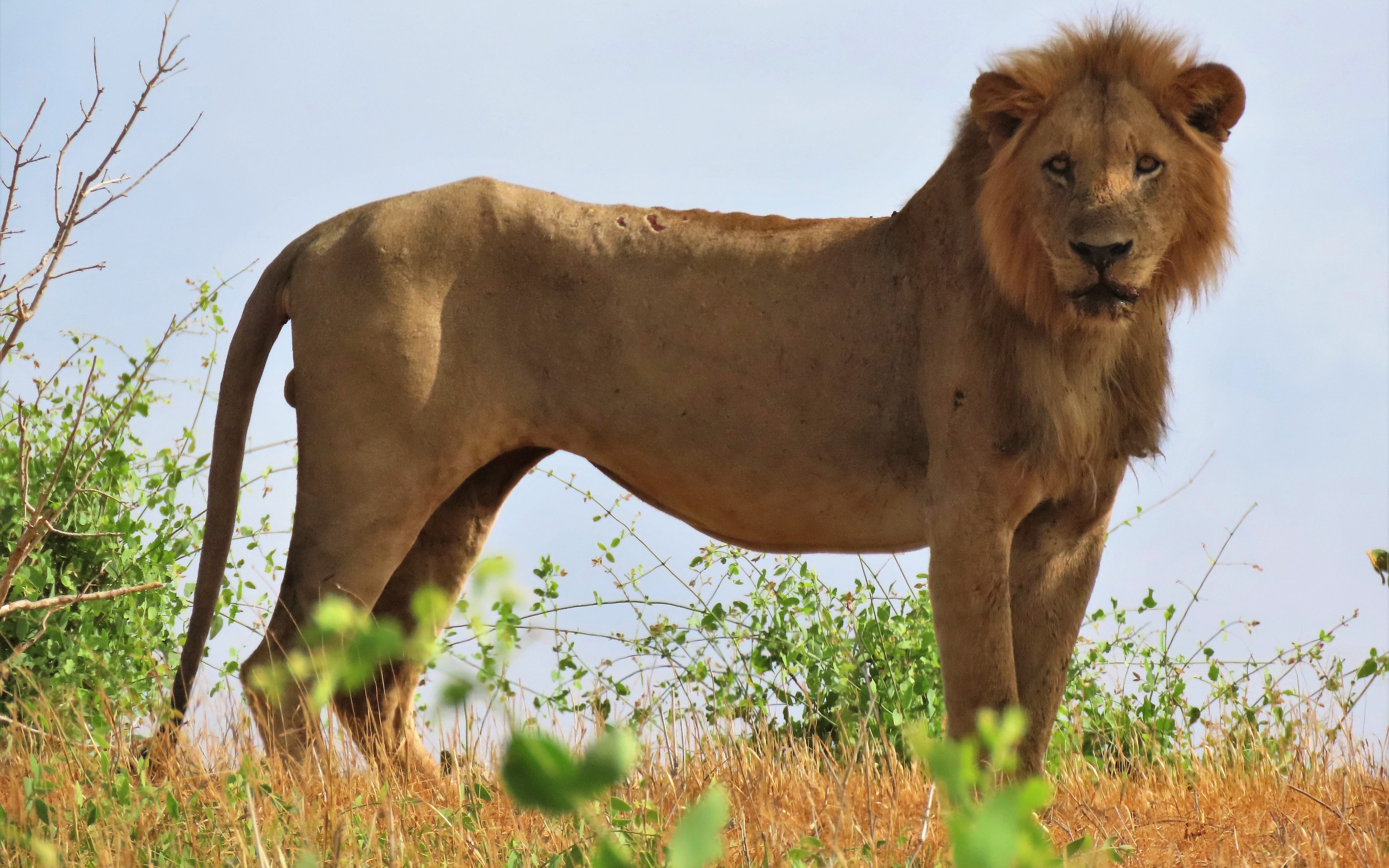
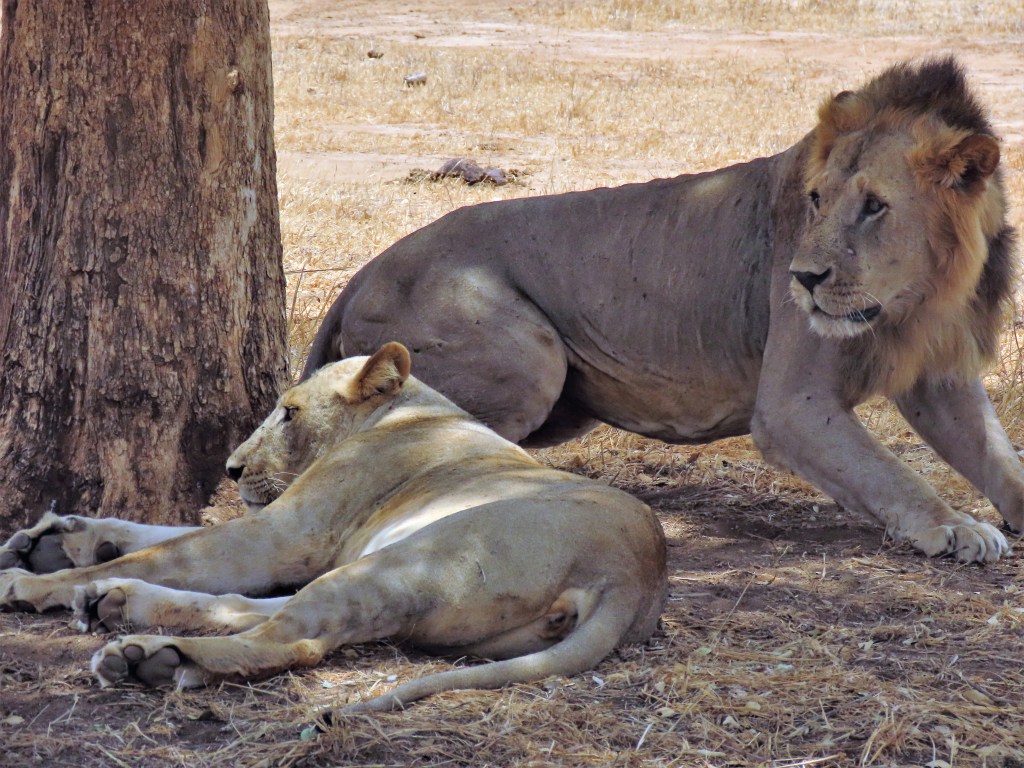
In the morning we head out into the park, I want to show Deb the Kanderi swamp area and see if those lions are still hanging about. And they are – we get a shot of the male as he looks out over the ‘swamp’ then walk towards us before joining the rest of the pride flopped down in the shade of a tree.
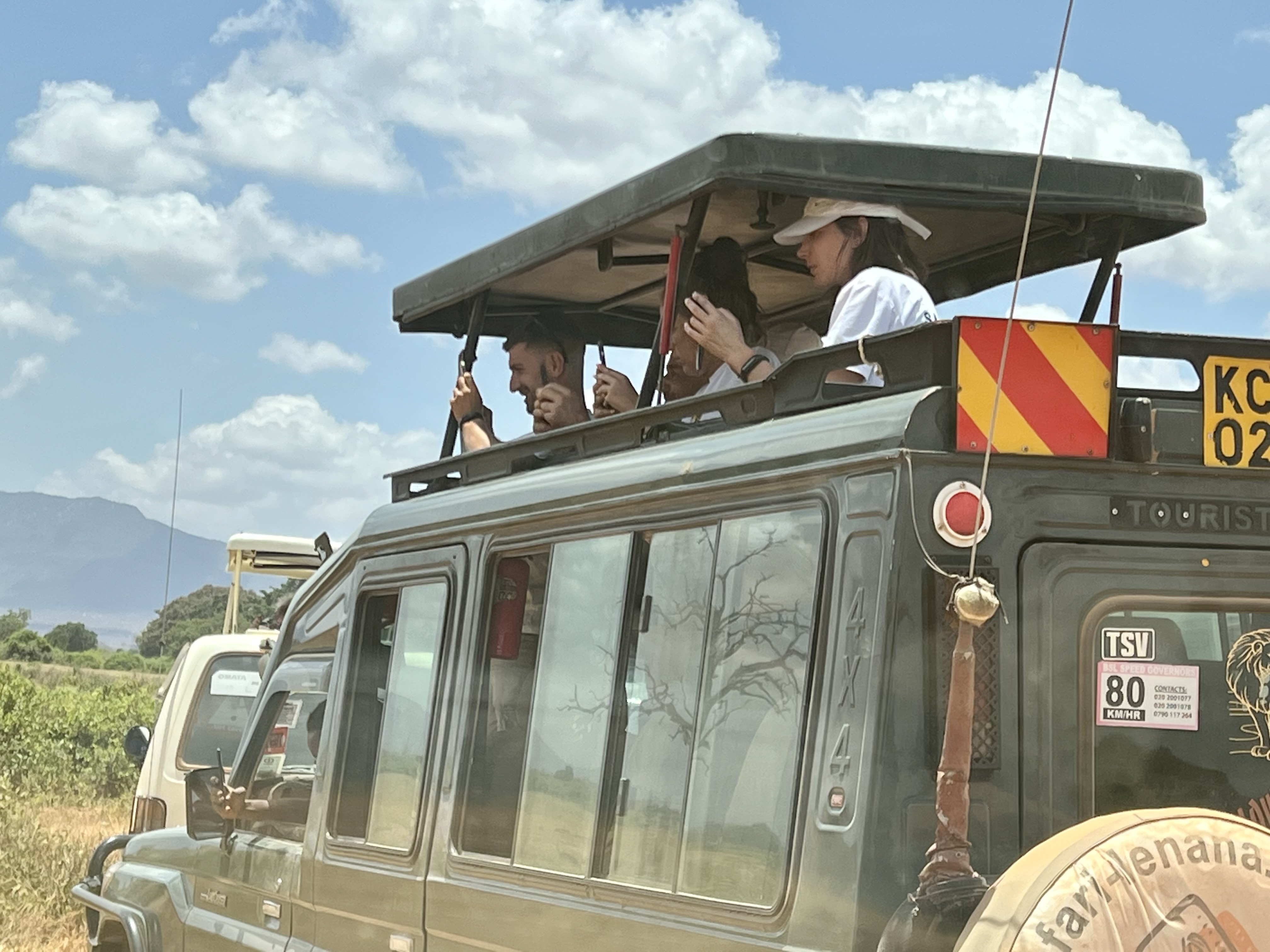
We take a few photos of them. And a few photos of people taking photos of them.
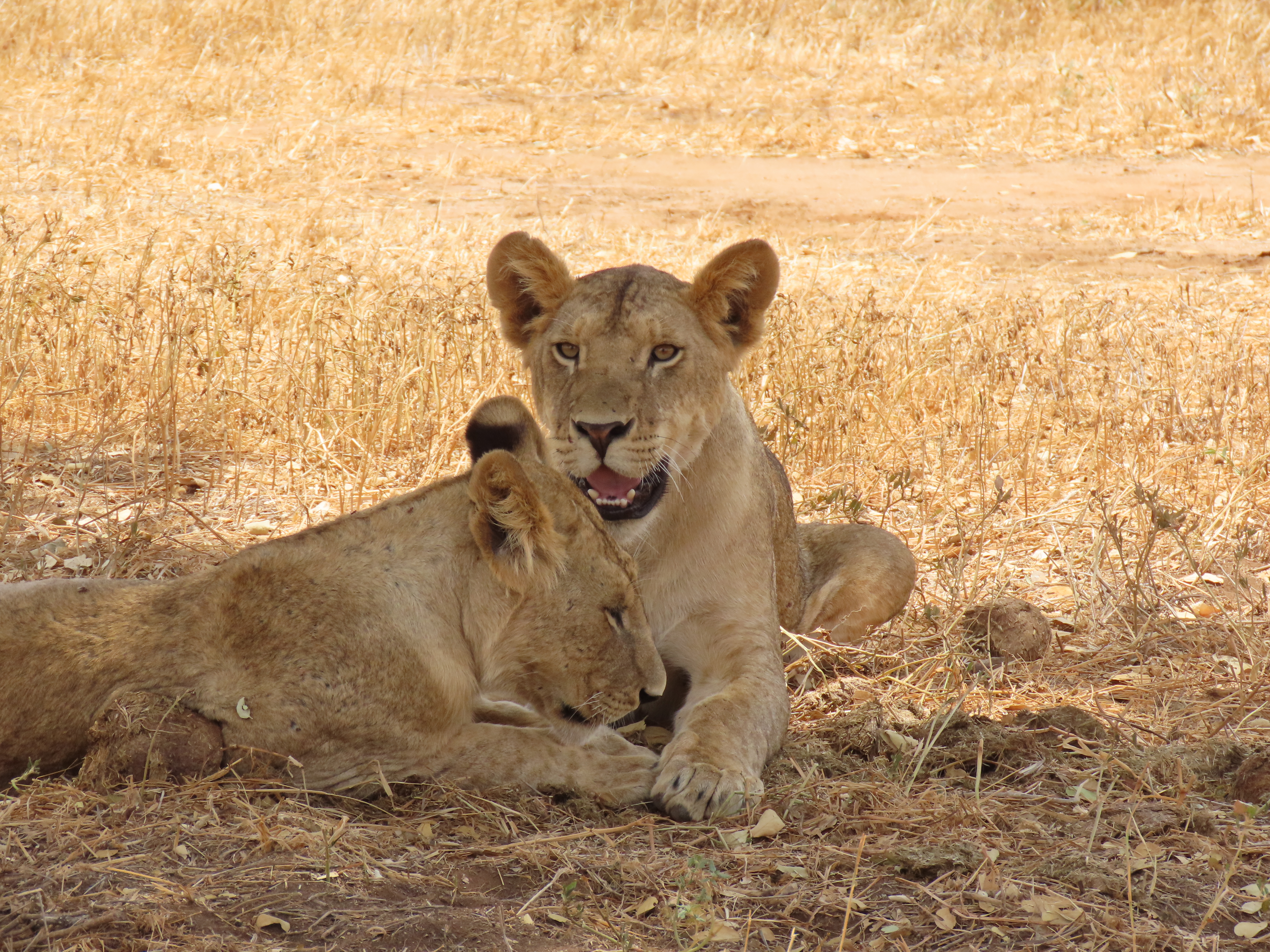
And next thing a small family of elephant arrives and angrily chases them away, trumpeting and stirring up dust. The lions scatter, but eventually make their way back – it’s so hot out there that this big shady tree is just too good to give up.
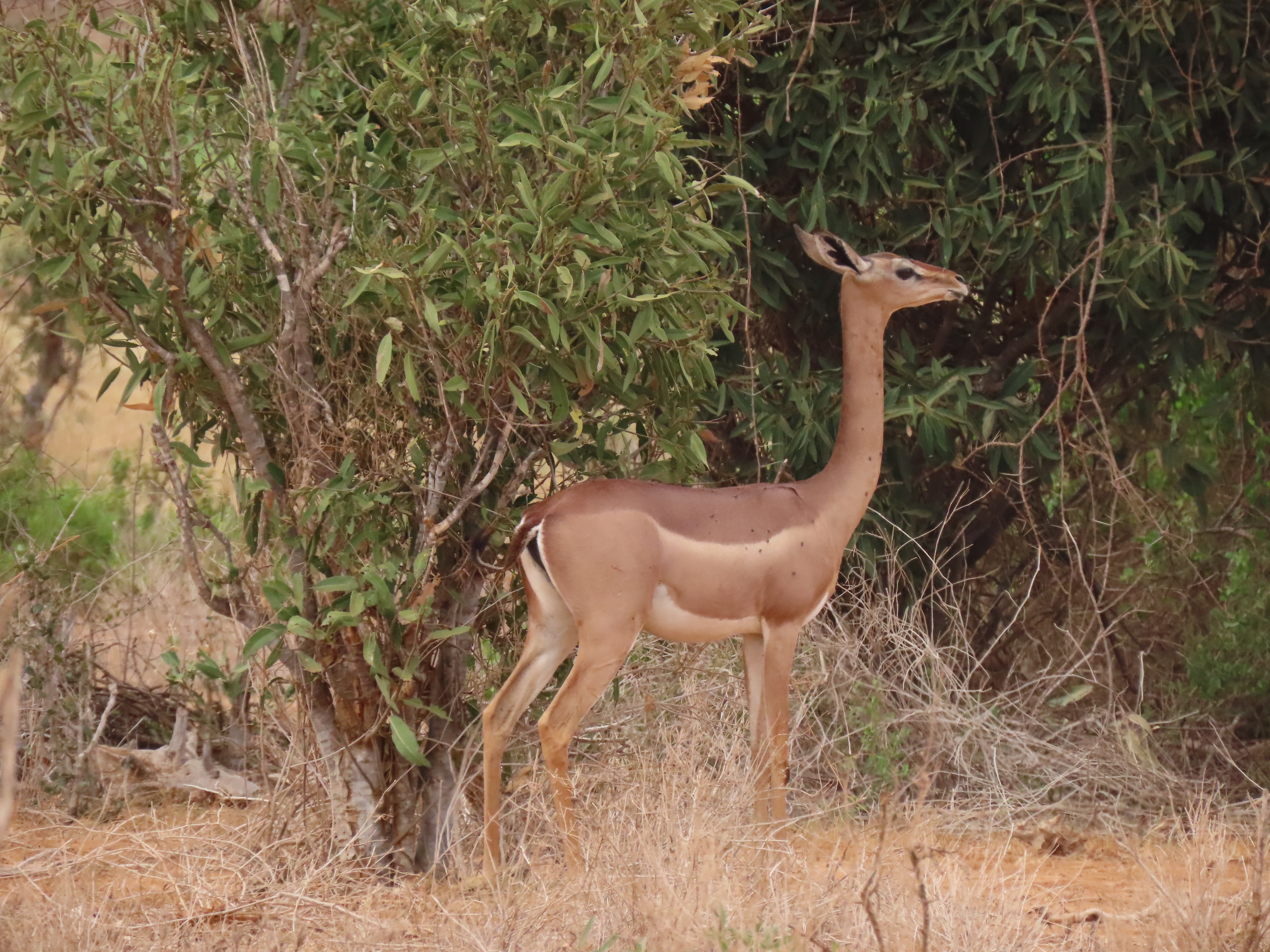
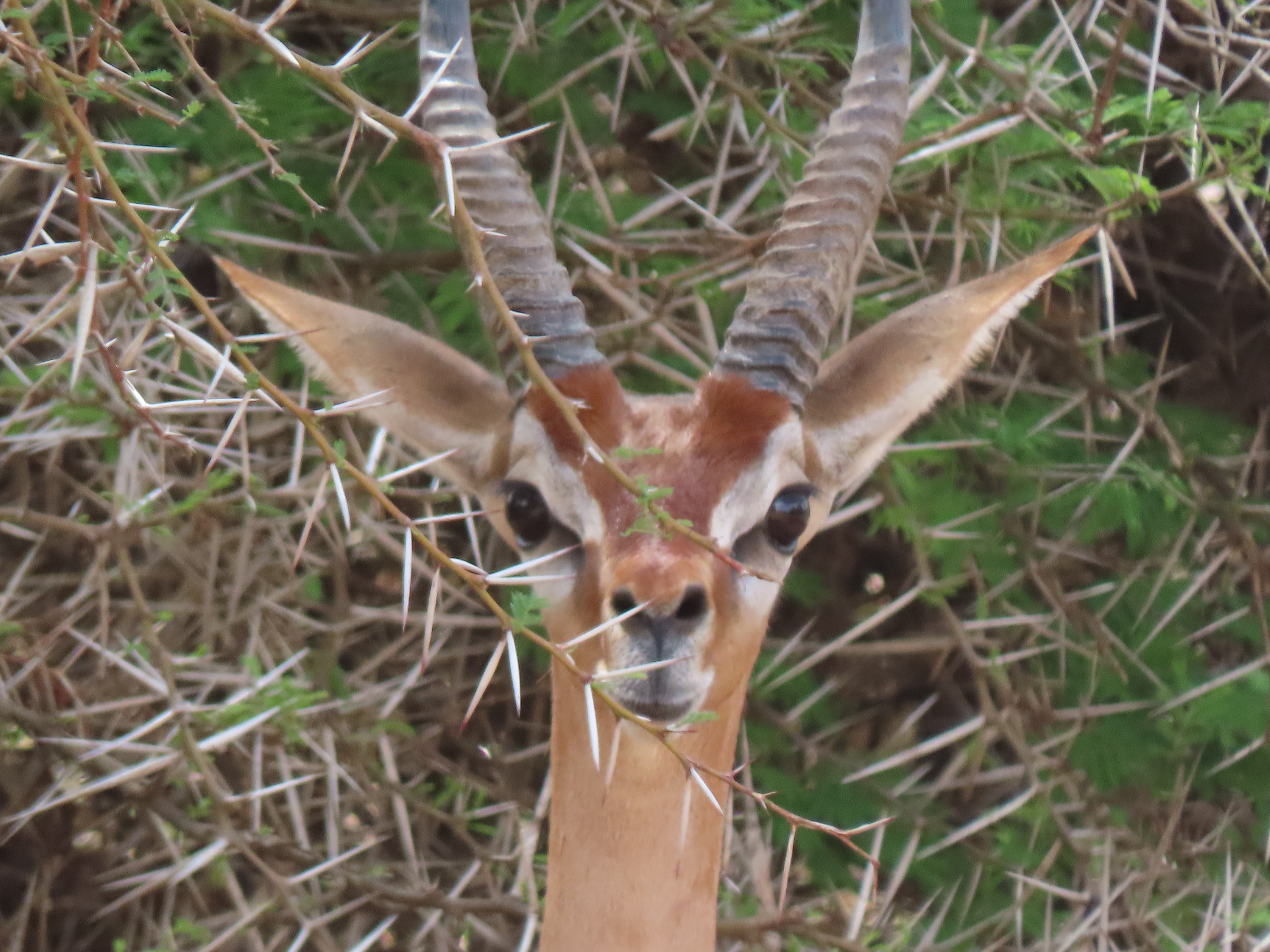
We drive out across the plains in the south of the park – see our first Somali ostrich with their distinctive blue legs, and then our first gerenuks with their elongated necks. They are very graceful side on, but head on I think they just look silly, like some kind of demented African llama.
And I discover my new favourite bird – how beautiful is this yellow bird? At first we thought a yellow wagtail, but after much scrabbling through the bird books we settle on a golden pipit (with a strong challenge from the yellow throated longclaw).

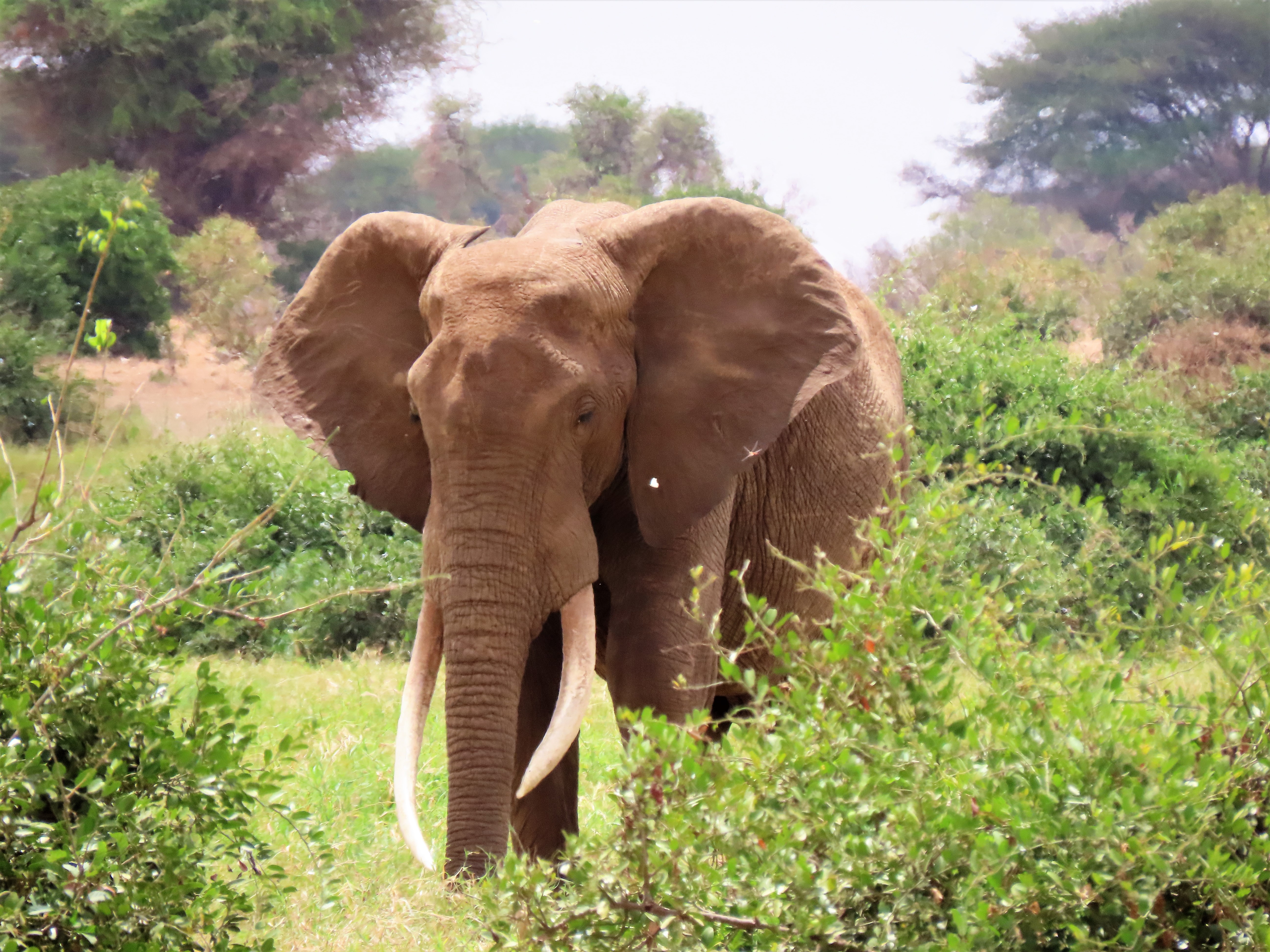
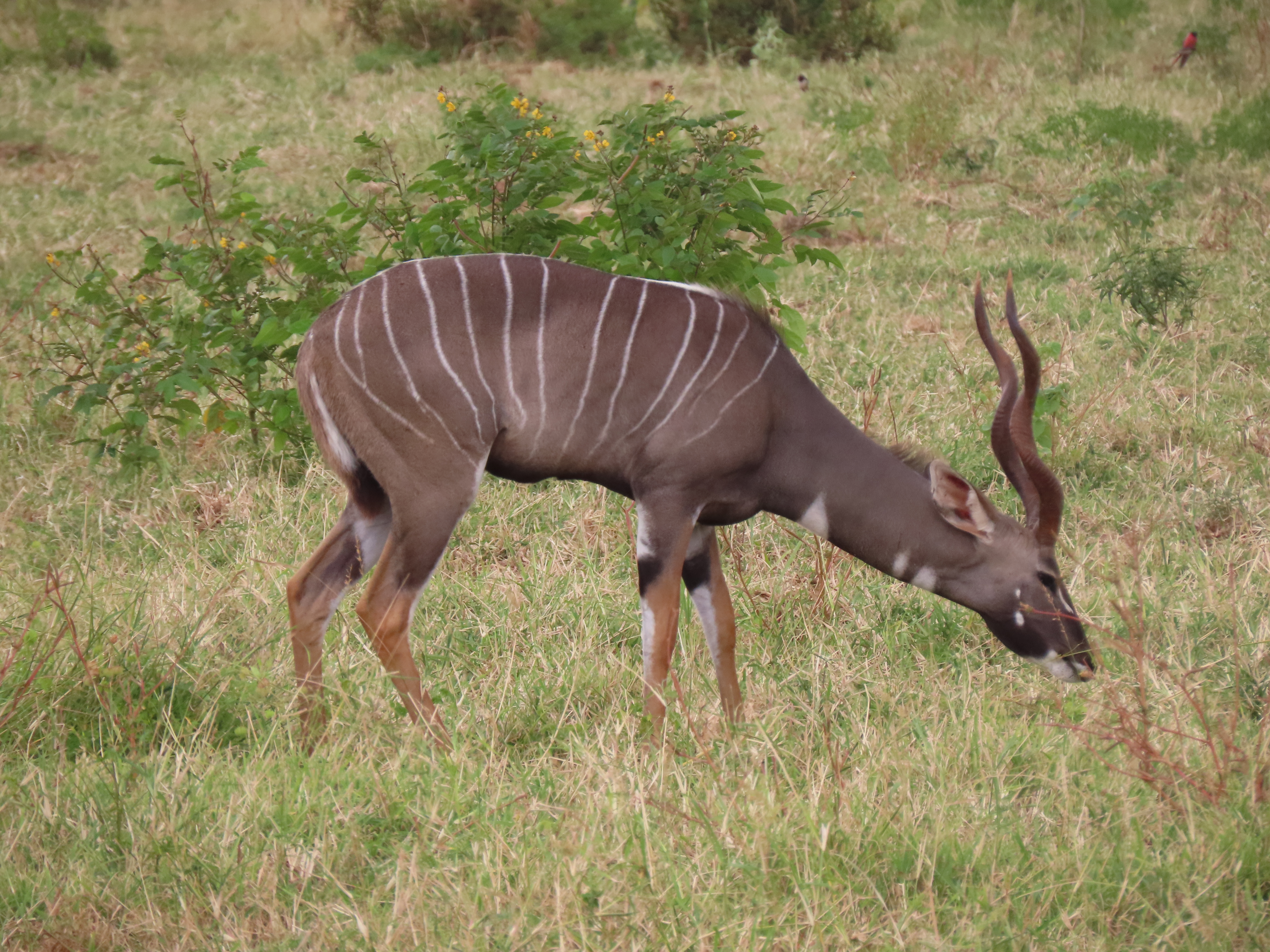
We then return to the river road, driving up past Aruba Lodge, enjoying all the game and especially the large herds of elephant. We spot a second pride of lion. And then another antelope that we don’t get at home: a lesser kudu.
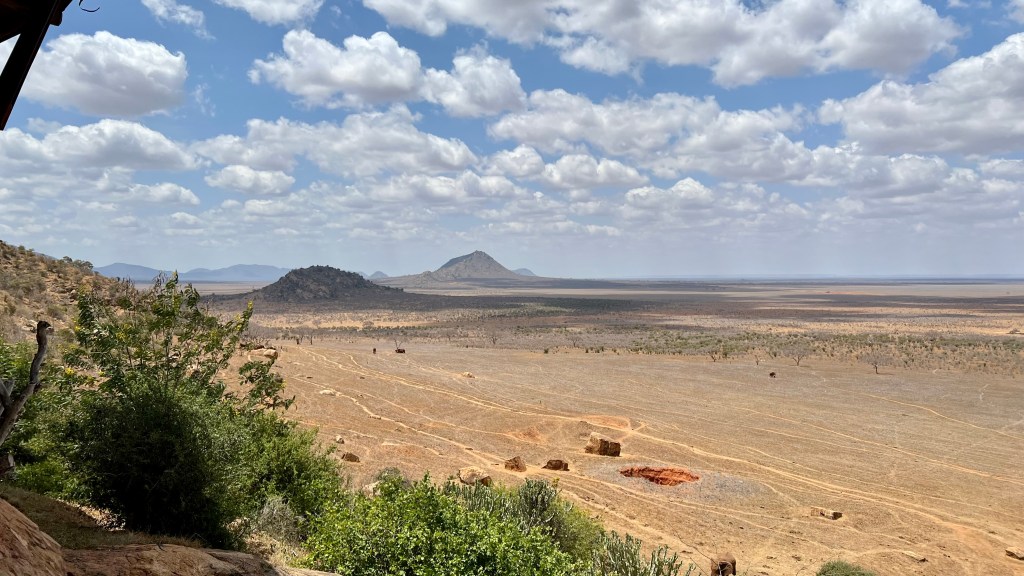
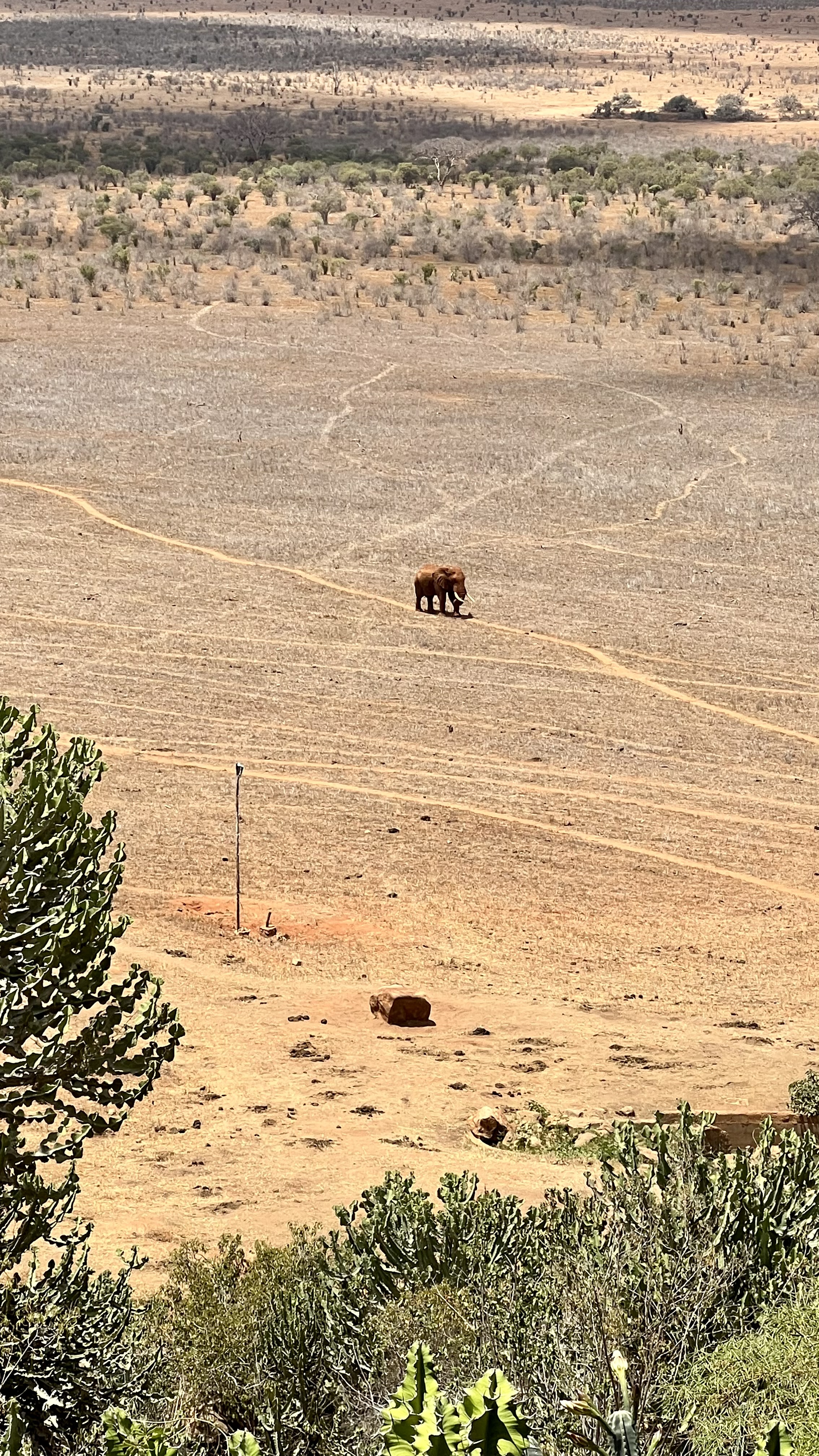
Heading back to camp we stop off at the Voi Safari Lodge – renowned for its spectacular views over the park – and they really are. The Lodge is perched on the side of a hill and sitting out of the deck, cold drink in hand, we take some time out from the driving, watching tuskers amble along trails to the watering hole at the foot of the hill. The view also drives home how dry and stressed this landscape is.
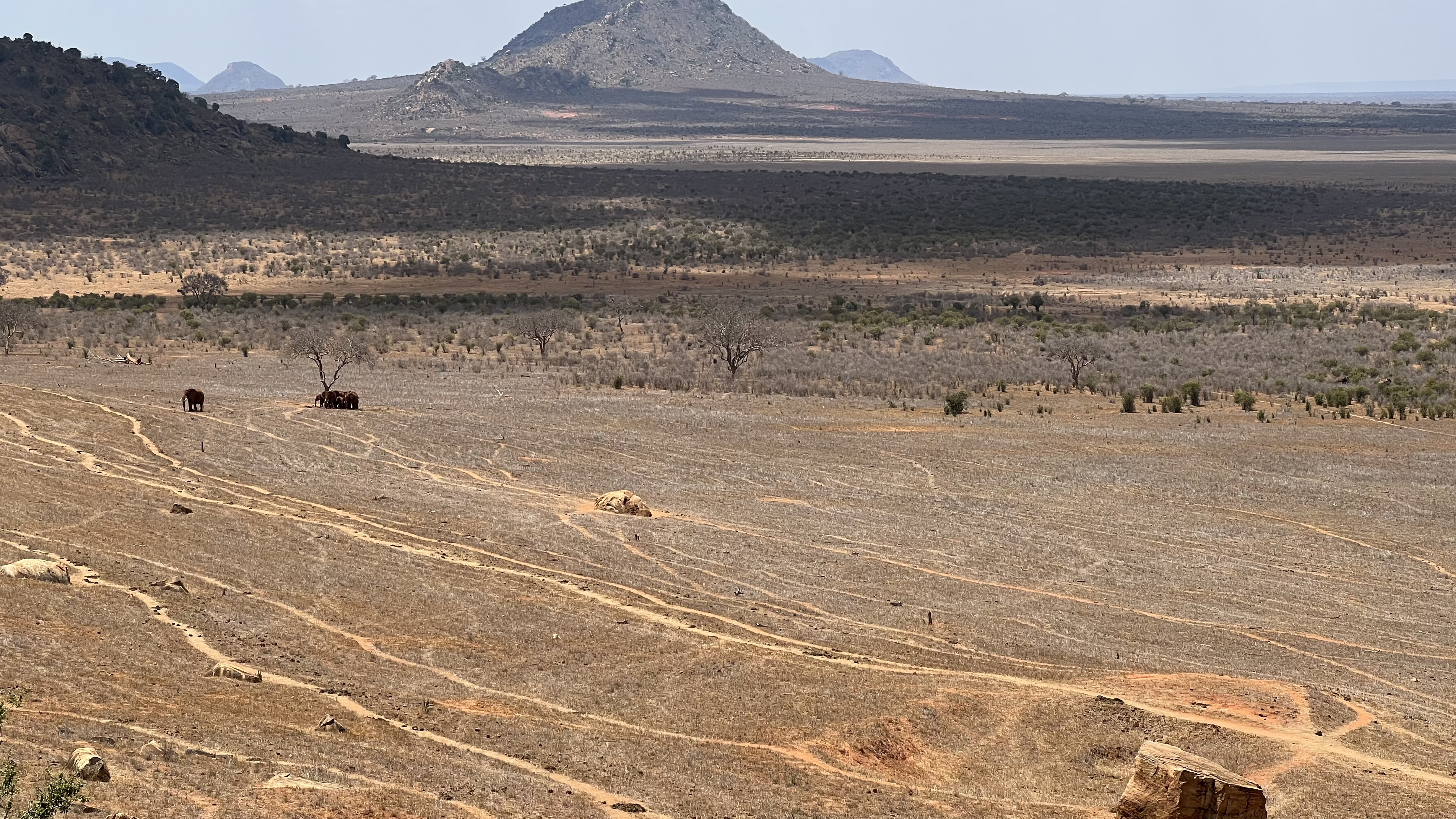
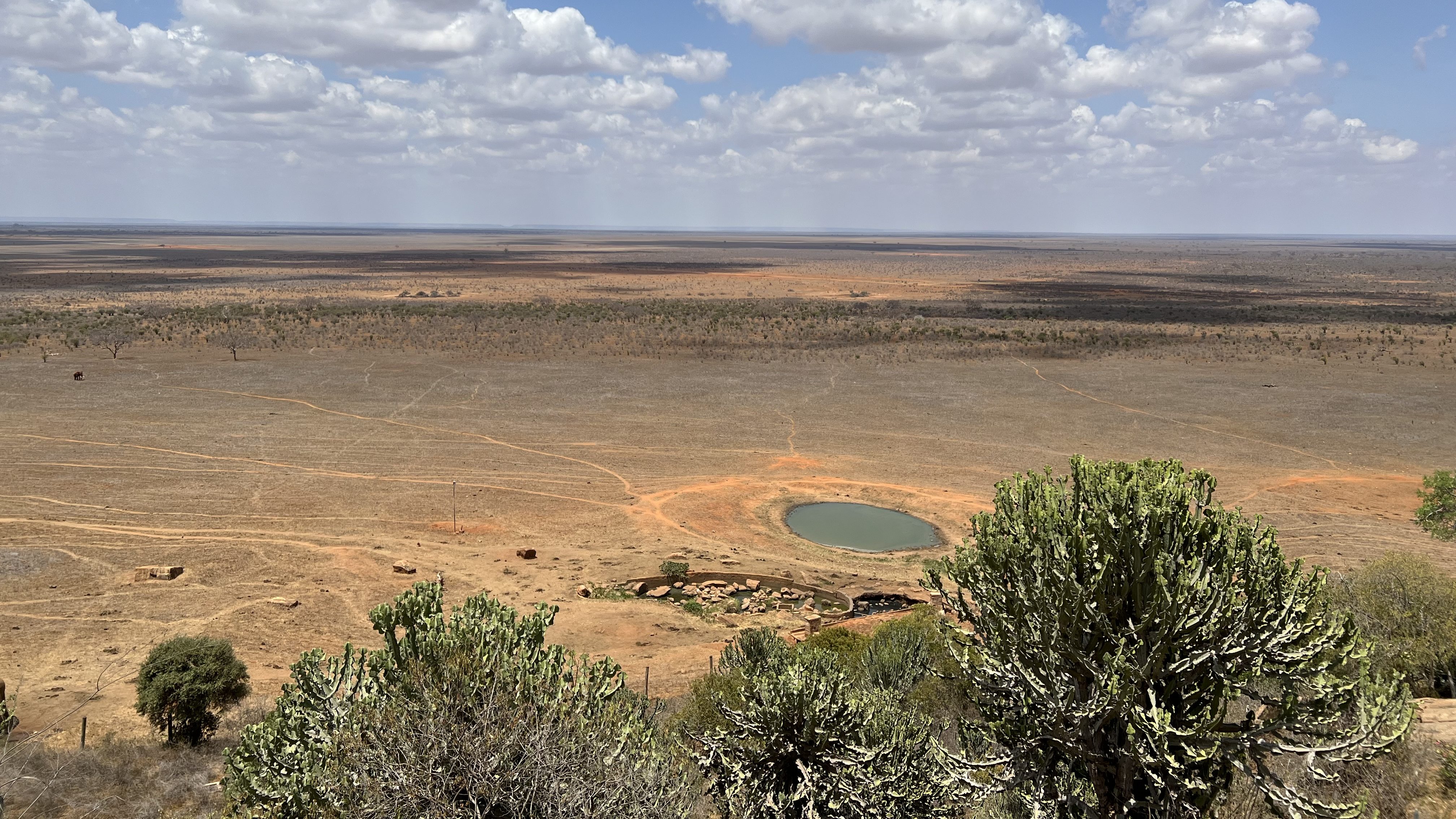
On our last day we head up through the park and up to the Galana river, which cuts a wide valley through the landscape – very scenic with large stands of wonky branched doum palms.
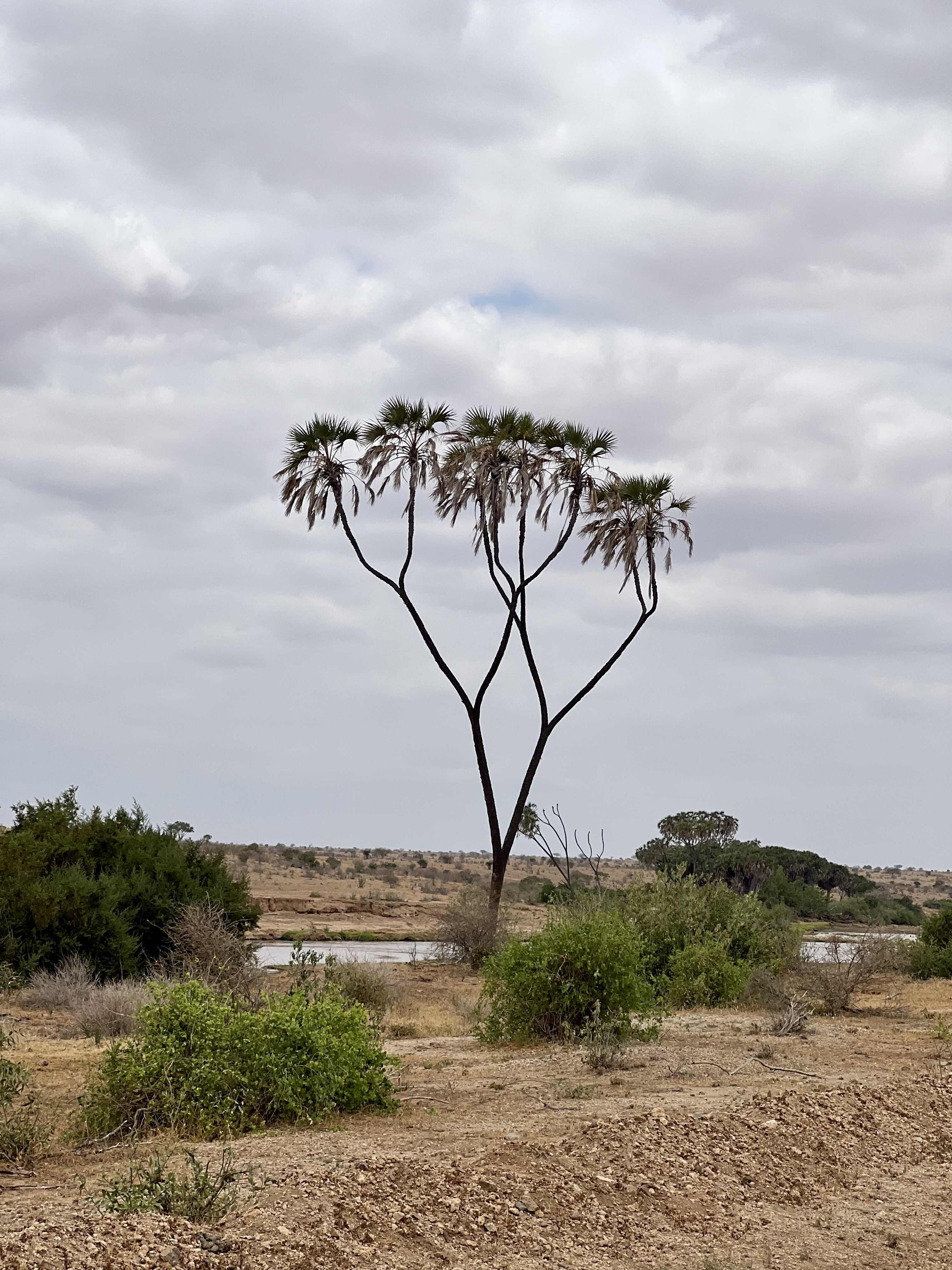
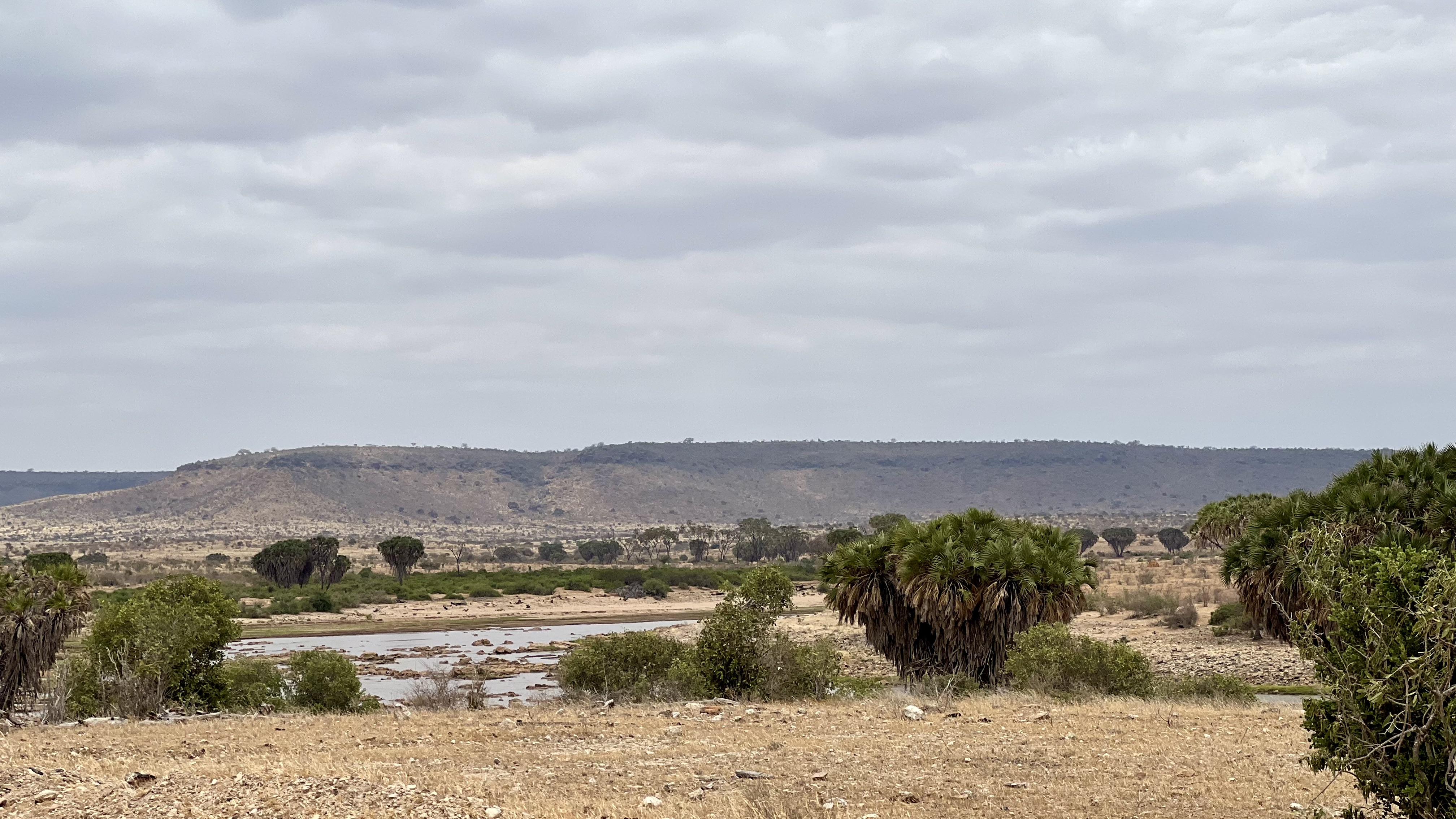
We leave the park through Sala gate – from here it is basically one long straight road to the coast.
Which is where we are off to next.


One response to “Tsavo West and Tsavo East”
What a fabulous catch up. All so different and looks v hot. Take care and enjoy. Xox Joanah
LikeLike