
6 – 18 March 2023
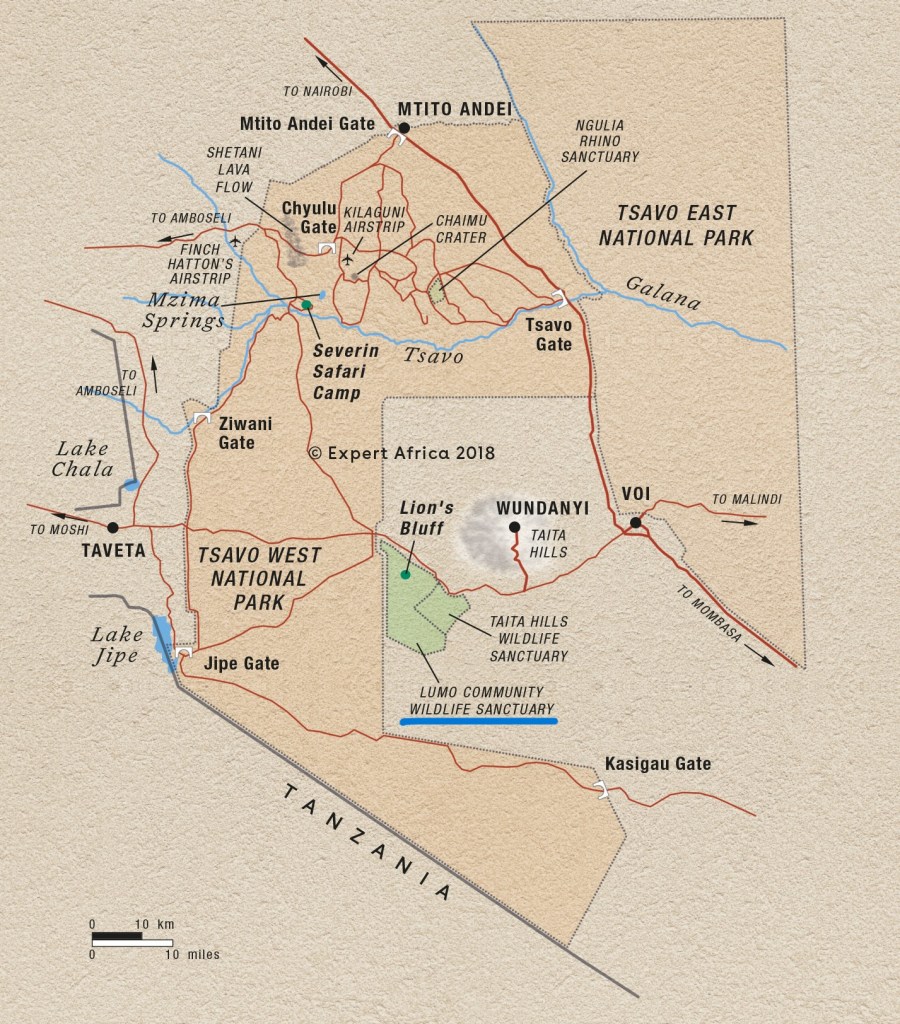
Our destination for today is Lumo Conservancy, a community conservancy in Taita Taveta county, created in 2001 by the merger of 3 ranches: Luanlenyi, Mramba and Oza (hence “Lumo”). It sits in between Tsavo East and Tsavo west and forms part of an important wildlife corridor between the two parks.
For context – on the map below left – our (approximate) route so far in blue – we are still in the far south of Kenya and have hardly made a dent in what the country has to offer. (Thanks Expert Africa for these simplified maps – I found them v useful for big picture planning).

So, finally packed, us and all our kitunga are on the road, heading on out of Mombasa on the notorious Mombasa – Nairobi highway. The traffic is heavy and roadworks ongoing with a number of detours that we inch our way through. Finally things open up and we can pick up the pace.
At Voi we leave the main road and head west, driving past enormous sisal farming estates.
Whilst the humidity and the coast was mad, it was a respite from the dry. And boy is it dry here. The landscape is parched and the vegetation crisp.
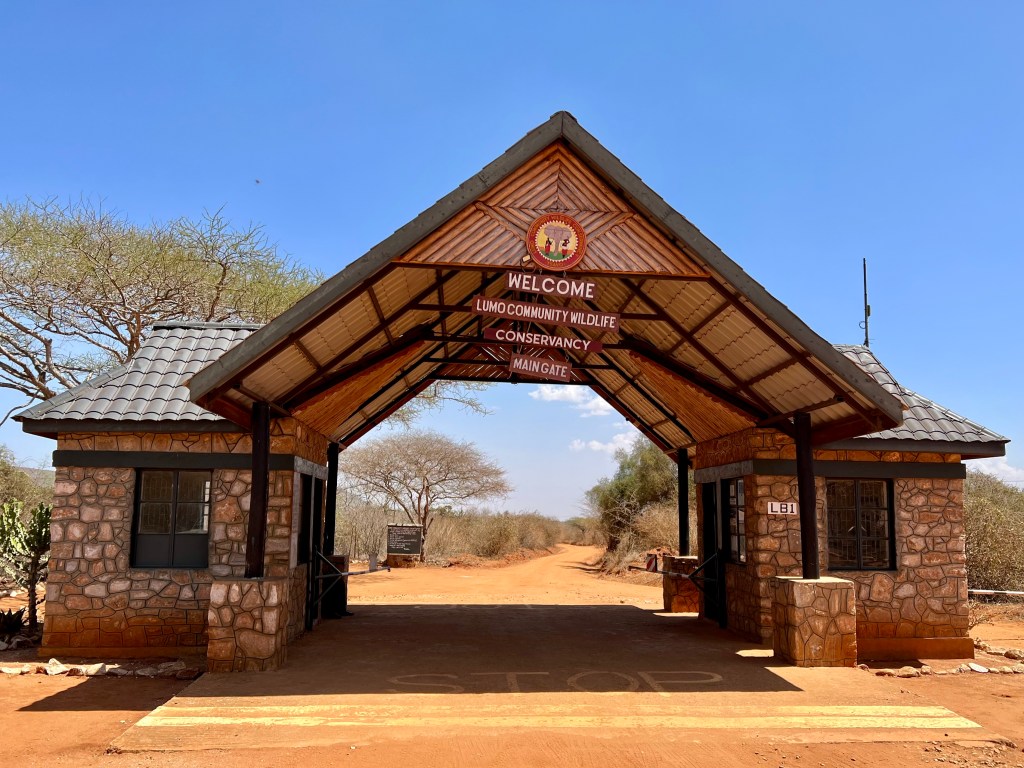
For some reason (to be honest I can’t remember why) we decide to drive through Taita Hills wildlife sanctuary as our access route to Lumo. So we turn off the main road at the Taita Hills sign and end up at Taita Hills Safari Lodge & Spa – it’s a big commercial lodge but with an awesome view – set high on the edge of a hills overlooking the plains. We’ve hit lunchtime so its super busy, with loads of tour busses and safari vehicles disgorging their charges into the restaurant. I check at reception and they say sure we can drive through – and I get rough directions to Lumo. But when I try to leave the complex and drive down into the sanctuary, I am told by the ranger sorry, no entry without proof of payment of Lumo fees in hand, so we back track to the tar and enter Lumo at the official Lumo gate. We check in, just one night for now.
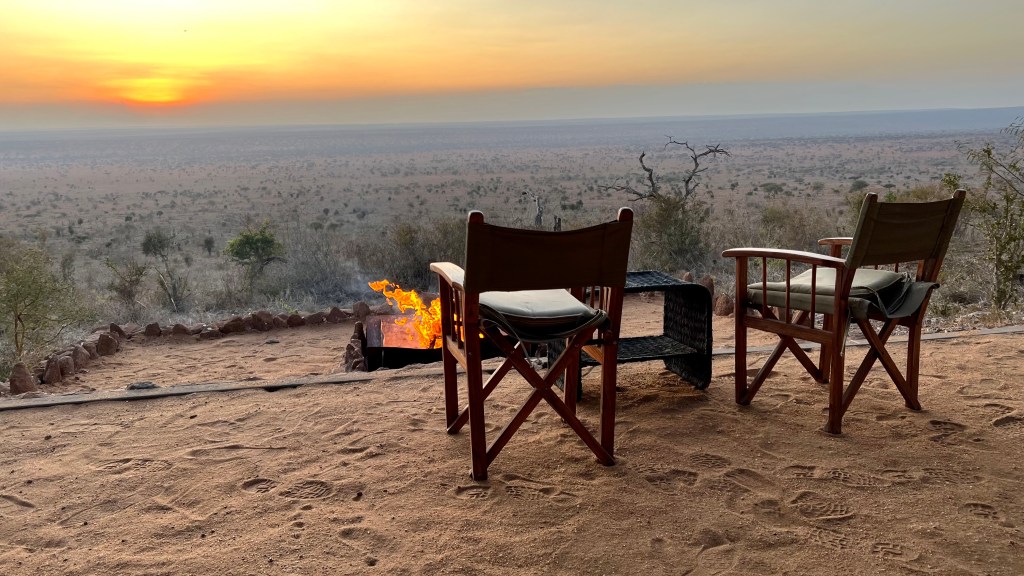
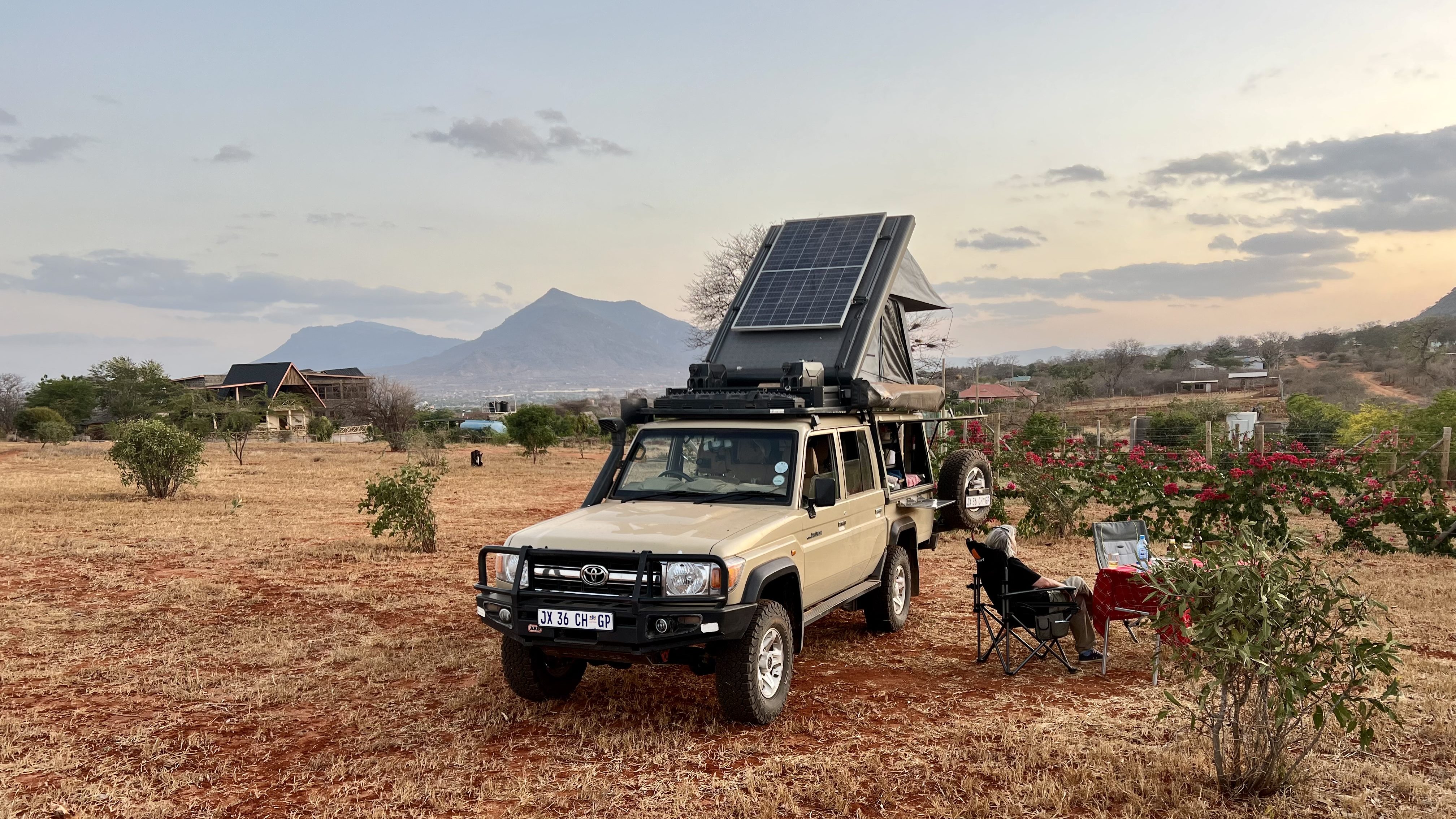
Cheetah campsite has a great view – it’s on a ridge (Lion’s Bluff) a bit along from the more upmarket Lions Bluff Lodge, also within Lumo. The campsite has good ablutions and a shaded area to sit under and look out over the plains, but the pitches themselves are small and uneven, with little shade. But we have the camp to ourselves to we set up our chairs under the shaded structure.
That evening I go for a game drive, down to the waterhole. The die-off in animal numbers here has been severe, and there are many carcasses but months old now – as we saw at Amboseli the worst of this happened some time back. What game there is though doesn’t look in bad shape. And I spot lions looking pretty content.
In the evening camp staff light us a fire and we sit looking out over the plains, and the red dusty horizon.
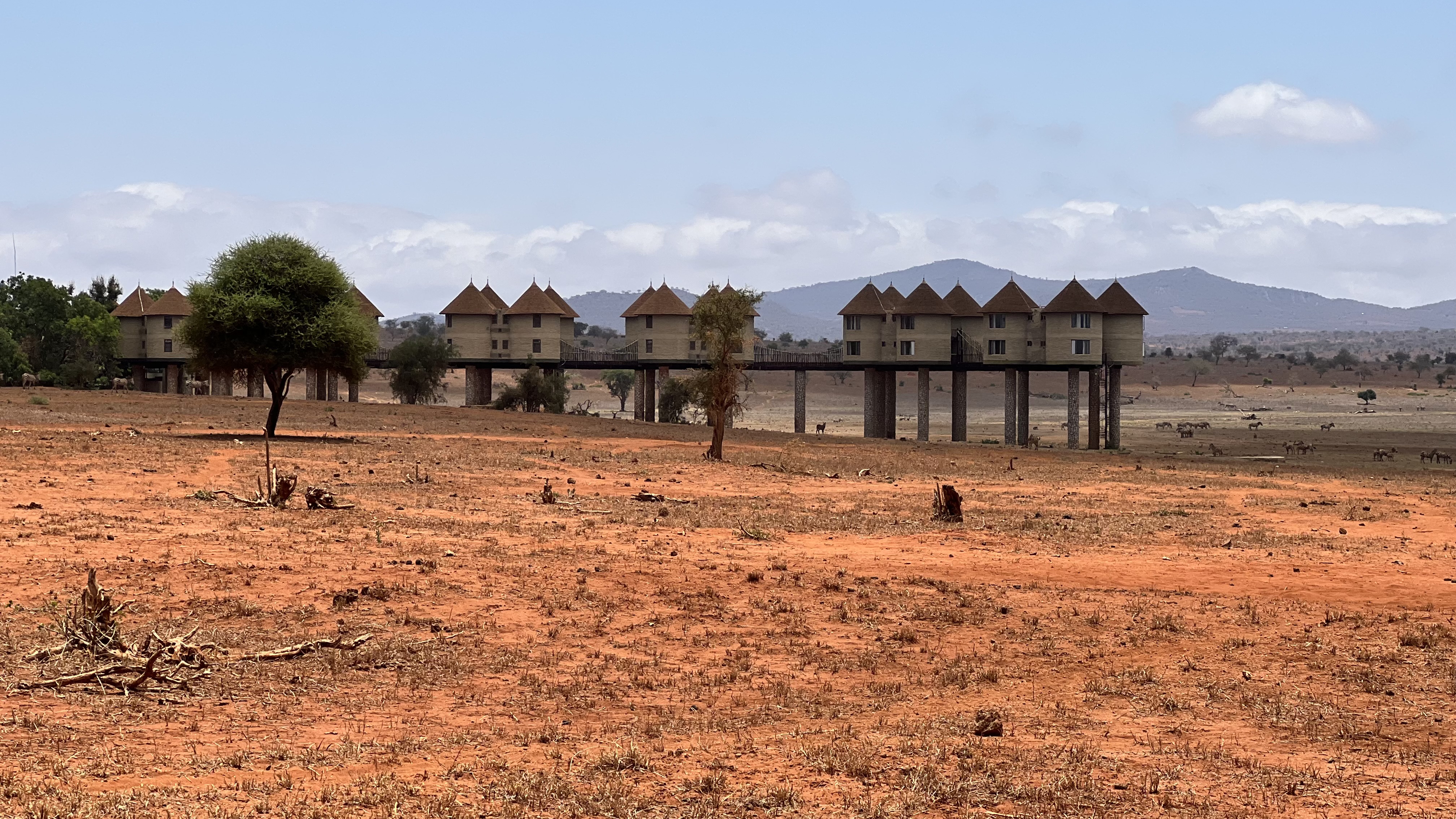
In the morning we decide to head out, but not before exploring the area a bit more. The landscape and surrounding hills / mountains are grand and the game seems content despite the dry. We see lions again and check out the Salk Lick Lodge on stilts.

That night we overnight in Voi, choosing to camp at the Simba Safari Lodge in Voi. It is a father and son team who have invested in the property – a series of A frame cottages and rooms as well as a restaurant and campsite. It borders the national park on one side, suburban Voi on the other. We’d checked out this spot 10 days or so earlier on our way to Tsavo East, but at that stage opted to stay in the park itself. Now we are back and I can’t believe the amount of work they have completed in that short space of time, planting up flower beds, laying pathways, finishing up the fish pond. They are particularly proud of the fish pond. The plan, the son tells me, is to stock it with tilapia. Guests can then choose which fish they want for supper and they will catch it and cook it for you, or you can catch it yourself he says, beaming with enthusiasm.
I’m a bit sceptical … Do you think people will like that, do you think it will catch on? Yes, Yes definitely he replies…he’s just come back from visiting a lodge where they do this. It’s very popular!
Each to his own.
We had a good night’s stay, parked up in the far corner overlooking a small waterhole (campsite ablutions a work in progress but they opened one of the rooms for us to use). We also had a very good meal (steak & chips) and a couple of cold beers in their restaurant – I wish them the best of luck.
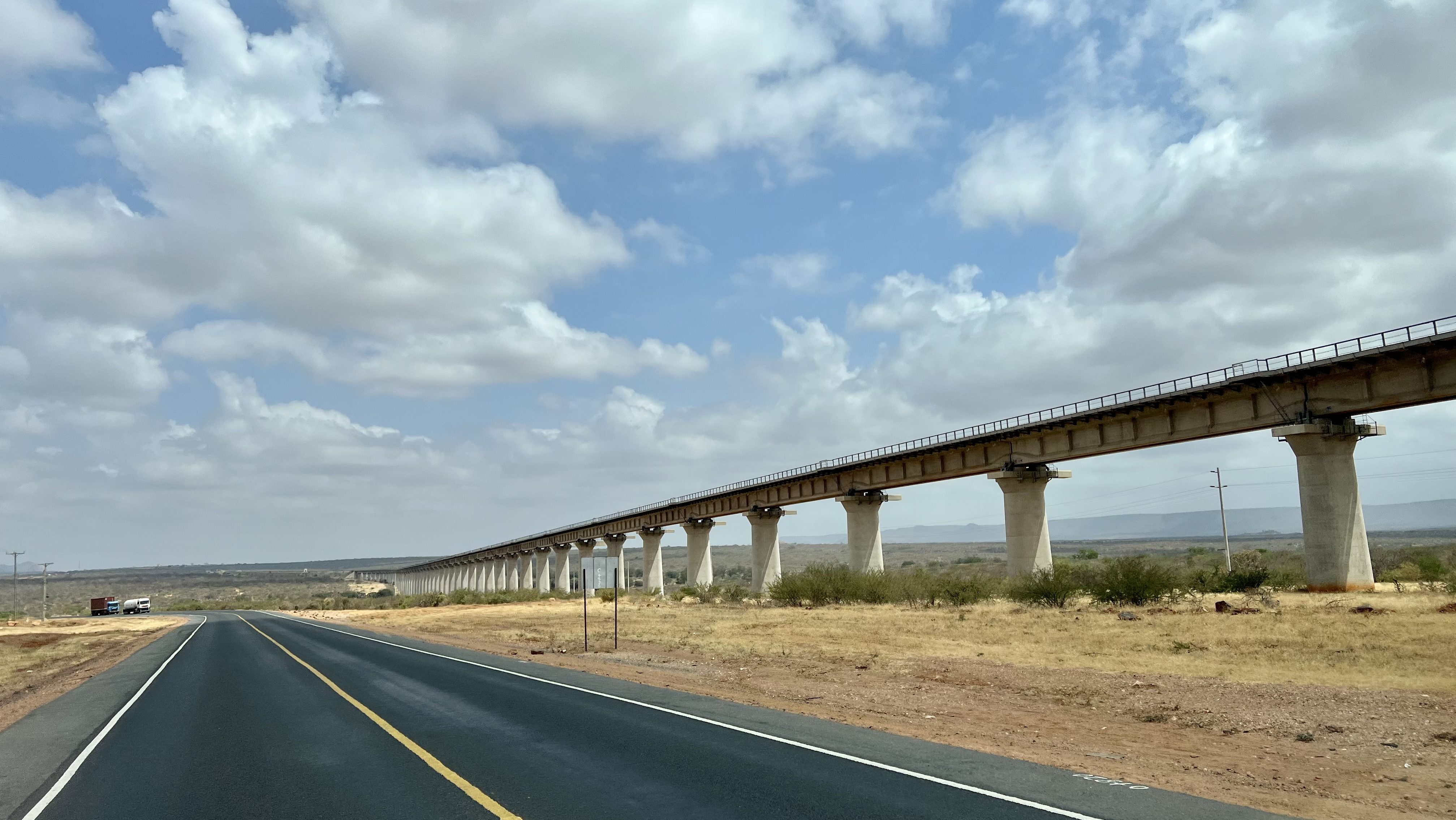
Next morning we make a fairly early start, back onto the Mombasa – Nairobi highway. It’s known for pretty scary driving, with trucks and buses pushing the limits, over-taking willy nilly. Actually we don’t find it too bad. Maybe we are just used to bad Joburg driving and / or resigned to the fact that over-taking anything in the heavy cruiser will always be testing. And the road surface is in good nick so we barrel along, spotting zebra grazing roadside, past Man Eaters Station and the entrance to Tsavo West and admiring the impressive railway bridges that run parallel to the road.
We soon leave the highway and head north B7 and leaving most of the traffic which is headed on to Nairobi. On we head up north, our destination for today is the foothills of Mount Kenya, or thereabouts. It is a full day’s driving but easy going, chatting about life & laundry, listening to a bit of music, staring out the window, lost in our own thoughts. We debate stopping at Mwea National reserve but we are making good time so we press on. We pass through the town of Embu, famous for its Jacarandas although it’s too early in the year for those. It’s a farming area and we are surprised to see rice paddies near the town.

After Embu we veer off climbing up steadily now, on up through all the tea plantations, finally reaching Castle Forest Lodge on the southern slopes of Mt. Kenya at around 17h30.
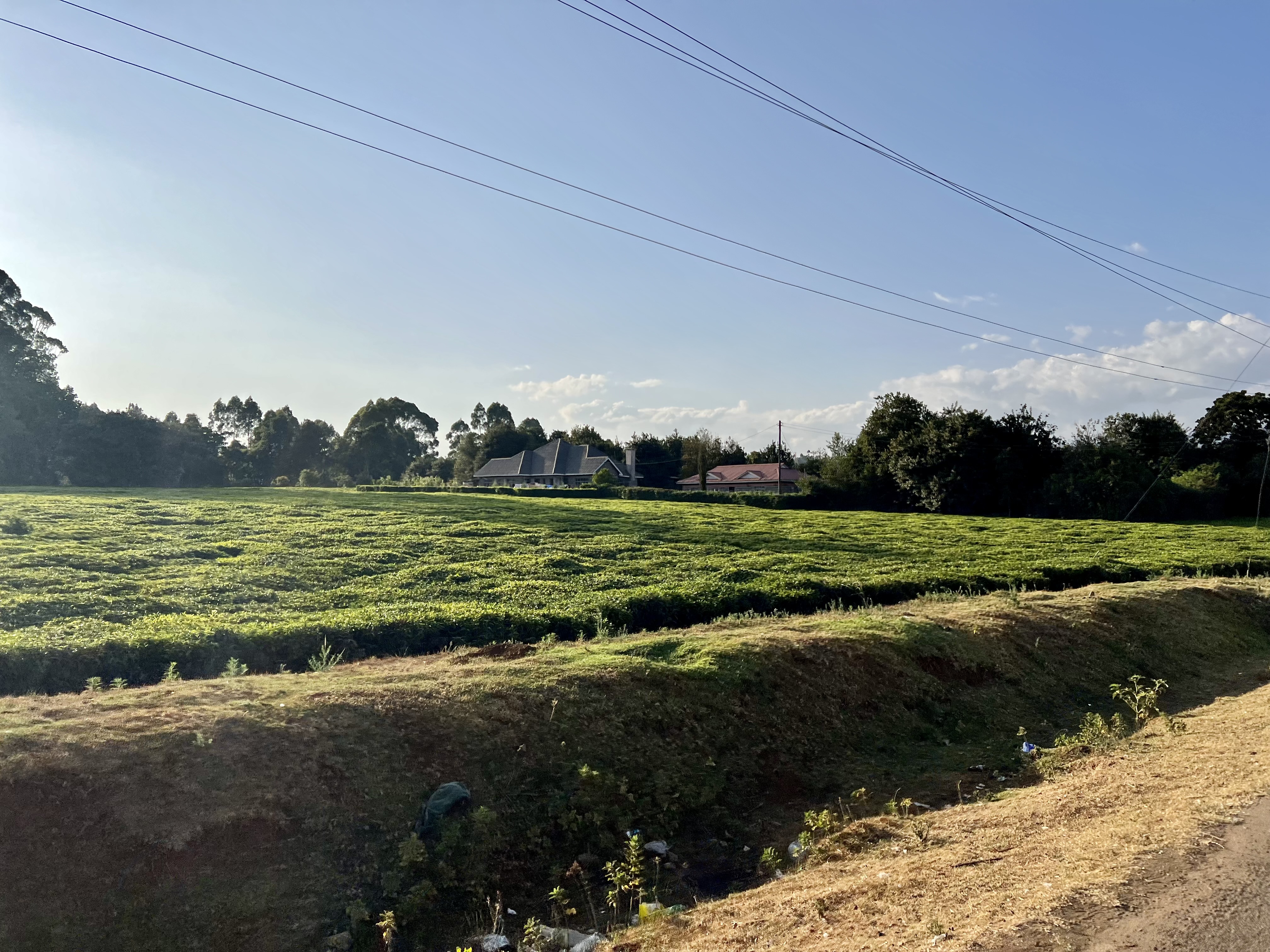
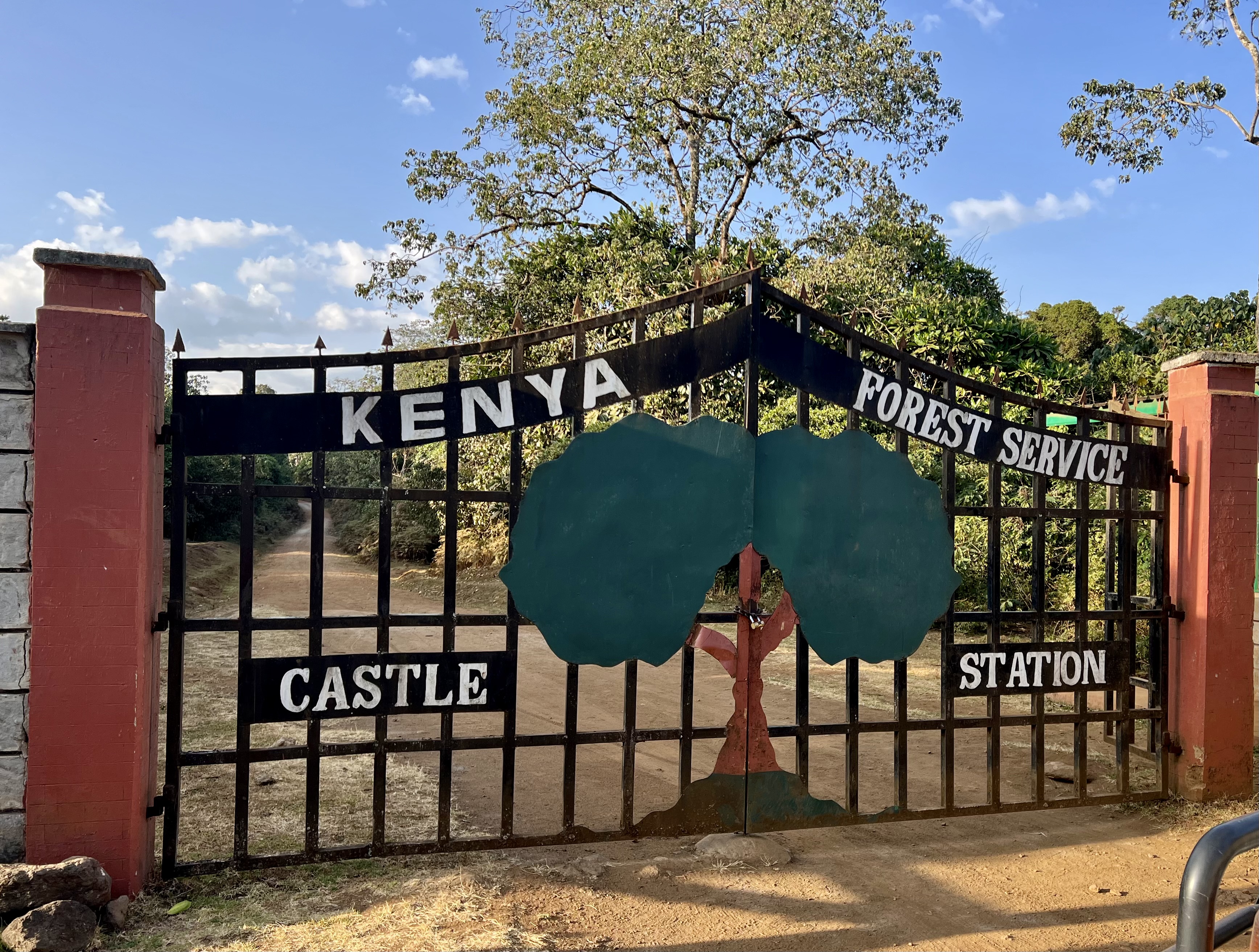
Castle Forest Lodge is all about the forest, with a series of hiking trails and great birding. It is also the starting point for climbers attempting Mount Kenya via the ‘Kamweti’ route. There is a range of accommodation on offer, from rooms, to self-catering accommodation to camping. The caretaker on site tells us to settle in – we can sort out formalities at reception in the morning.
The campsite is huge on a series of lawned terraces. The lodge grounds have views of Mt Kenya but so far, and all along the approach road these mountain peaks have been shrouded in cloud. It is lovely and green and decidedly nippy after the Tsavos and the coast. What a welcome relief.
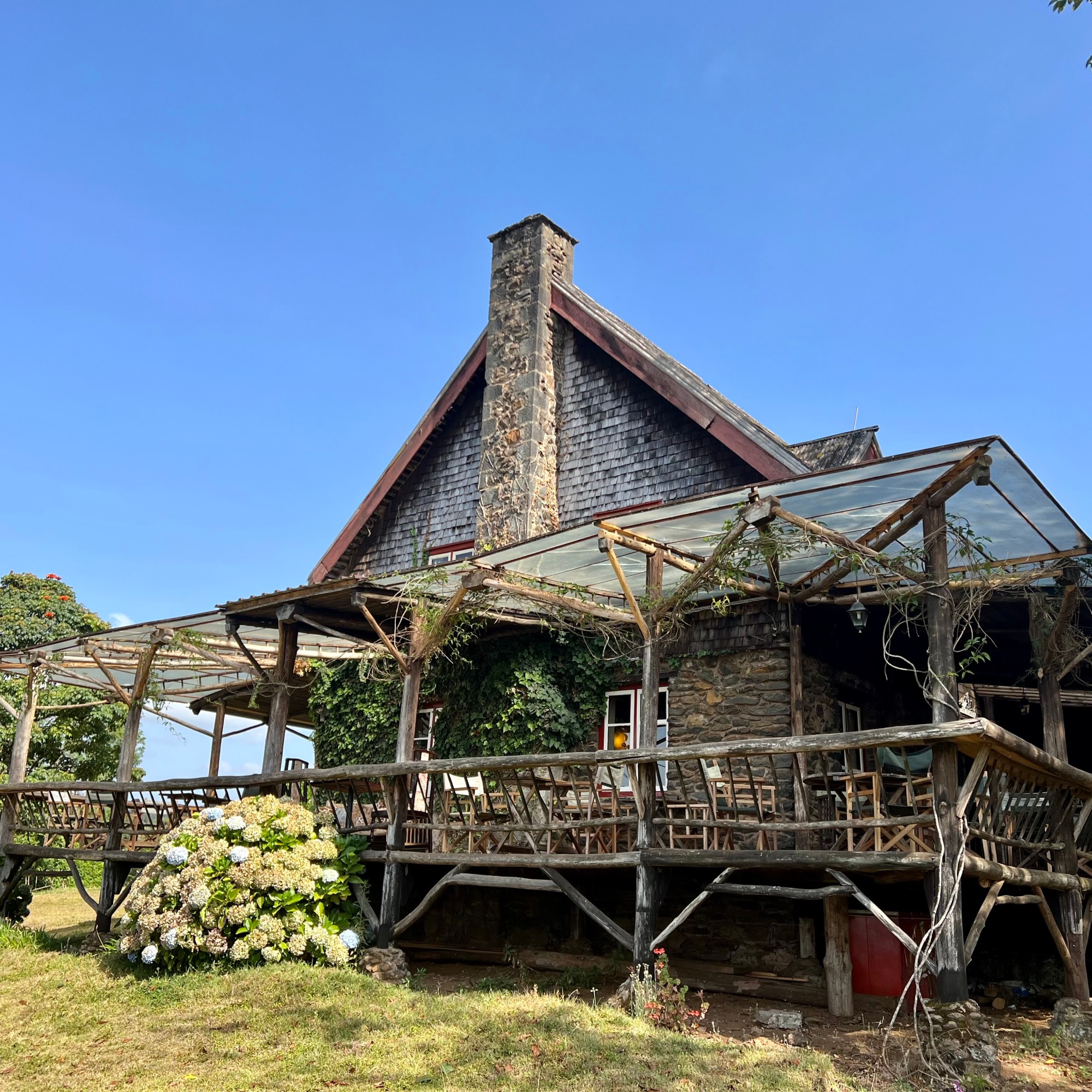
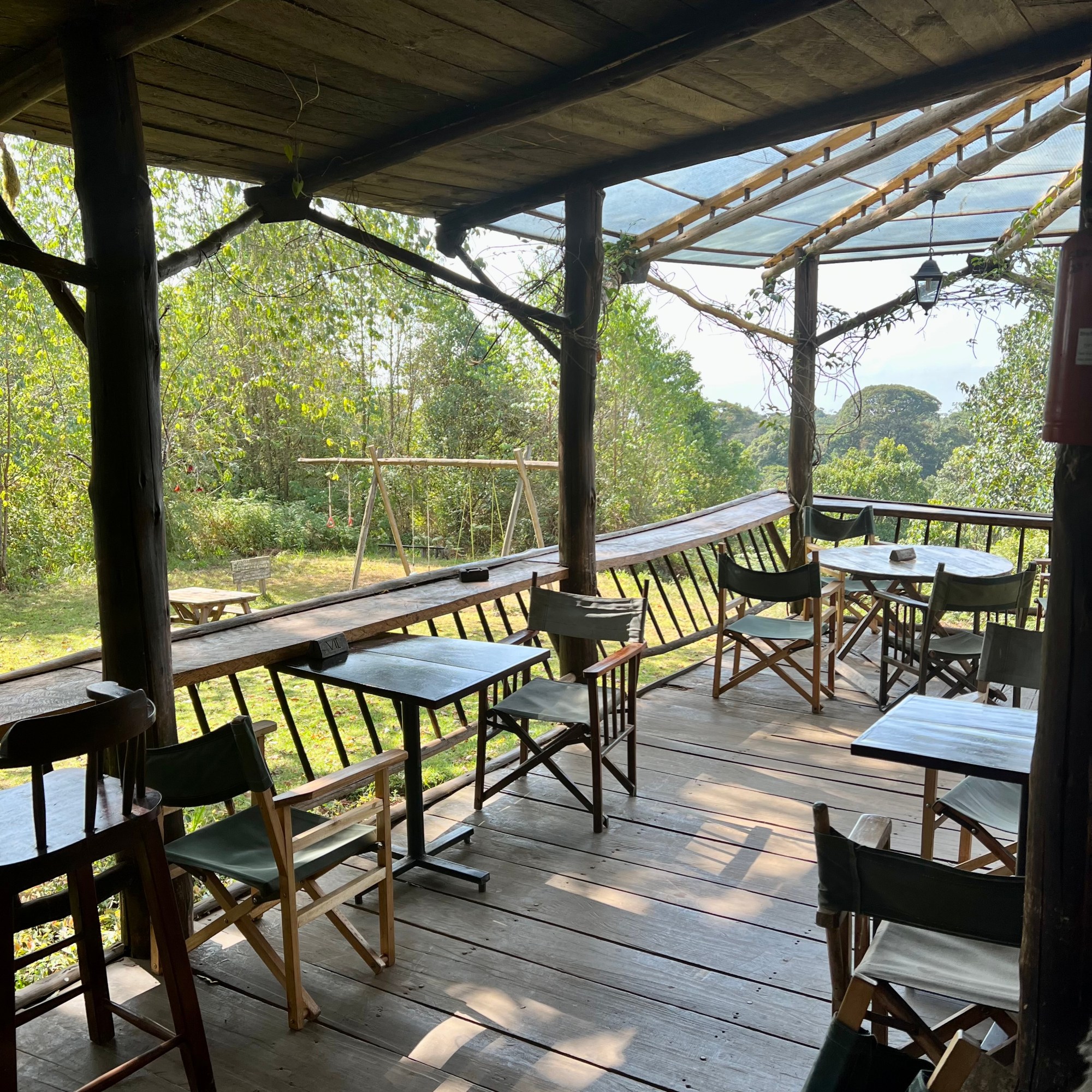
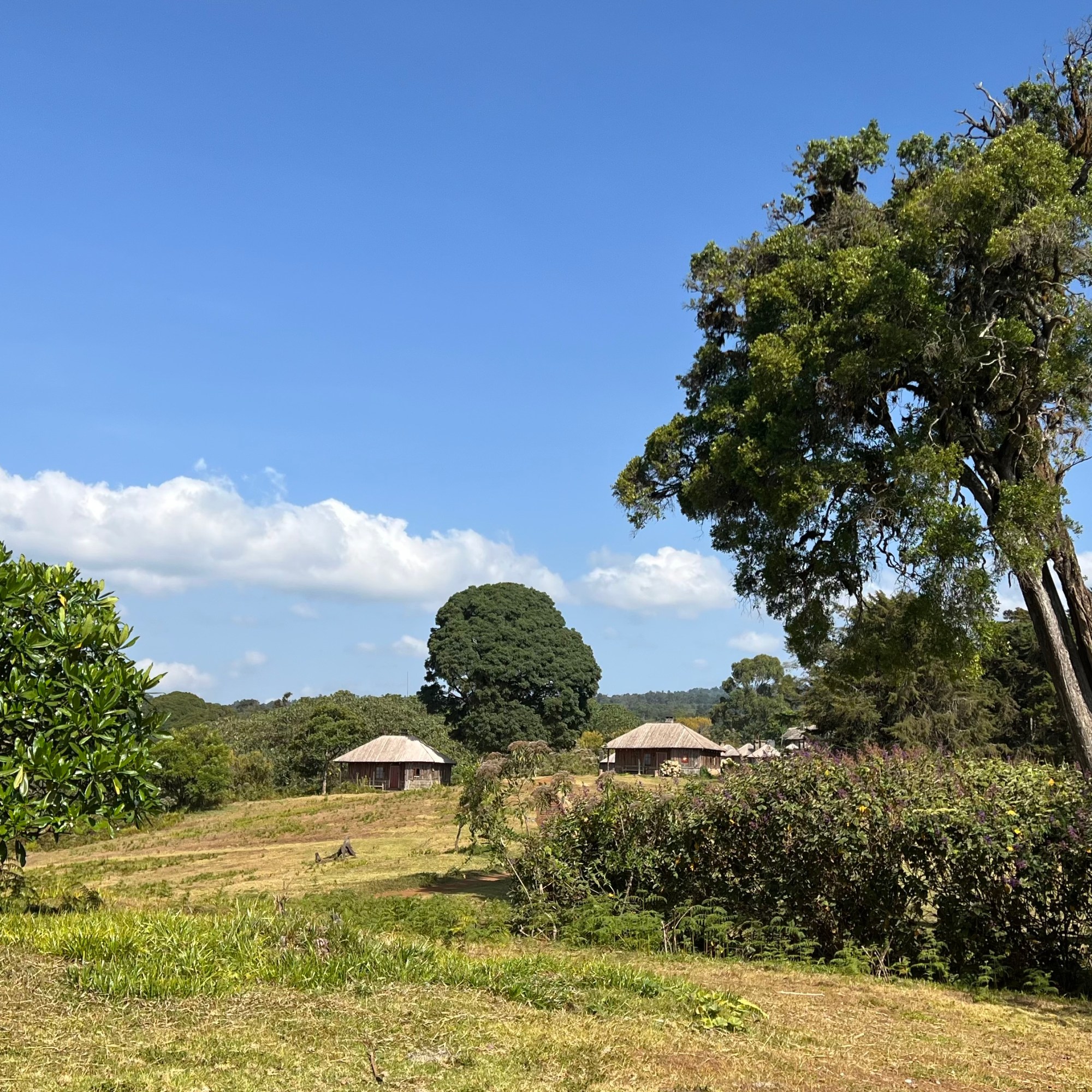
We are the only campers here and settle in, lighting a fire for warmth and atmosphere. As night falls the crickets and insects in the forest ramp it up, followed by the most terrifying noise – something in the forest screeching and wailing. A bird maybe? I don’t know but it’s spooky beyond, an almost primordial call.
In the morning I walk up to the main lodge reception to sign in and settle our camping fees and I ask about the nighttime noise. He laughs and says not to worry it’s only the tree hyraxes. What?? Tree dassies? You can’t be serious. (Subsequent googling tells me that we do get a form of Southern Tree Hyrax here in South Africa…I’ve never heard them and am sure I’d have remembered that sound).
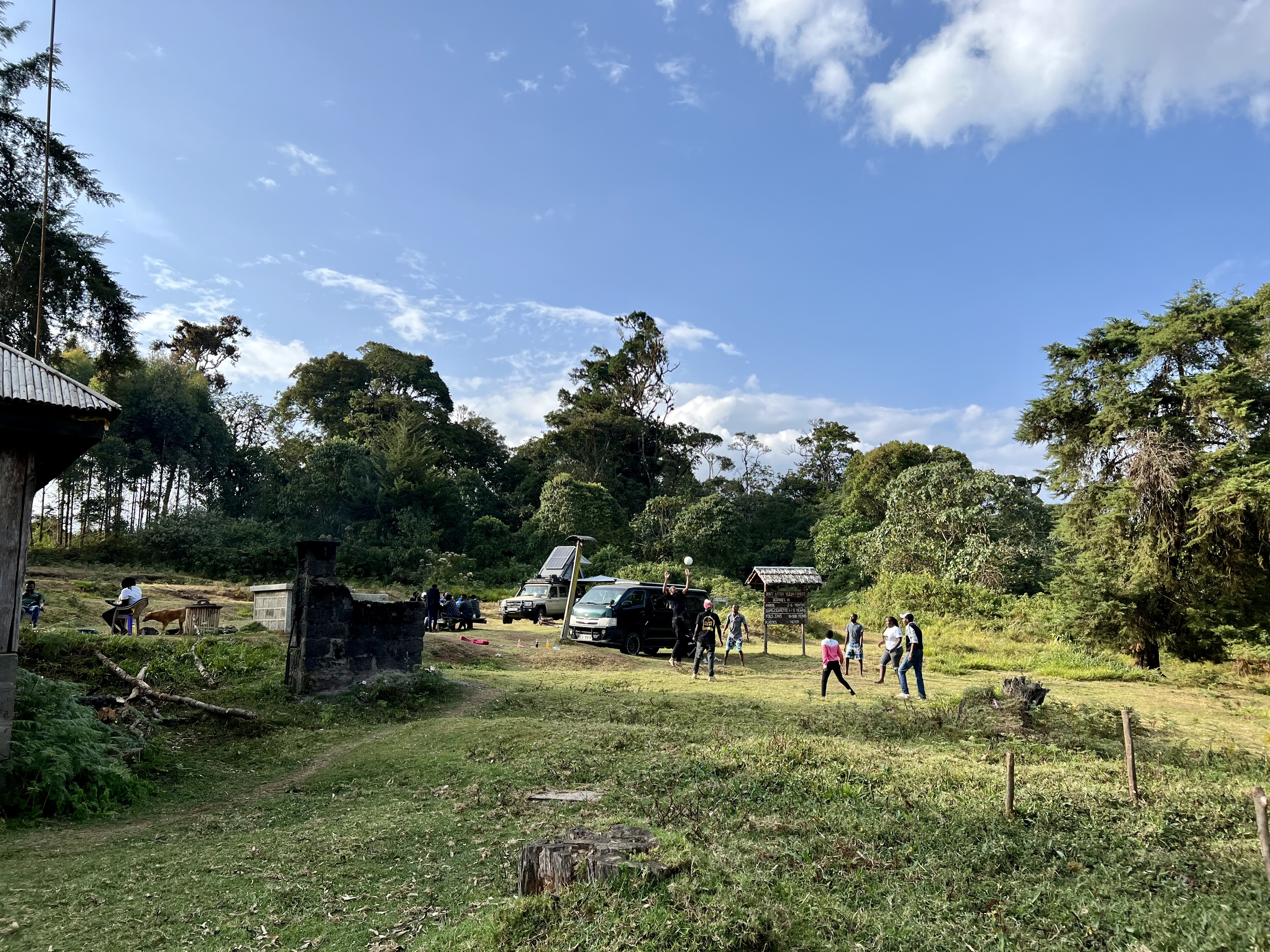
We end up spending 4 nights in this wonderful spot. Loving the cool and giving the cruiser a good clean out. We are adopted by the lodge dogs who chill with us in the day, wait to see if we feed them, and then go home for supper.


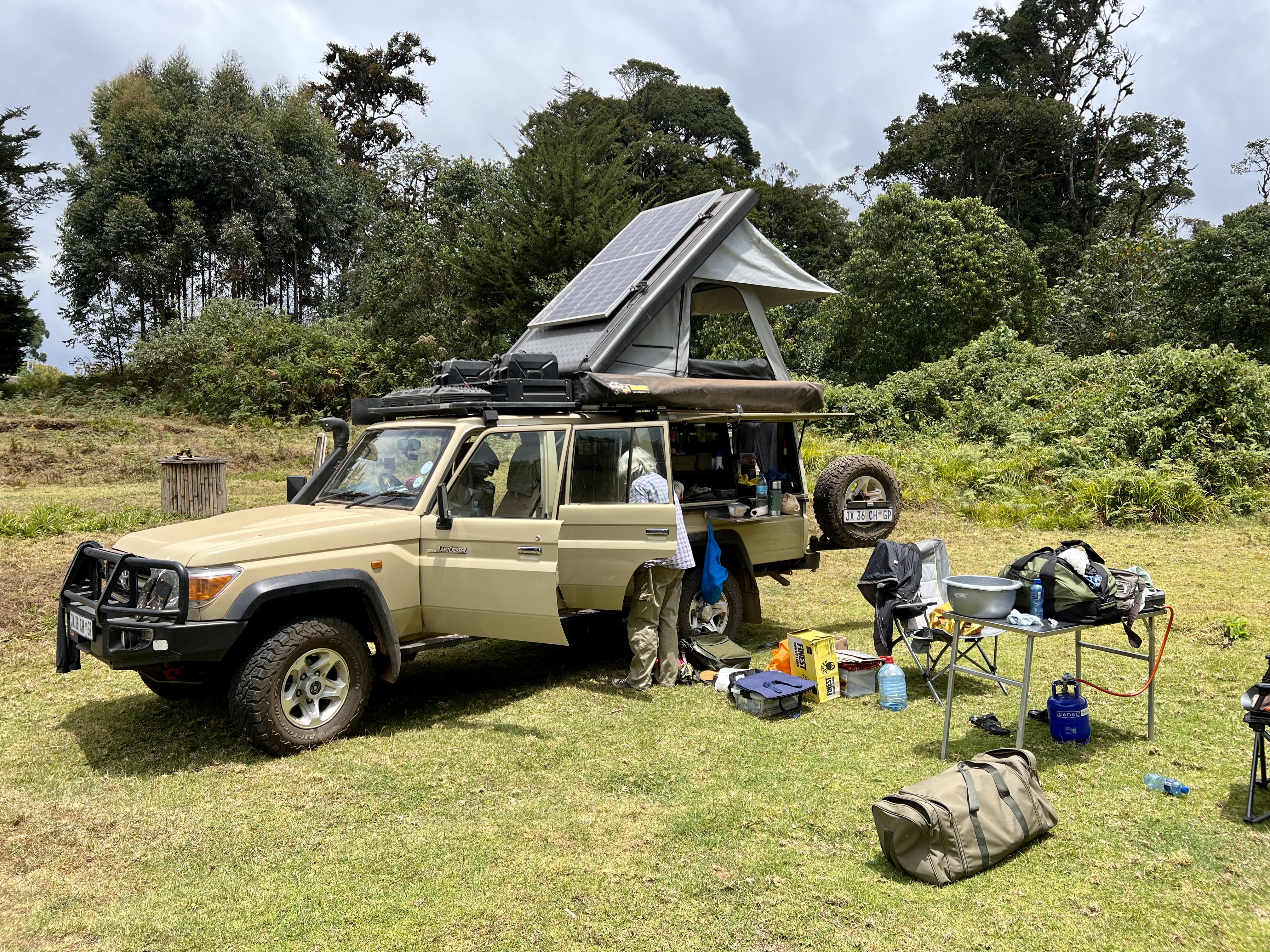
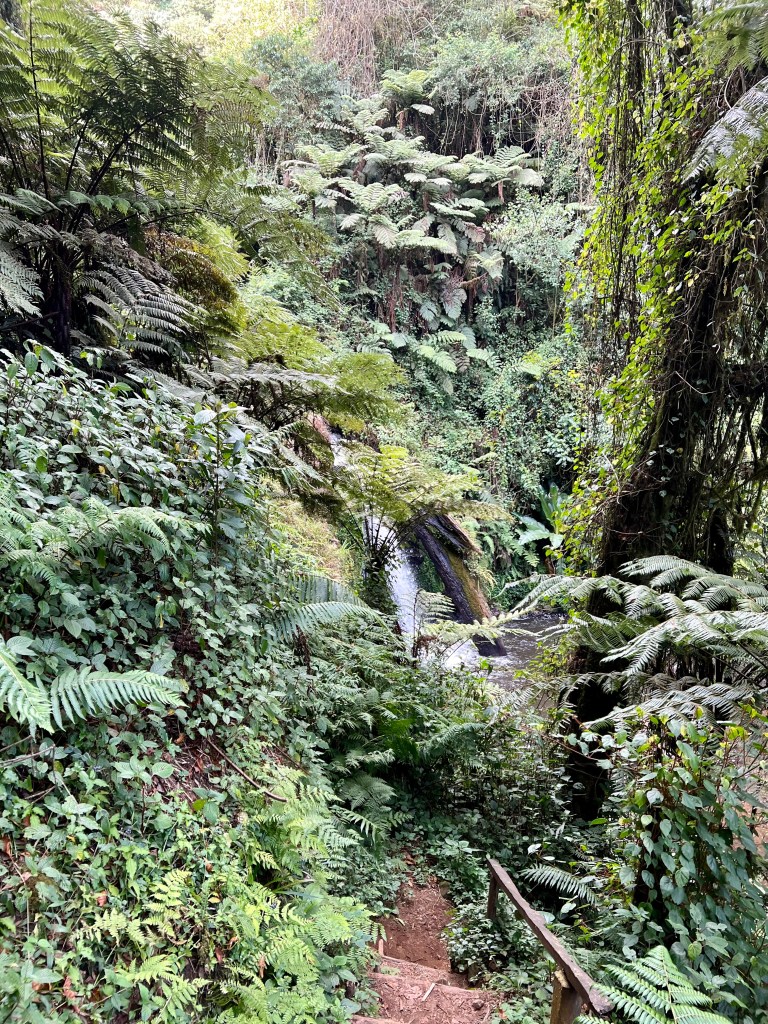
Initially it’s just us but things fill up on the weekend. A Chinese family settle in behind us. The Kenyan Women’s Birding Group arrive – we get chatting to them and they are keen to hear our story and super impressed that we have driven up from SA. They are a range of ages and shapes and sizes, but mainly professional working women from Nairobi and Thika – once a month they leave on a birding weekend, leaving boyfriends and husbands to their own devices and to sort out kids, they pick a destination and hire a guide and driver and off they go, usually just a night away, sometimes two. On the Sunday a church group arrives: prayers and a hike, lunch and a football match in the afternoon. It’s all action. Less so us, although I take a short walk to the nearby waterfalls.
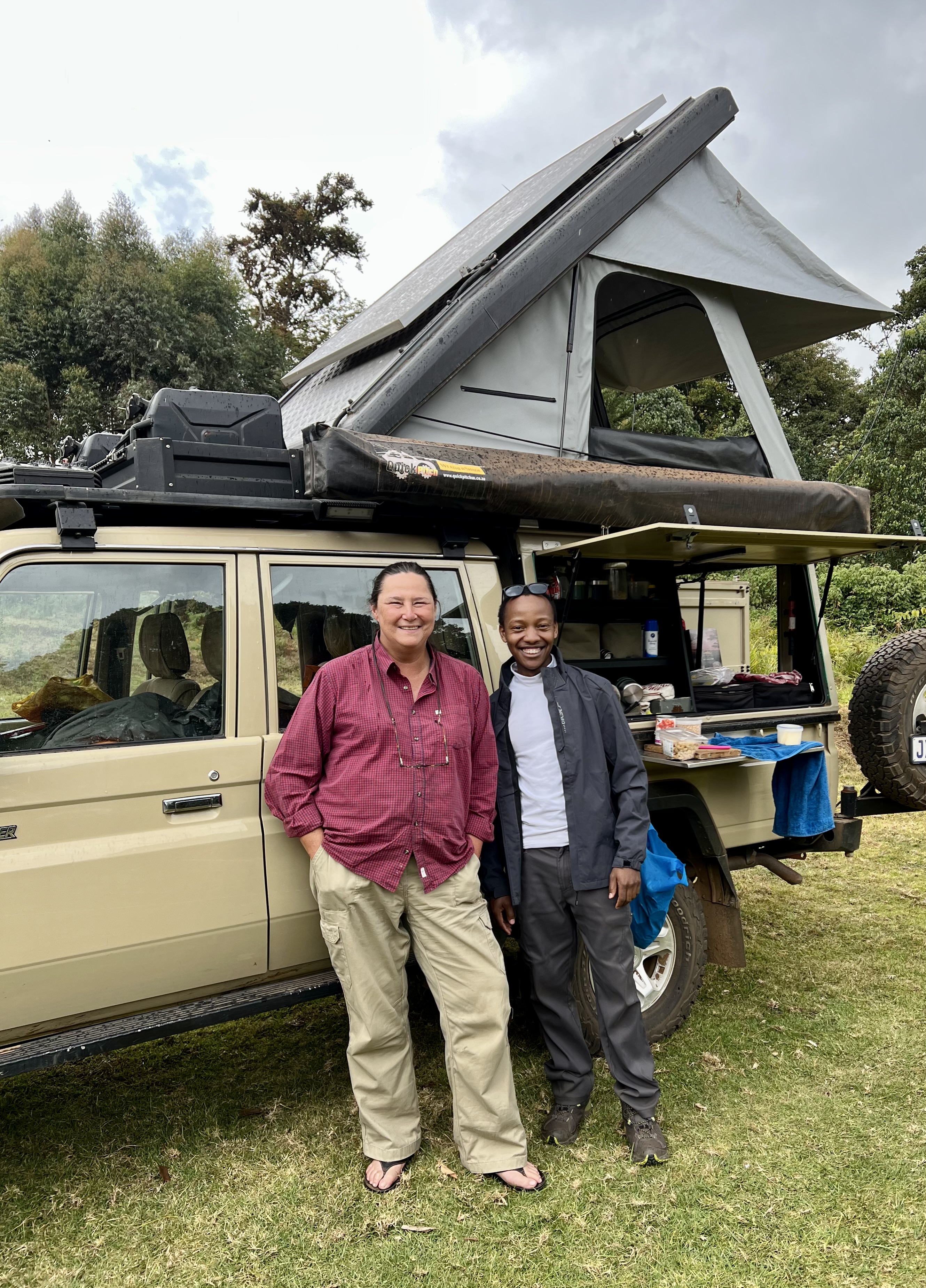
When Shackleton has the rooftop up and the awning out it’s an impressive piece of kit and a magnet for boys and men alike. We don’t mind – we love showing him off (the novelty still hasn’t really worn off yet) and at times it is a cool way to break the ice. We are sitting out in the sun sipping our coffee, reading our books. A young blonde boy and his Dad walk past, pretending not too look, and then they circle back and check us out again. Eventually the little boy cracks and drags his Dad up to us so we show them around – they are Dutch expats based in Nairobi, taking country break for the weekend. Later on another young man sidles past and then plucks up the courage to approach us and comes across, I’m Alan, he says, holding out his hand. Is this Shackleton? My jaw drops – yes, I say, indeed it is! Turns out he is a Kenyan fan of Jo and Paul Marsh’s YouTube channel: Essence of Overlanding and knows our story from there. (We are episode 4).
So we show Alan around and take a pic of me with Alan to send to Jo and Paul. Alan is super-chuffed and we spend some time chatting. We are joined later by his girlfriend who throws him under the bus a bit, teasing him for stalking us and telling us that he’s spent the morning online double checking You Tube to make sure it is us before approaching!
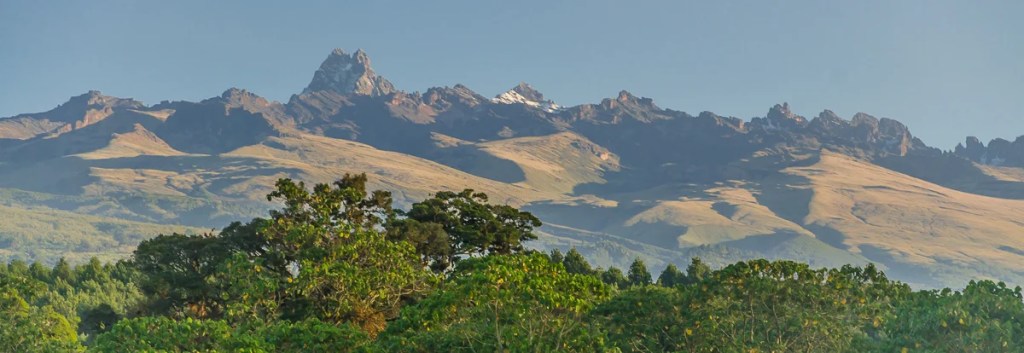
After a couple of lazy days we head out, but not before a walk on the last morning – I come over a hill to see Mount Kenya clearly for the first time in the morning light. As luck would have it I am camera-less and phone-less, so I’ve nicked a pic off the lodge’s website. It looked just like this:
Destination for today is Meru National Park, and we make our way out of the forest reserve in the beautiful clear morning light, past all the tea field and rice paddies, up though Embu. Looking to catch another glimpse of the mountain, but once again it’s now covered in cloud and the Castle Forest Lodge view turns out to be out only clear view of Mt Kenya on this trip.
On we go around the eastern slopes, stopping in the town of Meru for a bit of a stock up. It’s all hustle and bustle with loads of pedestrians and street kids too, asking for money and generally checking things out. Parking is kerbside so Deb stays in the vehicle and get out to sample the delights of the Naivas supermarket – I do a whizz around (well not really a whizz – it’s fun and distracting checking out the different brands and stuff so it takes a while). One thing that I know I do want is some Kenyan yoghurt. Generally I’m not a fan of flavoured yoghurt, preferring plain. But both of us seem to have developed more of a sweet tooth on this trip , and we are working our way through the Delamere brand (! I kid you not) range of flavours. Currently it is a two horse race between the Pear with Caramel and the Apricot, Orange & Honey. Finally I emerge from the store – now a card carrying member of the Naivas loyalty rewards club (hey, the teller was a born sales person and once she heard we’d be in the country a while…).
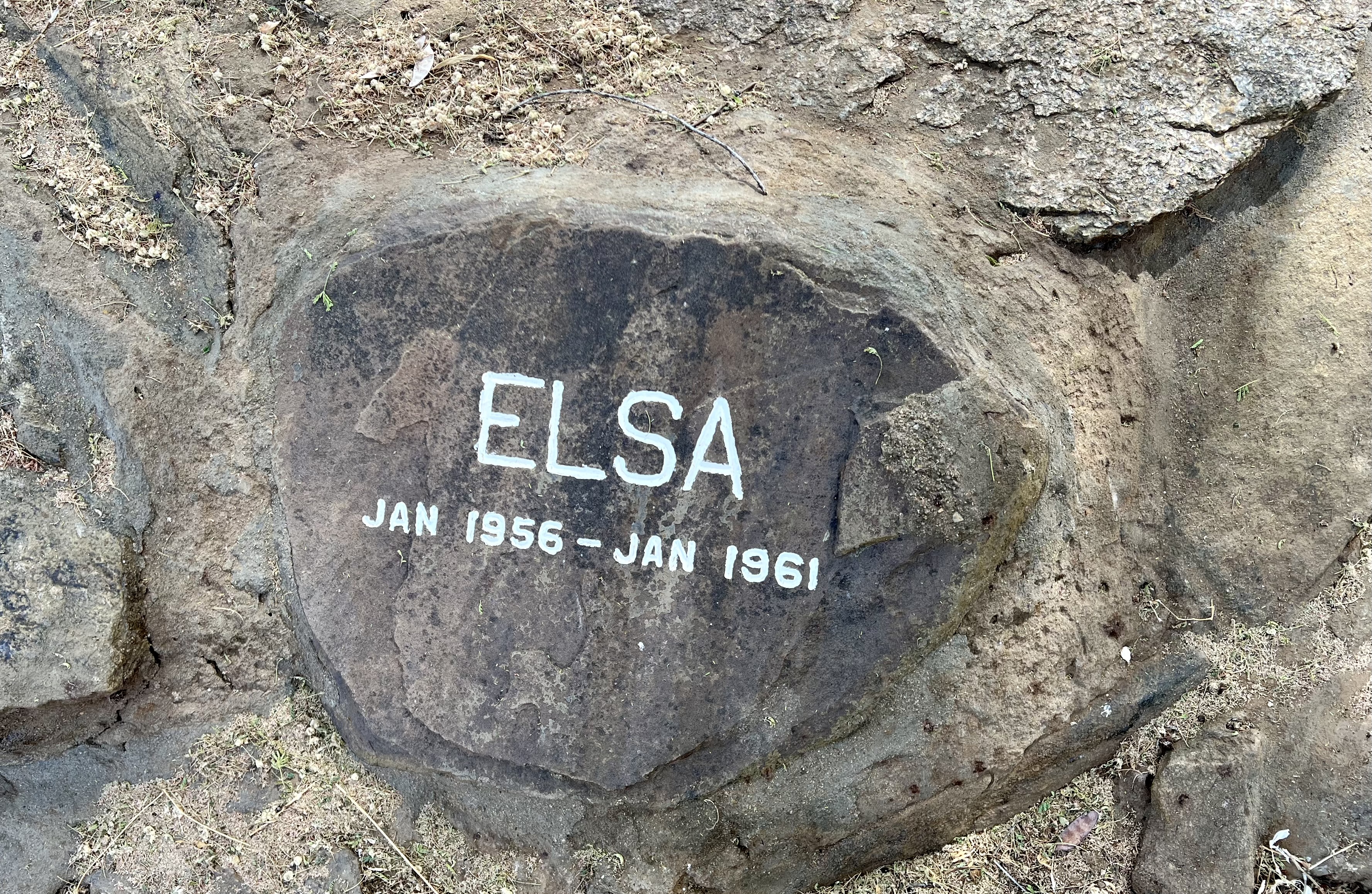
From Meru town we drop down in altitude towards the park, and it starts getting drier again. Meru NP transitions between the moist central highlands and the semi-arid north. The park was made famous in in the 1960’s as the setting of the book Born Free – the place where Joy Adamson raised Elsa the lioness and released her into the wild. Elsa is buried here.
The park does however have a troubled history. In the 1980’s much of the game here was decimated by commercial poachers, rhino and elephant in particular. Many rangers were killed and several tourist vehicles attacked. But gradually and with the injection of international funds for restoration, the poaching was brought under control and the park has largely recovered, although the re-introduced rhino are still contained in a fenced off sanctuary close to Murera entrance gate.
We check in, no more casual chinos for rangers here – all staff are in camo and armed. We ask to stay a couple of nights at the Bwatherongi public campsite. All is good and we confirm that the Meru park fees include traversing rights to Kora if we want. And they have a simple laminated map for sale. Great! (as before these maps are rarely on display so you need to ask).
At Bwatherongi we are once again the only campers, so we have our pick of sites. We choose the “middle” one (#2 I think). Beautiful shade trees and the added bonus is that the campsite has a well kept swimming pool – we spent a lot of time in and out of that.
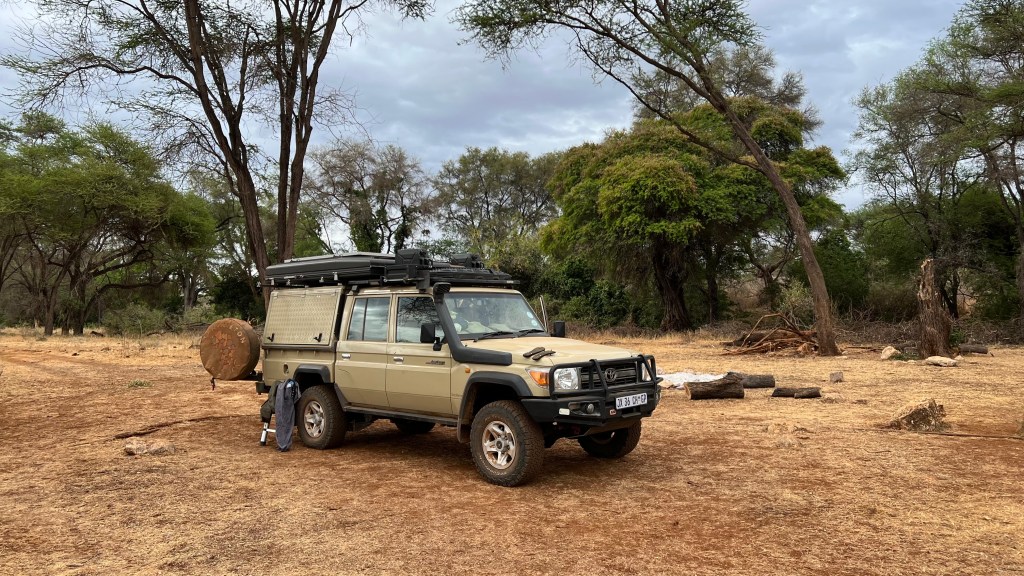
We spent 3 nights in Meru, exploring the park and the various swamp areas. We visit Elsa’s koppie with its elevated views (and a swish lodge on top), explore the area around Shifta Rocks (I love that word (shifta = bandit, outlaw) (from Swahili, and (disappointingly) nothing to do with the English word ”shifty”).
It is a beautiful park, made more interesting by the changes in elevation and the hills / mountains in the distance. Birdlife is quite limited in the dry but we see our first vulturine guineafowl and flocks of golden breasted starlings.
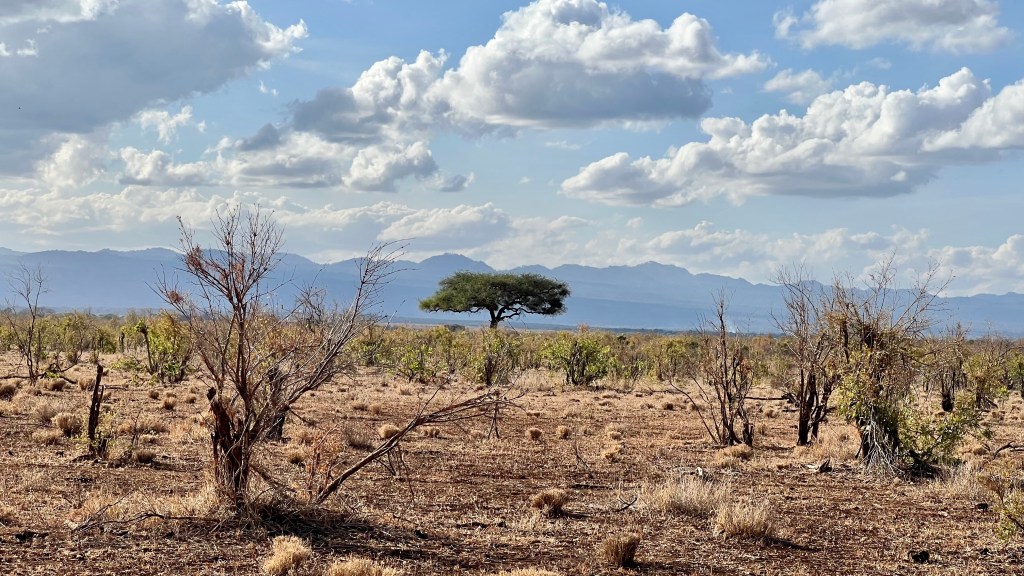
We get to see our first reticulated giraffe. Mesmerised by their crazy-paving coats. (Apparently you also get another of the Northern specials here – Grevy’s zebra – but we didn’t see any (we saw lots of Zebra but they were all ‘ordinary’ plains zebra)).
We also go to visit Elsa’s grave (I just couldn’t not, the story was a childhood staple). The grave is in the south of the park, in a glade on the Ura river. Joy Adamson was cremated after her murder (in 1980, in Shaba reserve, by a disgruntled employee) and her ashes are scattered here too. From here we make our way down through to park, along the Tana river to Adamson’s Falls, over Adamson bridge though the Mwingi reserve gates and on to Kora. Kora, of course, is where George Adamson moved following their separation and where he continued with his work, re-wilding lions and leopard, until his murder in 1989. It was very hot and dry in this area and basically we just ticked the Kora box before turning back to Meru.
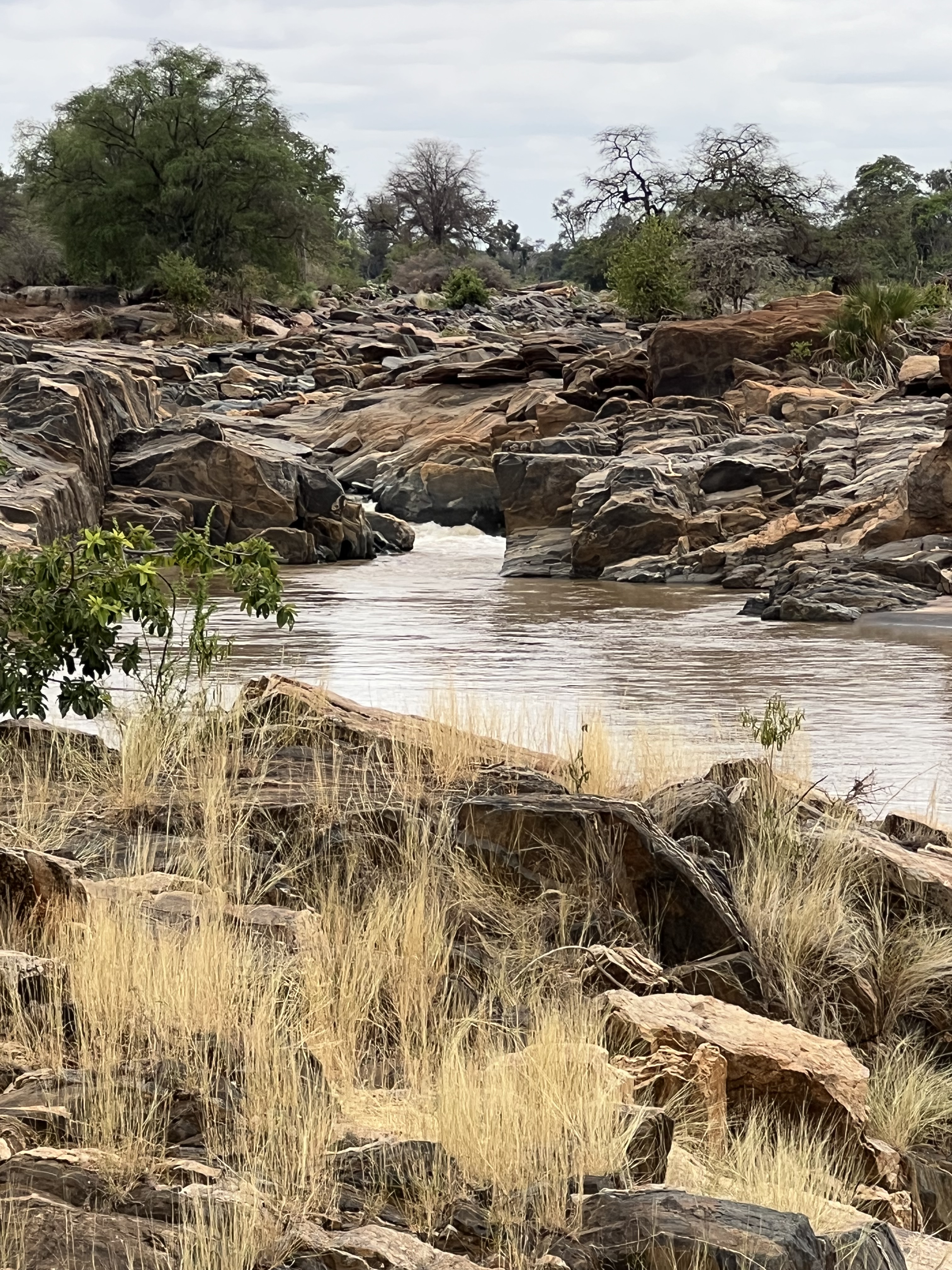
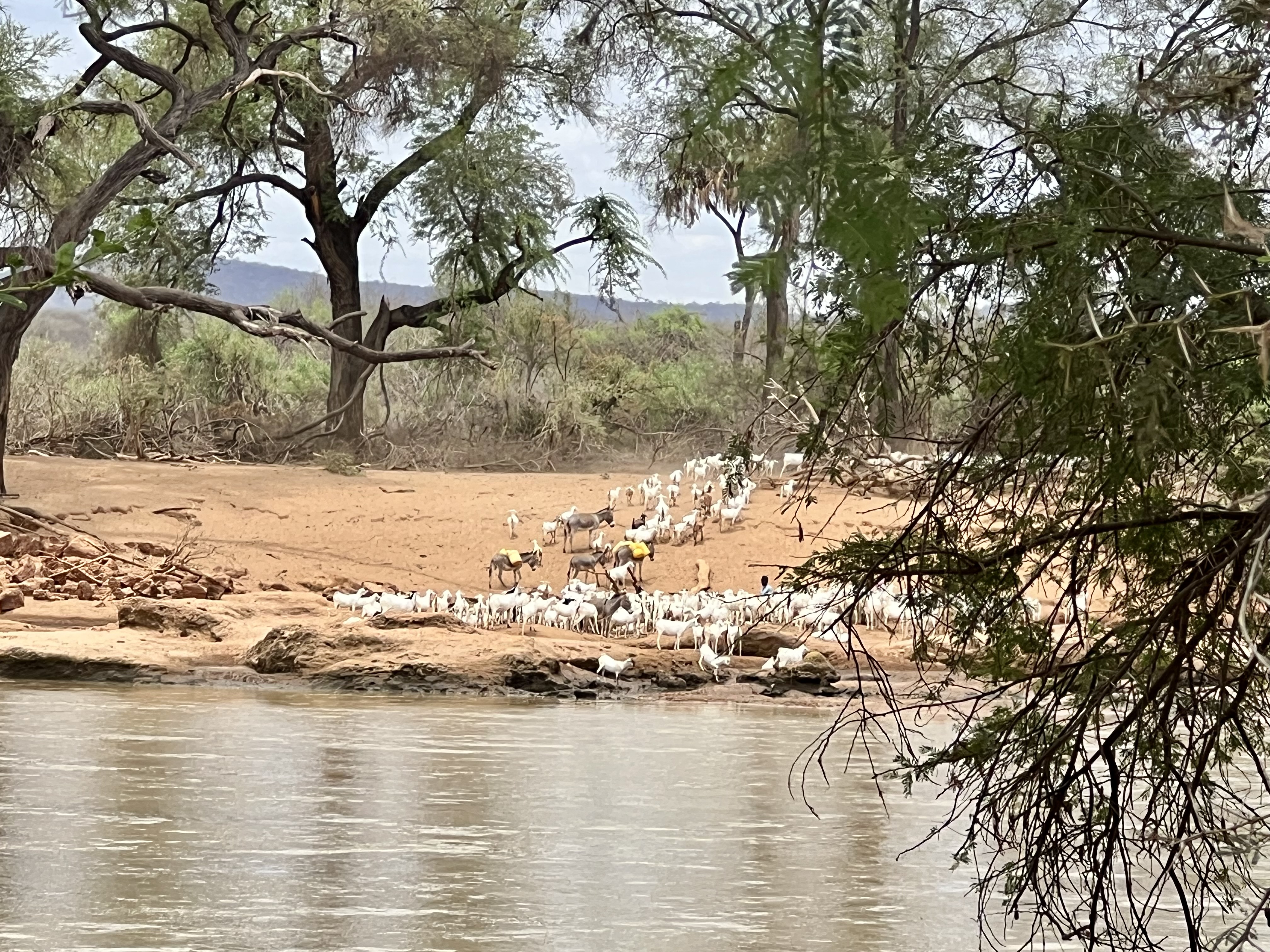
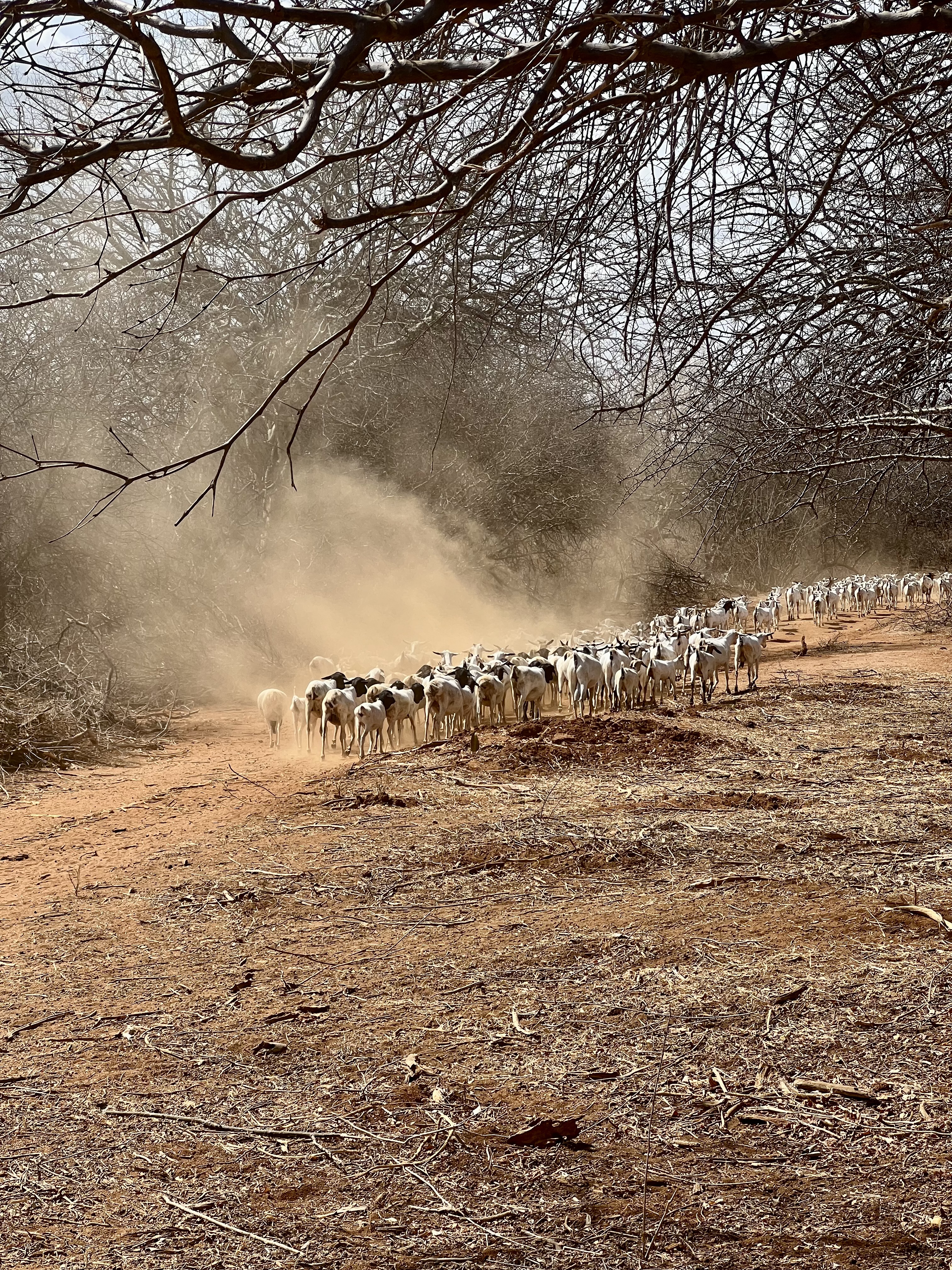
We saw a lot of livestock in the southern areas. Camels and goats, driven here to find grazing. Some were is the park itself, others gathered at watering points on the other side of the river, along with loads of donkeys, yellow water containers strapped to their backs. A huge fence is being erected along the Tana River border – presumably to keep grazers out, except it’s on the park side of the river…so how that will work with game and water access I don’t know.
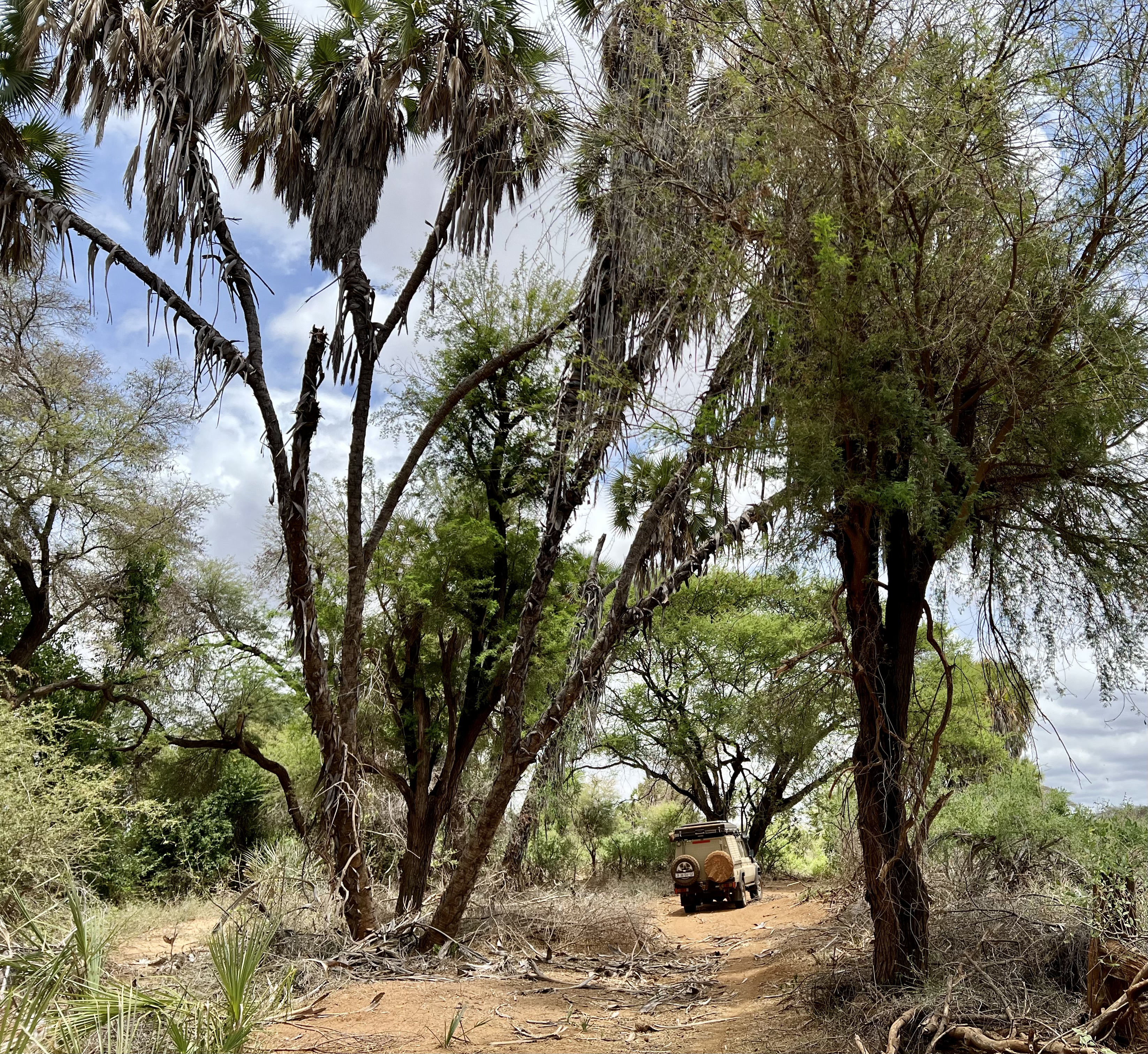
Every day the clouds build up, threatening rain. Until one afternoon when it all FINALLY lets loose and pours with rain. The petrichor is beyond heady and I swear the next day everything was definitely greener.
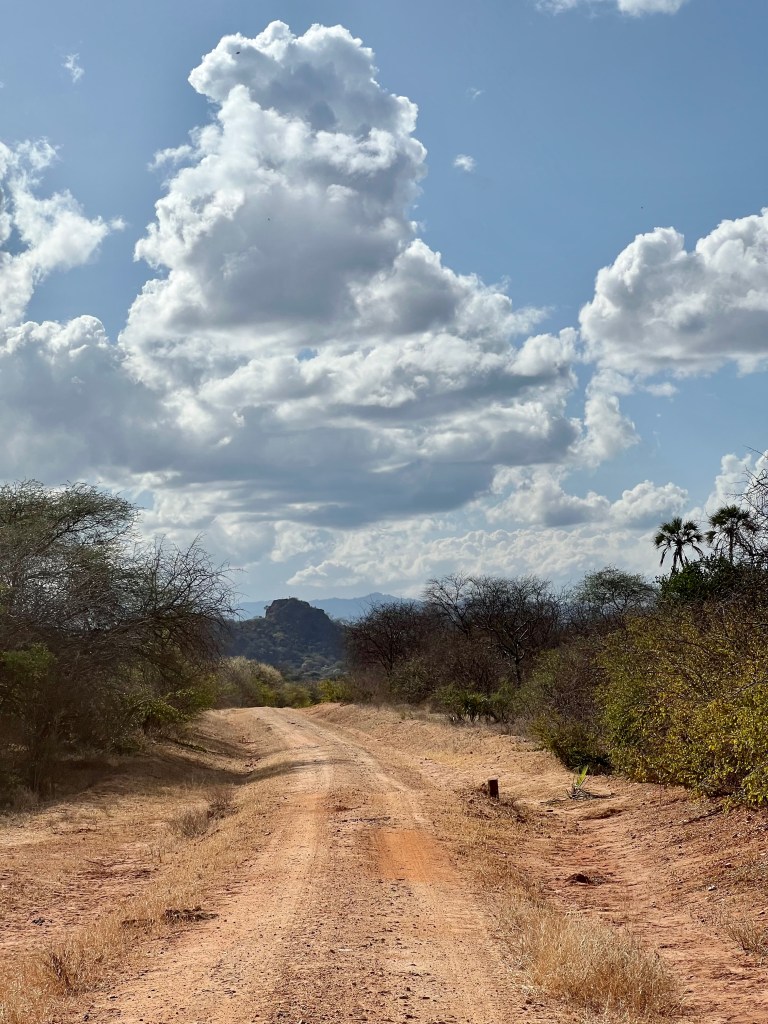
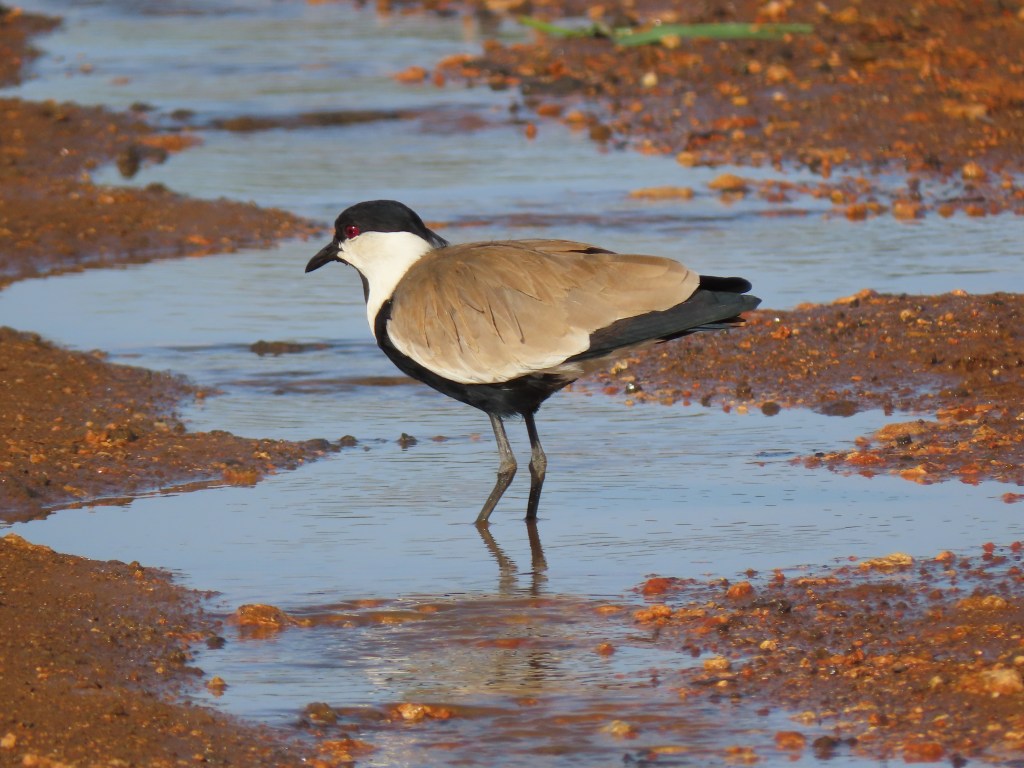
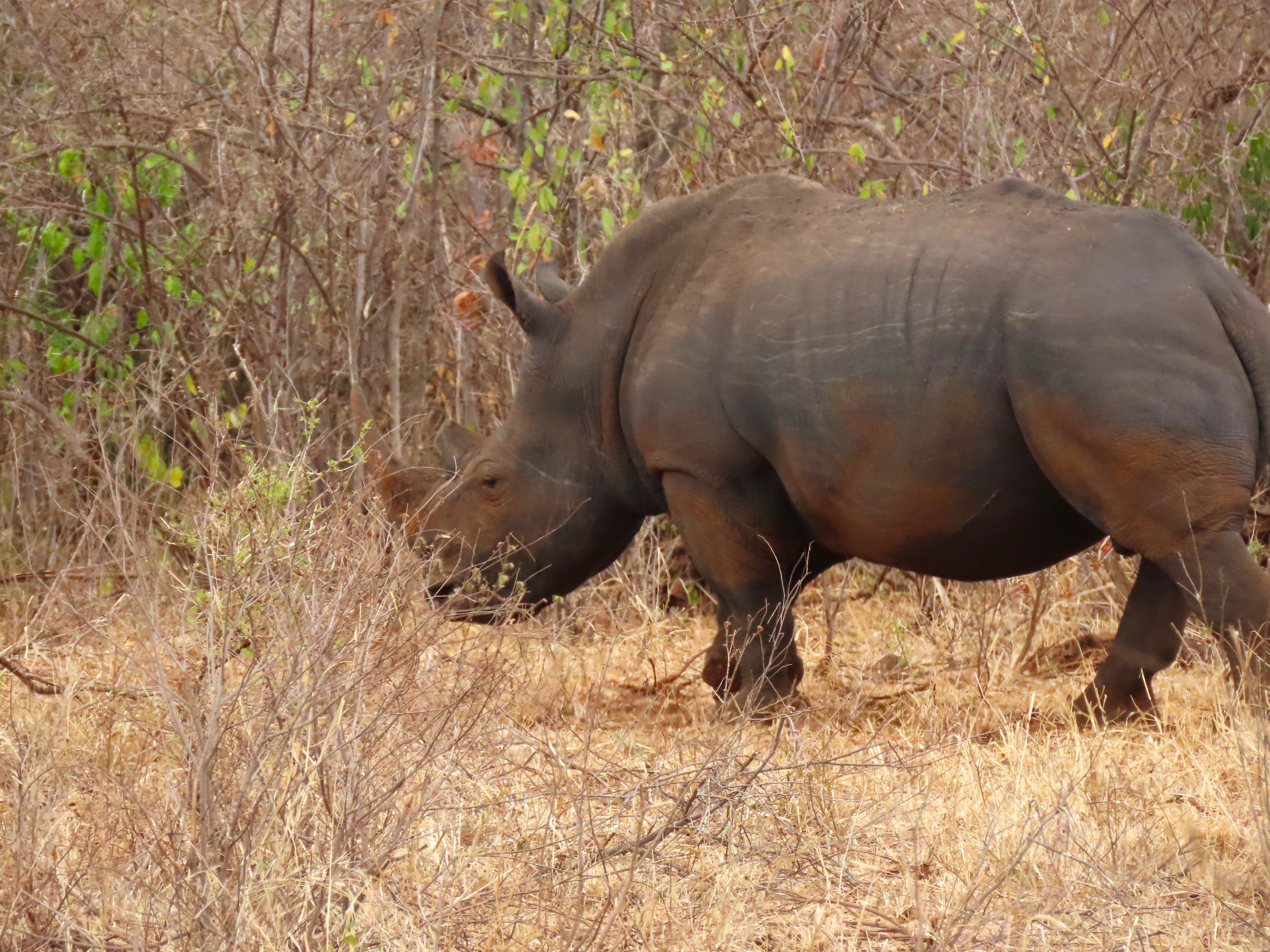
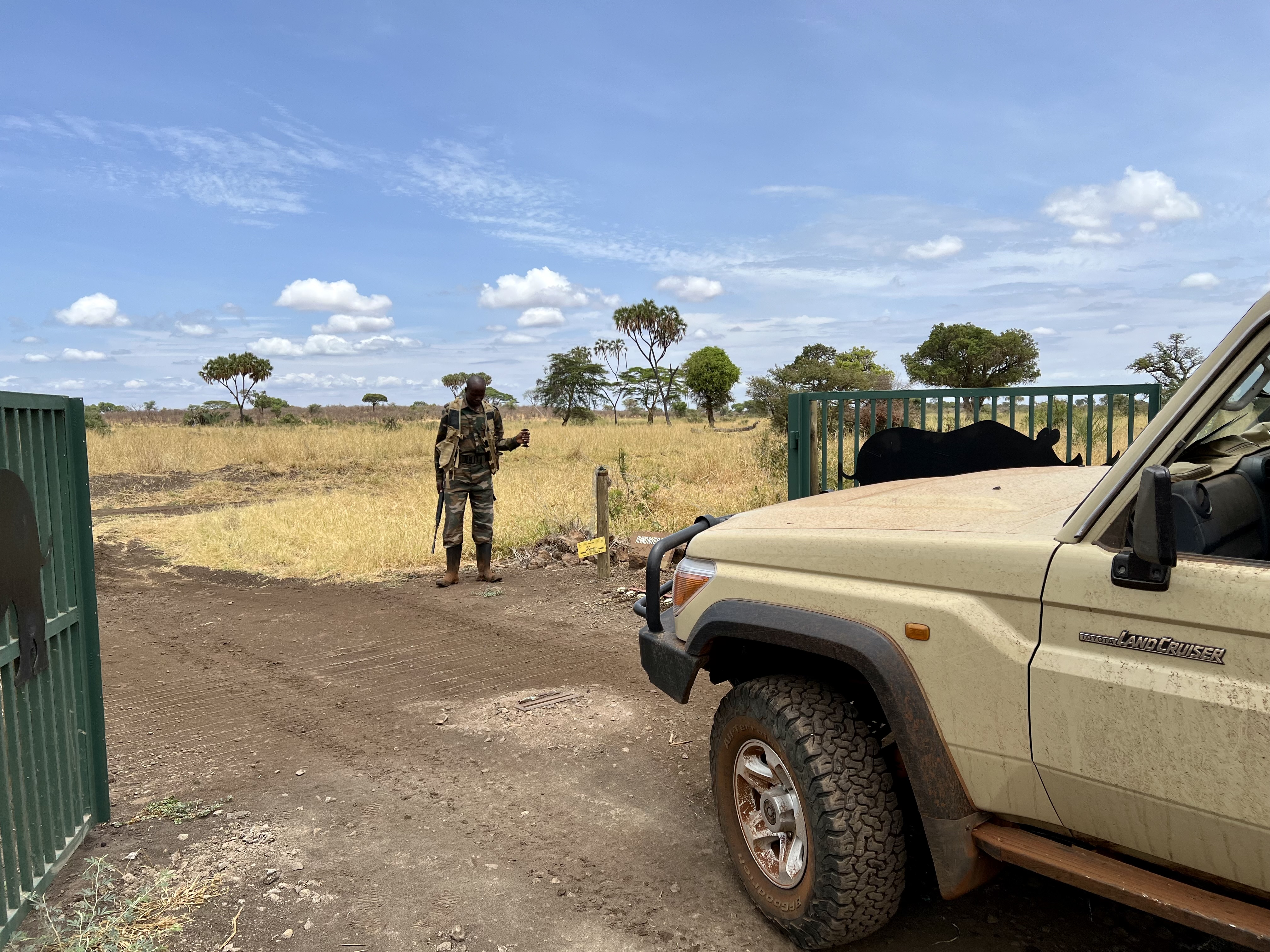
On our last day we visit the rhino sanctuary area. And we even see a rhino. Although we had to back track to find a ranger to let us out (we couldn’t figure out how to open the electric fence gate).
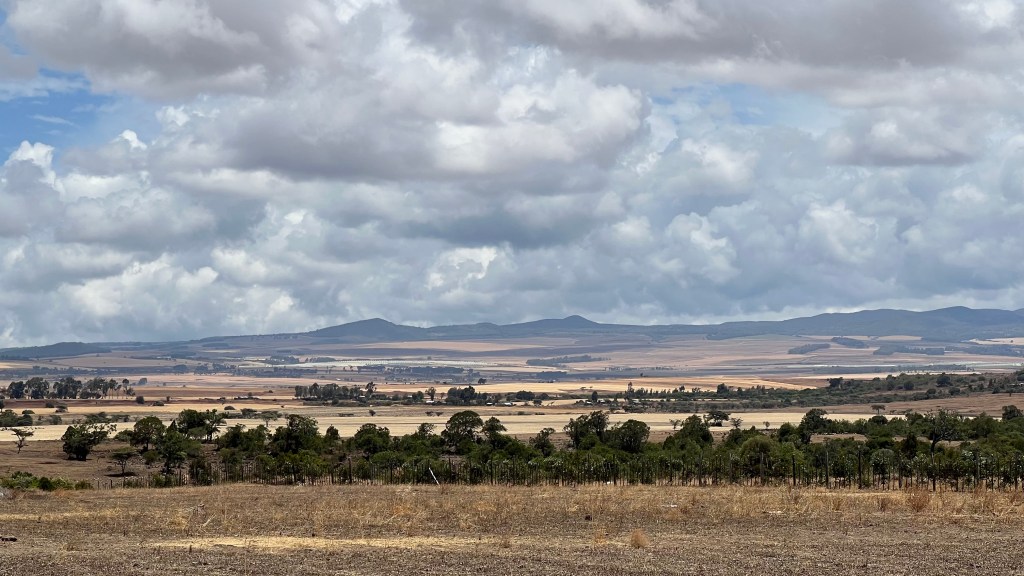
We leave Meru through the same gate, retracing our steps back to Meru town, back onto the B6 and curling around the northern slopes of Mt Kenya – the peak still stubbornly hidden by cloud, and the rain is coming down pretty hard now in places. Things lighten up a bit and we enter a landscape of open fields and large commercial farmers – it looks like wheat and is very reminiscent of the Overberg region in the Western Cape of SA.
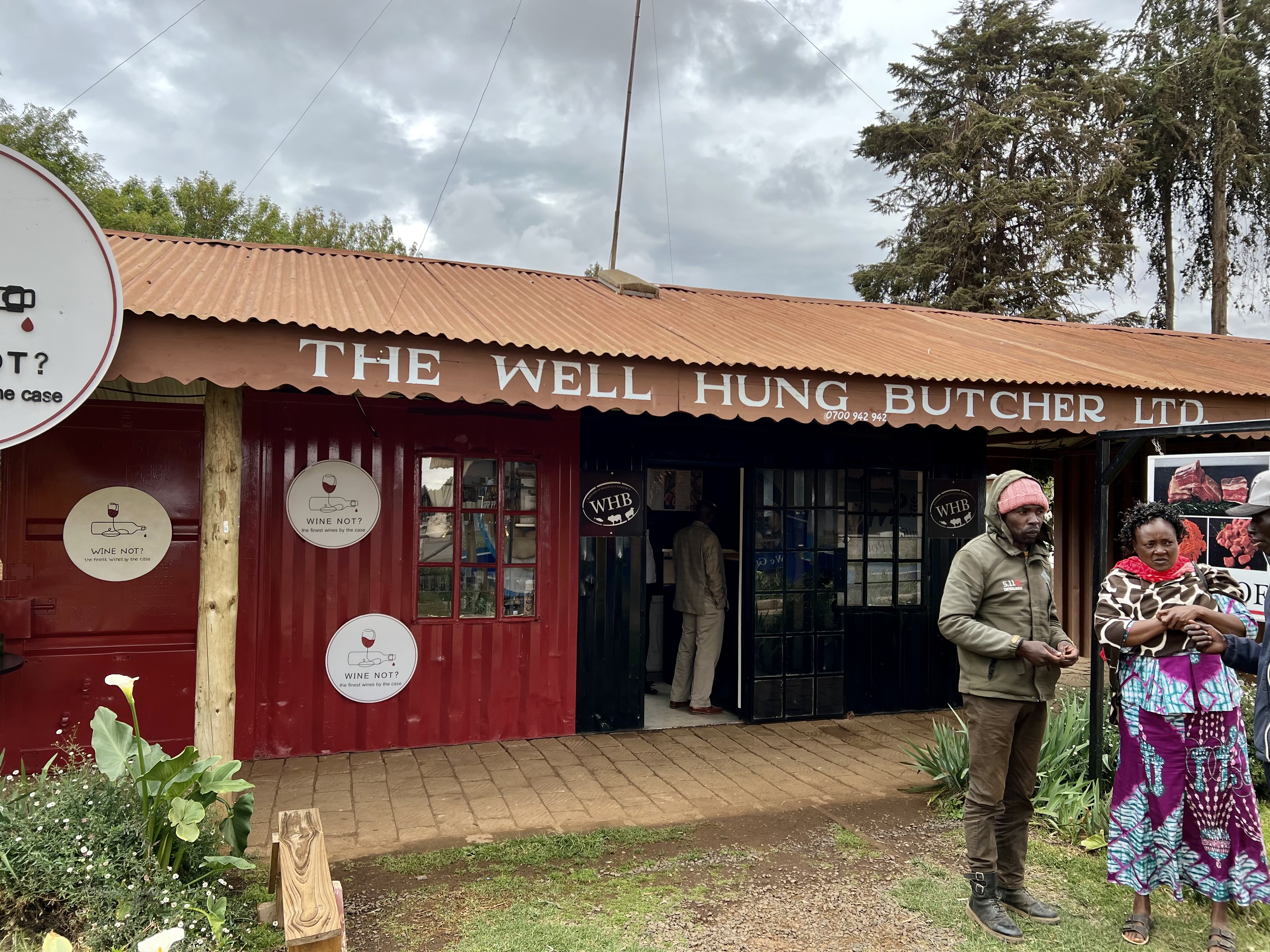
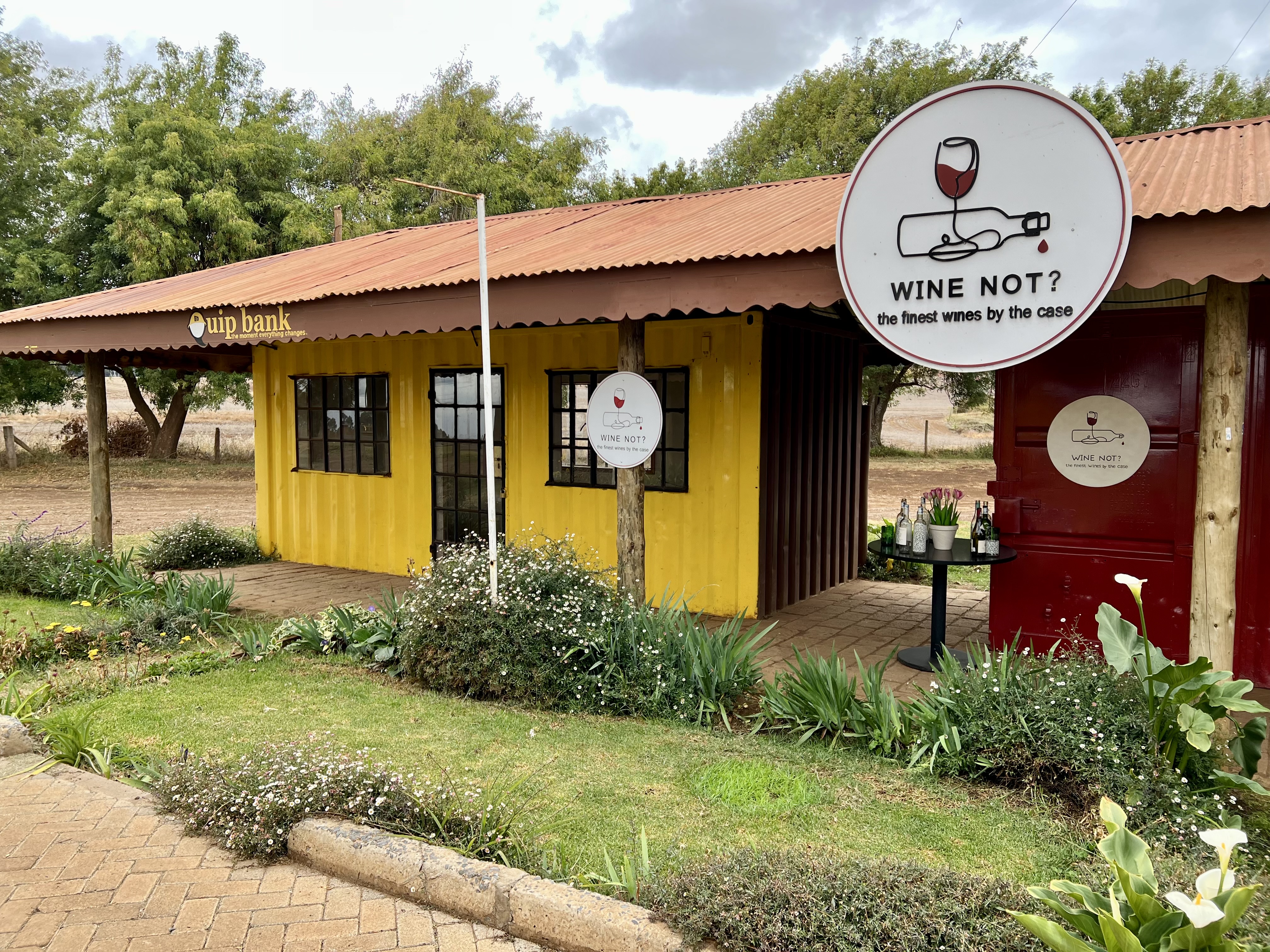
We stop at a farmstall complex. Hah! Here we see the Well Hung Butcher (same brand like the sirloins we bought in Watamu) so we buy some meat for our freezer, we also find a wine shop with a great selection.
We are headed for Ndare Ngare forest reserve. This conservancy protects one of the last remaining tracts of indigenous forest in amongst the huge commercial farms in the area. It is managed by a community focused trust (of which there are many in Kenya) grappling with that age old complex task of balancing conservation and community needs. All of these deserve support.
In the end we didn’t particularly enjoy our stay. Check in at the gate was friendly enough, but the two armed rangers that set up camp next to us (“to protect us from the wildlife’) seemed like overkill. Also once we were in the reserve we were stopped twice and asked if we had paid the entrance fee and rangers insisted on seeing a receipt (there is only one road in). And then again by the rangers at camp when we get there. And again in the morning in camp by another ranger. And again on the way out. They came across as pushy and distrusting. Maybe they have had issues – I don’t know. But it made me feel uncomfortable.
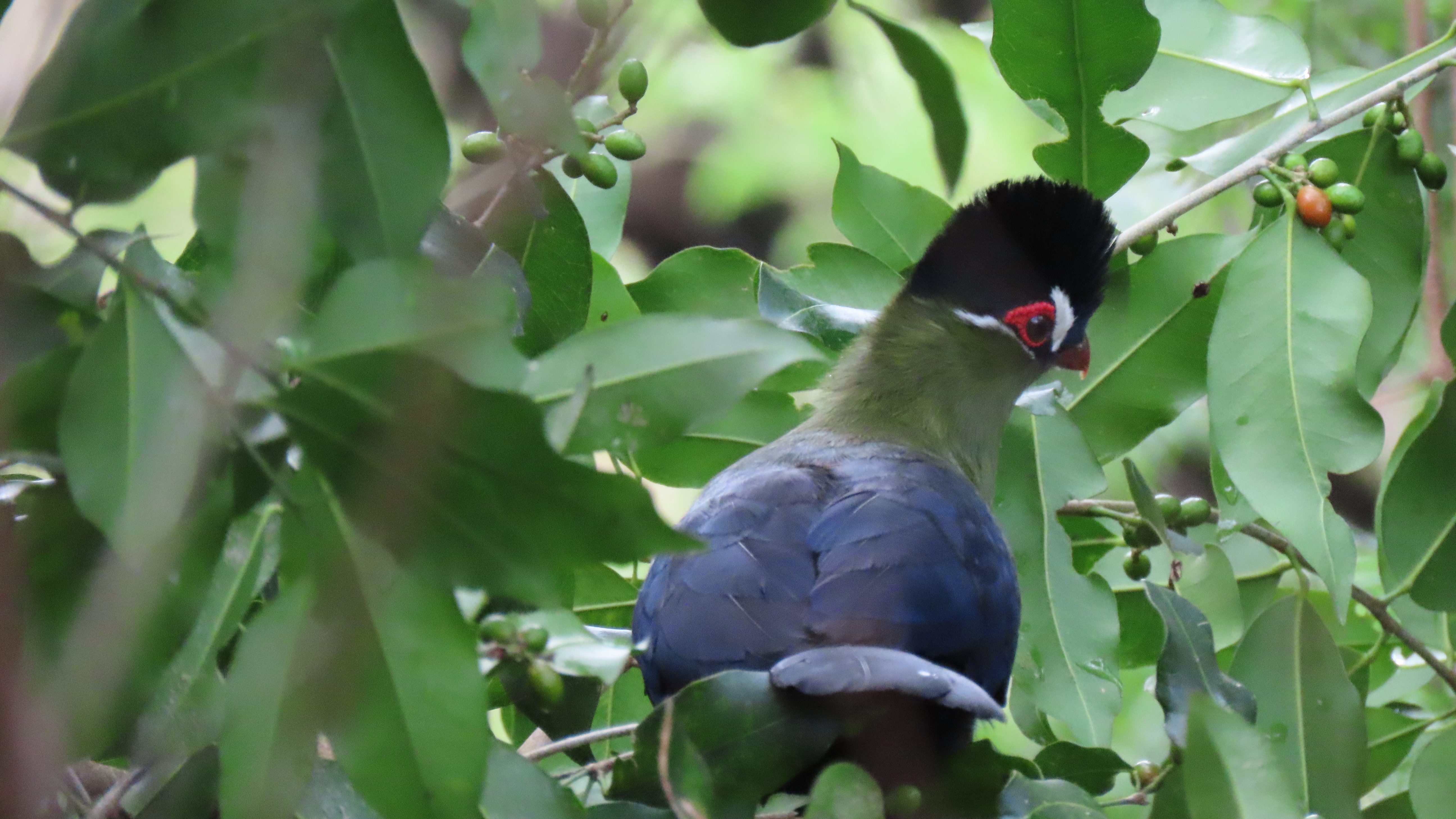
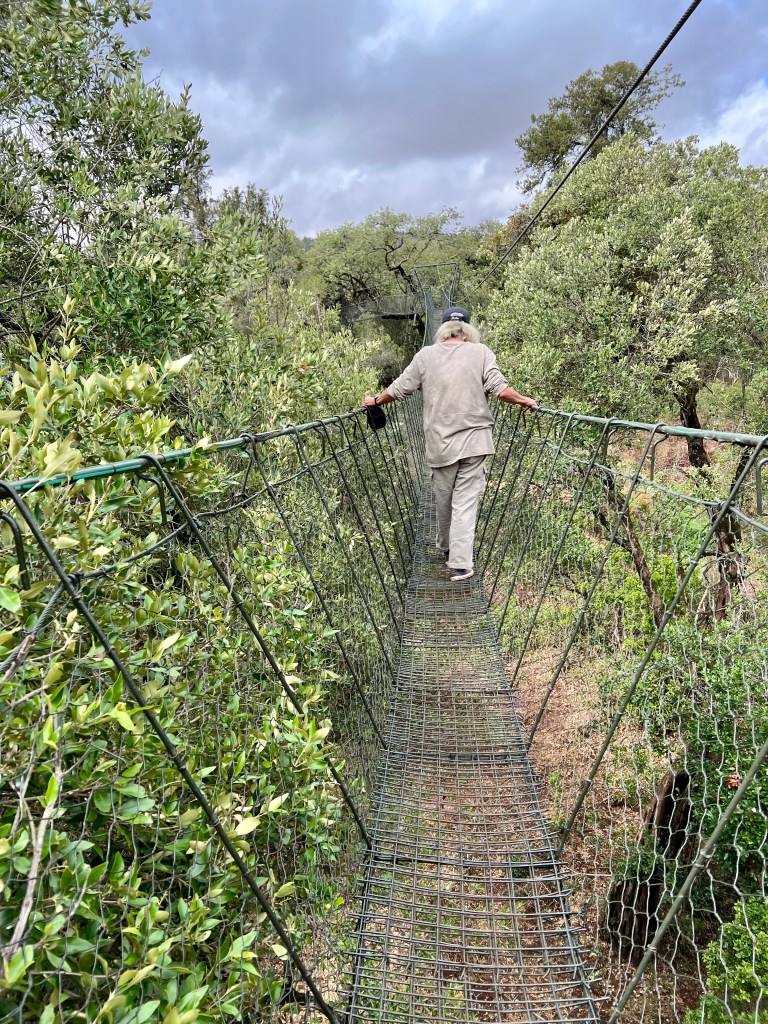
Our visit also wasn’t helped by the fact that it poured with rain all night with a big storm and things were decidedly soggy in the morning. We did the canopy walk but most of the birds were hunkered down, although we did see a flash of red underwing and Deb got a shot of this beautiful Hartlaub’s turaco. What a glamourous bird.
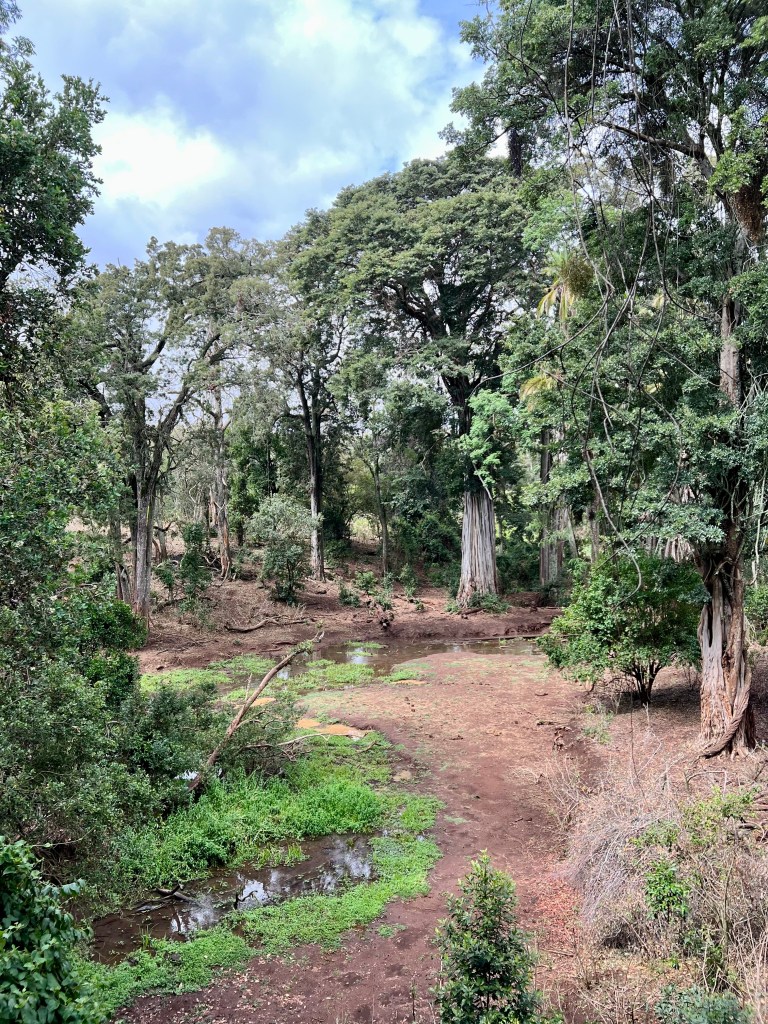
Coming down from our canopy walk (the ranger waits for us at the bottom of the ladder to escort us on the short walk back to camp), we hear people shouting and banging things, dogs barking and elephant trumpeting and squealing. The ranger runs over to have a look and calls us over. Come! See! Elephants! We both hang back – I don’t like what I see. A bunch of young men with sticks and machetes are chasing the elephants. They have a pack of dogs that are goading them, rushing at the baby elephants, hassling them. The adult elephants are infuriated and scared, trying to protect the youngsters, squealing and trumpeting. The crowd laugh and encourage the dogs. The ranger stands back and does nothing. I think he’s scared to intervene. The whole thing leaves a bad taste in my mouth. This did not look like villagers or subsistence farmers protecting crops. This was sport. Back at camp I ask the ranger why he didn’t do anything to stop them. He agrees it’s not right, but just shrugs…what can you do?
On top of this some Brazilian tourists arrive with their driver and guides. The open landcruiser has been touristco-ed (sp?) up. Shukas on the seats, wooden table and basketware and silverware for brunch, two askari standing by in over-the-top traditional dress. Looking like a set piece. Which it is.
What are we doing? What am I doing? What are any of us doing when we are doing this? It suddenly feels very flat.
We decide to move on and head somewhere dry, and (it being my birthday) find a place with a roof over our heads. Nanyuki here we come.
Once out of the reserve there is still a fair amount of farmland tracks to drive through before you rejoin the main tar road. As we are driving along a motorbike pulls up on the track running along side us, three teens up, laughing and waving, not a care on the world. One has dyed his hair scarlet – another sports ‘’check me, check you back’’ glasses (i.e. mirror sunglasses). I am driving and I put my foot down a bit, they respond immediately and we have a bit of a race on. Splashing though puddles, having a laugh. Eventually I pull back and let them drive ahead, waving goodbye. It lightens my mood considerably.
Ngare Ndare to Nanyuki is not far at all (just over 50km). A google search has thrown up the Penguin House as a possibility and we switch on the Wi-Fi router and enter Penguin House into Google maps, which so far seems the best App for town and city navigation. We turn off the main road as we enter Nanyuki and into the suburbs. Briefly losing connection, we have to reconnect we see all the names of the local Wi-Fi networks. One makes us laugh, it is called: Adults Live Here.
Penguin House is a nice little suburban hotel – we get a large twin ensuite. They have a restaurant too and delicious cashew nut chicken for birthday dinner. The rain holds off a bit so we eat in the garden that evening and as night falls we hear the primordial screeching, but at least we know what it is now – lots of tree dassies here in suburban Nanyuki.
Our room is called Kowalski, which seems a bit random. Until film-buff Deb figures it out – look at the names of the other rooms: Skipper, Private….they are all named after the penguins the movie Penguins of Madagascar (!). We ask the manager about it but he doesn’t know. He’s new. New owners. Maybe the old owners just liked penguins?
We spend a couple of days in Nanyuki, get laundry done, do a bit of shopping (Delamere Lemon Biscuit yoghurt is now in pole position). The Chandarana FoodPlus supermarket has a book section and I buy a Nelles fold out paper map of Kenya. We use this going forward, it’s more up to date and way easier to read than the combined East Africa one we’ve been using. We treat ourselves to dinner at The Nook, do a little work and generally ready ourselves for the push further north.
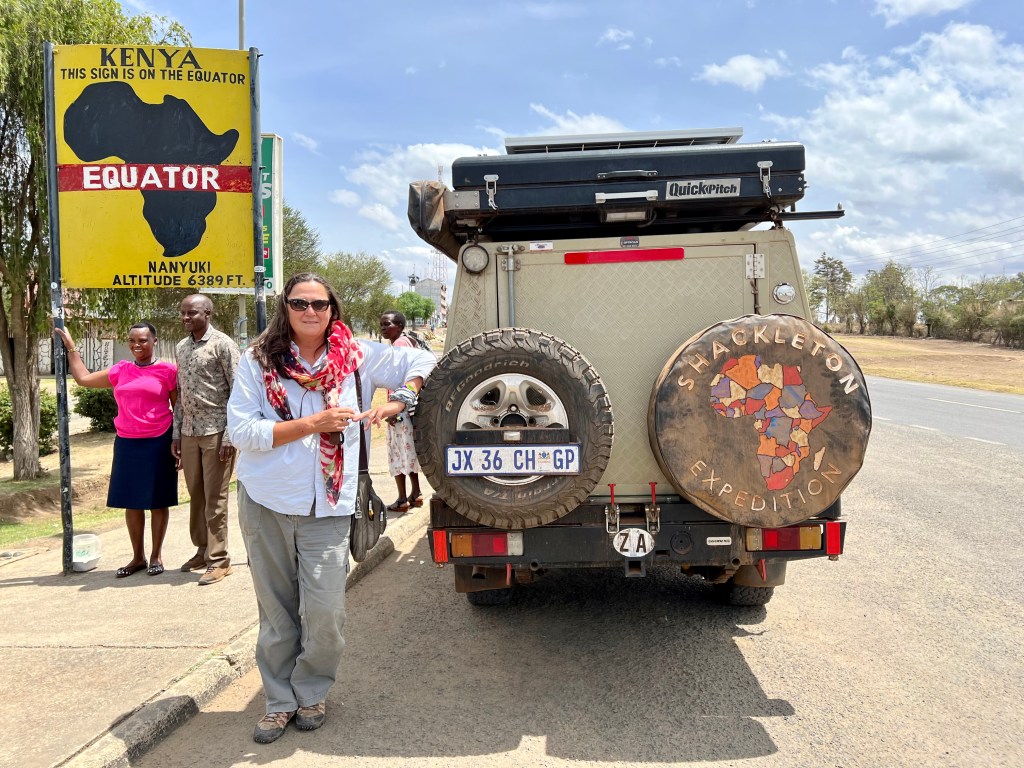
But not before visiting the equator sign. (You gotta do what you gotta do). It’s a magnet for tourists and locals alike who all want their photo taken with the sign.
Next stop: north to Samburu.
NOTES FOR TRAVELLERS
- Cheetah Campsite, Lumo Wildlife Sanctuary
- $37 ppn (park fees and camping), 24 hour rule, $4 for vehicleTraversing rights to Taita Hills conservancyGreat ablutions and view, but small uneven pitches and little shade other than under the shade structure – so you would have to share that with other campers (if there are any)Ongoing drought made things bleak – would love to revisit in the green
- Pretty but not sure adds much if you have been to the main Tsavo reserves
- Simba Safari Lodge, Voi
- Good alternative to the public campsite in Tsavo East
- KES 500 pp camping (since increased to KES 800 pp)
- Good restaurant
- If you go let us know if the tilapia thing happens!
- Meru National Park
- Park fees $52 ppd. Camping $20 pp, vehicle approx. $4 per day
- Park fees also allow you to access Kora reserve
- We really liked the public campsite at Bwatherongi, good shade, well spaces sites and the swimming pool was a bonus
- Ngare Ndare
- KES 5000 each camping, ranger fee KES 1000, car KES 500)
- Nanyuki:
- Penguin House (now rebranded as The Farmhouse Inn)
- $60 for a double room (includes full cooked breakfast)
- Secure parking in walled garden + guard
- Great restaurant
- Will call you a taxi if you want to eat out in the evening
- Friendly staff, do laundry reasonably priced per load
- Highly recommended if you want a break from the tent
- We had good pizzas at The Nook
- Supermarkets: there are loads. We liked Chandarana FoodPlus and Beyond Fruits
 Bonnievale to Burton Fleming
3 responses to “Coming round the mountain”
Thank you for this new post. I’m definitely your no1 fan.
And I learnt a new word – petrichor – fabulous word!
LikeLike
Thank you so much. It’s a fabulous word indeed!
LikeLike
This was such a pleasure to read. Makes me want to jump into a 4×4 and just GO. I also watched the episode in the Essence of Overlanding and thought that was great too. Well done!
LikeLike