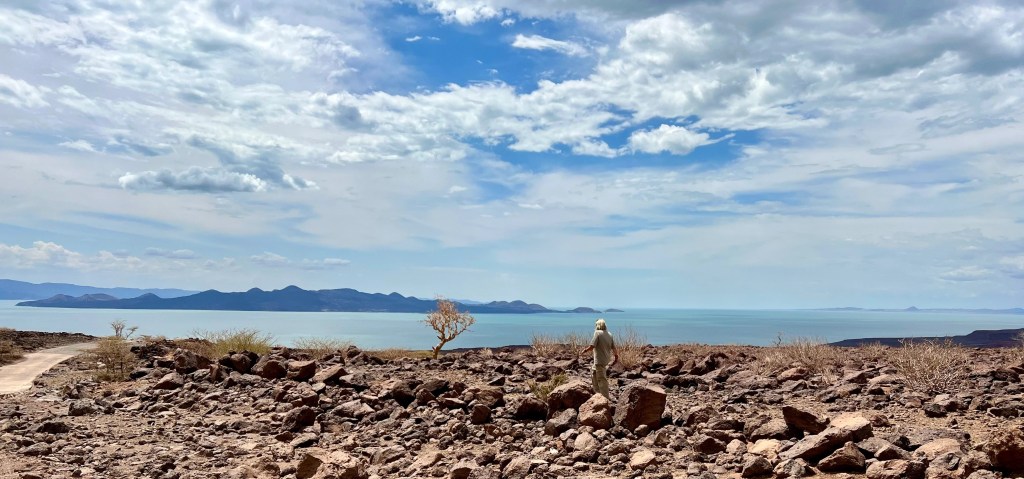
19 – 22 March 2023
The security situation in the northern parts of Kenya is volatile and ever changing. At best a bit tense, at worst just plain dangerous. Whilst tourists are unlikely to be targeted, it can sometimes be all too easy to get caught up in a skirmish. Just earlier in the month (March 2023) 4 people (not tourists) had been killed by cattle raiders / bandits in Samburu County.
Asking around (we have local guests as well as Kenyan tour guides staying at our Nanyuki hotel) throws up conflicting advice: Stick to the main routes and you’ll be OK … No way! You’ll be set upon by bandits … Storm in a tea cup, go … Fine if you take the Laisamis – Marsabit road, but avoid Baragoi route…Go no further than Samburu National Reserve…
In the end we decide to go ahead. We are here now and want to explore the reserves further north and hopefully press on to Lake Turkana. Whilst we don’t want to be foolish, we also don’t want to regret missing out because of an over-abundance of caution. In the end I reckon that if things are too volatile we will be turned back in any event at police / military checkpoints, as the last thing they’ll want to risk is tourists getting mixed up in something.
Leaving Nanyuki it feels great to be on the road again, retracing our steps through the wide open farmland, Mount Kenya still stubbornly hidden in cloud, past the turn off to Ngare Ndare and then heading north. The road leads you down the escarpment and things heat up as you lose altitude.
In no time we are in the bustling town of Isiolo. Isiolo has a very different feel to Nanyuki, even the people look different, with many Somali looking faces and lots of camels. Many military vehicles too. On we press, it’s a good road and the traffic is light. Soon we are at Archer’s Post (who thinks up these names?) – it’s a raggedy strung out town with roadside traders and lots of goats and many many people in full tribal dress. Archer’s post hey…ever since I first read that name it’s stuck with me, a marker of adventure with a frontier-sy ring about it. And here we are.
At Archers post we leave the main road (and the tar) and once through a scruffy collection of villages we find ourselves at the entrance gate to Samburu National Reserve. Samburu is one of three national reserves in the area that border the Ewaso Ngíro river (the others being Shaba and Buffalo Springs). We are just visiting Samburu on this trip, saving the others for a return visit. There is a lot to see in northern Kenya and we are really just getting a small taste.
At the gate to Samburu we check in and ask if we can stay a couple of days at the public campsite on the river. The ‘’accountant” isn’t there, but the rangers say we can settle up on our way out. They are an easy going bunch and when I ask about the security situation am reassured that all is good. Forever hopeful I ask about a map. No luck – but I take a photo of the map painted on the wall – it works fine.

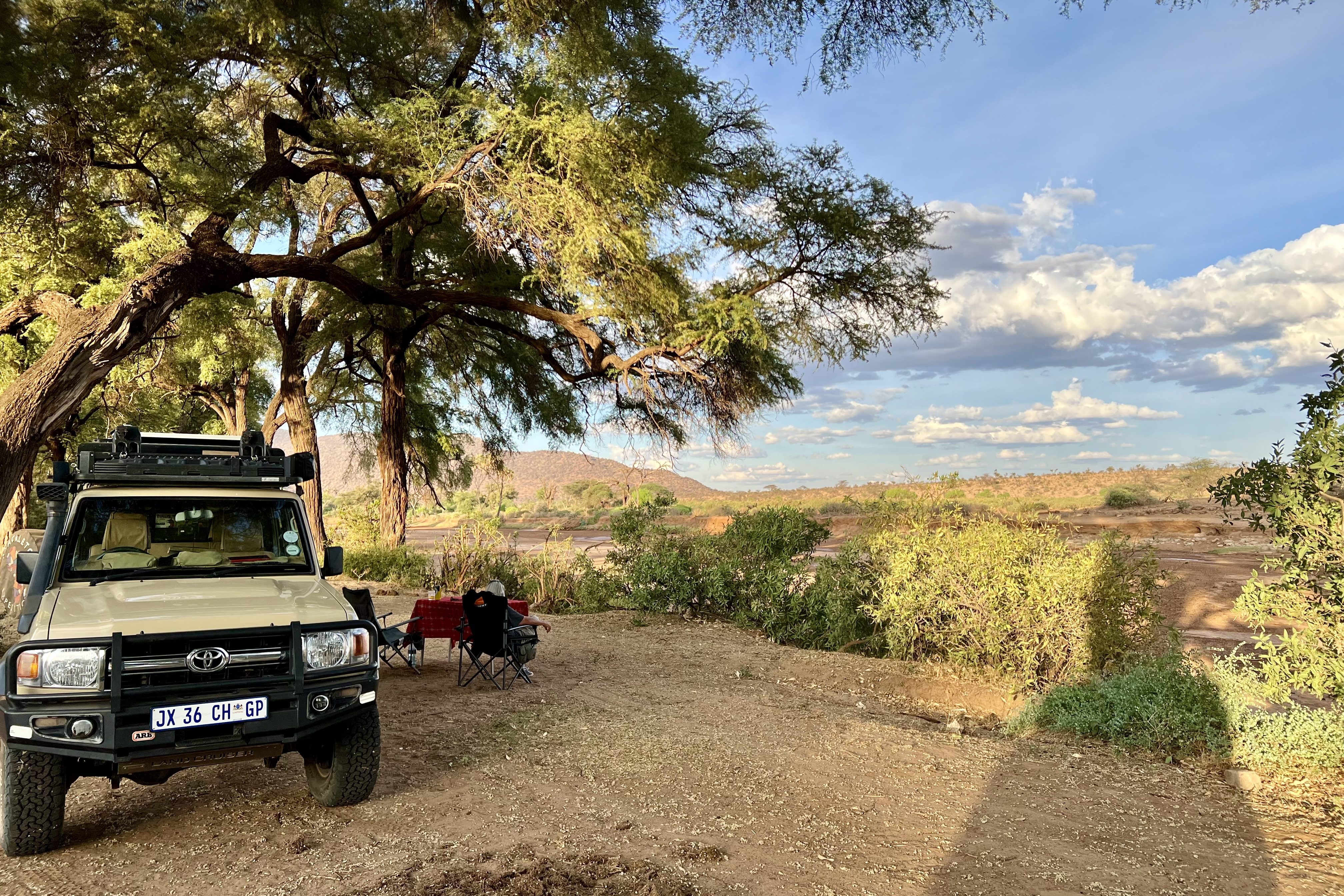
We find the campsite easily. It’s a lekker shaded pitch overlooking the dry river bed. The ablutions by contrast are a disgrace and filthy. When the community reps come to see us I tell them as much and to their credit they did clean up one side for us.
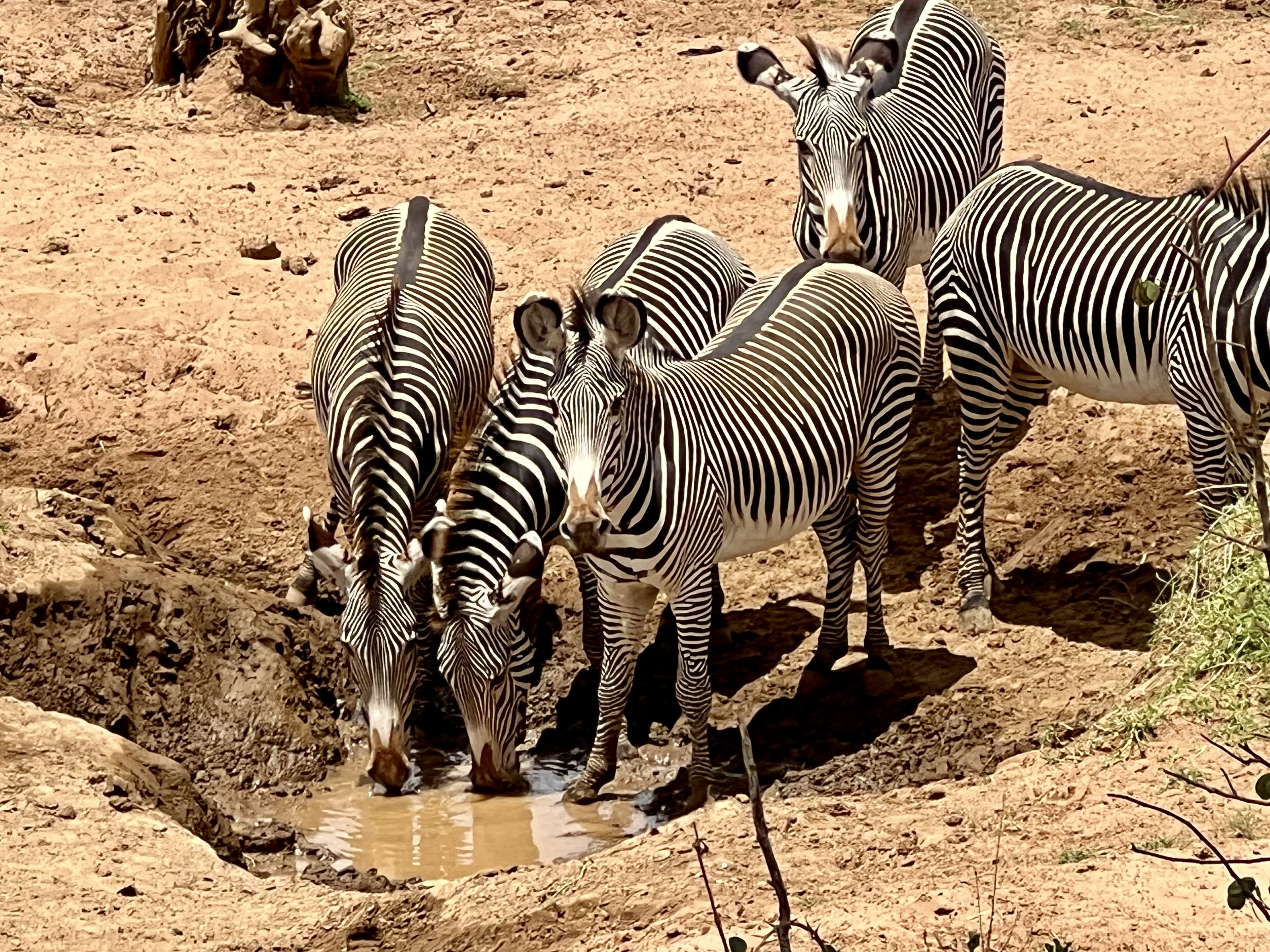
Samburu is home to all the northern specials including Grevy’s zebra. We’d expected to see these in Meru but no luck – but here they are – loads of them. I love them – much prettier that the Burchell’s, with tighter stripes and white bellies and very cool outsized round ears which ramp up the cuteness factor.

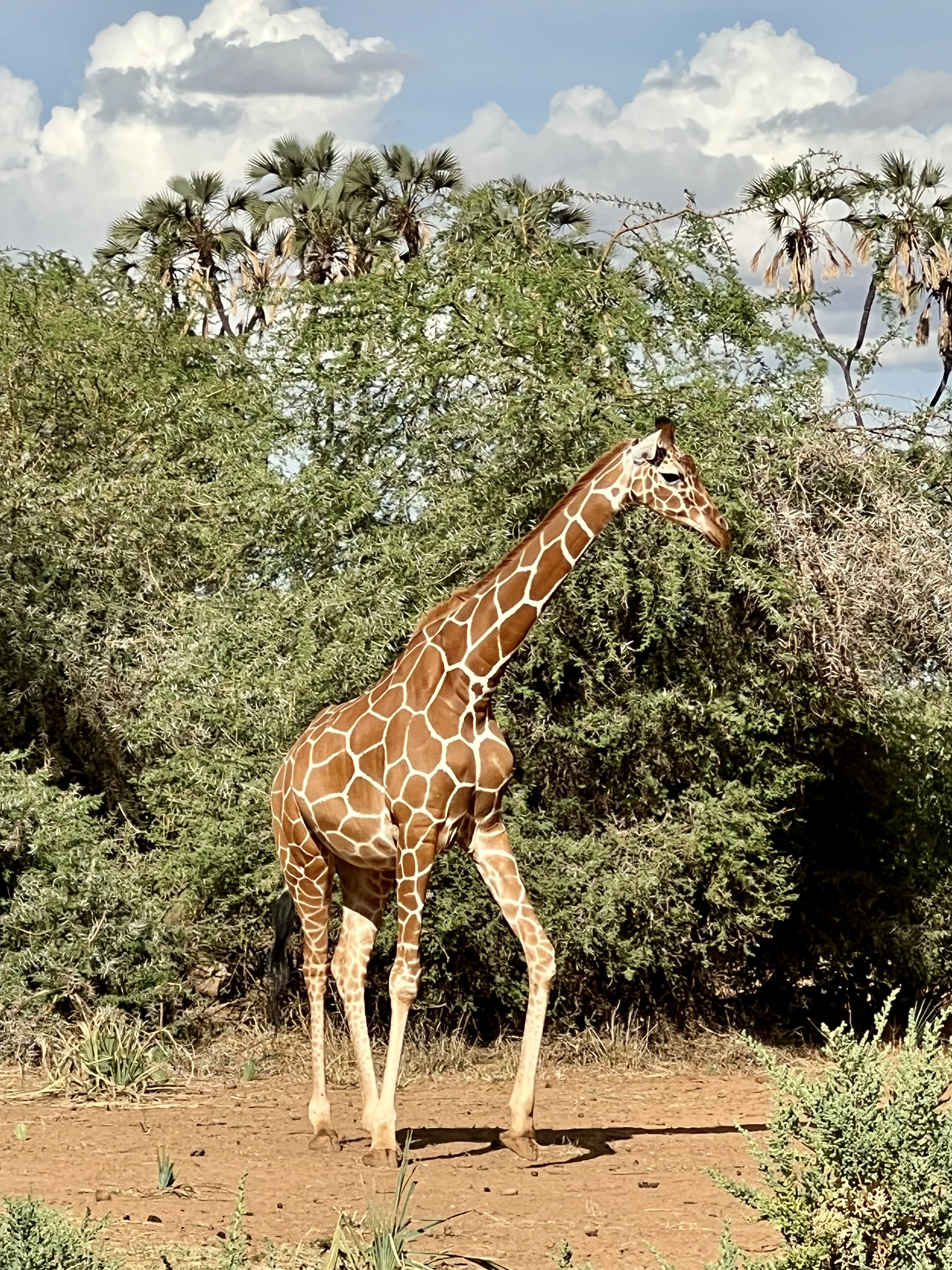
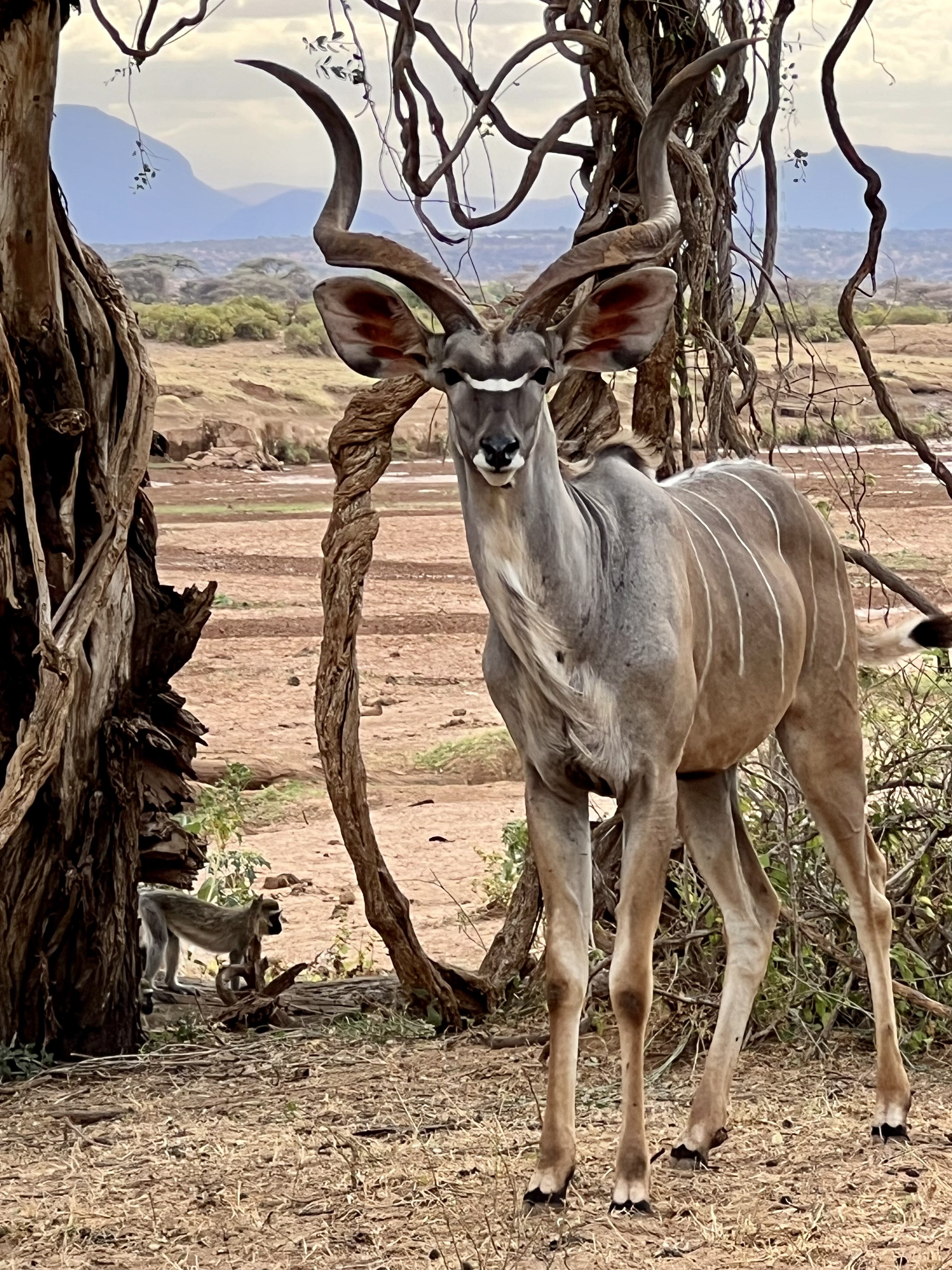
Other northern specials include besia oryx and reticulated giraffe – am still very taken with their crazy paving coats. We also come across the most beautiful kudu which stands stock still to pose for us.
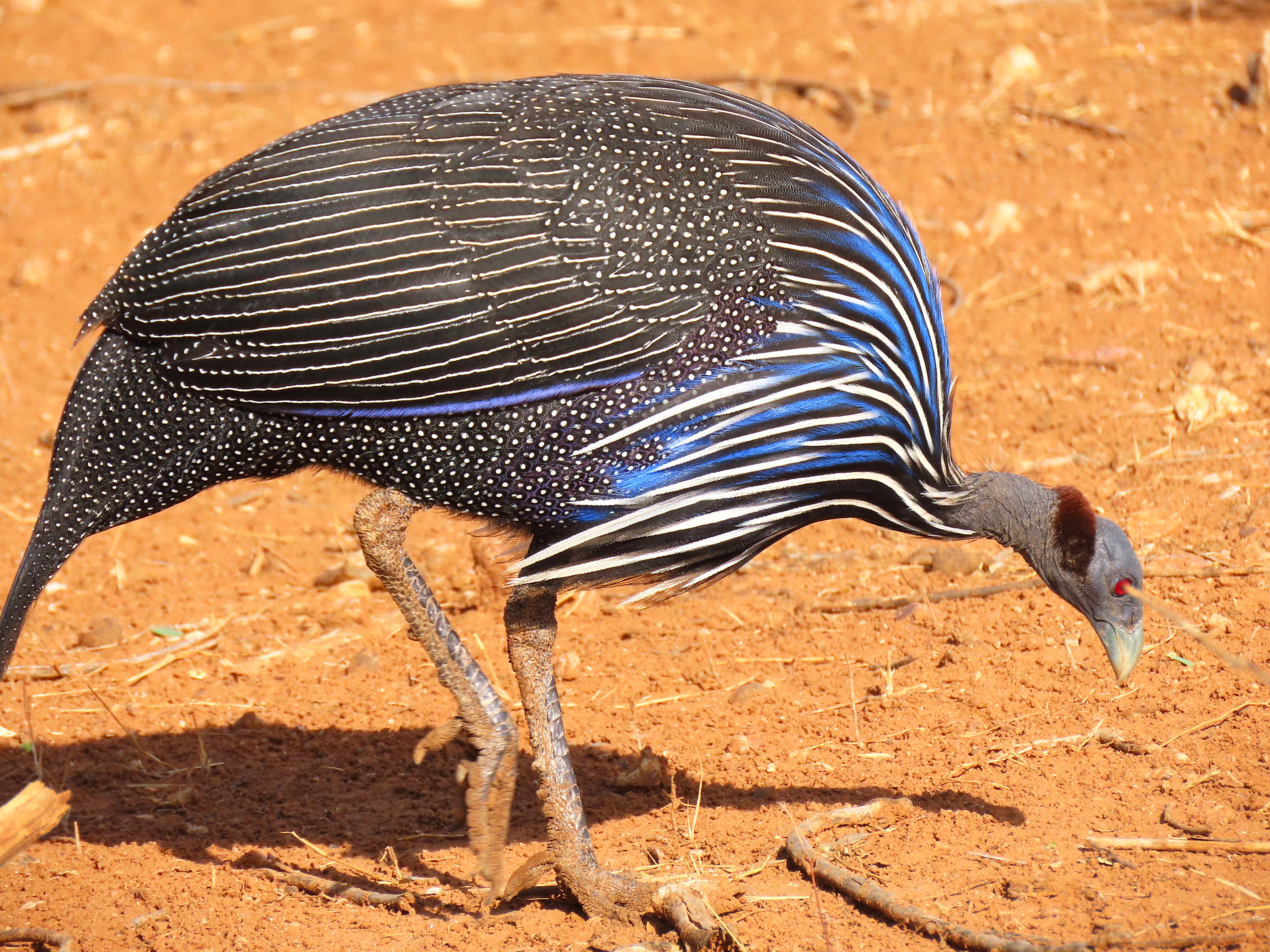
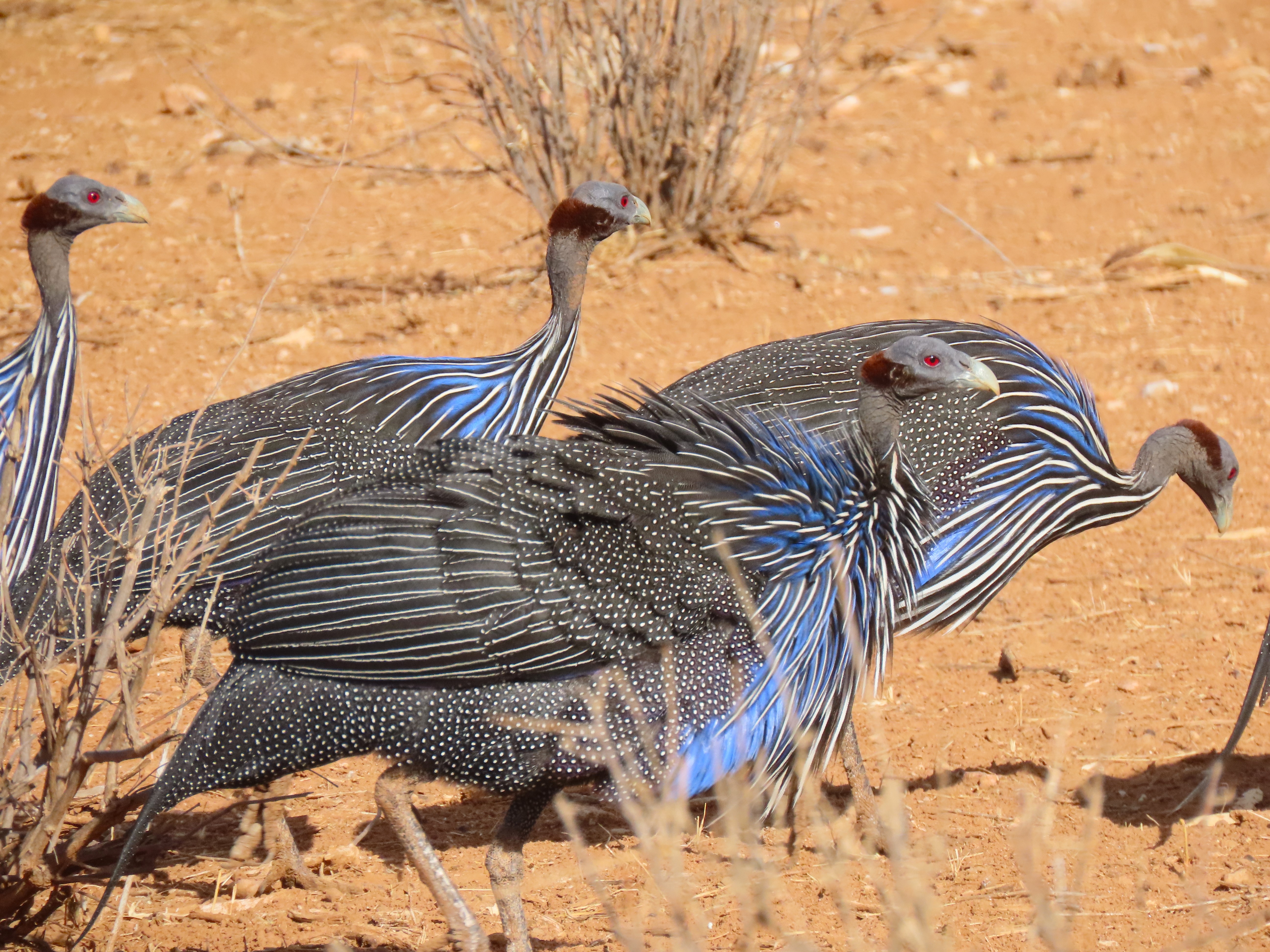
And loads and loads of vulturine guinea fowl – they really are spectacular birds.

We have the campsite to ourselves on the first night. Two rangers come past to check on us. Both women, which is different to what we’ve seen before. They are friendly and, as ever, curious about two women travelling together without male companions. We chat for a while, describing the route we’ve come so far. I think they are genuinely interested and enthusiastic about the idea that this can be done. They are very young and both have long braids and their easy going chatter is quite at odds which their overall get up (camo, boots, bullet proof vest, armed to the hilt).
The following evening we are joined by another couple. Retired expats who now call Kenya home. Next to arrive is a young local Kenyan and his girlfriend. He is positively beaming, so pleased to be here, labrador like in his enthusiasm as he sets about setting up camp. If he’d had a tail he’d be wagging it. His girlfriend appears less that impressed but hanging in there.
It’s been threatening to rain and finally does just that, so we turn in early with our books. Snug and dry in the tent.
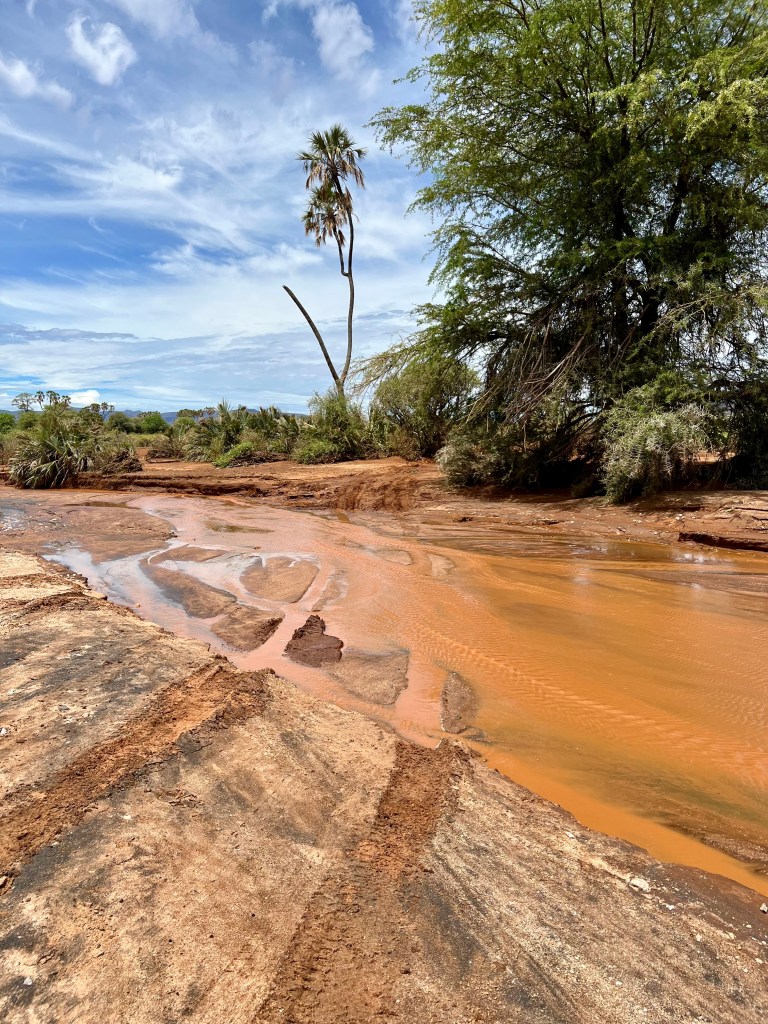
In the early hours of the morning I wake up to an odd noise. Like a low roaring, I can’t figure what it is. It sounds, if anything, like cars on a freeway, somewhere mid-distance. I lie there thinking that can’t be it. I sit up and unzip the window closed against we rain and can’t believe my eyes, the river has come down in full flood and the roaring is in fact the roar of waves and eddies forming and reforming in the river. It’s just starting to get light, and in the grey and gloom I anxiously check how much leeway we have …so far we are a fair bit higher than the water level. I pick a bush as a marker – if it gets to there I’m moving the car.
Leaving the park after all that rain is a slippery affair.
Once out of Samburu we get back on the tar but not before topping up with fuel in Archer’s Post, even though we left Nanyuki with full tanks and have extra in jerry cans on the roof, because if we are allowed to travel further the next reliably available fuel could be some ways away. A couple of kilometres out of Archer’s post we hit our first check point. We stop and show passports etc. and ask if it is safe to pass. We are quizzed on our route – we are headed to Lake Turkana I say, to Loiyangalani, via Ngurunit. That’s fine they say. All is peaceful, but please stick to that route. All good, Turkana here we come.
So on we head up the excellent tar road, headed for Laisamis where we will branch off west towards the Ndoto mountains.
The surrounding landscape is very dry despite the rain in the night – it hardly touched sides. All along the road there are large herds of very skinny camels – some being herded, others seemingly left to their down devices. The landscape and surrounding rock formations are striking.
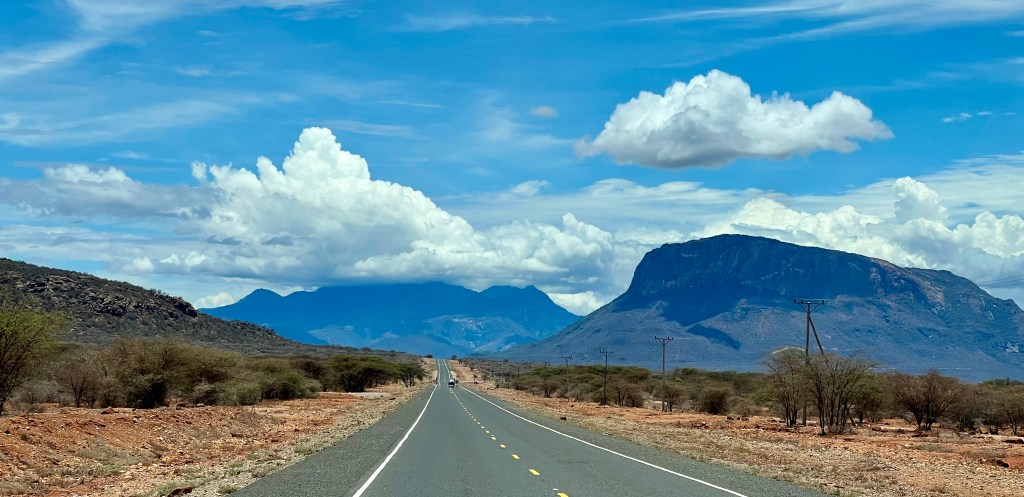

Turning off the main road we head to the Ndoto mountains, we have a bit of tar and then it turns to gravel. The route is very scenic but the road is very badly corrugated, and we endure an excruciating few hours of chassis shaking and skull rattling. The road passes through a series of dry river beds. Some have clearly had water through recently and in places I hold my breath and I feel the rear of the Cruiser slip and struggle in places. Please no, really, I don’t feel like having to dig us out. At one point we come across a bus and truck that are well stuck in. We stop and let more air out of the tyres.
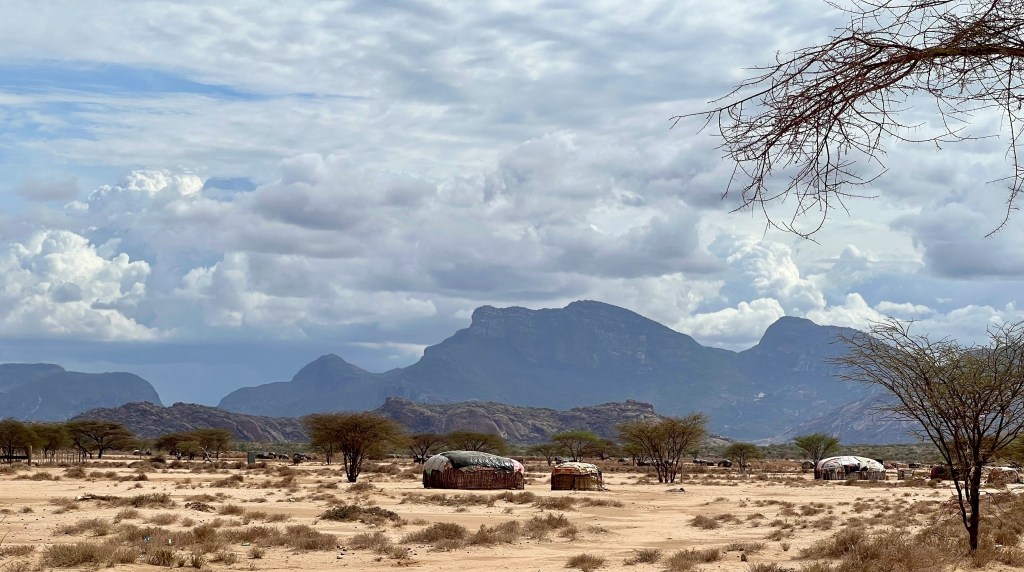
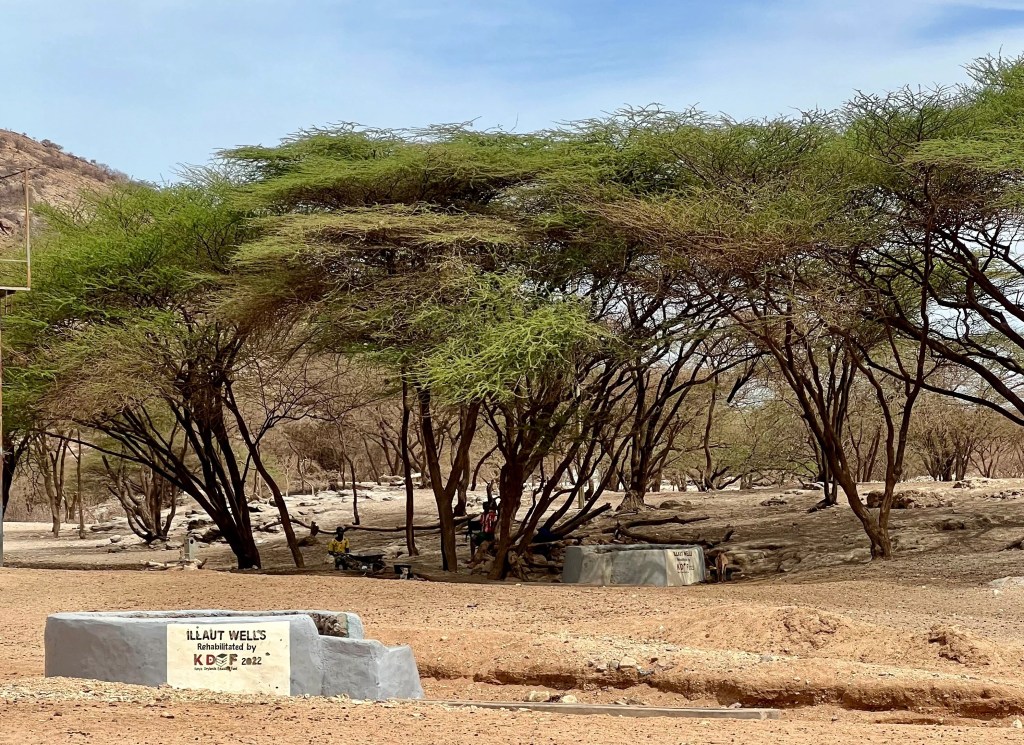
On we go, mountains to the left, hugging the foothills, past small settlements and kraals with rounded huts. Past a series of wells, many now solar powered.
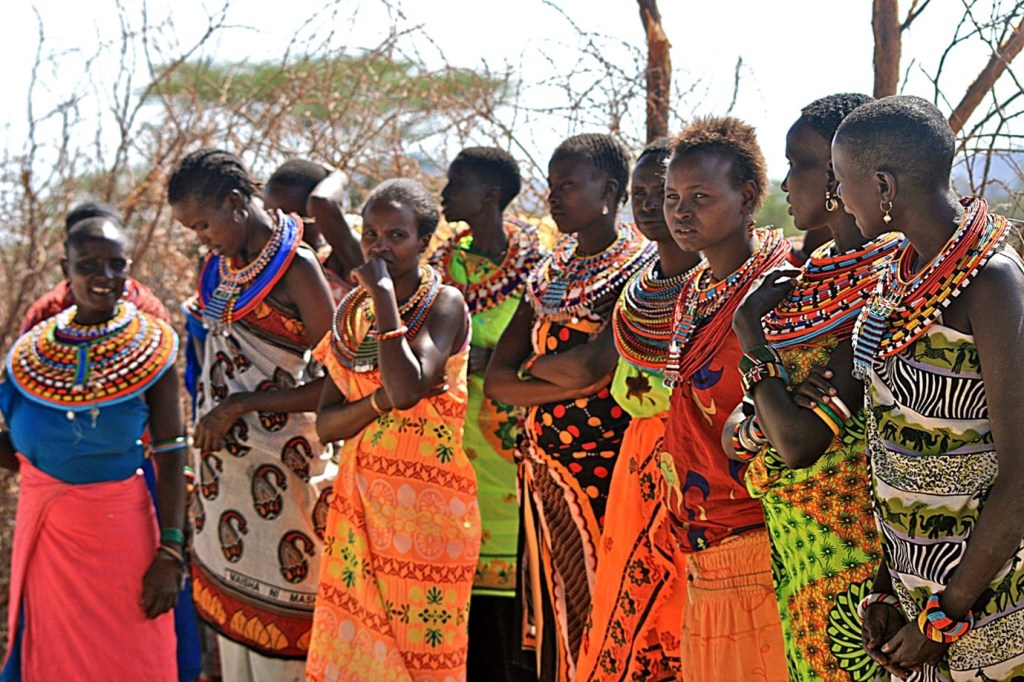
We come across many groups of women walking along the road, often carrying water. They are all in brightly coloured traditional dress with collars of beadwork. So statuesque and elegant. It’s tempting to try and sneak a shot but it doesn’t feel right. Nor does stopping and asking either. So it the end we just wave. I’ve taken some pics off the ‘net to show what they looked like – those colours really stand out against the dry scrub.
Finally we reach the small settlement of Ngurunit and the Lasamu campsite. Facilities are basic with a long drop and shower. It’s fenced off but you are still pretty much in the middle of things and on display. It does however have great views of the surrounding mountains.
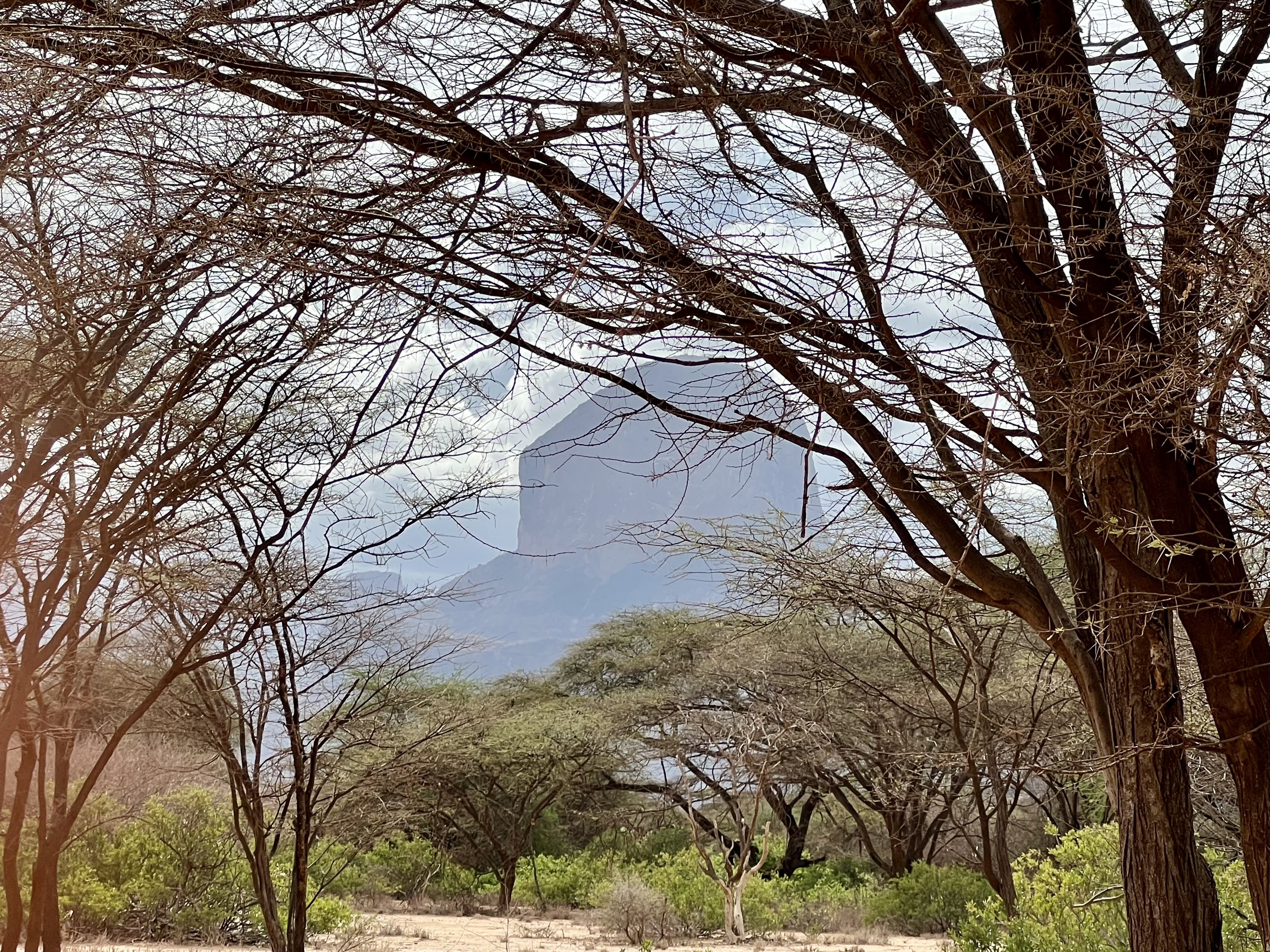
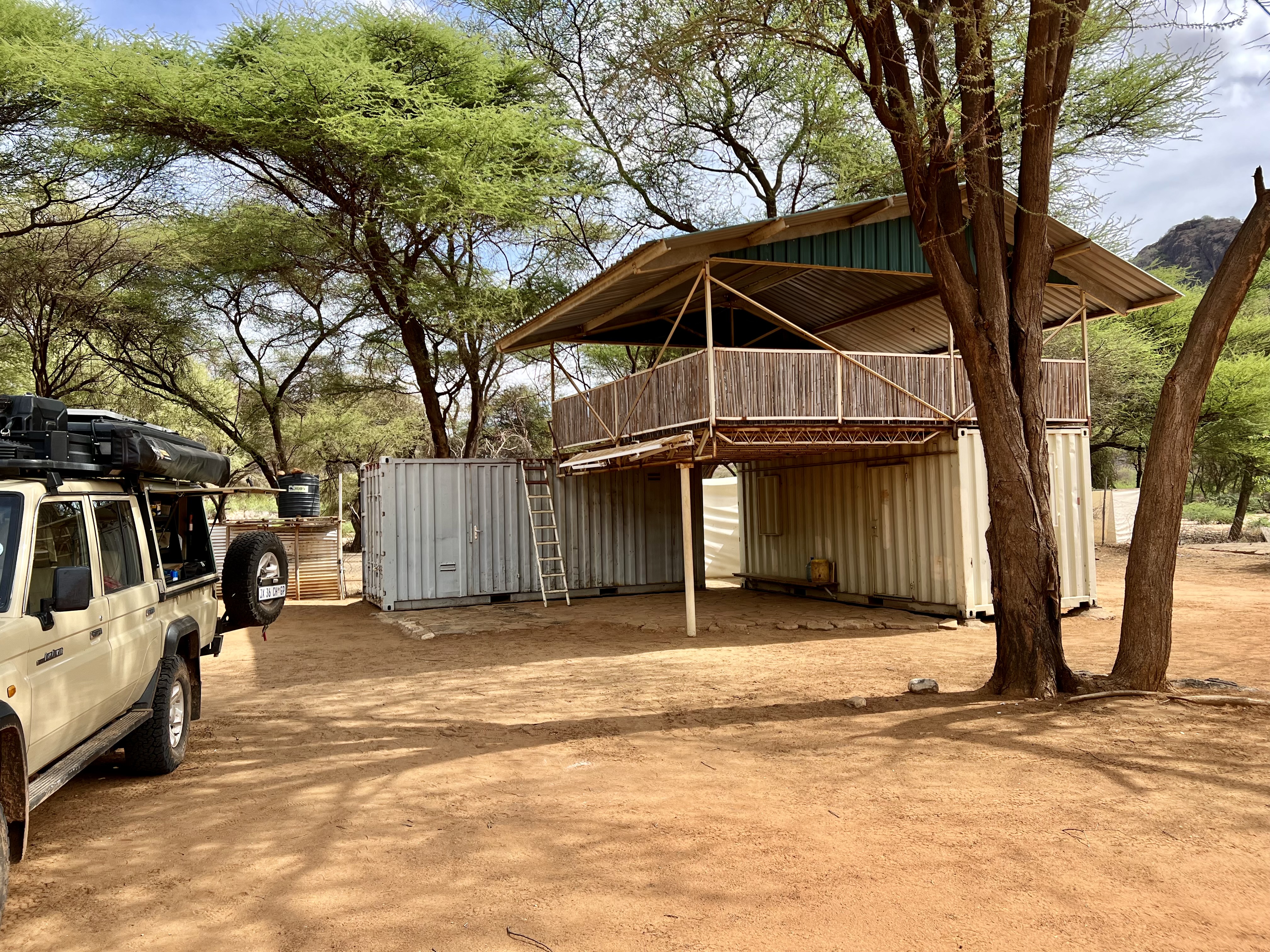
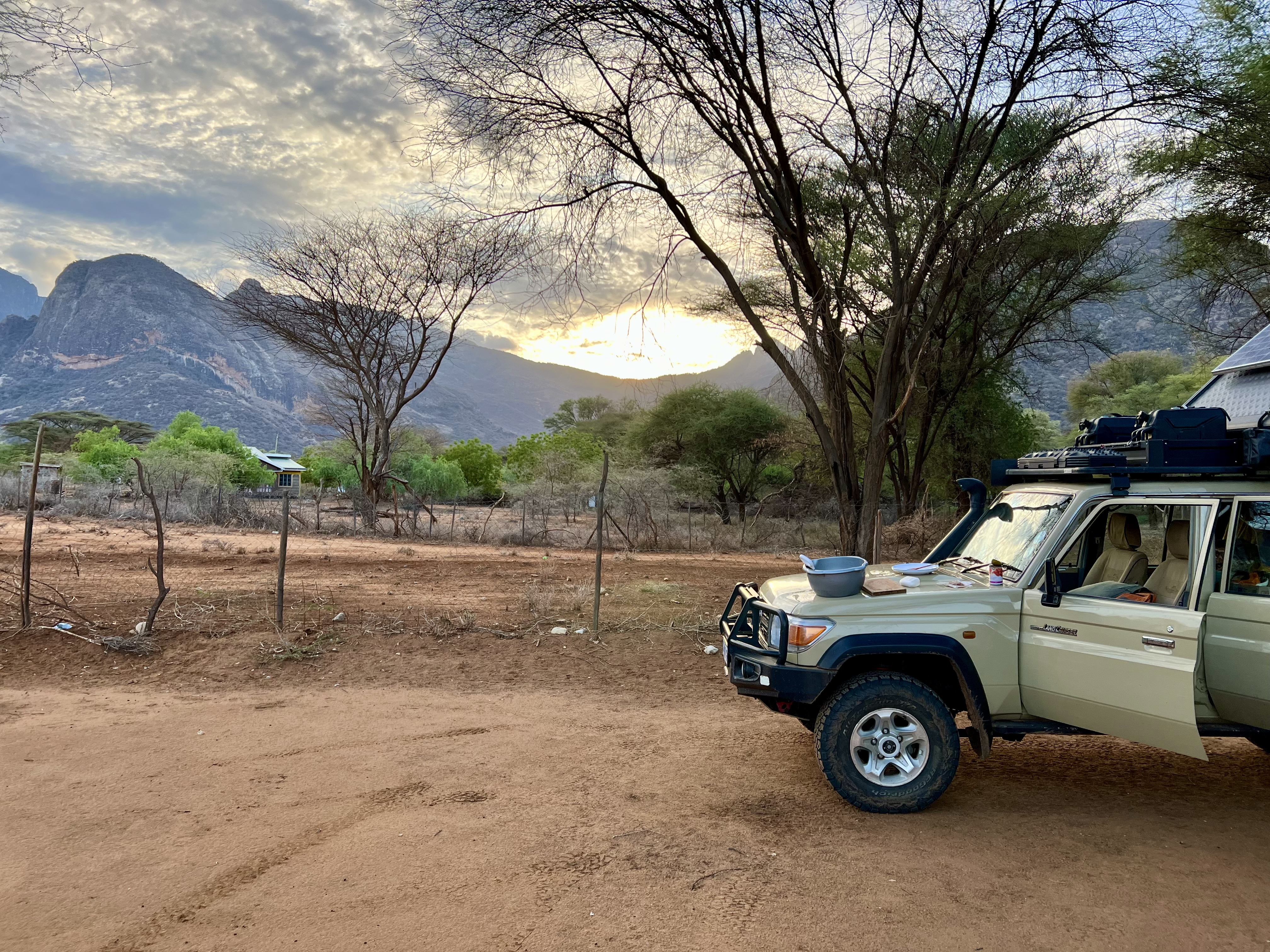
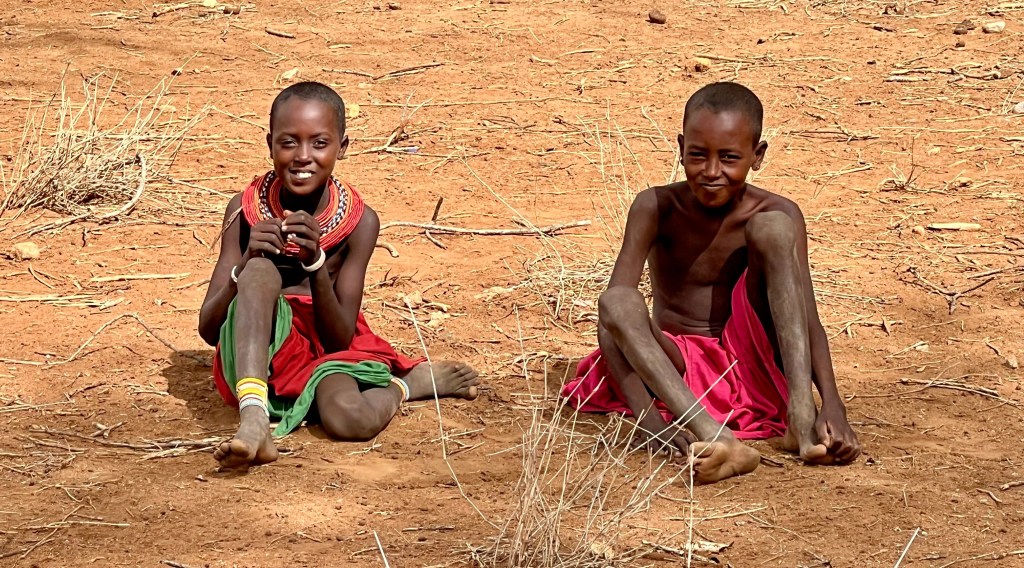
Two kids take up seats by the perimeter fence and watch our every move with fascination. I normally shy away from taking pictures of people but given that we provided hours of entertainment I thought it a fair trade to take a snap of these mates:
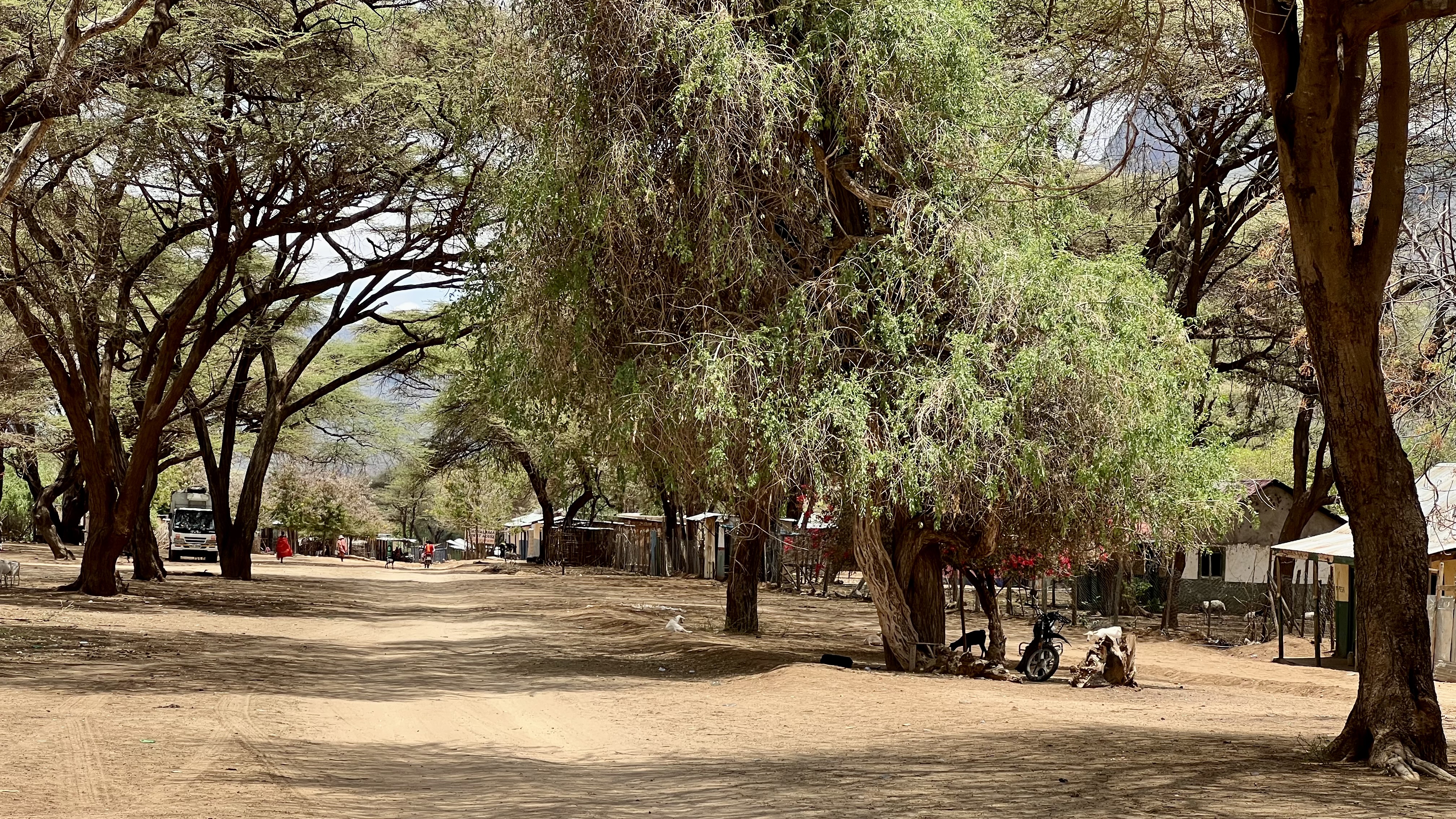
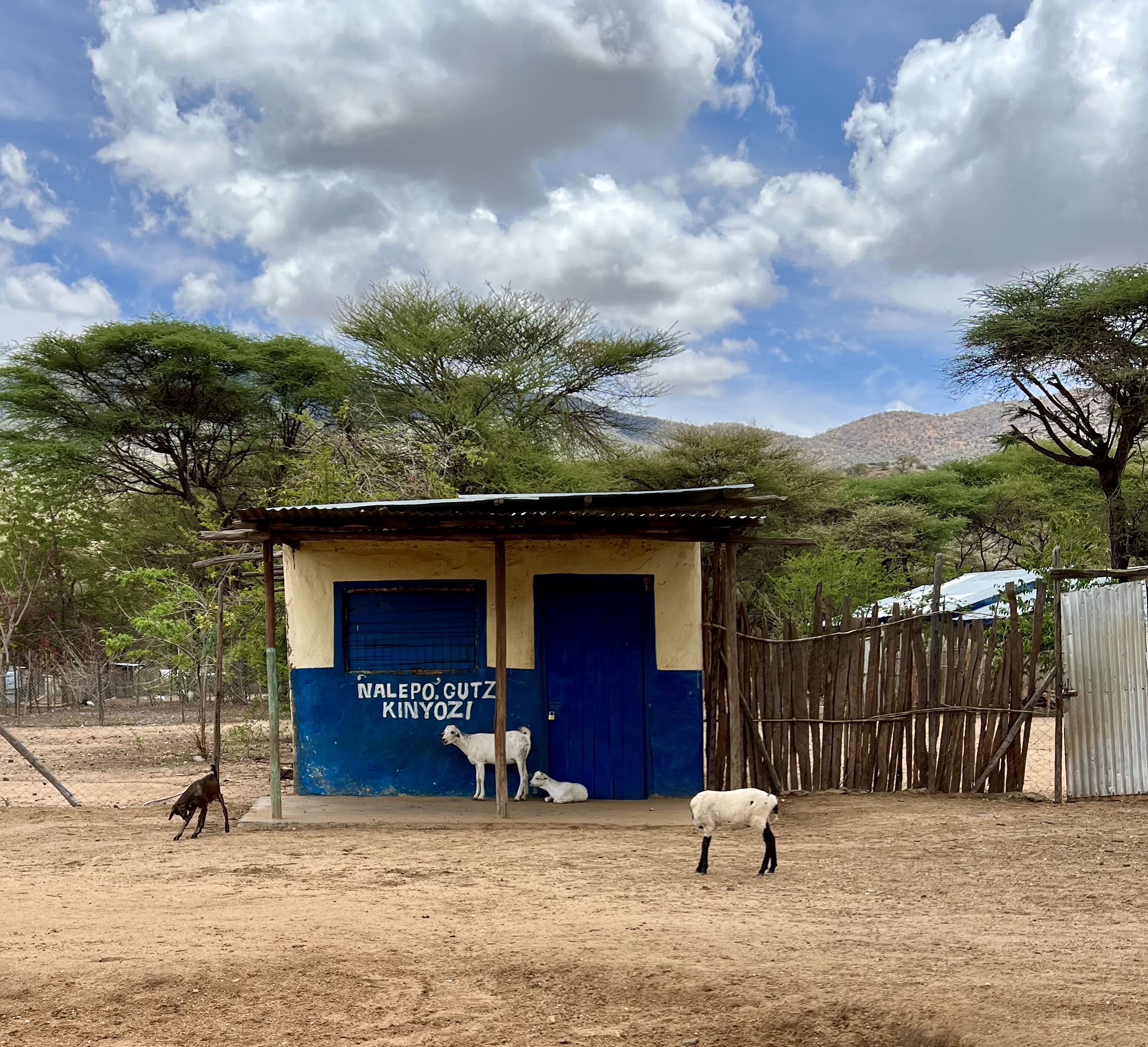
From Ngurunit we continue heading north west and on to South Horr. Now there is another name that conjures up all manner of overlanding day dreams. South Horr – one of the iconic stops on the (now practically impossible) Cape to Cairo overland route. And here we are – dropping down over a small pass and into the shady valley of South Horr.

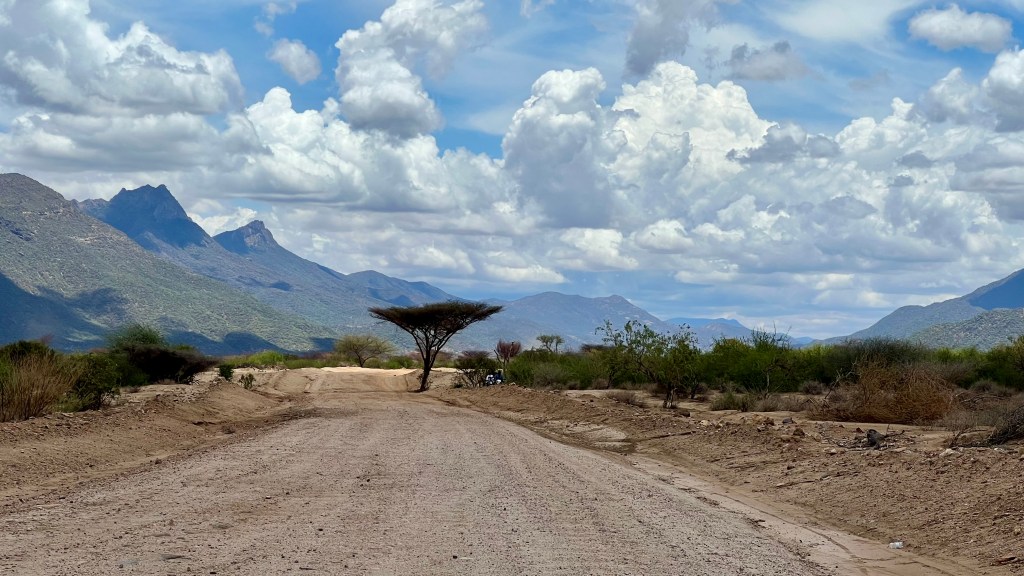
After South Horr we find ourselves driving through a wide valley, mountains on both sides, watching the storm clouds build up, downpours on the horizon.
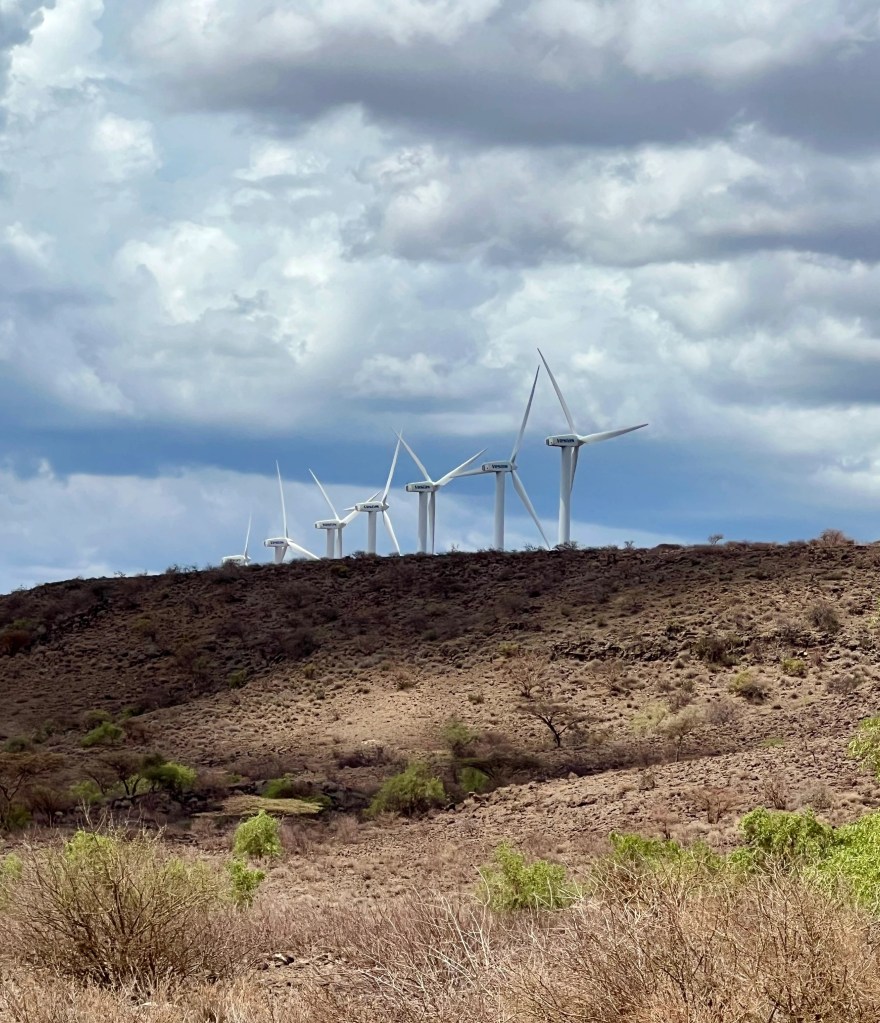
Next we are in among the wind turbines of the Lake Turkana Wind Power Project – it’s huge and very impressive:
And then, finally we reach Lake Turkana: a bright silvery turquoise, the northernmost of Kenya’s rift valley lakes and the largest alkaline lake it the world.
We pull over to take some pics and stretch our legs. I was last at lake Turkana in 1996, on a backpacker tour in a Unimog with my friends Sharon and Gwynn. We stopped and took some photos at this very point I think. It’s an obvious place to stop with a very photogenic tree. I WhatsApp them later and ask if they recognise the tree…Sharon sends back that pic from all those years ago– yep. Same Tree. Still here!
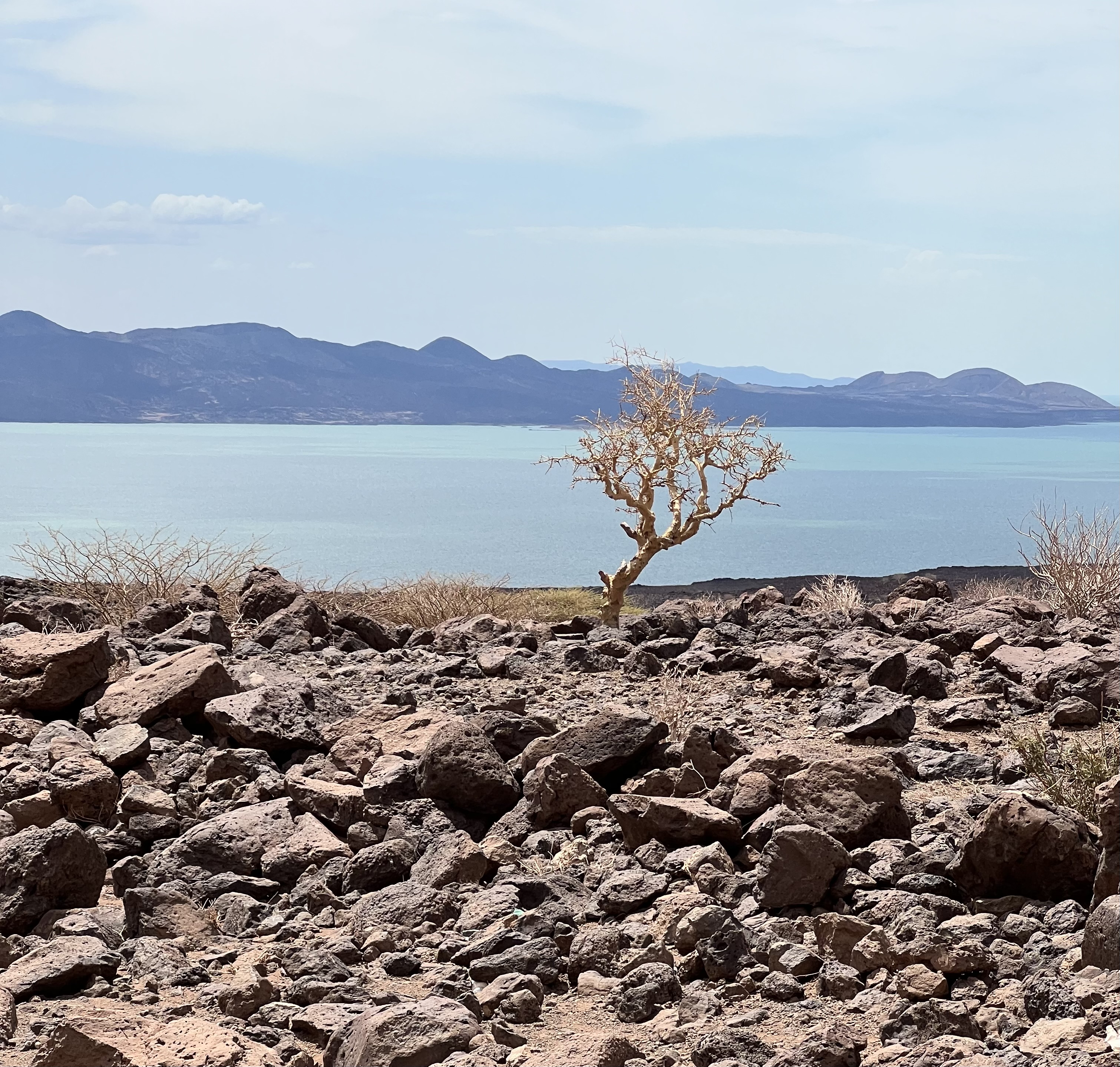

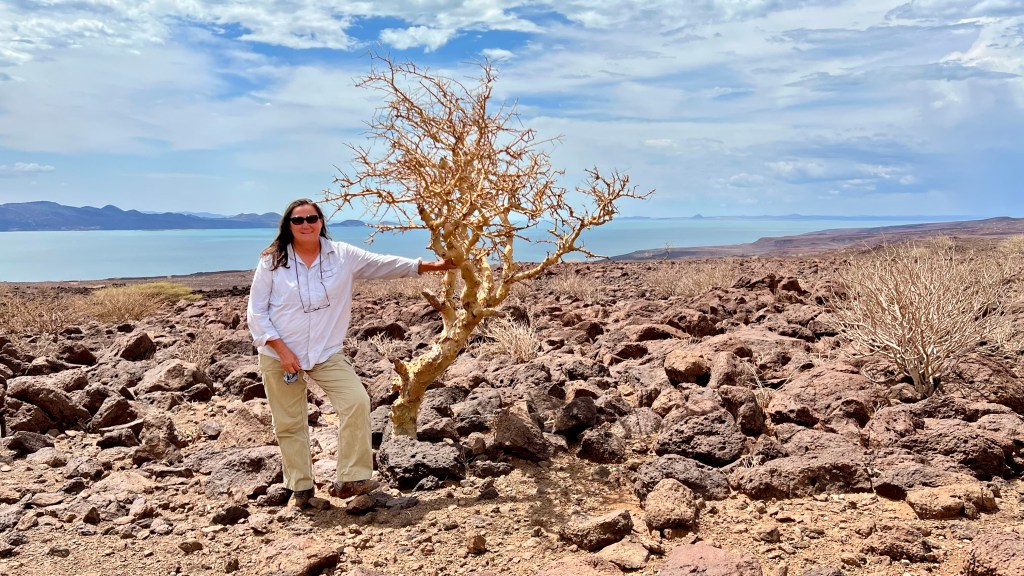
As the road drops down to the lakeshore the views are stunning and we stop and take a pic of the second most photographed tree in Turkana:

At the lakeshore we follow the road north and along to Loiyangalani, a settlement on the shore. It’s a sprawled out settlement, a mixture of brick and mortar buildings, mabati (corrugated iron) shacks as well as traditional round grass and reed nuts. There is loads of litter about and well, it’s a bit of a dump despite the beautiful lake.
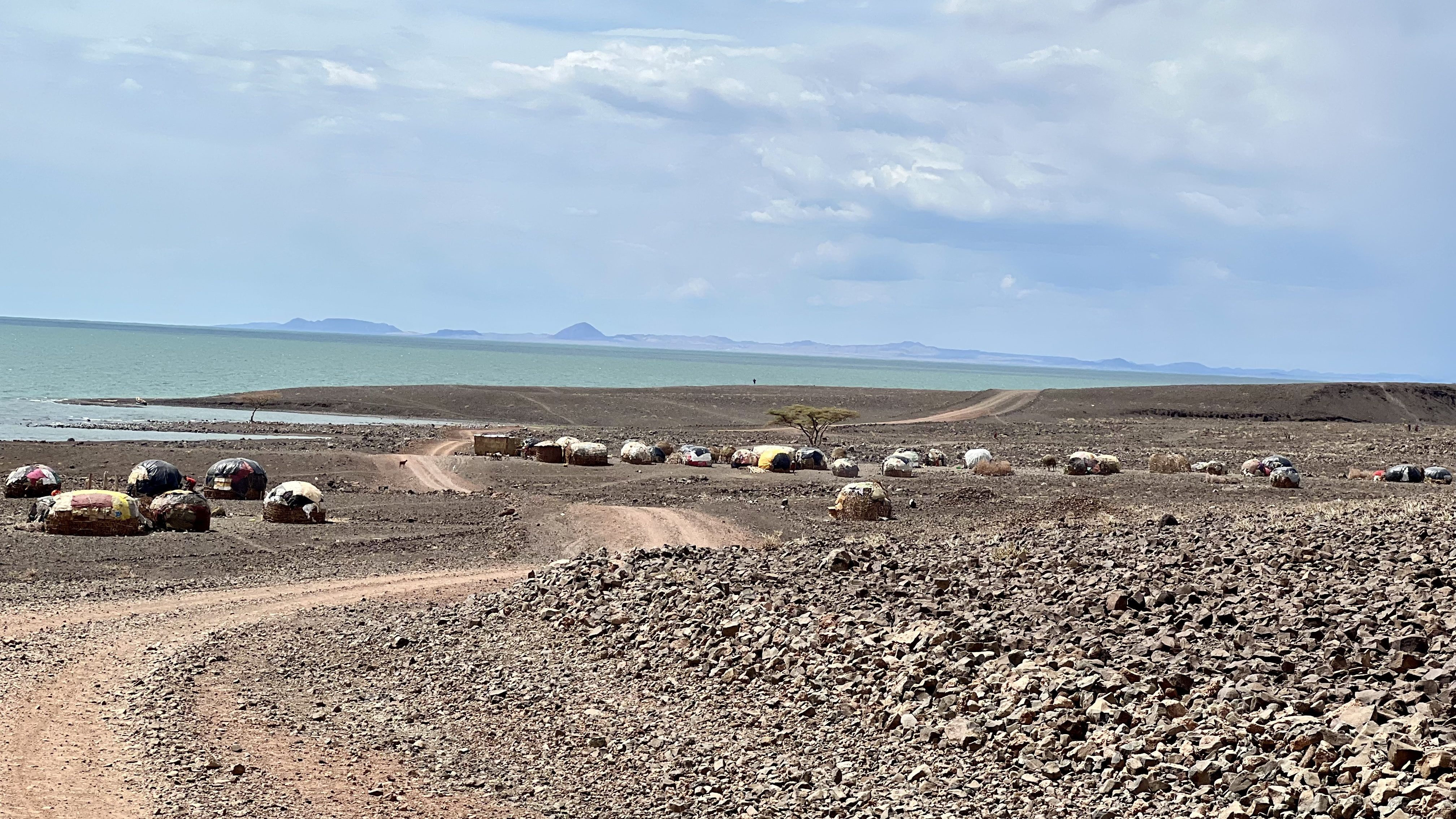
We make our way to the Palm Shade lodge and campsite to find it absolutely packed. We take a look around and they say they can fit us in for camping but I’m not sure where – they are hosting a conference of sorts and there are loads of delegates hanging about clutching Croxley books and frazzled staff trying to tidy and wash up from lunch.
We leave to see if we can find anywhere quieter. With the help of iOverlander and my notes we check out the nearby Oasis Lodge, but no camping and the lodge prices are outrageous. And the manager won’t budge on that (despite the place being completely empty). Pity – great view from the bar! We also checked out Malebo Resort (very run down) as well as the Desert Museum Hotel – the latter has a stunning location, perched on a hill overlooking the lake. But the hotel is closed as they have no water, and no possibility to camp either, and anyway there are a bunch of really shifty blokes hanging about and we just don’t feel comfortable there.
So in the end we end up back at Palm Shade where things have now quietened down a bit. We spend a chilled evening there – staff and manager very helpful and welcoming despite clearly having had a very long day.
Next stop Sibiloi National Park
NOTES FOR TRAVELLERS
- Samburu National Reserve: Park fees $70 ppd, camping $30 ppm, vehicle $10
- Also consider Buffalo Springs and Shaba
- NRT (Northern Rangelands Trust) website has good general info and links to various other community conservancies in the big north.
- Lasamu campsite, Ngurunit – detailed on iOverlander. We paid KSH 1500 each. Am sure you could get it for KSH1 000, I didn’t feel like haggling
- Palm Shade – detailed on iOverlander. Best on offer in Loiyangalani I reckon. Bar and restaurant too (we didn’t eat there but food looked good). Manager v helpful re directions etc. KSH 500 each
 Bonnievale to Burton Fleming
7 responses to “North to Samburu & Lake Turkana”
Makes wonderful reading, Dana and Deb! Happy travels xx
LikeLike
Thanks Neil – am determined to finish writing this up!
LikeLike
Yes please! You must!
LikeLike
I was so excited to see another post from your trip. I feel like a real armchair explorer. Please tell me there’s more?
xxx
LikeLike
Thanks Kyra – yes lots to get through (thank goodness for date stamps on photos!)
LikeLike
So beautifully evocative, Dana. Love the no-nonsense Webster approach to dealing with officialdom! And wonderful to see what’s changed (and what hasn’t) in Samburu and Turkana. No evidence of Burton & Speke?
LikeLike
Thanks Sharona
LikeLike