3 – 6 April 2023
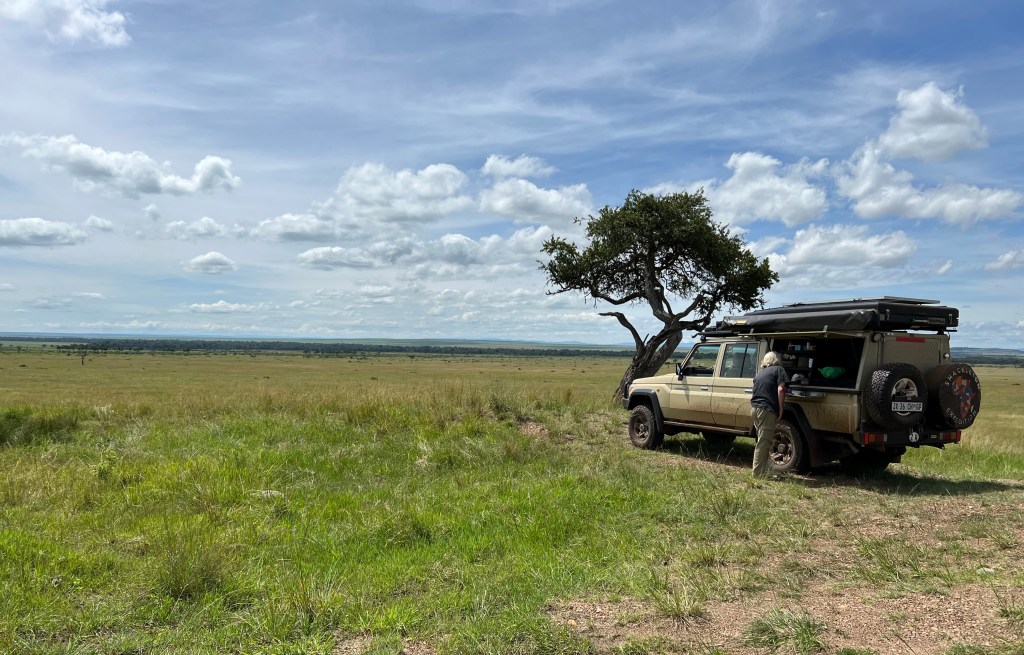
The rains are starting in earnest now, but despite this we resolve to treat ourselves to one of Africa’s most iconic safari destinations: the Maasai Mara. We can’t wait.
All stocked up, water tank full, off we set. Chris gives us directions for the best way out of Nairobi, walking us through the landmarks, where to turn etc. using google earth / street view on his PC – quite a nifty way of explaining things. The Mara is an easy day’s drive from Nairobi, tar all the way.
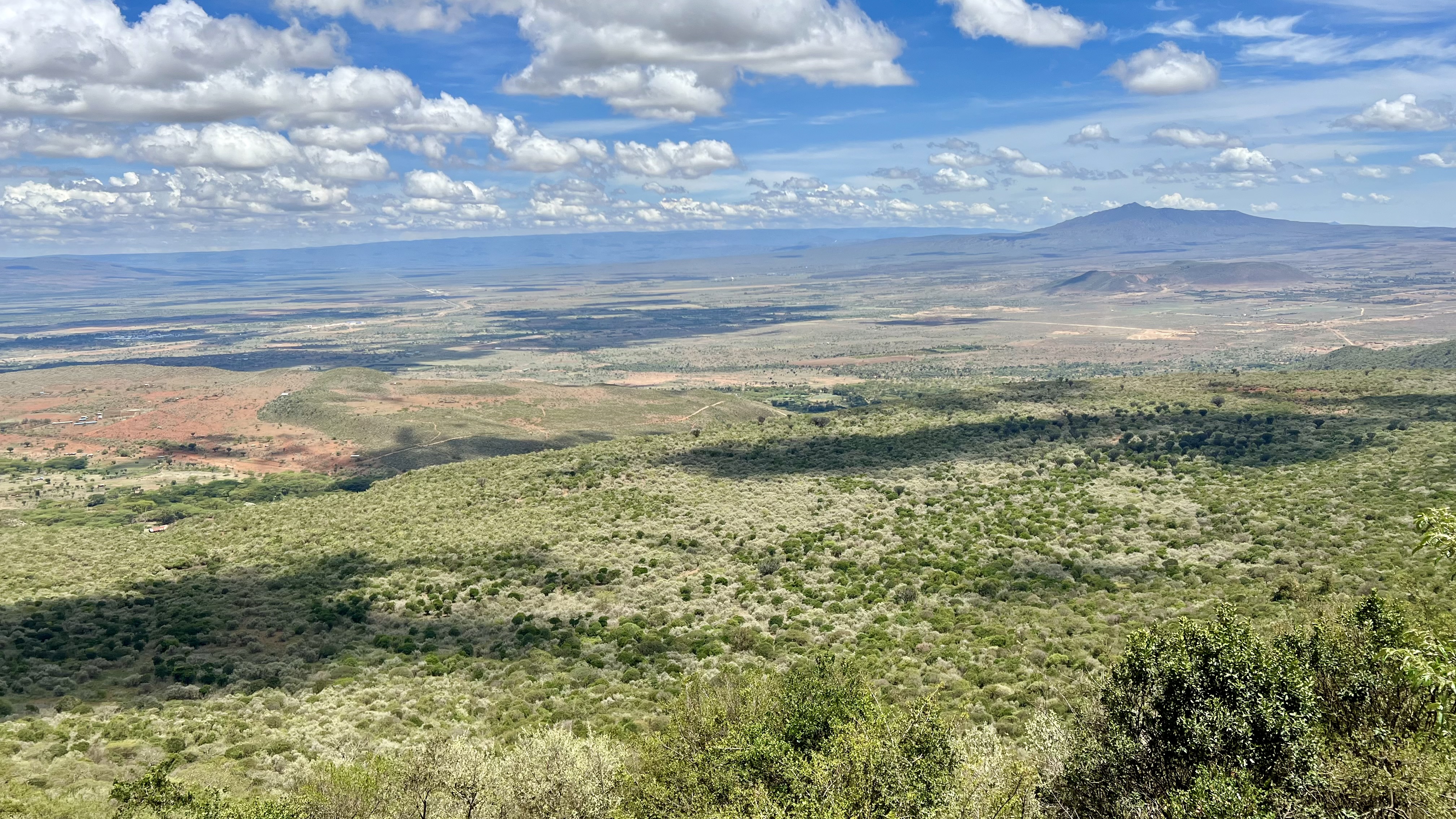
Once out of the city it’s a relaxing drive, a couple of showers but things clear up quickly. We reach the edge of the escarpment and pull off to take a few pics, Narok county spread before us.
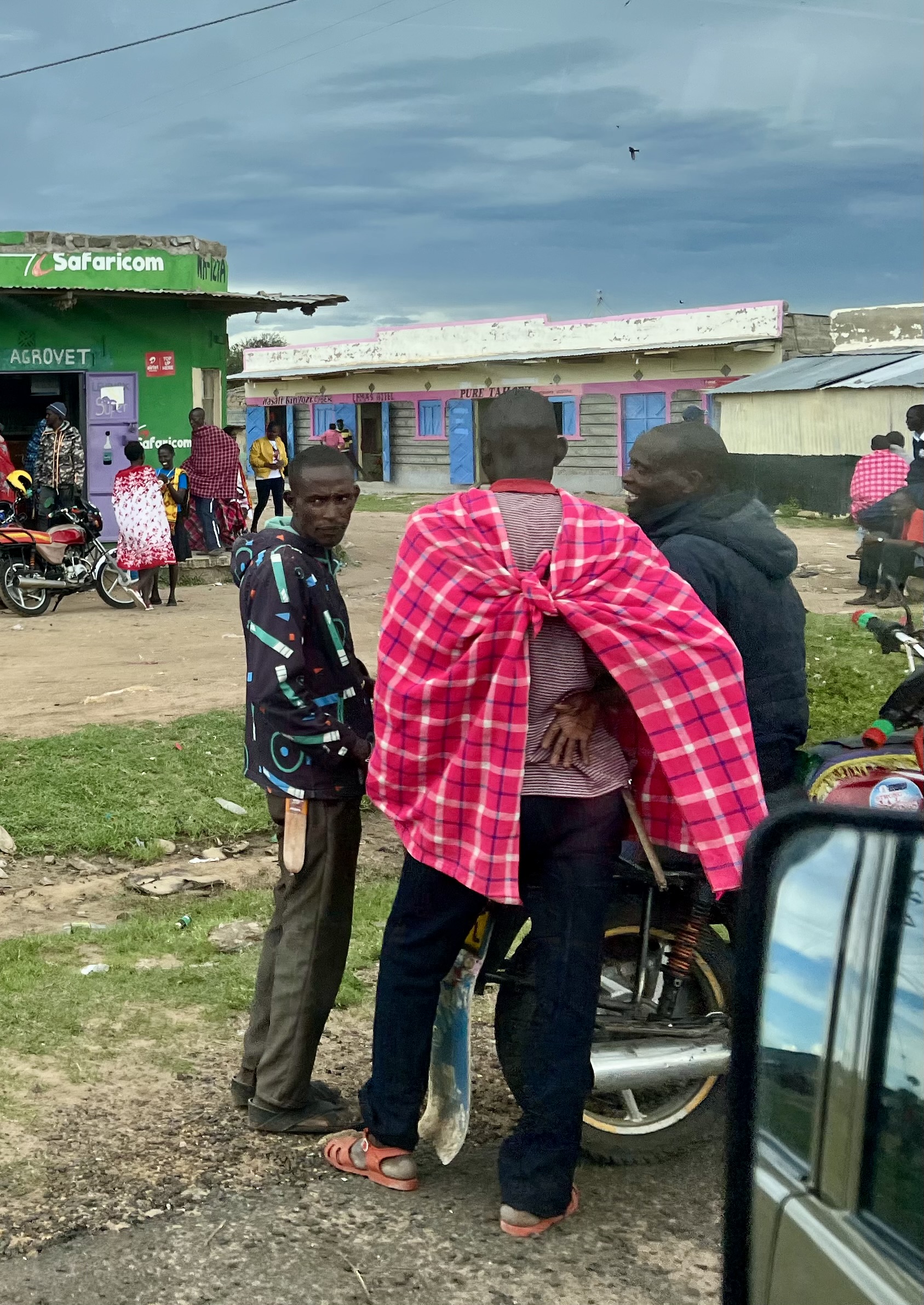
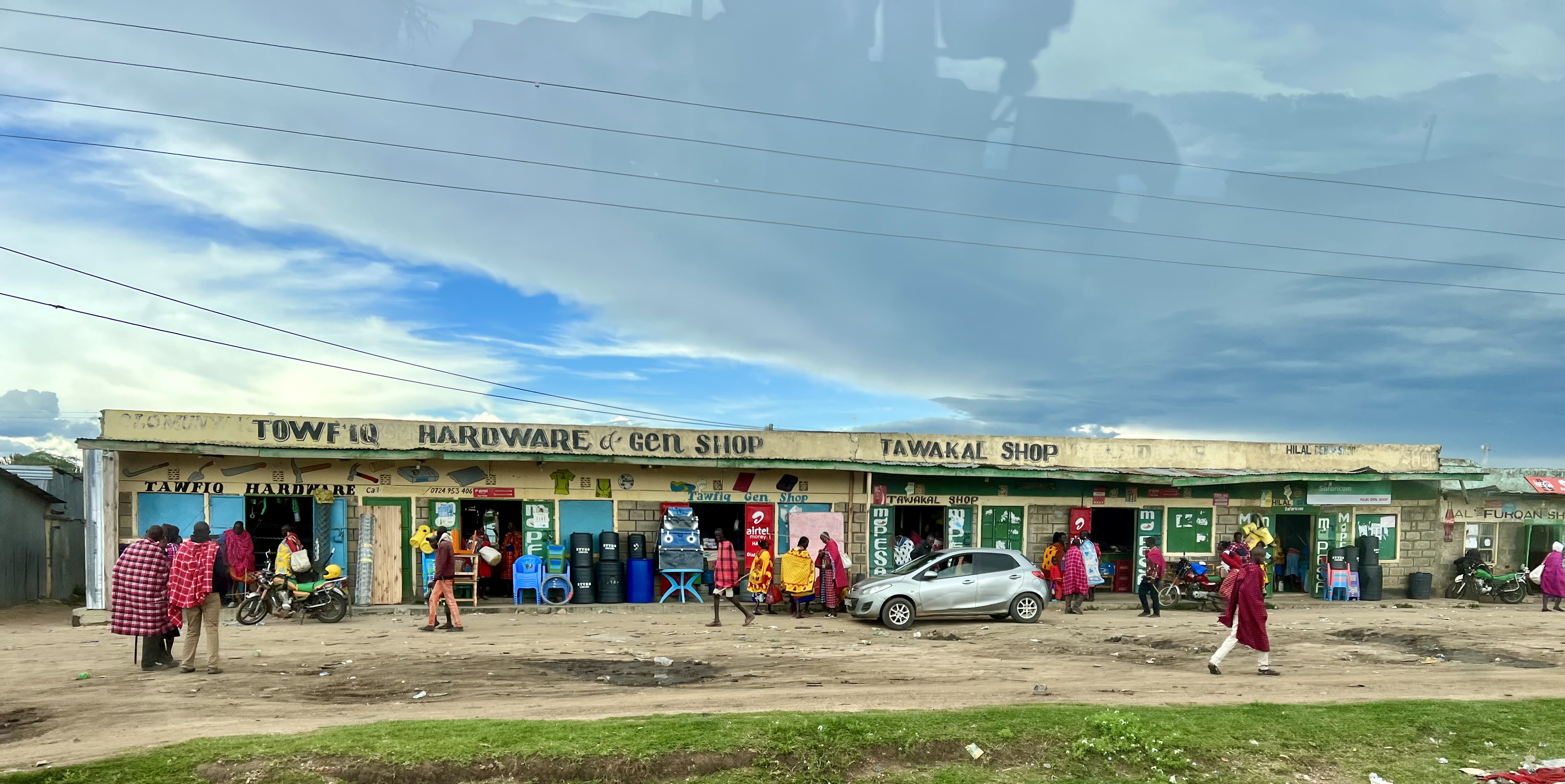
As we lose altitude things warm up a bit, but still the odd shower. Deb’s driving and I’m lost in my own thoughts, taking in the passing sights. Many Maasai men are wearing brightly coloured shukas and the colours stand out beautifully against the dark clouds.
We enter the Maasai Mara Reserve at Sekenani gate, but we don’t do any payments or formalities here – we are headed to the north west corner of the reserve to an area called the Mara Triangle. It is part of the reserve but falls under different management. Whilst the rest of the reserve is government (county) run, the Triangle is managed by the Mara Conservancy, a private-public not for profit initiative. The board pulls in all stakeholders, from local Maasai communities, government, private sector specialists in conservation and tourism, all to better manage the area and its relationship with the surrounding communities. More and more African countries are embracing similar public / private initiatives, but Kenya seems to do it a lot, and well.
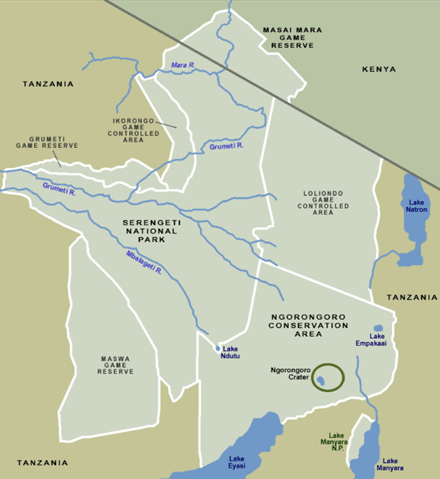
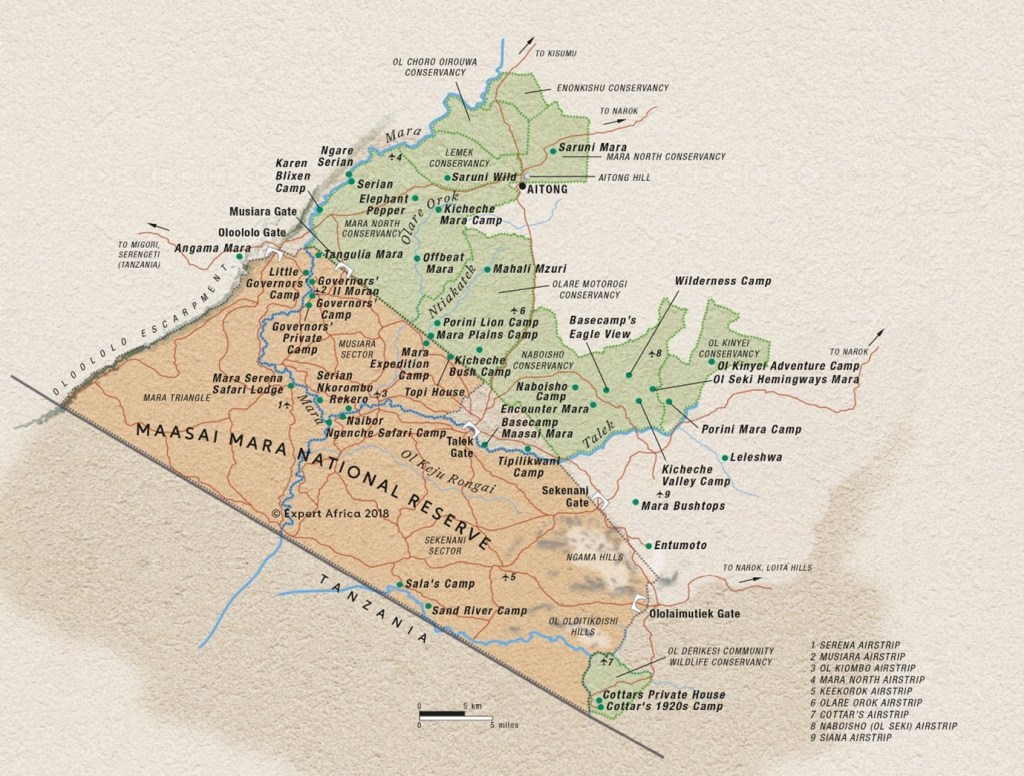
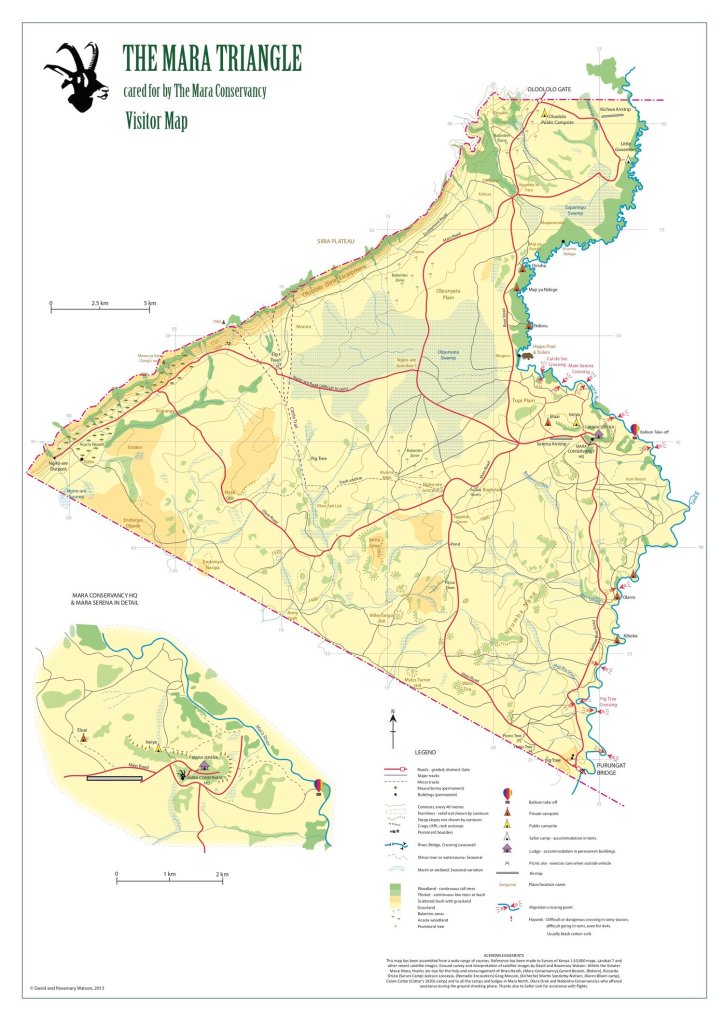
Whilst the Mara Triangle is a relatively small area, it is part of a much larger wildlife and conservation area: the greater Maasai Mara reserve as well as many adjoining private conservancies in Kenya, and then the Serengeti and Ngorongoro conservation area as well as many other buffer reserves in adjoining Tanzania. See map below for context and position of the Mara Triangle in all of this (I presume it is called the Mara Triangle because of its roughly triangular shape, bordered by the Oloololo escarpment to the west, the Mara river to the east and the Tanzania border to the south).
Patchwork of private conservancies adjoining the Maasai Mara on the Kenyan side:
When most of us think of the Maasai Mara, we think of the migration and dramatic shots of wildebeest crossing the Mara river (well certainly I do / did). Many of those famous crossing points are in the Mara Triangle. But, in fact, the migration doesn’t just happen here and its not a once off event. It carries on all year, as the herds move to follow the rains and grazing in one big clockwise circle. At this time of year (early April) the herds are not here in the Mara. They are most likely to be in the southern and western Serengeti. For those wanting to see the migration in the Mara then any time from June / July and into November would be the time to visit. But it varies from year to year and is dependent on rain patterns – and we all know how variable that is these days.
However, the Mara is not just about the migration and there is a lot of permanent game, not to mention the stunning landscapes. Another advantage of travelling here outside of peak season is that it is way less crowded. For a lot of the time it feels like we have the place to ourselves.
Entering the Mara is exhilarating, and with so much green. It feels luxurious compared to all the dry and arid parks we’ve visited in Kenya to date. We come across a huge herd of buffalo on our way in and we stop to let them cross the road. We get a good sense of how long and thick the grass is. Spotting could be tricky (!)


We enter the Mara Triangle at Purungat Bridge where we book in and ask if we can camp at Eluai, one of the public campsites in the Triangle. The Mara Conservancy staff are friendly and efficient and in no time we are off to Eluai.

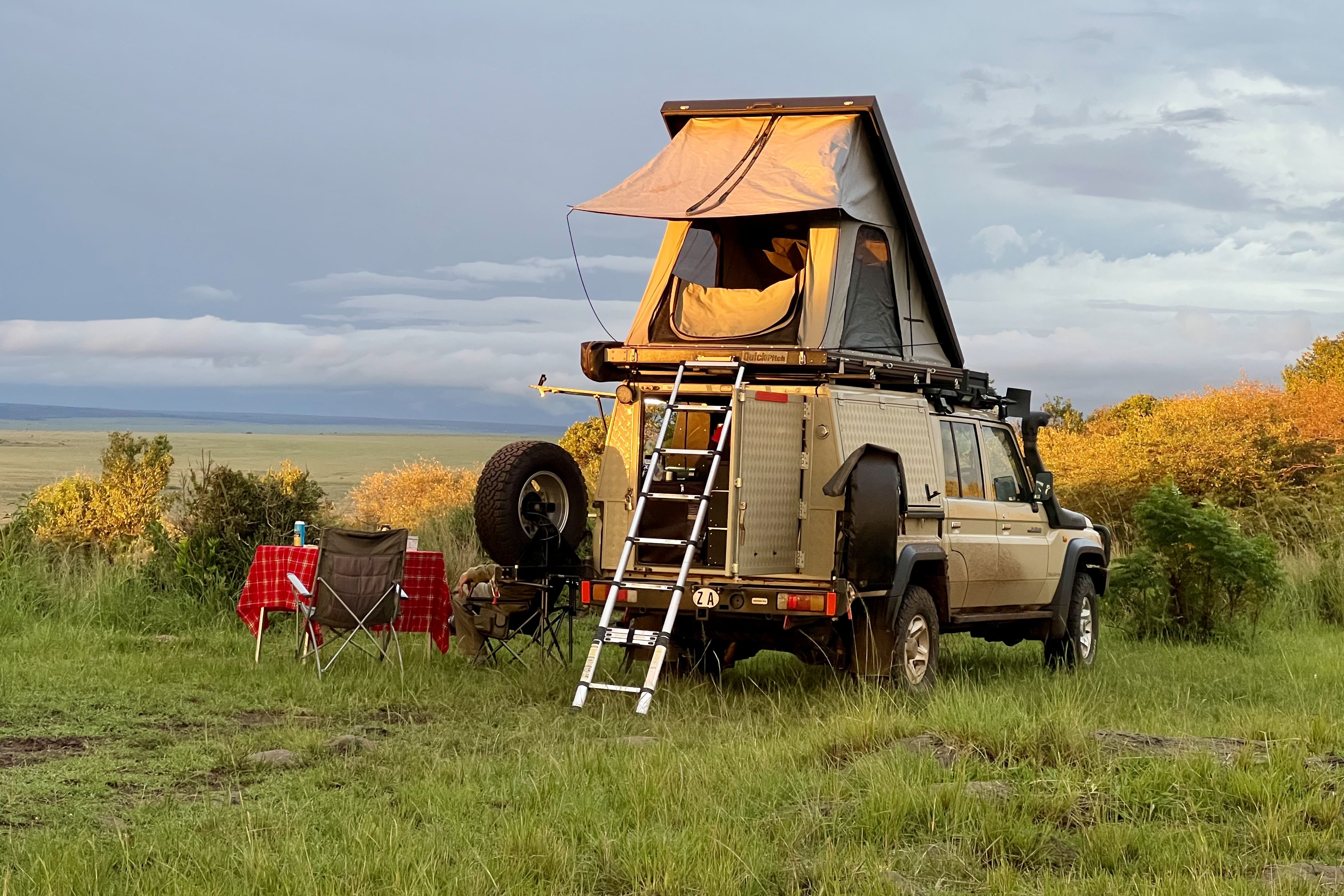
When we get to Eluai we have it to ourselves and snag a great pitch on the edge of the ridge looking out over the Mara river snaking below:
Some time later we are joined by three young men in a Prado. They come over to say hello and then start setting up some ways away, careful not to intrude on ‘our’ space. They have ground tents but no table or chairs and it all looks a bit chaotic but they are cheerful and clearly having fun. Deb and I start debating : where do you think they are from? Excellent English but can’t place the soft accent. Dunno says Deb, but definitely in the church or something, I mean look at the aesthete. I know immediately which of the three she is referring to. The word fits exactly, studied appearance, soft spoken manner. I bet you he’s a priest (Deb’s lapsed Catholic radar going into overdrive).
We clearly have the best spot so we invite them to join us for a beer overlooking the valley for sundowners. We have two spare chairs I say – you’ll have to toss a coin. The aesthete (as we dub him), laughs and says don’t worry he’ll bring a rock. Which he does!
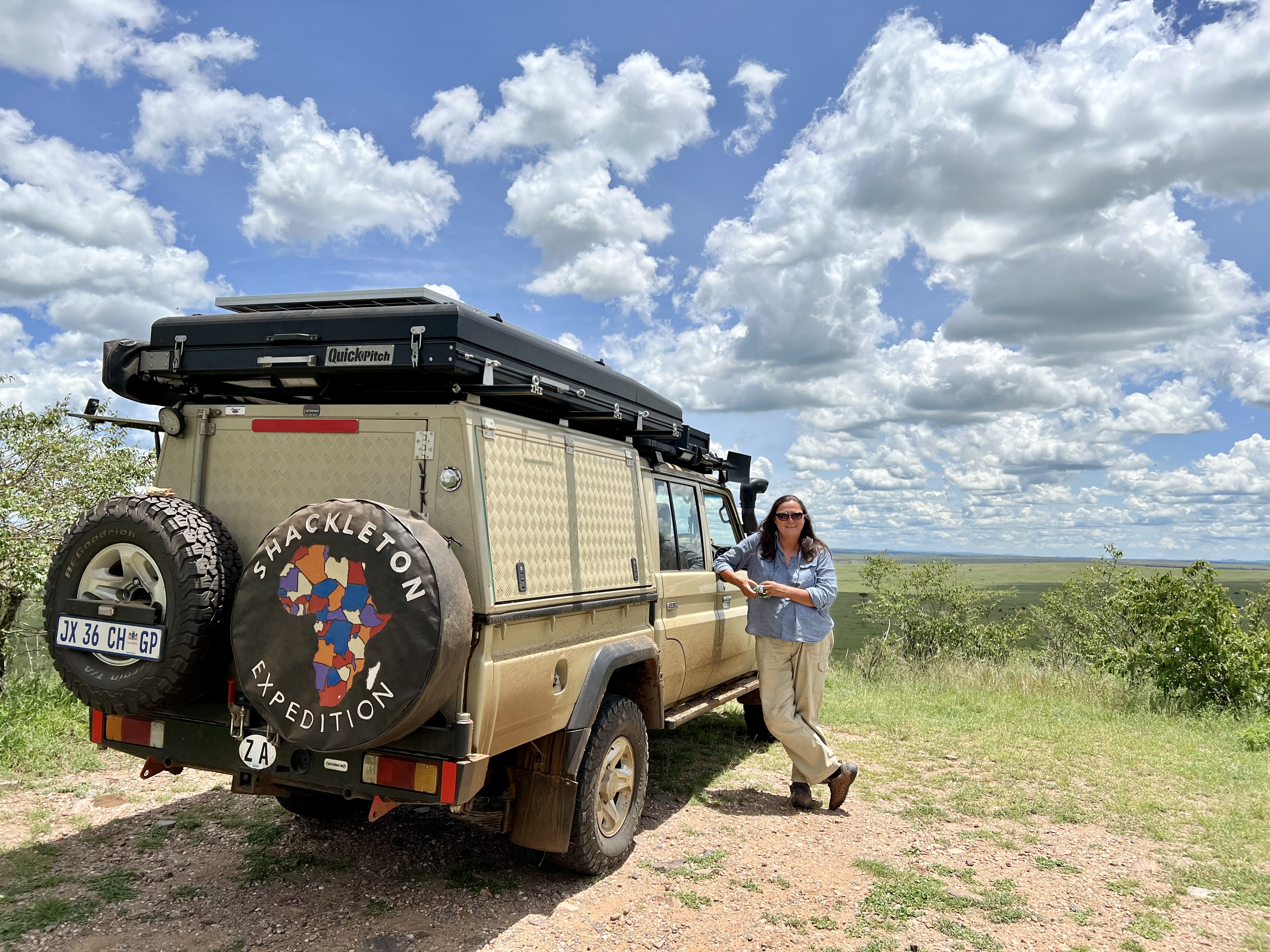
Turns out they are Spanish, from Santiago. Theology students (Deb catches my eye – I told you) Our aesthete is resident in Nairobi, studying here and his mates have come over to visit. So they have rented a vehicle and borrowed tents and a few bits and pieces of camping stuff and are here for safari and then off to climb a mountain (never gathered which one) before flying back. We do another Shackleton show and tell. Anyway it was good to socialize for a bit and share a beer (or water in the case of our rock hauling aesthete, it being the week before Easter. Holy Week).
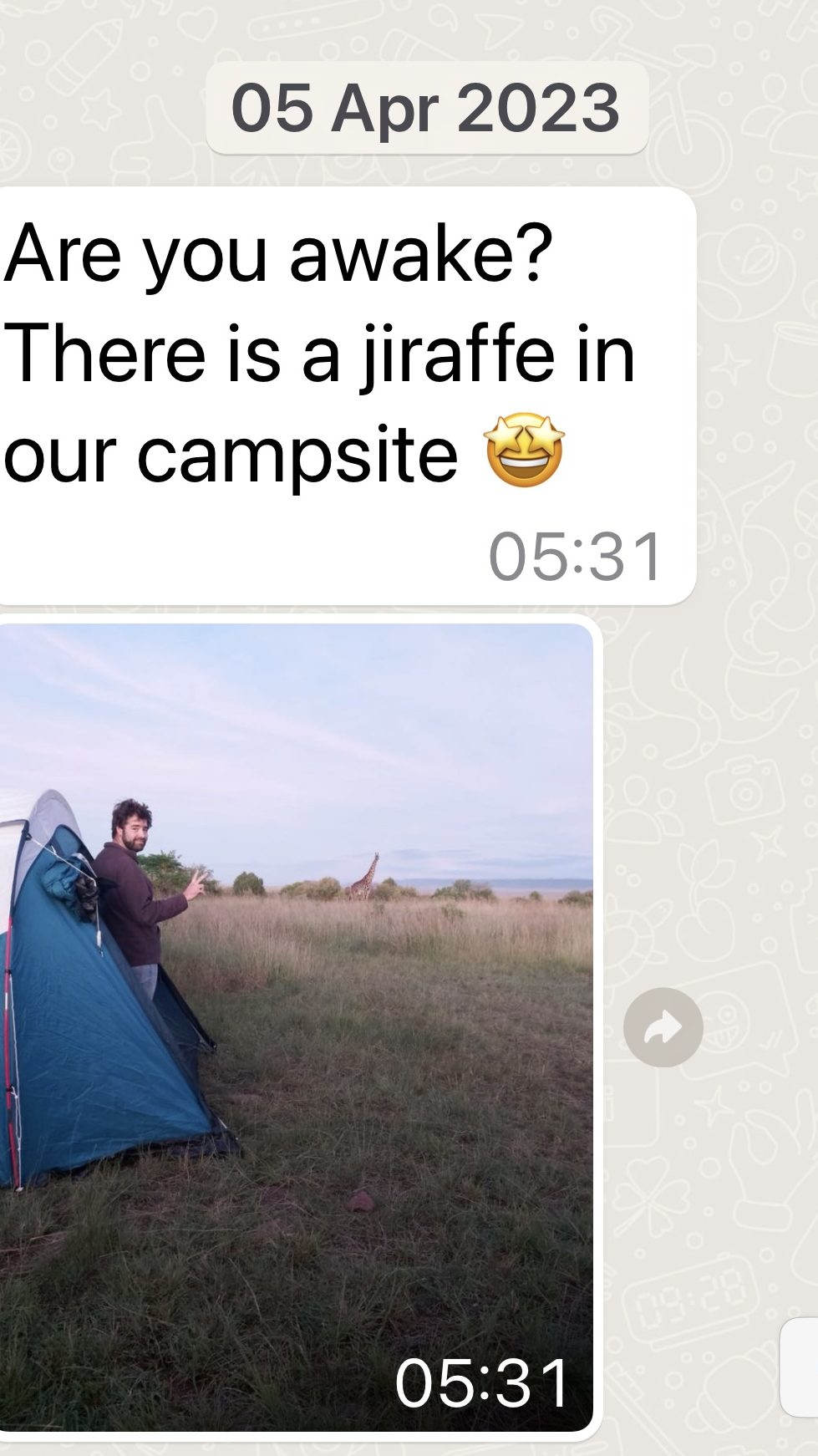
It starts to drizzle a bit later so we turn in early. Lekker snug and dry in our tent. It’s a wonderful feeling. At some point in the early hours I wake up. I need to pee and lie there trying to ignore it. No such luck. Ag. This is one of the downsides of a roof top tent (and aging). Anyway I get up, unzipping the tent door (is there anything louder than a tent zip in the middle of the night?). Sitting on the edge of the tent, I look out. Most of the clouds have cleared and the starlight is amazing. Standing about 10m away, eyelashes blinking, is a really tall giraffe. Standing stock still. Watching me.
I sit it there for what seems like ages, watching it. It feels almost magical, hyper real. Eventually I really do need to move. I’m sure it will scarper as soon as I start down the ladder but it doesn’t budge. It just stands there blinking, and watches me when I make my way up the ladder again. A year and a half later and the image still sticks with me.
When we get up in the morning the giraffe has moved away a bit but it’s still in the campsite – much to the thrill of our fellow campers. I guess one good thing about sharing a site is you get WhatsApps like these:
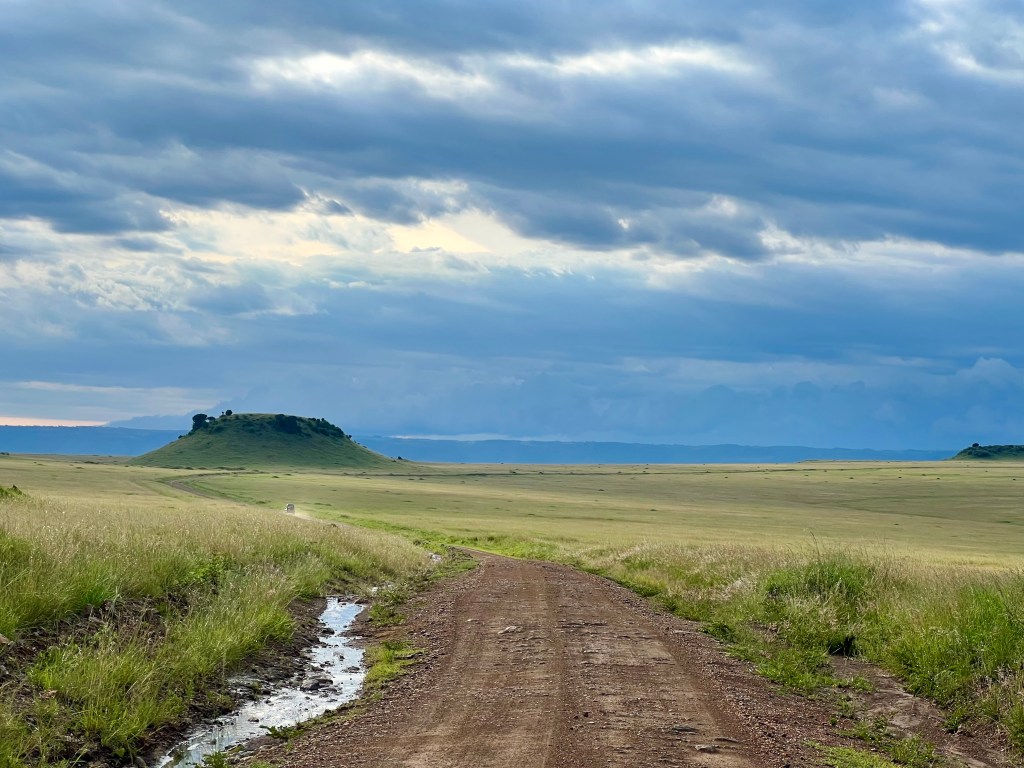
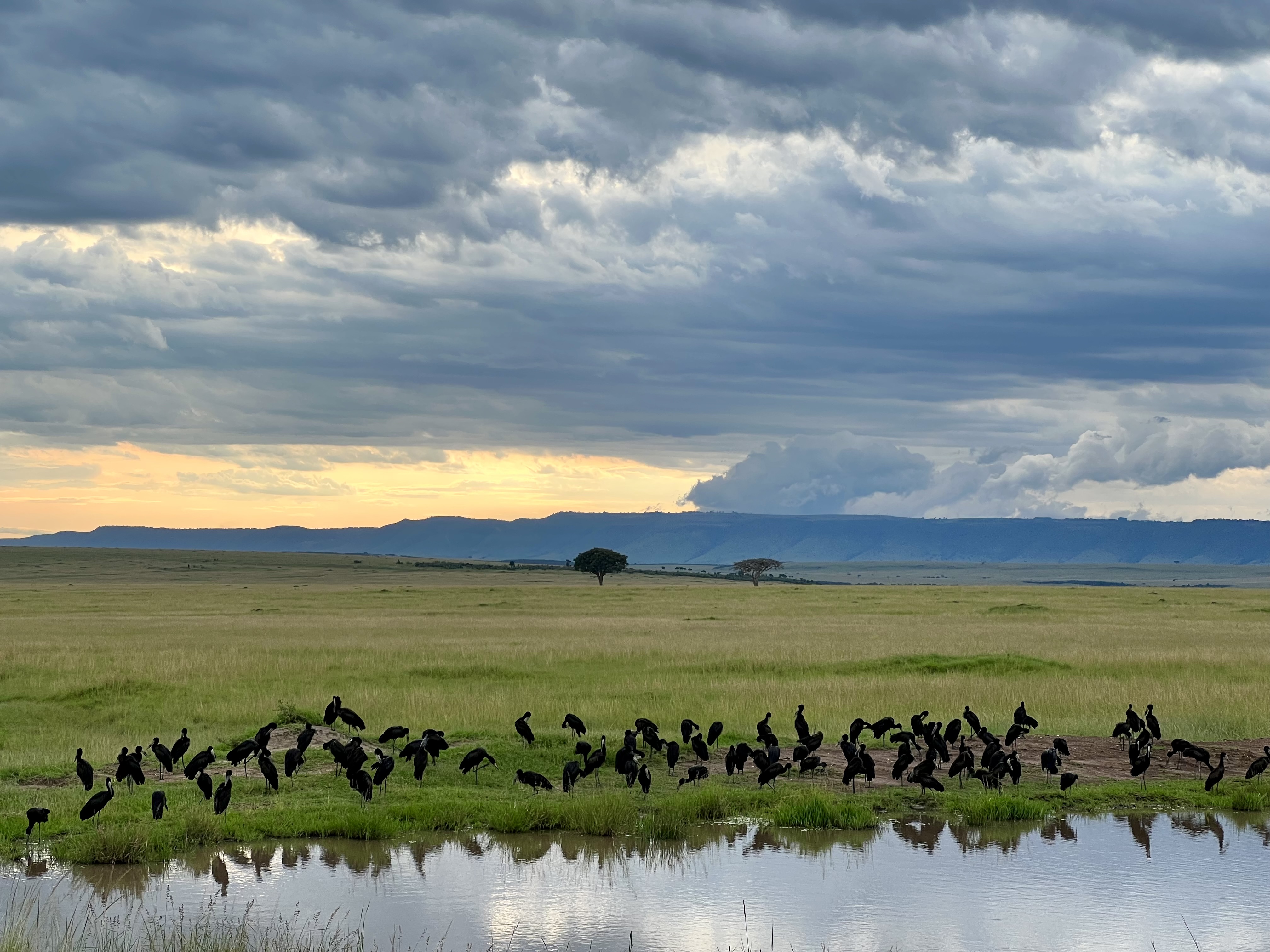
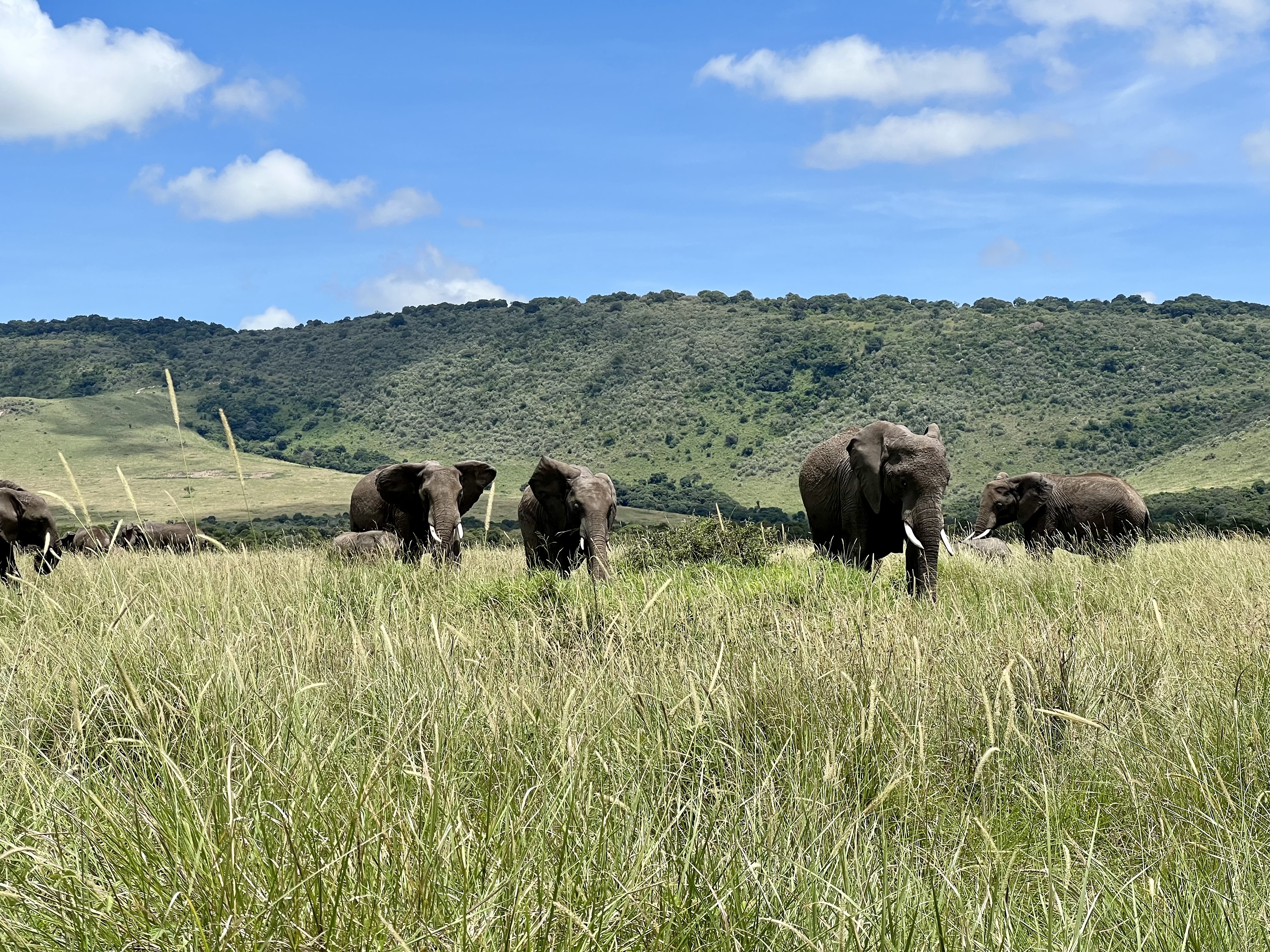
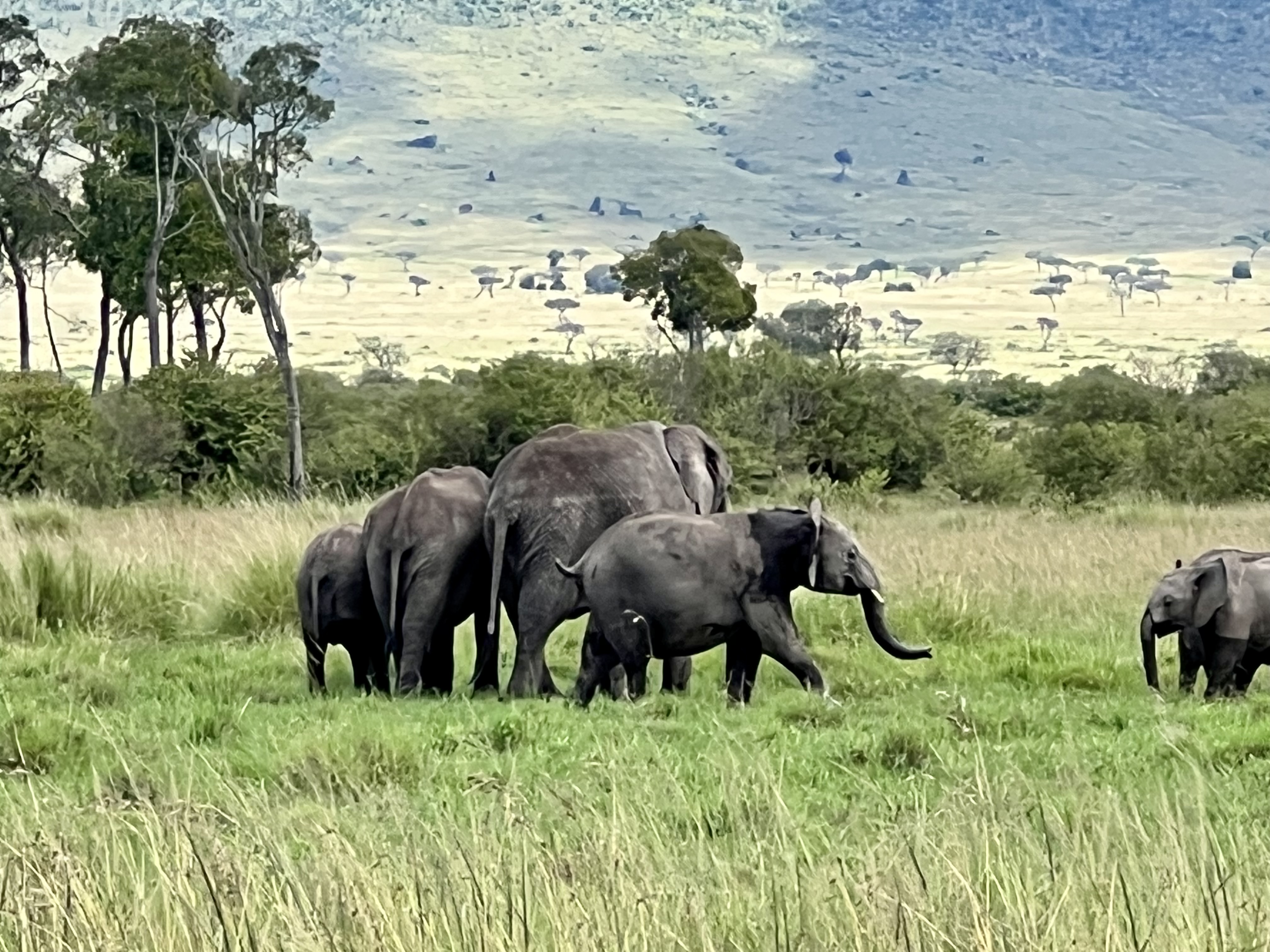
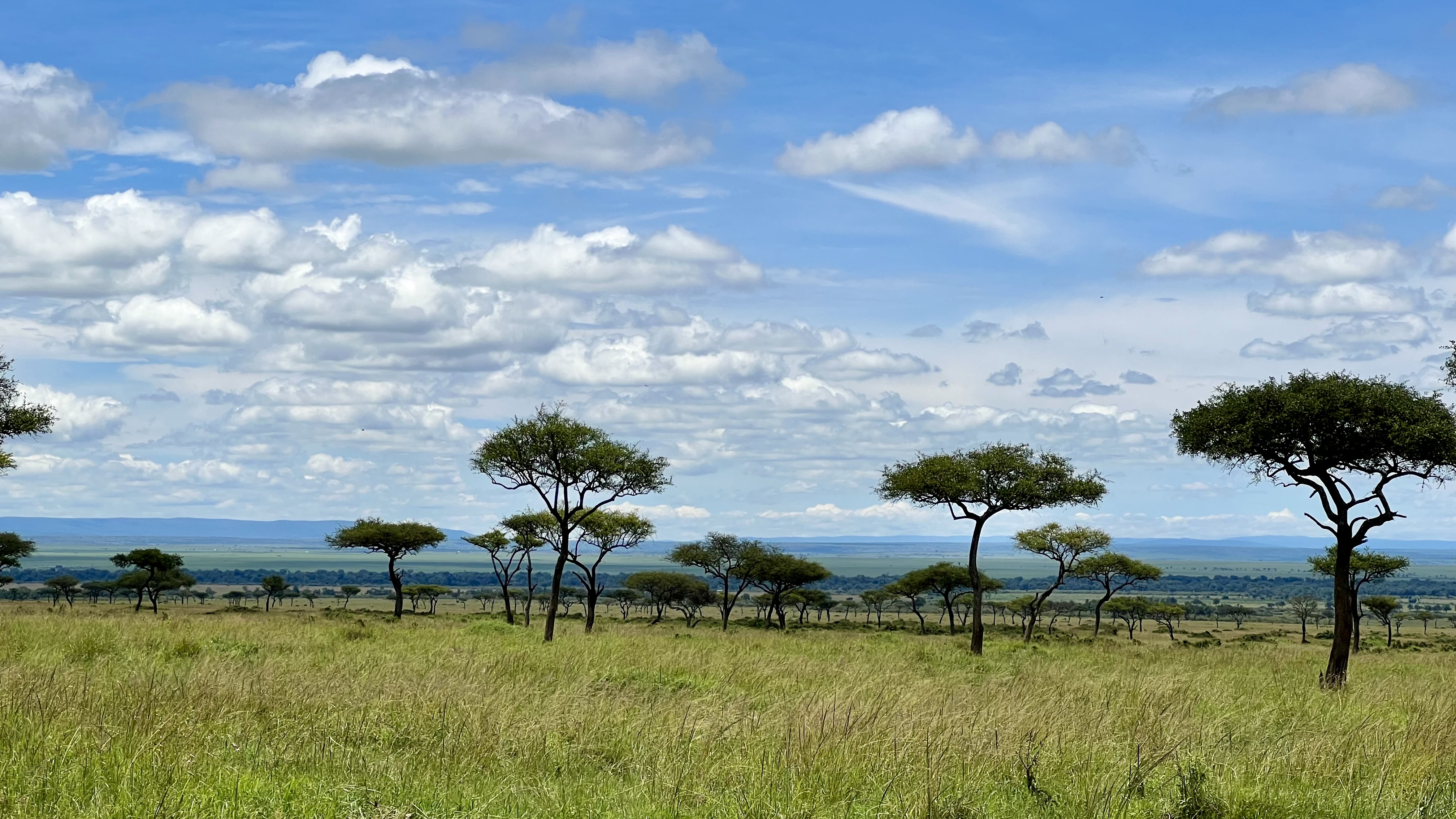
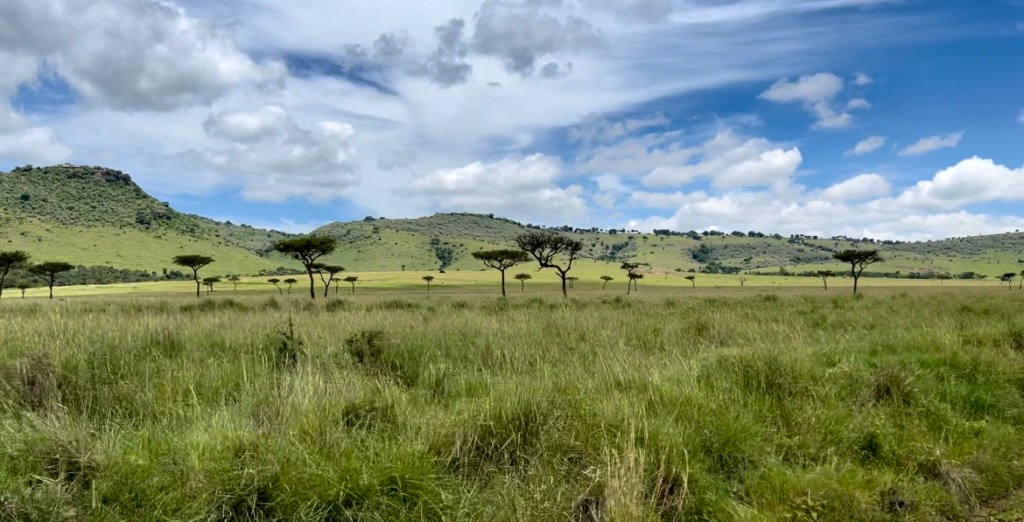
Our days in the Mara are spent game driving and enjoying the scenery. It really is spectacular.
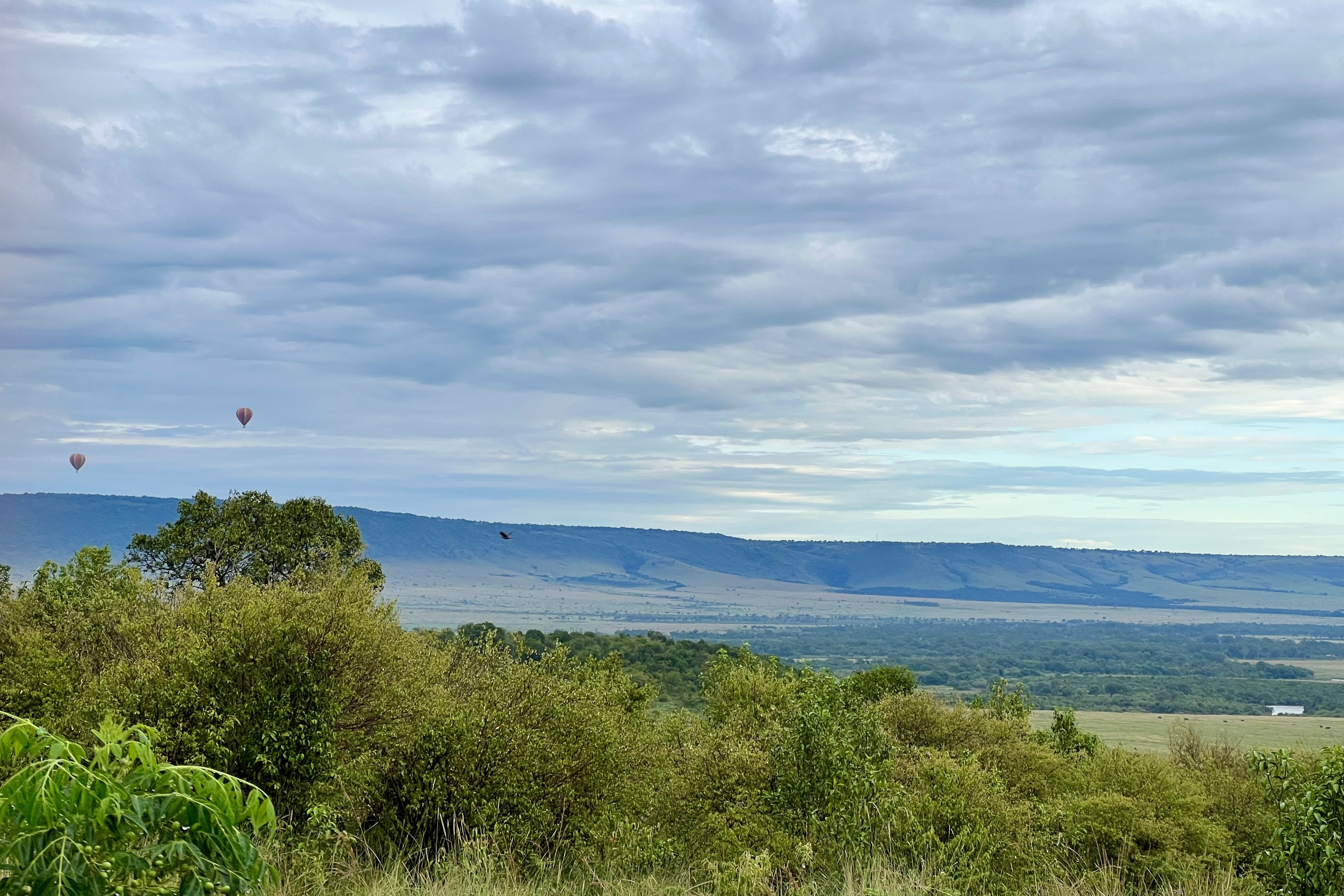
In the morning we see the hot air balloons taking off from the valley below the campsite:
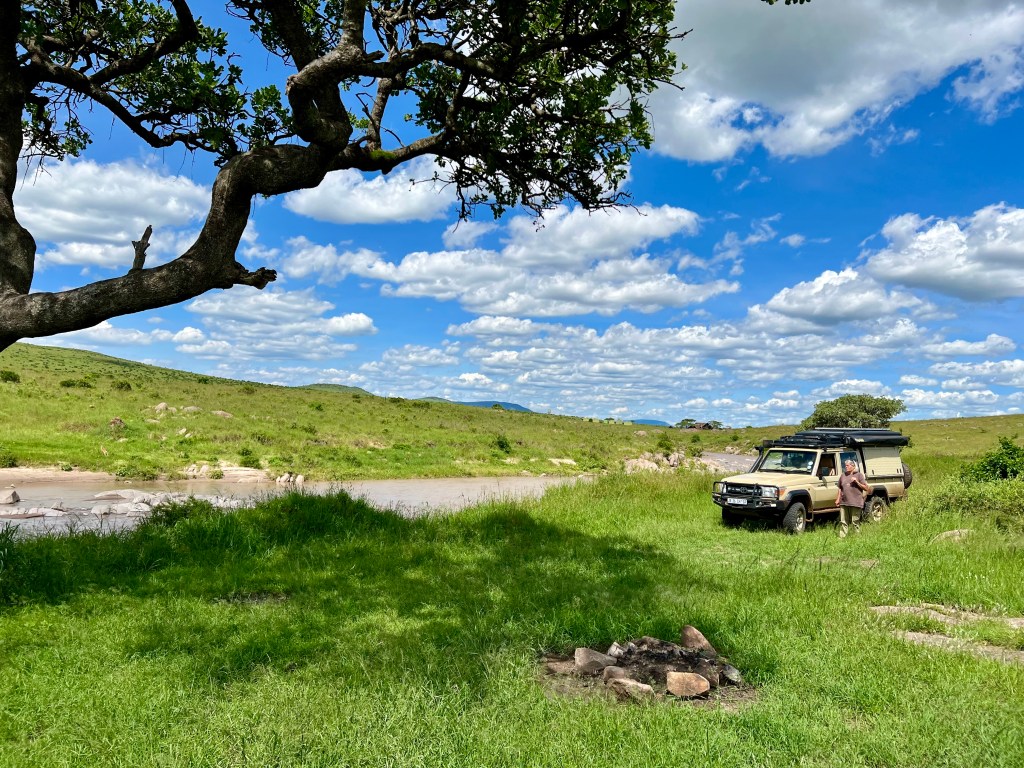
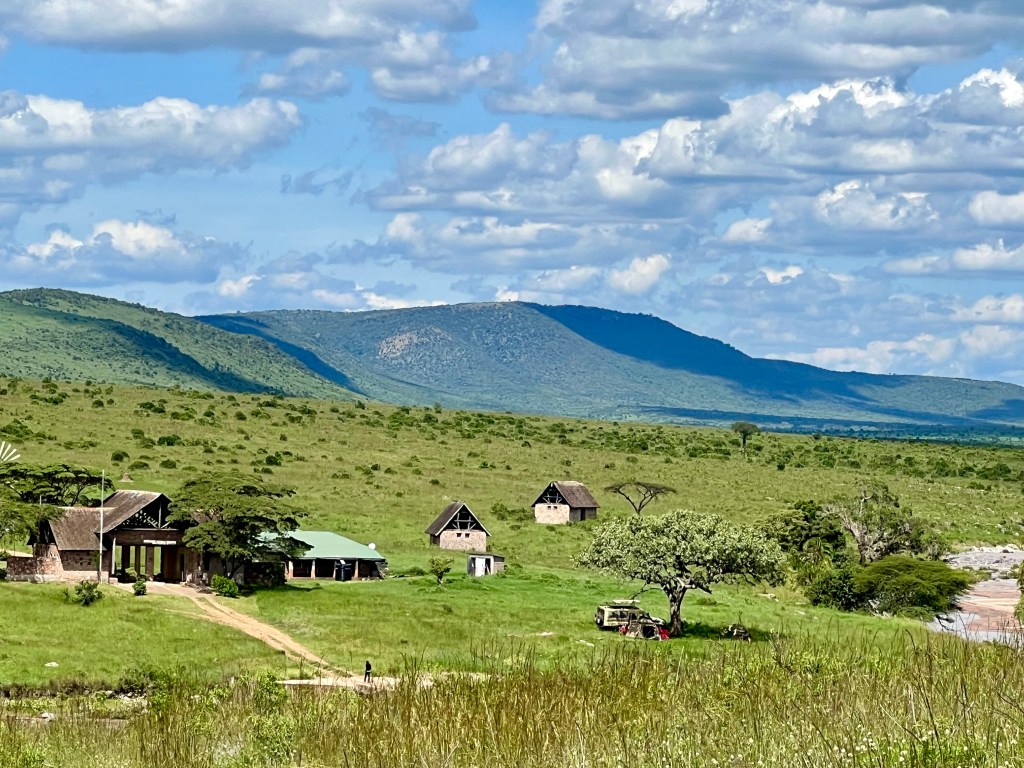
We concentrate our time mainly in the triangle but also drive in the main reserve. I want to check out the main reserve and visit the (only – I think) public campsite in the main reserve – at Sand River. We chat to the rangers there and they show us the options of where to camp. There are a couple of options – next to the gate and buildings or a more private site further along the river:
We didn’t see any cats other than a lioness and cubs in a thicket – shown to us I confess by a professional guide. The guides generally are very friendly, nearly always stopping for a chat. One such guide in a Landrover with a single guest asks if we would like to see lions. He knows where they are and we are welcome to follow them if we like. I always feel a bit awkward in these situations. The guest has clearly sprung for a fancy camp / lodge and guide and I don’t want to feel like we are free-loading. So I ask her if she minds if we follow. No worries she says, looking bored and turns back to her iPad. Anyway we follow. Soon the Defender turns off the all weather road and is off down a very muddy track. Oh no. So far we have been avoiding the more muddy, smaller tracks. It is very boggy and slippery in the black mud. And the Defender is way lighter than us (no tent or gear) and with better clearance. But am feeling the pressure so we follow in low range, passing up a not so silent prayer. The sighting is underwhelming but as least we don’t get stuck.
We loved our Mara visit. It is a very special place, and whilst I still want to visit to see the migration here, out of season (rainy season) travel has its own charms. We hardly saw any other vehicles and it was a super chilled place to potter about. There are a number of picnic trees or higher elevated spots where you can get out of your vehicle, make a cup of coffee or break for lunch. The only downside is that many of the tracks just looked too boggy so some areas we didn’t access for fear of getting stuck.
After 4 days we exit at Oloololo gate (there is a public campsite here too with great views and with running water, but a bit on top of the staff accommodation. I think Eluai is better).
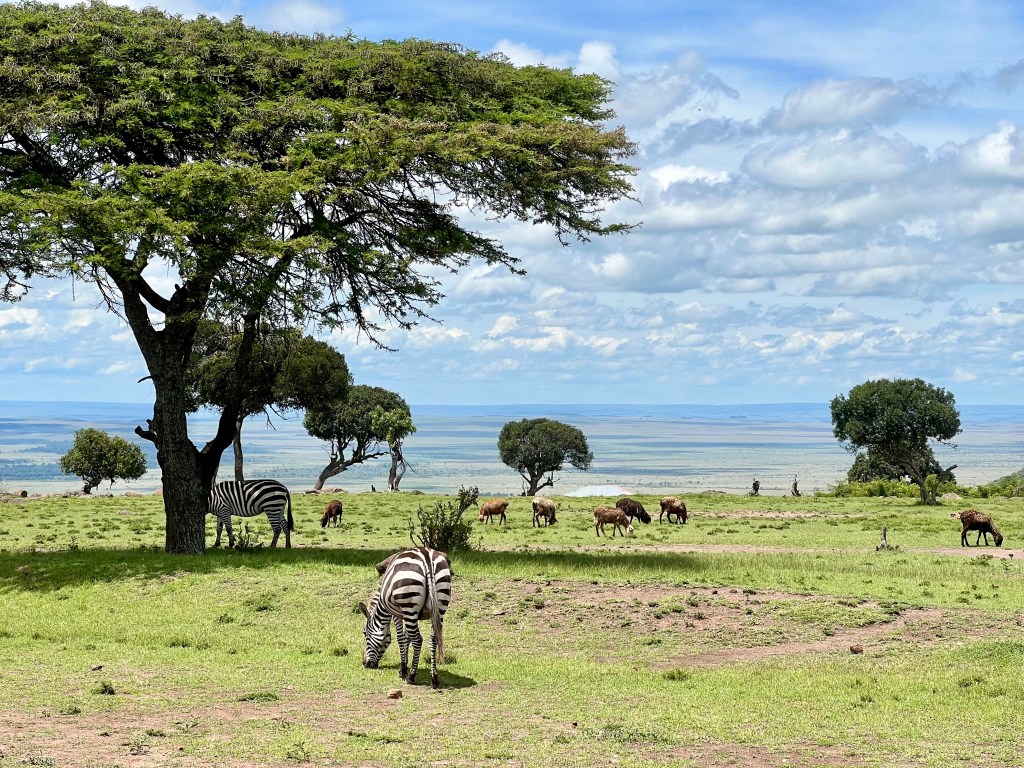
The road climbs sharply up the Oloololo escarpment and at the top you see zebra mixed in with cows and goats, and some scruffy settlements strung out along the top of the escarpment in between some very swish lodges, all sharing the same sweeping views into the Mara below:
Next stop the tea plantations of Kericho
NOTES FOR TRAVELLERS
- Keep in mind that I am posting this over a year after our visit to the Mara (yes, I know!) and there have been some significant changes since we travelled.
- The area was hit by severe flooding in April / May 2024, causing serious damage to infrastructure, including washing away the Purungat Bridge at the southern entrance to the Mara Triangle. Then in late June 2024, Narok county announced a ban on self-driving in the main Maasai Mara reserve. A huge blow to independent travelers, but as it turns out the ban seems to have been forgotten, and if not officially rescinded is currently not being enforced. Purungat Bridge is being / has been (?) rebuilt.
- I am not sure if camping is still allowed at Sand River in the main reserve.
- When we visited fees were payable on a 24 hour basis – this has now changed to calendar days. 6 am to 6pm, if you overnight then you need to leave by 10 am the next day to avoid a second full days fee
- The Mara Conservancy website (https://www.maratriangle.org) has all the info that one could hope for on staying in the Mara Triangle. Note than there are both Special and Public campsites. You can’t pre-book the public sites – they are on a first come, first served basis. I don’t know if they are ever full….but presumably they would have to control numbers during busy periods like the migration.
- Public campsite costs in the triangle are $40 ppn. Vehicle Ksh 1000 per day
- Conservation fees have increased a lot since we visited and are currently $100 ppd low season (Jan to end June) and $200 ppd high season (July to end Dec).
- The Mara Conservancy website also has a good map of the area available for download.
 Bonnievale to Burton Fleming
9 responses to “Into the Mara”
love traveling with you both and love the script xox
LikeLike
Thanks Joanah!
LikeLike
Glorious open spaces. Enjoy following your journey even with delays!
LikeLike
Thanks Lou. Its a very special place
LikeLiked by 1 person
It was such a treat to find this in my mailbox – thanks for allowing us to peer over your shoulder on your travels.
LikeLike
Thanks Kyra. The Mara was wonderful
LikeLike
Lovely read. Pictures are stunning.
LikeLike
Beautiful text and beautiful pics. Thank you so much!
LikeLike
You are very kind! Am so behind on writing all this up, it’s silly. But will get there at some point…too many other adventures in between
LikeLike